Quick Answer: What Is the Acura RSX Prototype Electric SUV?
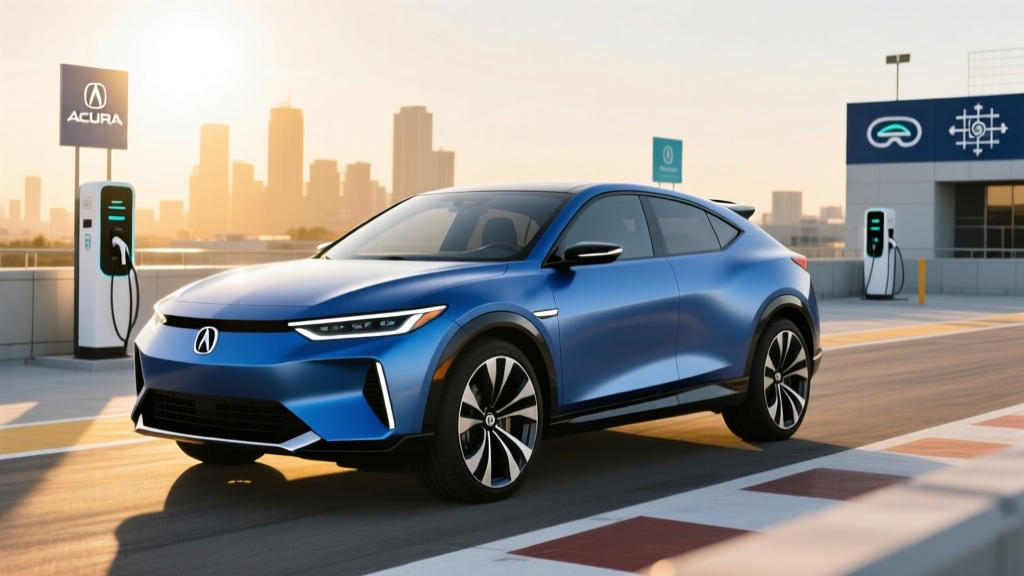
The Acura RSX prototype electric SUV is a battery-electric performance crossover that Acura unveiled as a concept signaling its next-generation EV direction. As of mid-2026, Acura has not published final EPA range, battery capacity, or MSRP figures for a production version. Based on the Honda/Acura EV platform trajectory and competitive positioning against models like the Porsche Macan EV and Tesla Model Y Performance, industry analysts estimate a production RSX EV could target 280–320 miles of EPA range, a ~90–100 kWh usable battery, DC fast charging up to 250–350 kW, and a starting price in the $55,000–$65,000 range before incentives. Acura has not confirmed a production timeline or final specifications, so every number below is an estimate grounded in platform data and segment benchmarks until the automaker publishes official figures.
What the RSX Prototype Tells Us About Acura's Electric Future
The RSX nameplate carries weight. Originally a sporty, affordable coupe sold from 2002 to 2006, the RSX badge now signals Acura's intent to build a performance-oriented electric vehicle that sits below the larger, more expensive ZDX in the lineup. The prototype shown by Acura emphasizes aggressive styling, a low-slung proportion unusual for an SUV, and a driver-focused cabin — all hallmarks of the brand's "Precision Crafted Performance" ethos applied to electrification.
What we can reasonably infer from the prototype and Acura's current EV strategy:
- Platform: The production RSX EV is expected to ride on a next-generation Honda/Acura dedicated EV architecture. The current ZDX uses GM's Ultium platform, but Honda and Acura have signaled a shift toward in-house EV development for future models, which could mean a new skateboard platform with 800-volt electrical architecture for faster charging.
- Positioning: A compact-to-midsize performance electric SUV aimed at driving enthusiasts who want something sportier than the family-oriented ZDX but with more practicality than a sedan.
- Production timeline: No official sale date has been announced. Concept-to-production timelines for Acura typically run 18–30 months, which could place a production RSX EV in the 2027 or 2028 model year.
Estimated Specs: Range, Battery, and Charging
Until Acura releases official numbers, here is a data-informed estimate based on the competitive set and Honda/Acura's known EV engineering direction. Treat these as preliminary projections, not confirmed specifications.
| Specification | Estimated (RSX EV) | Segment Benchmark |
|---|---|---|
| EPA Range (est.) | 280–320 miles | Porsche Macan EV: 288–308 mi; Tesla Model Y Perf: 303 mi |
| Battery Capacity (usable, est.) | ~90–100 kWh | Macan EV: 95 kWh usable; Model Y: ~75 kWh |
| Battery Chemistry (likely) | NMC (nickel manganese cobalt) | Performance EVs favor NMC for energy density |
| Peak DC Fast Charge (est.) | 250–350 kW (800V architecture) | Macan EV: 270 kW; Hyundai Ioniq 5 N: 240 kW |
| 10–80% DC Charge Time (est.) | ~18–24 minutes | Macan EV: ~21 min; Model Y: ~27 min at 250 kW |
| Level 2 AC Charge Rate (est.) | 11.5–19.2 kW | Segment standard: 11.5 kW; premium: 19.2 kW |
| 0–60 mph (est.) | 3.5–4.5 seconds (AWD Performance) | Macan 4 EV: 4.9s; Macan Turbo EV: 3.1s; Model Y Perf: 3.5s |
| Horsepower (est.) | 400–500 hp (dual-motor AWD) | Macan 4: 402 hp; Macan Turbo: 630 hp; Model Y Perf: 456 hp |
| Drivetrain | Dual-motor AWD expected | Standard for performance EV SUVs |
| Estimated Base MSRP | $55,000–$65,000 | ZDX starts ~$65,000; Macan EV starts ~$78,800 |
Real-World Range Reality Check
If the production RSX EV achieves an EPA estimate near 300 miles, expect real-world highway driving at 70–80 mph to deliver approximately 240–270 miles in moderate temperatures. In cold weather (below 30°F), battery efficiency drops and cabin heating draws additional energy, potentially reducing range to 200–230 miles. These are typical reductions for NMC-based performance EVs and are consistent with what we observe in the Porsche Macan EV and Tesla Model Y under similar conditions. Preconditioning the battery before DC fast charging will be essential to achieving peak charge rates.
How the RSX EV Compares to Gas and Hybrid Alternatives
Buyers cross-shopping the Acura RSX prototype electric SUV are likely also considering the current gasoline Acura RDX, the Acura ZDX (already on sale), or performance gas crossovers like the BMW X3 M40i. Here is how the economics compare using estimated figures for the RSX EV against known data for gas alternatives.
| Metric | RSX EV (est.) | Acura RDX (gas, AWD) | BMW X3 xDrive30i (gas) |
|---|---|---|---|
| Starting MSRP | $55,000–$65,000 | ~$45,000 | ~$50,000 |
| Fuel/Energy Cost per Mile | $0.04–$0.06 (home charging) | $0.16–$0.19 (gasoline) | $0.16–$0.19 |
| Annual Fuel/Energy (12,000 mi) | $480–$720 | $1,920–$2,280 | $1,920–$2,280 |
| Maintenance (annual est.) | $300–$500 | $600–$900 | $700–$1,000 |
| EPA Efficiency | ~90–100 MPGe (est.) | 24 MPG combined | 25 MPG combined |
| Federal Tax Credit (§30D) | Up to $7,500 (if eligible) | $0 | $0 |
The RSX EV's higher upfront cost is partially offset by dramatically lower per-mile energy costs and reduced maintenance (no oil changes, fewer brake replacements due to regenerative braking, no transmission fluid). Over five years and 60,000 miles, the energy and maintenance savings could total $7,000–$10,000 compared to a gas equivalent, depending on local electricity rates and gas prices. The IRS §30D federal tax credit can further reduce effective cost by up to $7,500, but eligibility depends on MSRP caps, buyer income limits, battery component sourcing, and critical mineral requirements — all of which Acura will need to confirm for the production vehicle.
Cost of Ownership: 5-Year Breakdown
For buyers evaluating the Acura RSX prototype electric SUV against internal-combustion alternatives, total cost of ownership matters more than sticker price alone. Below is an estimated 5-year/60,000-mile cost breakdown. All EV figures are projections; gas figures use current EPA and AAA data.
| Cost Category | RSX EV (est.) | Gas Crossover (e.g., RDX) |
|---|---|---|
| Purchase Price (base, est.) | $60,000 | $45,000 |
| Federal Tax Credit | –$7,500 (if eligible) | $0 |
| Effective Purchase | $52,500 | $45,000 |
| Energy/Fuel (5 yr) | $3,000–$3,600 | $9,600–$11,400 |
| Maintenance (5 yr) | $1,500–$2,500 | $3,000–$4,500 |
| Insurance (5 yr, est.) | $9,000–$12,000 | $7,500–$9,500 |
| Estimated Depreciation | $22,000–$28,000 | $18,000–$22,000 |
| Approx. 5-Year Total | $88,000–$98,600 | $83,100–$92,400 |
Key takeaways from this breakdown:
- Insurance is higher for EVs. Performance electric SUVs typically cost 15–30% more to insure than gas equivalents due to higher repair costs and parts pricing. Get quotes before committing.
- Depreciation is the wildcard. EV depreciation has been volatile. Early Acura ZDX resale values and broader EV market trends will set expectations for the RSX EV.
- Energy savings are real and consistent. Home charging at $0.13–$0.18/kWh yields a per-mile cost roughly one-third that of gasoline at $3.50/gallon. Public DC fast charging at $0.35–$0.50/kWh narrows the gap but still typically undercuts gas.
Real-World Ownership: What First-Time EV Buyers Should Know
If the RSX EV becomes your first electric vehicle, several practical factors will shape your daily experience far more than the spec sheet.
Home Charging Is Non-Negotiable for Most Owners
Over 80% of EV charging happens at home. If you have a garage or driveway where a Level 2 (240V) home charger can be installed, daily ownership is effortless — plug in overnight and wake up to a full battery every morning. A Level 2 charger delivering 11.5 kW can add roughly 35–45 miles of range per hour, meaning a full overnight session easily replenishes daily driving. Expect $500–$2,000 for a quality Level 2 unit and professional installation by a licensed electrician, with costs rising if your electrical panel needs an upgrade to 200 amps.
If you live in an apartment or lack dedicated parking with electrical access, relying solely on public charging is viable but more expensive and time-consuming. Assess your situation honestly before purchasing.
Charging Infrastructure Varies by Region
The RSX EV will likely use the NACS (North American Charging Standard) connector, given Honda and Acura's commitment to NACS for future EVs. This is significant because it grants access to Tesla's Supercharger network — the most reliable and widespread DC fast-charging network in the U.S. — either natively or via adapter. Electrify America, EVgo, and ChargePoint networks remain alternatives with CCS connectors.
Cold Weather Changes the Equation
Battery chemistry and cabin heating reduce EV efficiency in cold climates. NMC batteries, which the RSX EV will likely use, experience greater cold-weather range loss than LFP (lithium iron phosphate) chemistry in some conditions, though NMC offers higher energy density. If you live in a region with sustained sub-freezing winters, budget for 20–30% range reduction and look for a heat pump in the vehicle's thermal management system — this feature significantly reduces cold-weather efficiency penalties by scavenging waste heat rather than using resistive heating.
Common Misconceptions About the RSX EV (and EVs in General)
| Myth | Fact |
|---|---|
| "The RSX EV is available to buy now." | As of 2026, the RSX exists only as a prototype/concept. No production vehicle is on sale, and final specs have not been published by Acura. |
| "EVs always save money compared to gas cars." | EVs save on fuel and maintenance, but higher purchase prices, insurance premiums, and potentially steeper depreciation can offset those savings. Total cost of ownership depends on your mileage, electricity rate, and how long you keep the vehicle. |
| "I'll get the full $7,500 tax credit automatically." | The §30D credit has MSRP caps (vans/SUVs/trucks: $80,000; cars: $55,000), buyer income limits ($300K joint / $150K single), and strict battery component and critical mineral sourcing requirements. Eligibility is not guaranteed and rules change — consult a tax professional and check fueleconomy.gov for the latest qualifying list. |
| "Fast charging to 100% is fine every time." | DC fast charging generates heat and stresses battery cells. For daily use, charging to 80–90% on Level 2 is ideal for long-term battery health. Reserve DC fast charging and 100% charges for road trips. The RSX EV's battery management system will include buffers, but owner habits still affect long-term State of Health (SoH). |
| "EV batteries need replacing every few years." | Modern NMC and LFP batteries are engineered for 1,500–3,000+ charge cycles before significant degradation. Most automakers warrant the battery for 8 years/100,000 miles with a capacity retention threshold of 70% or higher. Real-world data from Tesla, Hyundai, and others shows typical degradation of 10–15% over 150,000–200,000 miles. |
Decision Framework: Is the RSX EV Worth Waiting For?
Choose to Wait for the Acura RSX EV If:
- You want a performance-oriented luxury electric SUV and aren't in a rush to buy — production is likely 2027 or later.
- You value Acura's design language, dealership network, and brand loyalty programs.
- You want native NACS charging and Tesla Supercharger access without an adapter.
- Your budget is $55,000–$70,000 and you can wait for confirmed specs and tax credit eligibility.
Choose an Available Alternative Now If:
- You need a vehicle within the next 3–6 months — the RSX EV is not yet purchasable.
- You want confirmed EPA range, pricing, and tax credit eligibility before committing.
- Tesla Model Y Performance: Available now, 303 miles EPA range, 3.5-second 0–60, ~$53,000, widely eligible for §30D credit, Supercharger-native.
- Porsche Macan 4 EV: Available now, 308 miles EPA range, 402 hp, premium interior, starts ~$78,800 (likely above §30D MSRP cap for SUVs).
- Hyundai Ioniq 5 N: Performance-focused, 221 miles EPA range (trade-off for track capability), 641 hp with N Grin Boost, ~$67,500, 800V charging.
- Acura ZDX: Already on sale, larger SUV, 304–325 miles EPA range depending on trim, starts ~$65,000, GM Ultium platform.
Frequently Asked Questions
When will the Acura RSX electric SUV be available to buy?
Acura has not announced an official sale date for a production RSX EV. Based on typical concept-to-production timelines and Honda/Acura's EV roadmap, a 2027 or 2028 model year launch is plausible but not confirmed.
Will the RSX EV qualify for the $7,500 federal tax credit?
It is too early to confirm. Eligibility under IRS §30D depends on the vehicle's final MSRP (must be under $80,000 for SUVs), the buyer's adjusted gross income, and battery component/critical mineral sourcing at the time of purchase. Acura will need to certify compliance when the vehicle goes on sale.
What connector will the RSX EV use for charging?
Honda and Acura have committed to the NACS (North American Charging Standard) connector for future EVs, which means the production RSX EV is expected to use NACS natively. This provides direct access to Tesla Supercharger stations without an adapter.
How does the RSX EV compare to the Acura ZDX?
The ZDX is a larger, more family-oriented electric SUV built on GM's Ultium platform. The RSX EV is expected to be smaller, sportier, and potentially built on a next-generation Honda/Acura in-house platform. Think of the ZDX as the family hauler and the RSX EV as the driver's car — if the prototype's positioning carries through to production.
Should I wait for the RSX EV or buy an EV now?
If your current vehicle is reliable and you can wait 12–24 months, the RSX EV could be a compelling option given Acura's performance heritage and the expected NACS charging advantage. If you need a vehicle soon, the Tesla Model Y Performance, Acura ZDX, or Porsche Macan EV are strong alternatives with confirmed specs and availability today.