The Short Answer on the Acura RSX EV
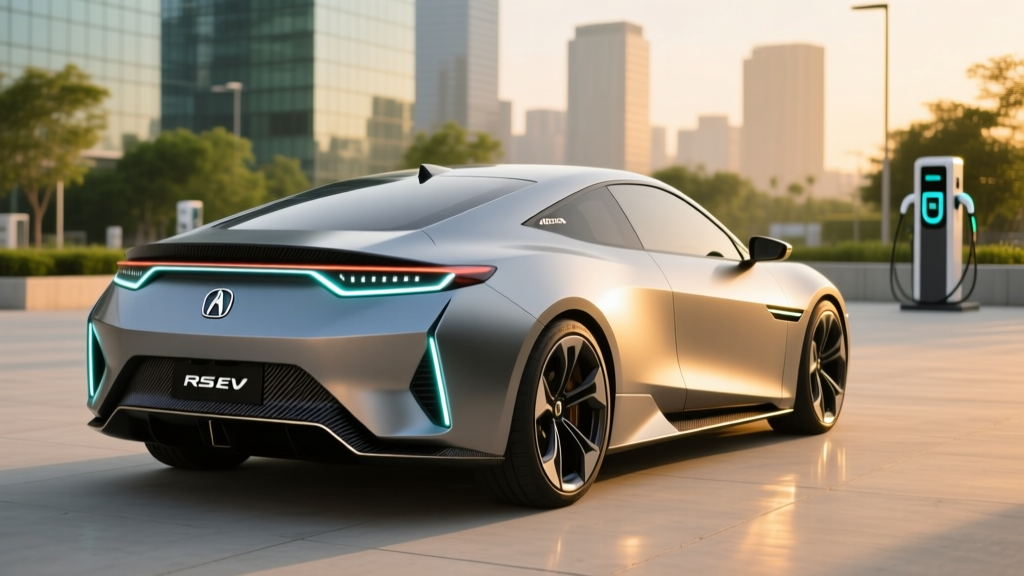
As of early 2026, Acura has not officially announced an electric RSX revival. The original Acura RSX (2002–2006) was a gas-powered sport coupe, and while Honda has teased a next-generation electric sports car concept (the Honda 0 Series), no production Acura RSX EV has been confirmed for sale. If Acura does badge an electric sport coupe as the RSX, expect a dual-motor AWD layout, roughly 250–300 miles of EPA range, a 75–85 kWh battery, and a starting MSRP in the $45,000–$55,000 range based on current Honda/Acura EV pricing trajectories. Until official specs drop, treat all RSX EV figures as preliminary estimates.
Why the Acura RSX EV Keeps Trending
The search volume around "Acura RSX EV" stems from two converging realities. First, Honda's 0 Series concept lineup—unveiled at CES 2024—includes a sleek electric sports sedan/coupe that enthusiasts immediately began calling a spiritual RSX successor. Second, Acura's existing EV portfolio (the ZDX, built on GM's Ultium platform) has left a clear gap for a sporty, driver-focused electric model below the ZDX's $57,000+ starting price.
Honda has confirmed that its 0 Series production vehicles will ride on a dedicated EV architecture with thin, lightweight battery packs, rear-wheel-drive bias, and a target of Level 3 automated driving capability on highways. The production Honda 0 Series saloon is expected for the 2026 model year, and a sportier coupe variant—or an Acura-badged version—could logically follow for 2027 or 2028.
Here is what we can reasonably project based on Honda's published 0 Series technical targets and Acura's current EV strategy.
Projected Specs: What an Acura RSX EV Could Look Like
These figures are estimates based on Honda's 0 Series announcements, Acura's ZDX platform data, and competitive segment benchmarks. They will be updated once Acura publishes official specifications.
| Specification | Estimated (Acura RSX EV) | Segment Benchmark (BMW i4 eDrive40) |
|---|---|---|
| Battery Capacity | ~80 kWh (usable), NMC chemistry | 81.5 kWh usable, NMC |
| EPA Range (est.) | 260–300 miles | 301 miles (EPA) |
| Drivetrain | RWD standard / AWD optional | RWD (eDrive40) / AWD (M50) |
| Horsepower | 280–340 hp (RWD); 400+ hp (AWD Type S) | 335 hp / 536 hp |
| 0–60 mph | 5.5 sec (RWD); ~4.0 sec (AWD Type S) | 5.5 sec / 3.7 sec |
| Peak DC Fast Charge | ~175–200 kW (estimated) | 205 kW |
| 10–80% DC Charge Time | ~25–30 minutes (est.) | ~31 minutes |
| Level 2 AC Charge Rate | 11.5 kW (estimated) | 11 kW |
| Starting MSRP (est.) | $45,000–$50,000 (base); $55,000+ (Type S) | $52,200 |
Real-World Range Expectations
If the RSX EV targets a 280-mile EPA rating, plan for approximately 230–250 miles in sustained 75 mph highway driving and 200–220 miles in sub-freezing winter conditions. Sport coupes typically prioritize performance tires and lower ride height, both of which increase rolling resistance and reduce efficiency at speed. The BMW i4 eDrive40, rated at 301 miles EPA, averages closer to 250–265 real-world highway miles in independent testing—a useful reference point.
How an Electric RSX Compares to the Gas Original
The 2006 Acura RSX Type-S produced 201 horsepower from a 2.0L inline-four, achieved 27 mpg combined, and started around $24,000. An electric successor would be dramatically quicker but heavier, more expensive upfront, and cheaper to operate per mile. Here is a direct comparison using current energy and fuel costs:
| Metric | 2006 Acura RSX Type-S (Gas) | Estimated Acura RSX EV (2027+) |
|---|---|---|
| Horsepower | 201 hp | 280–400+ hp |
| 0–60 mph | 6.4 sec | 4.0–5.5 sec |
| Energy/Fuel Cost per Mile | ~$0.13/mi (27 mpg, $3.50/gal) | ~$0.05/mi (home L2, $0.14/kWh) |
| Annual Fuel/Energy (12k mi) | ~$1,556 | ~$600 (home charging) |
| Annual Maintenance | ~$600–$900 | ~$200–$400 |
| 5-Year Energy + Maintenance | ~$10,780–$12,280 | ~$4,000–$5,000 |
| Purchase Price (MSRP) | $24,000 (2006) | $45,000–$55,000 (est.) |
The operating-cost advantage is substantial: roughly $950–$1,100 in annual savings on energy and maintenance alone. However, the purchase-price gap is approximately $25,000–$35,000 in nominal terms (even adjusting for inflation, the 2006 RSX's $24,000 equals roughly $37,000 in 2026 dollars). The RSX EV would need at least 6–8 years of ownership for operating savings to close that gap, assuming no major battery replacement.
Real Costs of Ownership: What to Budget
If you are planning to buy an electric sport coupe in this segment—whether it ends up wearing an RSX badge or you cross-shop the BMW i4, Hyundai Ioniq 6, or Tesla Model 3 Performance—here are the cost realities to model into your decision.
| Cost Category | Year 1 | 5-Year Total (est.) |
|---|---|---|
| Purchase Price (base, before incentives) | $47,500 | $47,500 |
| Federal §30D Tax Credit (if eligible) | –$3,750 to –$7,500 | –$3,750 to –$7,500 |
| Home Level 2 Charger Install | $800–$2,000 | $800–$2,000 |
| Annual Electricity (12,000 mi, home L2) | $600 | $3,000 |
| Annual Insurance (sport coupe EV) | $2,200–$3,000 | $11,000–$15,000 |
| Maintenance (tires, cabin filter, fluid) | $300 | $1,500–$2,000 |
| Estimated Depreciation (5-yr) | — | $18,000–$24,000 |
Key variables that shift these numbers significantly:
- Tax credit eligibility: Under current IRS §30D rules, the full $7,500 credit requires the vehicle to meet battery critical-mineral and component sourcing thresholds, the buyer's AGI must not exceed $150,000 (single) or $300,000 (joint), and the MSRP must stay under $55,000 for sedans/coupes. A Type S trim above $55,000 would be ineligible. Always verify current-year rules at IRS.gov and consult a tax professional.
- Insurance premiums: Electric sport coupes carry higher insurance costs than economy EVs due to repair complexity, performance ratings, and parts availability. Expect premiums 15–30% higher than a comparable gas coupe.
- Home charging access: Without a Level 2 home charger, you will rely on public DC fast charging at $0.30–$0.50/kWh, which raises annual energy costs to $1,200–$1,800 and erodes the fuel-cost advantage.
Charging Reality: What to Expect
Honda's 0 Series platform targets 800-volt architecture capability, which would allow faster DC charging than the current 400V systems in the Acura ZDX. If the RSX EV adopts 800V, peak charge rates of 200–250 kW are plausible. However, peak kW is not sustained kW—this is the single most misunderstood concept in EV charging.
Understanding the Charge Curve
A vehicle that peaks at 200 kW typically sustains that rate only between 10–40% State of Charge (SoC). Above 60%, the rate tapers to protect battery health. Above 80%, it may drop below 50 kW. A "10–80% in 25 minutes" spec is far more useful than a peak kW number. For road trips, plan charging stops around the 10–80% window to minimize time at the charger.
| Charging Level | Power | Miles Added per Hour | Typical Use Case |
|---|---|---|---|
| Level 1 (120V household) | ~1.4 kW | 3–5 miles | Overnight trickle; not practical as primary |
| Level 2 (240V home/public) | 7.7–11.5 kW | 25–40 miles | Daily charging; full battery in 7–10 hours |
| DC Fast Charge | 50–200+ kW | 150–600 miles/hr (peak) | Road trips; 10–80% in 20–35 minutes |
Common Misconceptions About Electric Sport Coupes
| Myth | Fact |
|---|---|
| "EVs have no driving feel—too heavy and numb." | Modern EVs like the Porsche Taycan and Hyundai Ioniq 5 N prove electric powertrains can deliver sharp handling. The weight is real (typically 4,200–4,800 lbs for this segment), but low center of gravity and torque vectoring compensate. Honda's 0 Series explicitly targets driving engagement with rear-drive bias. |
| "The battery will need replacing in 5 years." | Current NMC and LFP batteries are warrantied for 8 years/100,000 miles at 70% capacity retention minimum (per DOE data). Real-world degradation studies show most EV batteries retain 85–90% capacity after 100,000 miles. |
| "I'll save money immediately by going electric." | The upfront price premium of an EV sport coupe is $10,000–$20,000 over a gas equivalent. Operating savings of ~$1,000/year take 5–10+ years to break even. The financial case strengthens with higher annual mileage and reliable home charging access. |
| "Public charging is everywhere now." | The Tesla Supercharger network (now opening to NACS-equipped non-Teslas) and Electrify America have expanded significantly, but rural corridors and apartment-dweller access remain genuine gaps. Check PlugShare for your specific routes before buying. |
Decision Framework: Should You Wait or Buy Now?
Choose to Wait for the Acura RSX EV If:
- You specifically want an Acura-badged electric sport coupe and are not in a rush to replace your current vehicle.
- You value Honda's engineering approach to lightweight EV platforms and want to see real-world reviews before committing.
- Your current car has 2+ years of reliable life remaining, giving you a window into 2027–2028.
- You want to see whether the RSX EV qualifies for the §30D tax credit at launch (battery sourcing rules are tightening annually).
Choose an Available Alternative Now If:
- You need a vehicle within 6 months and cannot wait for an unannounced model.
- You want confirmed EPA range, verified charging speeds, and established dealer service infrastructure today.
- Consider the BMW i4 eDrive40 ($52,200, 301 mi EPA, 205 kW DC charging) for a proven electric sport sedan with strong driving dynamics.
- Consider the Hyundai Ioniq 6 SE Long Range ($42,715, 361 mi EPA, 235 kW peak) for maximum range and 800V fast charging at a lower price.
- Consider the Tesla Model 3 Long Range AWD ($42,630, 341 mi EPA, Supercharger network access) if charging infrastructure is a top priority.
Frequently Asked Questions
Has Acura officially announced the RSX EV?
No. As of early 2026, Acura has not confirmed an RSX EV. Honda's 0 Series electric vehicle lineup includes a sports sedan concept, and enthusiasts have speculated about an RSX revival, but no production model, specs, or release date have been published.
When would the Acura RSX EV be available?
If Acura decides to produce an RSX EV based on Honda's 0 Series platform, the earliest realistic availability would be the 2027 or 2028 model year. Honda's 0 Series production saloon is targeting 2026, and a sport coupe variant or Acura derivative would logically follow 12–24 months later.
Will the RSX EV qualify for the $7,500 federal tax credit?
Unknown until Acura publishes battery sourcing details. Under current IRS §30D rules, eligibility requires meeting critical-mineral and battery-component sourcing thresholds that tighten each year. Additionally, coupes/sedans must have an MSRP under $55,000, and buyer income must not exceed $150,000 (single) or $300,000 (joint filing). A high-performance Type S variant priced above $55,000 would be ineligible regardless of sourcing.
What battery chemistry would the RSX EV likely use?
Honda's 0 Series targets energy density and light weight, which points toward NMC (nickel manganese cobalt) chemistry rather than LFP (lithium iron phosphate). NMC offers higher energy density—critical for a sport coupe where weight distribution and range matter—but typically has a lower cycle life and requires more careful thermal management than LFP. Honda has not confirmed chemistry details.
Should I buy a used Acura RSX (2002–2006) instead?
A clean, low-mileage 2004–2006 RSX Type-S now trades between $15,000–$30,000 depending on condition. It is an engaging analog driving experience, but you will pay $1,500+ annually in fuel and maintenance, face rising insurance for a collector-adjacent vehicle, and have no modern safety tech (no AEB, no lane-keeping). It is an enthusiast purchase, not a practical daily-driver decision.
What is the closest EV I can buy right now to a sport coupe experience?
The BMW i4 M50 ($67,300, 288 mi EPA, 536 hp, 3.7 sec 0–60) is the closest current-production equivalent to what an RSX Type S EV might become. For a more accessible option, the Hyundai Ioniq 5 N ($66,000+, 221 mi EPA, 641 hp with N Grin Boost) prioritizes track-capable driving engagement with simulated gear shifts and aggressive regen tuning. Neither is cheap, but both deliver genuine sport-coupe dynamics on electric powertrains.