Quick Answer: Does the Acura RSX Electric Crossover SUV Exist Yet?
No — as of mid-2026, the Acura RSX electric crossover SUV has not officially entered production or gone on sale. Acura revived the RSX nameplate as a concept at Monterey Car Week in August 2024, signaling Honda's intent to build a premium, performance-oriented electric crossover on its forthcoming dedicated EV architecture. Final EPA range, battery capacity, pricing, and a firm on-sale date remain unannounced. What follows is a data-grounded preview based on confirmed Honda/Acura platform details, competitive benchmarks, and realistic ownership projections.
What the RSX EV Concept Tells Us About the Production Model
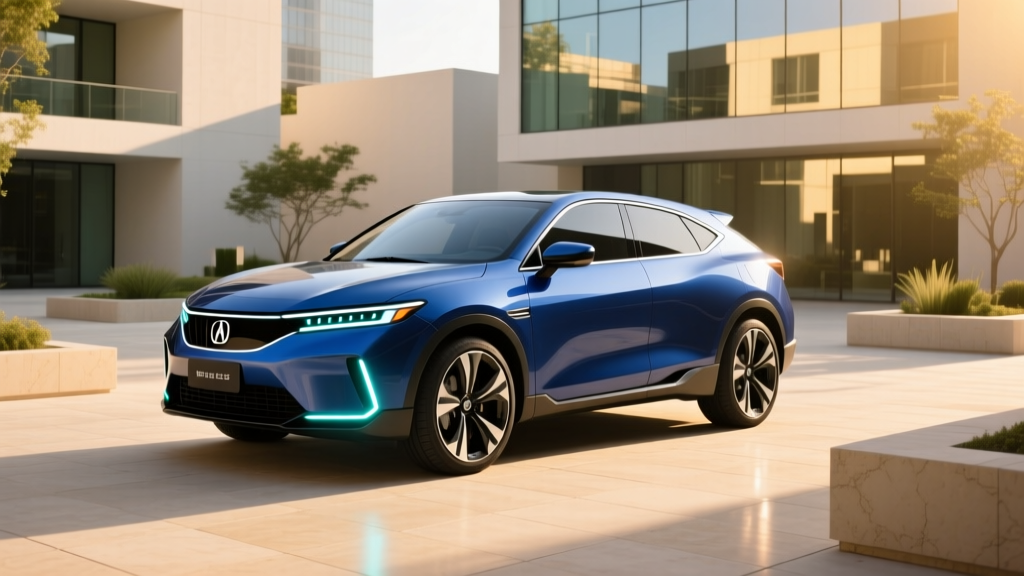
The 2024 Acura RSX Prototype was a low-slung, coupe-like electric crossover — closer in spirit to the BMW iX or a lifted performance hatchback than a traditional boxy SUV. Acura positioned it as a driver-focused EV built on Honda's next-generation e-Architecture, which is expected to support 800V electrical systems, enabling significantly faster DC charging than the 400V systems found in the current Honda Prologue and Acura ZDX (which ride on GM's Ultium platform).
Based on Honda's published platform targets and competitive positioning against vehicles like the Tesla Model Y Performance, BMW iX xDrive50, and Porsche Macan Electric, here is what industry analysts project for the production RSX EV:
| Attribute | Projected / Estimated | Notes |
|---|---|---|
| Platform | Honda e-Architecture (800V) | Dedicated EV skateboard, not shared with GM |
| Battery Chemistry | NMC (nickel manganese cobalt) | Expected for energy density in a performance-oriented vehicle |
| Usable Battery Capacity | ~90–100 kWh (est.) | Competitive with BMW iX, Porsche Macan EV |
| EPA Range (est.) | ~300–340 miles | Real-world highway: expect ~260–290 mi |
| Peak DC Fast Charge | ~270–350 kW (800V) | 10–80% in ~18–22 minutes (projected) |
| Level 2 AC Charging | ~11.5–19.2 kW | ~7–8 hours for a full charge at 11.5 kW |
| Drivetrain | Dual-motor AWD (SH-AWD electric) | Acura's trademark torque-vectoring AWD, electrified |
| 0–60 mph | ~3.5–4.5 seconds (est.) | Performance variant likely quicker |
| Horsepower | ~450–550 hp (est.) | Dual-motor combined output |
| Starting MSRP (est.) | ~$60,000–$75,000 | Performance trims could exceed $85,000 |
| Battery/Powertrain Warranty | 8 years / 100,000 miles (expected) | Standard for luxury EVs per federal guidance |
Note: All specifications above are preliminary estimates based on Honda platform disclosures and competitive analysis. Final figures will be confirmed by Acura closer to the vehicle's launch. We will update this article when official data is released.
How the RSX EV Stacks Up Against Gas and Hybrid Crossovers
Many shoppers cross-shopping the Acura RSX EV will be coming from gas-powered luxury compact SUVs like the Acura RDX, BMW X3, or Porsche Macan. Here is how the projected RSX EV compares on operating costs over a 5-year, 75,000-mile ownership period:
| Cost Category | Acura RSX EV (Projected) | 2026 Acura RDX A-Spec | 2026 BMW X3 xDrive30i |
|---|---|---|---|
| Purchase Price (base MSRP) | ~$65,000 | $46,350 | $51,900 |
| Federal Tax Credit (§30D) | Up to $7,500 (eligibility TBD) | $0 | $0 |
| Fuel / Electricity (75k mi) | ~$4,200 (home L2 at $0.14/kWh) | ~$9,400 (24 MPG combined, $3.60/gal) | ~$9,800 (25 MPG combined, $3.60/gal) |
| Maintenance (5 yr) | ~$1,800 | ~$3,600 | ~$4,200 |
| Insurance (5 yr avg) | ~$12,500 | ~$9,200 | ~$10,800 |
| Estimated 5-Year Total | ~$76,000 | ~$68,550 | ~$76,700 |
The RSX EV's higher purchase price is partially offset by dramatically lower fuel and maintenance costs. Electric motors have no oil changes, no transmission fluid, fewer brake replacements (thanks to regenerative braking), and no spark plugs. However, EV insurance premiums run 15–30% higher than gas equivalents due to battery replacement costs and specialized repair requirements. These figures assume predominantly home Level 2 charging; frequent public DC fast charging at $0.35–$0.55/kWh would raise the RSX's energy cost to roughly $7,500–$10,000 over 5 years.
Real-World Ownership: What First-Time EV Buyers Need to Know
If the RSX EV becomes your first electric vehicle, the ownership experience will differ significantly from a gas car in ways that spec sheets don't capture.
Home Charging Is Non-Negotiable for Convenience
Over 80% of EV charging happens at home. For the RSX EV's projected ~95 kWh battery, a Level 2 home charger (240V, 48A) delivering ~11.5 kW will add roughly 35–40 miles of range per hour of charging, fully replenishing the battery in about 8–9 hours. Expect to pay $800–$2,500 for a quality Level 2 charger plus professional installation by a licensed electrician, with costs rising to $3,000–$5,000+ if your electrical panel needs a 200A upgrade.
If you live in an apartment without charging access or rely entirely on street parking, an EV this size requires careful planning around public charging infrastructure. Check AFDC's charging station locator for DC fast chargers near your daily routes.
Cold Weather and Highway Driving Reduce Range
The projected 300–340 mile EPA range assumes moderate temperatures and mixed driving. In real-world conditions:
- Cold weather (below 32°F): Expect 20–30% range loss due to battery chemistry limitations and cabin heating demand. A 320-mile EPA rating could drop to 220–255 miles in sustained winter conditions.
- Highway driving at 75+ mph: Aerodynamic drag reduces efficiency by 10–15% compared to city driving with regenerative braking. Expect ~270–290 real-world highway miles from a 320-mile EPA estimate.
- Combined cold + highway: The worst-case scenario — winter road trips may yield as little as 200–230 miles before needing to charge.
A heat pump (expected on the RSX EV given its premium positioning) mitigates cold-weather loss by 5–10 percentage points compared to resistive heating, but does not eliminate it.
Charging Speed: Peak kW Is Not Sustained kW
The RSX EV's projected 800V architecture should enable peak charging rates of 270–350 kW — but that peak is typically sustained only between roughly 10–50% state of charge. Above 80%, the charge curve tapers sharply to protect battery health, dropping to under 50 kW. This means a 10–80% session might take 18–22 minutes, but charging from 80–100% could add another 25–35 minutes. For road trips, plan to charge to 80% and go.
Common Misconceptions About the RSX EV and Electric Crossovers
| Myth | Fact |
|---|---|
| "The RSX EV will get the full $7,500 tax credit automatically." | §30D credit eligibility depends on MSRP caps (SUVs: $80,000), buyer income limits ($150K single / $300K joint), and battery critical-mineral sourcing requirements. Check current IRS rules — they change frequently. |
| "300 miles of EPA range means I'll always get 300 miles." | EPA range is a laboratory estimate. Highway driving, cold weather, elevation changes, and aggressive acceleration all reduce real-world range by 15–30%. |
| "EV batteries need replacing every few years." | Modern NMC and LFP batteries are designed to retain 70–80% capacity after 150,000–200,000 miles. The federal warranty mandate requires 8 years/100,000 miles of coverage with a minimum 70% capacity retention threshold. |
| "I can charge on any public charger." | Connector compatibility matters. The RSX EV is expected to use the NACS (Tesla-style) connector as Honda has committed to NACS adoption, but early production vehicles may ship with CCS. Verify before you buy. |
| "Electric AWD is the same as gas AWD." | Acura's electric SH-AWD uses individual motor torque vectoring at each rear wheel, which can react in milliseconds — faster than any mechanical system. But it does not provide the same low-speed crawling capability as a traditional off-road SUV. |
Federal Tax Credit Eligibility: What to Watch
The IRS §30D Clean Vehicle Credit can reduce your tax burden by up to $7,500, but qualifying for the full amount is not guaranteed. Here is the current eligibility checklist for a vehicle like the RSX EV:
- MSRP cap: SUVs and crossovers must have a base MSRP at or below $80,000. A base RSX EV should qualify, but a fully loaded Type S variant could exceed this threshold.
- Buyer income limits: Modified adjusted gross income must not exceed $150,000 (single), $225,000 (head of household), or $300,000 (married filing jointly).
- Battery sourcing: A percentage of critical minerals and battery components must be sourced from the U.S. or free-trade-agreement partners. These percentages increase annually, making qualification harder over time.
- North American assembly: Final assembly must occur in North America. Honda's Ohio EV hub is expected to handle RSX production, which should satisfy this requirement.
- Point-of-sale transfer: As of 2024, buyers can transfer the credit to the dealer for an upfront price reduction rather than waiting to claim it on their tax return.
Always consult a tax professional and verify current rules at IRS.gov before making a purchase decision based on credit eligibility.
Decision Framework: Should You Wait for the RSX EV or Buy Now?
Choose to Wait for the Acura RSX EV If:
- You want a dedicated Honda/Acura EV platform (not a rebadged GM Ultium vehicle like the current ZDX)
- 800V fast-charging capability is a priority for road trips (10–80% in under 20 minutes)
- You prefer Acura's design language and SH-AWD torque vectoring over Tesla or BMW
- Your current vehicle is functional and you can wait until late 2027 or 2028
- You have home Level 2 charging access or can install it
Buy an Available Electric Crossover Now If:
- You need a vehicle within the next 6 months
- You want proven reliability data and real-world owner reviews before committing
- The Tesla Model Y, BMW iX, Hyundai Ioniq 5, or Porsche Macan Electric already fits your budget and needs
- You want to lock in the current §30D tax credit before sourcing requirements tighten further
- You're uncertain whether Acura will price the RSX EV competitively
Frequently Asked Questions
When will the Acura RSX electric crossover SUV go on sale?
Honda has confirmed that its next-generation EVs on the dedicated e-Architecture will begin production at its Ohio EV hub in the 2025–2027 timeframe. The RSX EV is expected to arrive as a 2027 or 2028 model, likely reaching dealerships in late 2027 at the earliest. No firm date has been announced.
Will the RSX EV be built on GM's Ultium platform like the current Acura ZDX?
No. The RSX EV is expected to ride on Honda's own e-Architecture with 800V capability, marking a departure from the GM-sourced Ultium platform used in the Acura ZDX and Honda Prologue. This should give Acura more control over design, performance tuning, and charging speed.
How much will the Acura RSX EV cost?
Based on competitive positioning against the BMW iX ($87,000+), Porsche Macan Electric ($78,800+), and Tesla Model Y Performance (~$52,000), we project a starting MSRP of $60,000–$75,000 for the base RSX EV, with a high-performance Type S variant potentially reaching $85,000–$90,000. These are estimates only.
Will it qualify for the $7,500 federal EV tax credit?
Likely yes for the base trim, provided the MSRP stays at or below $80,000, you meet income requirements, and Honda's battery sourcing satisfies current critical-mineral thresholds. Higher trims could exceed the MSRP cap. Always verify at IRS.gov before purchasing.
What connector will the RSX EV use — NACS or CCS?
Honda has committed to adopting the NACS (Tesla-style) charging standard for future EVs. The production RSX EV is expected to feature NACS natively, giving it access to Tesla's Supercharger network without an adapter. However, Honda's transition timeline means early models could potentially ship with CCS and a NACS adapter.
How does the RSX EV compare to the Acura ZDX?
The current Acura ZDX is a larger, more comfort-oriented crossover built on GM's Ultium platform with a 400V architecture and EPA range up to 325 miles. The RSX EV is expected to be smaller, sportier, faster-charging (800V), and more driver-focused — essentially a different vehicle for a different buyer. Think of the ZDX as Acura's family cruiser and the RSX EV as its performance statement.