The Short Answer on the Acura RSX Electric
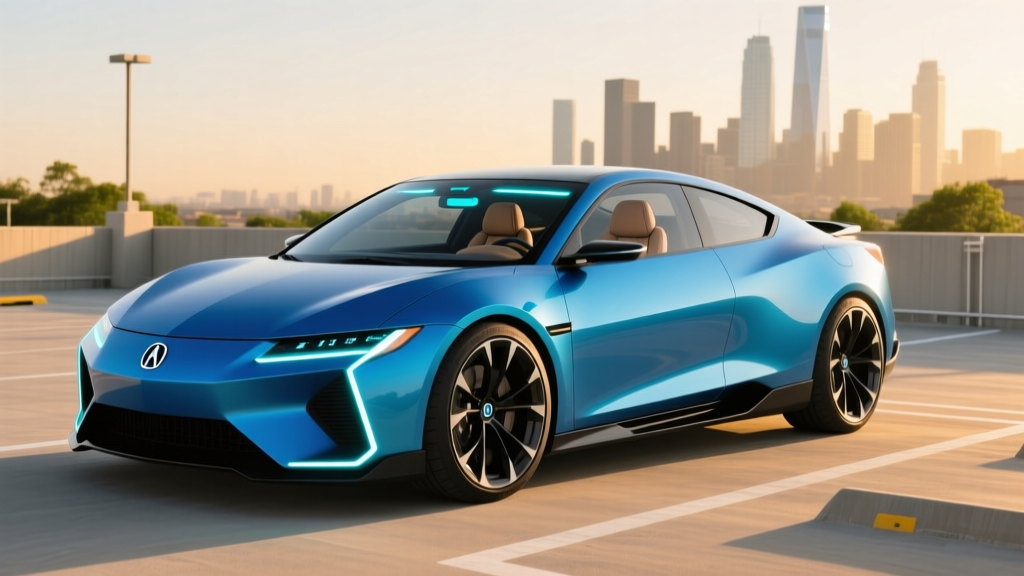
As of early 2026, Acura has not officially confirmed a production RSX electric model. However, Honda's new 0 Series EV platform — debuting with models like the Honda 0 SUV and Saloon sedan — is widely expected to underpin a compact performance coupe or liftback that could carry the RSX nameplate. If it arrives, expect a dual-motor AWD layout producing roughly 300–400 hp, an EPA range target in the 280–320 mile range, DC fast charging at up to 200+ kW, and a starting MSRP likely between $45,000 and $55,000. Until Acura makes a formal announcement, all specifications remain preliminary and estimated.
Why the Acura RSX Electric Rumors Won't Stop
The original Acura RSX (2002–2006) was a compact sport coupe beloved for its high-revving engine, precise shifter, and accessible performance. When Honda CEO Toshihiro Mibe announced in early 2024 that the company would revive iconic nameplates on its next-generation EV architecture, enthusiast forums immediately speculated about an RSX return. Honda's "0 Series" platform promises thin batteries, lightweight construction, and rear-wheel-drive or all-wheel-drive configurations — all traits that align with a sporty coupe revival.
Acura's current U.S. lineup consists entirely of SUVs (RDX, MDX, ZDX) and one sedan (the Integra). A compact performance EV would fill a significant gap and compete directly with vehicles like the Hyundai Ioniq 5 N, the Tesla Model 3 Performance, and the forthcoming electric offerings from European brands. Honda's own 0 Series announcement confirmed that multiple models would launch between 2026 and 2030, leaving room for an Acura-badged performance variant.
Estimated Specs: What a Platform Suggests
While Acura has not released official RSX electric specifications, Honda's 0 Series platform details and industry reporting allow us to construct a reasonable estimate. The table below reflects projected figures based on the platform's published capabilities and segment benchmarks.
| Specification | Estimated / Projected | Segment Benchmark |
|---|---|---|
| Platform | Honda 0 Series (dedicated EV) | Hyundai E-GMP |
| Drivetrain | Dual-motor AWD (likely) | Tesla Model 3 Perf. AWD |
| Horsepower | 300–400 hp (est.) | Ioniq 5 N: 641 hp |
| Battery Capacity | ~75–85 kWh usable (est.) | Model 3 LR: 79 kWh |
| Battery Chemistry | NMC (likely for performance trim) | — |
| EPA Range (est.) | 280–320 miles | Model 3 LR: 341 mi |
| DC Fast Charge Peak | 200–250 kW (est.) | Ioniq 5: 240 kW |
| 10–80% DCFC Time | ~20–25 minutes (est.) | Ioniq 5: ~18 min |
| Level 2 AC Charging | ~11 kW onboard charger | Industry standard |
| 0–60 mph | 4.5–5.5 seconds (est.) | Model 3 Perf.: 2.9 sec |
| Starting MSRP (est.) | $45,000–$55,000 | Ioniq 5 N: $66,000 |
| Battery Warranty | 8 yr / 100,000 mi (expected) | Federal minimum standard |
Real-world range caveat: If the RSX electric achieves an EPA rating near 300 miles, expect real-world highway driving at 70–80 mph to yield roughly 240–270 miles. Cold-weather operation (below 32°F) could reduce that by an additional 15–25%, bringing effective range to approximately 200–230 miles in winter highway conditions. These are typical reductions for NMC-equipped performance EVs and are not unique to Honda's platform.
EV vs. Gas: How an RSX Electric Would Compare to the Original
The 2006 Acura RSX Type-S produced 201 hp from a 2.0-liter inline-four and returned an EPA-rated 24 mpg combined. Let's compare what a modern electric successor would look like on paper and at the pump — or charger.
| Metric | 2006 RSX Type-S (Gas) | RSX Electric (Estimated) |
|---|---|---|
| Horsepower | 201 hp | 300–400 hp |
| 0–60 mph | ~6.4 sec | ~4.5–5.5 sec (est.) |
| Fuel/Energy Cost per Mile | ~$0.13/mi (gas at $3.10/gal, 24 mpg) | ~$0.04/mi (home L2 at $0.14/kWh) |
| Annual Fuel/Energy (12,000 mi) | ~$1,550 | ~$480 (home charging) |
| Annual Maintenance | ~$600–$900 | ~$200–$400 |
| EPA Range / Tank | ~320 mi (13.2-gal tank) | ~280–320 mi (est.) |
| "Refuel" Time | ~5 minutes | ~20–25 min (10–80% DCFC) |
| CO₂ Tailpipe Emissions | ~370 g/mi | 0 g/mi (grid-dependent upstream) |
The electric version would deliver substantially more power and lower per-mile operating costs, but at a higher purchase price and with longer refueling times on road trips. The trade-off is familiar to anyone who has cross-shopped EVs against their gas predecessors: you gain instant torque and lower running costs, but you surrender the five-minute fill-up and the sub-$30,000 entry price the original RSX enjoyed.
Ownership Cost Breakdown: What to Budget
If the RSX electric launches near $50,000, here is what a five-year ownership horizon looks like compared to a similarly priced gas sport coupe. This assumes 12,000 miles per year, a mix of 80% home charging and 20% public DC fast charging, and a residential electricity rate of $0.14/kWh.
| Cost Category (5 Years) | RSX Electric (Est. $50K) | Gas Sport Coupe (~$45K) |
|---|---|---|
| Purchase Price (MSRP) | $50,000 | $45,000 |
| Federal Tax Credit (§30D) | Up to $7,500 (see eligibility below) | $0 |
| Effective Purchase Price | $42,500 (if full credit applies) | $45,000 |
| Fuel / Energy (5 yr) | ~$3,200 | ~$7,750 |
| Maintenance (5 yr) | ~$1,500 | ~$3,750 |
| Insurance (5 yr avg.) | ~$9,000–$11,000 | ~$7,000–$9,000 |
| Home Charger Install (L2) | $500–$2,000 (one-time) | $0 |
| Estimated 5-Year Total | $56,700–$60,200 | $63,500–$65,500 |
Tax credit reality check: The federal §30D clean vehicle credit offers up to $7,500, but eligibility depends on multiple factors that change frequently. As of 2026, the vehicle must meet MSRP caps ($55,000 for sedans/coupes), the buyer must fall under income thresholds ($150,000 single / $300,000 joint filers), and the battery must satisfy critical-mineral and component-sourcing requirements that have tightened significantly since the Inflation Reduction Act. The credit can now be transferred to the dealer at point of sale, effectively reducing the purchase price upfront — but only if the specific vehicle configuration qualifies. Always verify current eligibility at IRS.gov before assuming you will receive the full amount.
Charging Realities: Home, Public, and Road Trips
Whether an RSX electric fits your life depends heavily on your charging situation. Here is what each level looks like in practice:
| Charging Level | Power | Miles Added per Hour | Typical Use Case |
|---|---|---|---|
| Level 1 (120V outlet) | ~1.4 kW | ~4–5 mi/hr | Overnight top-up; insufficient as primary |
| Level 2 (240V home) | 7.7–11.5 kW | ~25–40 mi/hr | Daily charging; full battery in 8–10 hours |
| DC Fast Charge | 200–250 kW (peak) | ~600+ mi/hr (at peak) | Road trips; 10–80% in ~20–25 min |
Home charging is the make-or-break factor. If you have a garage or driveway where a Level 2 (240V) charger can be installed, daily EV ownership is remarkably convenient — plug in at night, wake up to a full battery. Installation costs typically range from $500 to $2,000 if your electrical panel has sufficient capacity (a 200-amp panel is standard for most modern homes). If a panel upgrade to 200A is needed, costs can jump to $2,500–$5,000. Always get a quote from a licensed electrician before purchasing.
Road-trip charging requires planning. On a 300-mile highway drive, you would need one DC fast-charge stop. Honda has committed to adopting the NACS (Tesla Supercharger) connector for its North American EVs, which means an RSX electric would likely access Tesla's Supercharger network — currently the most reliable and extensive DC fast-charging infrastructure in the U.S. with over 25,000 stalls. This is a significant advantage over CCS-only vehicles, which rely on networks like Electrify America and EVgo that have historically had lower uptime rates.
Public charging costs more. While home charging at $0.14/kWh yields roughly $0.04/mile, public DC fast chargers often charge $0.30–$0.50/kWh, pushing the per-mile cost to $0.10–$0.15/mile — approaching gas-car territory. Budget accordingly if you cannot charge at home regularly.
Common Misconceptions About Buying an EV Like the RSX Electric
| Myth | Fact |
|---|---|
| "EV batteries need replacing every few years and cost $20,000." | Modern NMC and LFP batteries are warrantied for 8 years/100,000 miles at a minimum of 70% capacity retention. Real-world degradation data from fleet operators shows most batteries retain 85–90% capacity after 100,000 miles. Full replacement is rare and typically only needed after a defect or extreme degradation outside the warranty curve. |
| "I'll be stranded because charging stations are everywhere unreliable." | Tesla's Supercharger network (which Honda/Acura EVs will access via NACS) consistently reports 99%+ uptime. The real risk is in rural corridors and apartment-dweller scenarios without home charging — not in typical suburban/highway driving patterns. |
| "EVs are worse in cold weather, so they're impractical." | Range does drop 15–30% in freezing temperatures due to battery chemistry and cabin heating demands. A vehicle rated at 300 miles EPA may deliver 210–255 miles in winter. This is manageable with preconditioning (warming the battery while plugged in) and route planning, but it is a real limitation buyers in northern climates should factor in. |
| "The $7,500 tax credit applies to every EV." | §30D eligibility requires meeting MSRP caps, buyer income limits, and increasingly strict battery-sourcing rules. Many EVs qualify for only a partial credit or none at all depending on the model year and configuration. The point-of-sale transfer option (effective 2024) simplifies the process but does not expand eligibility. |
| "EV insurance is always vastly more expensive." | EV insurance premiums run 10–25% higher on average due to repair costs and battery replacement risk, but the gap has narrowed as insurers gain experience. Shop quotes from multiple carriers — some now offer EV-specific policies with competitive rates. |
Decision Framework: Should You Wait for the RSX Electric?
Wait for the Acura RSX Electric if:
- You are an RSX enthusiast who values the brand heritage and wants a compact sport coupe with Acura's premium interior and tech.
- You have reliable Level 2 home charging access and a daily commute under 80 miles round-trip.
- You are willing to wait potentially until late 2026 or 2027 for production to begin, and you accept that early-model-year pricing and availability may be limited.
- You want NACS/Supercharger access from day one for road-trip confidence.
Look at Available EVs Now if:
- You need a vehicle within the next 3–6 months and cannot wait for an unannounced model.
- You want verified EPA range, real-world charging data, and established reliability records rather than projections.
- Your budget is under $45,000 — the RSX electric is likely to start above that threshold.
- You live in an apartment or area without home-charging feasibility and need to evaluate public-charging practicality with a proven model.
Consider a Plug-in Hybrid (PHEV) Instead if:
- You regularly drive 300+ miles in a single day and cannot rely on charging stops.
- You lack home charging and your area has limited public DC fast-charging infrastructure.
- You want electric commuting (20–40 miles EV-only) with gas-engine flexibility for longer trips, without range anxiety.
What First-Time EV Buyers Should Know Before Committing
If the RSX electric — or any EV — is your first electric vehicle, these practical realities will shape your ownership experience more than any spec sheet:
1. Charge where you park. The single biggest predictor of EV satisfaction is home charging access. If you can install a Level 2 charger, daily life with an EV is simpler than a gas car (no fuel stops). If you cannot, evaluate your public-charging options honestly before buying.
2. kW and kWh are not the same thing. Kilowatts (kW) measure power — how fast you can charge or how hard the motors can push. Kilowatt-hours (kWh) measure energy — how much the battery holds, which determines range. A 200 kW charger does not fill an 80 kWh battery in 24 minutes; the charge curve tapers significantly above 80% state of charge to protect battery longevity.
3. EPA range is a best-case scenario. The EPA test cycle includes low-speed city driving and moderate highway speeds. Real-world highway driving at 75+ mph, with air conditioning or heat running, will typically deliver 80–90% of the sticker range. In freezing weather, expect 70–85%.
4. Preconditioning matters. Most modern EVs can warm or cool the battery while plugged in before you leave. This preserves range and enables faster DC charging. If you set a departure time in the vehicle's app, the car will precondition automatically — use this feature.
5. Tires wear faster. EVs are heavier and deliver instant torque, which accelerates tire wear by roughly 15–25% compared to equivalent gas cars. Budget for tire replacement every 25,000–35,000 miles rather than the 40,000–50,000 miles typical for ICE vehicles.
Frequently Asked Questions
Has Acura officially confirmed the RSX electric?
No. As of early 2026, Acura has not issued a formal announcement for an RSX electric model. Honda has confirmed that multiple 0 Series EVs will launch between 2026 and 2030, and industry reporting suggests a performance-oriented Acura variant is under consideration. All specifications discussed here are estimates based on platform capabilities and segment analysis.
Will the Acura RSX electric qualify for the $7,500 federal tax credit?
It is too early to confirm. §30D eligibility depends on the vehicle's MSRP (must be ≤$55,000 for a coupe/sedan), the buyer's adjusted gross income, and the battery's critical-mineral and component-sourcing compliance. Honda's battery supply chain for the 0 Series platform is still being finalized. Check fueleconomy.gov closer to launch for confirmed eligibility.
What charging connector will the RSX electric use?
Honda has committed to adopting the NACS (North American Charging Standard) connector for its North American EVs, replacing CCS1. This means an RSX electric would natively access Tesla Superchargers without an adapter — a major advantage for road-trip charging reliability and coverage.
How does an electric RSX compare to the Tesla Model 3 Performance?
The Model 3 Performance (341 mi EPA range, 510 hp, 2.9-sec 0–60, ~$55,000 MSRP) would be the primary benchmark. An RSX electric would likely offer less outright power but could differentiate with Acura's premium interior materials, a sport-coupe design language, and potentially a lower starting price. Direct comparison will only be possible once Acura releases official specifications.
Should I buy an EV now or wait for upcoming models like the RSX electric?
If your current vehicle needs replacement within six months, do not wait for an unconfirmed model. The EV market already offers strong options in the $40,000–$55,000 range with proven range, charging, and reliability data. If you have flexibility and are specifically drawn to the RSX heritage and Acura brand, monitoring Honda's official announcements through mid-2026 is reasonable — but have a backup plan in case the model is delayed or repositioned.