The Quick Answer on the Acura RSX Electric
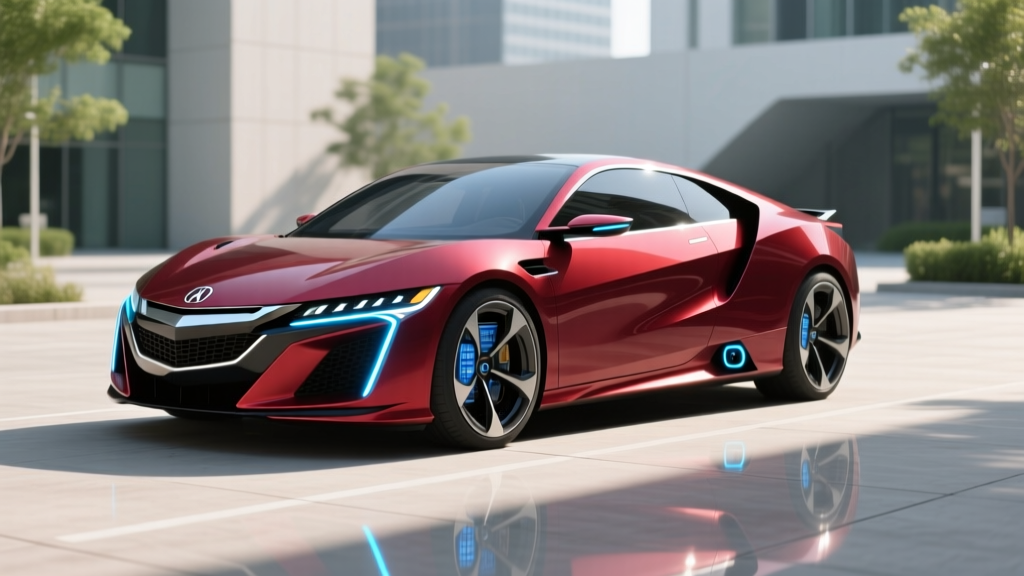
The Acura RSX nameplate is officially returning — but this time as an all-electric performance coupe built on Honda's new dedicated EV platform. As of early 2026, Acura has confirmed the RSX electric will debut as a 2027 model year vehicle, positioned as a premium sport compact EV competing against vehicles like the Tesla Model 3 Performance and the upcoming electric Hyundai Ioniq 6 N. The RSX electric has not yet gone on sale. All specifications discussed here are based on Acura's official announcements, Honda's EV platform disclosures, and informed projections from the Honda 0 Series concept vehicles shown at CES. Expect final EPA range figures, pricing, and trim details to be confirmed closer to the on-sale date in late 2026 or early 2027.
Why Acura Is Bringing Back the RSX as an EV
The original Acura RSX (2002–2006) was a cult-favorite sport compact — a lightweight, high-revving coupe that carved out a niche among driving enthusiasts. Nearly two decades after its discontinuation, Acura confirmed in January 2024 at CES that the RSX nameplate would return as part of the Honda 0 Series EV lineup. This isn't a nostalgia cash-grab. It's a strategic play.
Honda's EV strategy has been turbulent. The Prologue, a rebadged GM Ultium vehicle, served as a stopgap. The Honda 0 Series — including the Saloon sedan, Space-Hub minivan concept, and the RSX coupe — represents Honda's ground-up EV architecture. This new platform promises:
- A thin battery pack enabling a low seating position and sporty driving dynamics
- Rear-wheel-drive bias with optional all-wheel-drive
- Steer-by-wire technology (no mechanical connection between steering wheel and wheels)
- Targeted lightweight construction — a direct response to the 4,500+ lb curb weights plaguing most EVs
The RSX electric is meant to be the halo performance model of this lineup — the car that proves Honda can still engineer a driver's car in the electric era.
Projected Specs: Range, Battery, and Charging
Because the RSX electric has not entered production, final EPA-certified numbers are not available. However, Honda has shared enough about the 0 Series platform to build a credible projection table. The following estimates are based on Honda's stated battery architecture (thin, high-density cells), the Saloon concept's disclosed "300+ mile range" target, and competitive positioning against vehicles in the $45,000–$60,000 sport EV segment.
| Specification | Projected Value | Notes |
|---|---|---|
| Battery Capacity | ~75–85 kWh (usable) | Thin-pack design; chemistry TBD (likely NMC for energy density) |
| EPA Range (est.) | 280–320 miles | Honda targets 300+ mi; sport tuning may reduce efficiency |
| Real-World Highway Range | ~240–270 miles | Expect 15–20% reduction at 75+ mph sustained |
| DC Fast Charge Peak | ~200–250 kW | 10–80% in est. 20–25 minutes |
| Level 2 Charging | ~11.5 kW (48A) | Full charge in ~7–8 hours |
| Powertrain | RWD standard / AWD optional | Dual-motor AWD likely on Type S variant |
| Horsepower (est.) | 300 HP (base) / 450+ HP (Type S) | Competitive with Model 3 Performance (510 HP) |
| 0–60 mph (est.) | ~5.0 sec (RWD) / ~3.5 sec (AWD Type S) | Honda prioritizes handling over straight-line speed |
| Charging Port | NACS (native) | Honda committed to NACS for all new EVs from 2025+ |
| Starting MSRP (est.) | $45,000–$50,000 (base) / $58,000+ (Type S) | Final pricing TBD |
RSX Electric vs. the Competition: Where It Fits
The sport compact EV segment is growing. Here's how the projected RSX electric stacks up against current and upcoming rivals that buyers in this space are cross-shopping:
| Vehicle | EPA Range | 0–60 mph | Peak DC Charge | Base MSRP |
|---|---|---|---|---|
| Tesla Model 3 Performance (2026) | 315 mi | 2.9 sec | 250 kW | $52,990 |
| Hyundai Ioniq 6 N (2026) | ~260 mi | 3.2 sec | 350 kW | $55,000 (est.) |
| BMW i4 M50 (2026) | 282 mi | 3.7 sec | 205 kW | $67,795 |
| Acura RSX Electric (2027, projected) | 280–320 mi | ~3.5–5.0 sec | ~200–250 kW | $45,000–$50,000 |
The RSX electric's key differentiator won't be raw acceleration. Tesla and Hyundai already own the sub-3-second 0–60 bragging rights. Honda's engineering DNA is in chassis balance, steering feel, and weight management. If the 0 Series platform delivers on its "thin and light" promise — Honda has publicly targeted under 4,400 lbs for the Saloon, which suggests the smaller RSX coupe could land near 4,000 lbs — it would be one of the lightest EVs in the segment. That translates to better tire wear, more engaging cornering, and potentially better real-world efficiency than the numbers suggest.
EV vs. Gas: What the RSX Electric Means for Your Wallet
For buyers who remember the original RSX as a $22,000 gas coupe getting 27 MPG combined, the jump to a $45,000+ EV is a paradigm shift. Here's a realistic cost comparison between the projected RSX electric and a comparable sport compact gas car (using the 2026 Honda Civic Si as a spiritual successor benchmark):
| Category | RSX Electric (est.) | Civic Si (2026) |
|---|---|---|
| Purchase Price (MSRP) | $47,000 | $31,500 |
| Federal Tax Credit (§30D) | Up to $7,500* | $0 |
| Effective Purchase Price | ~$39,500 | $31,500 |
| Fuel/Energy (5 yrs, 60K mi) | $3,600 (home charging at $0.14/kWh) | $7,800 (premium at $3.80/gal, 28 MPG) |
| Maintenance (5 yrs) | $1,200 (tires, cabin filter, fluid top-offs) | $3,200 (oil, brakes, filters, spark plugs) |
| Insurance (5 yrs, avg.) | $9,500 (EV premium ~15–20% higher) | $7,800 |
| Total 5-Year Cost | ~$53,800 | ~$50,300 |
*The §30D federal tax credit of up to $7,500 requires meeting IRS sourcing, MSRP, and buyer income requirements. The credit can now be transferred to the dealer at point of sale as an instant discount. Eligibility for the RSX electric will depend on Honda's battery supply chain at time of purchase — not guaranteed. Always verify current rules with a tax professional.
The math shows what most EV ownership analyses reveal: the EV costs more upfront but narrows the gap significantly over five years through fuel and maintenance savings. The RSX electric won't be cheaper than a Civic Si over five years — but you're getting a fundamentally different class of vehicle in terms of refinement, instant torque delivery, and technology. The comparison to a BMW i4 or a Tesla Model 3 Performance is more apples-to-apples, and against those, the RSX could be competitively priced.
What First-Time EV Buyers Need to Know Before Reserving
If the RSX electric is your first EV, or you're coming from the original RSX or another gas sport compact, here are the practical realities that spec sheets don't capture:
Home Charging Is the Foundation
The single biggest ownership satisfaction factor for EVs is reliable home charging. Without it, you're dependent on public infrastructure that varies wildly in reliability. For the RSX electric with a ~80 kWh battery and an 11.5 kW onboard charger, a Level 2 home charger (240V, 48A) will add roughly 30–35 miles of range per hour and fully replenish the battery overnight in 7–8 hours. Budget $800–$2,000 for a quality Level 2 unit (ChargePoint Home Flex, Emporia V2, or Tesla Wall Connector) and $500–$2,500 for professional installation, depending on whether your electrical panel needs an upgrade. If you live in an apartment or condo without charging access, weigh this seriously before committing.
Cold Weather Changes Everything
Lithium-ion batteries lose efficiency in cold temperatures. At 20°F, expect the RSX electric to deliver roughly 70–80% of its EPA range — so a 300-mile EPA rating becomes 210–240 miles in winter. Preconditioning the battery (warming it while plugged in before driving) mitigates this, but only if you have access to a plug at home or work. If you live in the upper Midwest or Northeast, this isn't a dealbreaker — millions of EV owners manage it — but it should shape your range expectations and trip planning.
Charging Speed Isn't a Single Number
When Acura eventually publishes a "peak DC charge rate" of, say, 250 kW, understand that this is the maximum rate the car can accept at a low state of charge (SoC). In practice, charging follows a curve: the car pulls peak power from roughly 10–40% SoC, then progressively tapers to protect the battery. A 250 kW peak might average 150–170 kW across a 10–80% session, translating to roughly 20–25 minutes. This is still fast enough for a highway rest stop, but don't plan your road trip around the headline number alone.
NACS Opens the Supercharger Network
Honda's commitment to the North American Charging Standard (NACS) means the RSX electric will have native access to Tesla's Supercharger network — the most reliable and extensive DC fast-charging infrastructure in the U.S., with over 25,000 stalls as of 2026. This is a significant advantage over CCS-only vehicles, which rely on Electrify America, EVgo, and other networks with more variable uptime. On a road trip, Supercharger access means you're almost always within 30 minutes of a reliable, high-speed charge.
Common Misconceptions About the RSX Electric
| Myth | Fact |
|---|---|
| "It won't feel like a real RSX without a high-revving engine." | EVs deliver instant torque from 0 RPM. The RSX electric will feel more responsive off the line than any original RSX ever did. Whether Honda can replicate the emotional engagement of a VTEC engine via sound design and steering calibration remains to be seen — and is the real question. |
| "The battery will need replacing in a few years." | Modern EV batteries are warrantied for 8 years/100,000 miles (federally mandated minimum). Real-world degradation data from similar NMC packs shows ~10–15% capacity loss after 150,000 miles. Honda's 0 Series platform includes advanced thermal management to further slow degradation. |
| "I can't take it on road trips." | With ~300 miles of range and 20–25 minute DC fast charging sessions, the RSX electric will handle road trips with a brief stop every 2.5–3 hours. NACS/Supercharger access makes route planning straightforward via the Acura app or built-in navigation. |
| "The $7,500 tax credit is guaranteed." | The §30D credit requires the vehicle to meet critical mineral and battery component sourcing thresholds, the buyer to fall under income caps ($150K single / $300K joint), and the vehicle MSRP to stay under $55,000 for sedans/coupes. Honda's supply chain decisions and your personal tax situation both affect eligibility. Check IRS.gov before assuming. |
| "It's basically a rebadged Honda." | The RSX electric rides on Honda's 0 Series platform, but Acura engineers handle suspension tuning, steering calibration, interior materials, and sound insulation. The Prologue showed that Acura's EV execution can differ meaningfully from Honda's — expect the RSX to feel distinctly premium. |
Decision Framework: Should You Wait for the RSX Electric?
The "Wait or Buy Now" Guide
Wait for the RSX electric if:
- You want a sport compact EV with Honda/Acura chassis DNA and aren't in a rush to buy
- You prioritize handling and lightweight feel over raw 0–60 numbers
- You want native NACS/Supercharger access without adapters
- Your budget is $45,000–$60,000 and you can wait until late 2026 or 2027
- You have home Level 2 charging or can install it before delivery
Buy something now if:
- You need a vehicle within the next 3–6 months — the RSX electric is still over a year from deliveries
- Maximum range (350+ miles) is your top priority — consider a Tesla Model 3 Long Range or Lucid Air Pure
- You want proven long-term reliability data — the 0 Series platform is brand-new with no ownership track record
- Your budget is under $40,000 — look at the Hyundai Ioniq 5, Chevrolet Equinox EV, or a used Tesla Model 3
- You want a performance EV today — the Tesla Model 3 Performance ($52,990, 315 mi, 2.9 sec 0–60) is available now and is exceptionally capable
Consider a hybrid alternative if:
- You lack reliable home charging and don't want to depend on public infrastructure
- Your daily commute is short but you frequently take 400+ mile road trips without wanting to plan charging stops
- The Toyota GR86 or Subaru BRZ still satisfy your sport-coupe itch at ~$30,000 with no range concerns
What to Watch Between Now and Launch
As Acura moves the RSX electric toward production, these are the data points that will determine whether it's worth your reservation deposit:
- Final EPA range certification — Will Honda hit 300+ miles, or will sport tuning and larger wheels drop it below 280?
- Confirmed pricing by trim — A base price under $48,000 keeps the §30D tax credit MSRP cap ($55,000 for cars) safely in play. A Type S above $55,000 would eliminate federal credit eligibility entirely.
- Battery chemistry and warranty details — NMC offers higher energy density but may have different long-term degradation characteristics than LFP. Honda's warranty terms (capacity retention percentage at 8 years/100K miles) will signal confidence.
- Steer-by-wire execution — The Toyota bZ4X and Lexus RZ have shown that steer-by-wire can feel disconnected if not calibrated well. Honda needs to nail this to deliver on the "driver's car" promise.
- Real-world charging curve data — Peak kW means little without knowing the sustained rate and taper profile. Independent testing at launch will reveal the truth.
Frequently Asked Questions
Is the Acura RSX electric confirmed for production?
Yes. Acura confirmed the RSX nameplate will return as an all-electric model as part of the Honda 0 Series lineup. It was previewed at CES 2024 alongside the Saloon and Space-Hub concepts. Acura has stated it will go on sale as a 2027 model year vehicle, with expected availability in late 2026 or early 2027.
Will the RSX electric qualify for the $7,500 federal tax credit?
It's too early to say definitively. Eligibility under IRS §30D rules depends on (1) the base MSRP staying under $55,000 for a coupe/sedan, (2) battery components and critical minerals meeting domestic-sourcing thresholds at time of sale, and (3) the buyer's adjusted gross income falling under $150,000 (single) or $300,000 (joint). Honda is actively building its North American battery supply chain through its Ohio EV hub, which improves the odds — but verify eligibility at time of purchase.
Will the RSX electric have a manual transmission or simulated gears?
Honda has not confirmed this. The Hyundai Ioniq 5 N simulates an 8-speed dual-clutch transmission with artificial shift points and even synthetic engine sound. Toyota's electric concepts have shown manual-like engagement modes. Given Honda's enthusiast heritage, some form of driver engagement mode is likely — but whether it's a simulated manual, a paddle-shift regen mode, or something novel remains to be seen.
How will the RSX electric compare to the original RSX in terms of driving feel?
The original RSX Type-S weighed roughly 2,700 lbs and made 200 HP from a 2.0L naturally aspirated four-cylinder that revved to 8,100 RPM. The electric RSX will almost certainly weigh 4,000+ lbs and make 300+ HP with instant torque. It will be objectively faster and more refined, but heavier. Honda's 0 Series platform aims to counteract EV weight through a low center of gravity, double-wishbone front suspension, and rear-drive bias. Whether it captures the raw, analog charm of the original is the central question enthusiasts will want answered at first drive reviews.
Can I reserve the Acura RSX electric now?
Not yet. As of early 2026, Acura has not opened reservations or provided a specific on-sale date. Follow Acura's official channels for reservation announcements, which are expected in mid-to-late 2026 ahead of the first deliveries.
What charging connector will the RSX electric use?
Honda has committed to the NACS (North American Charging Standard) connector for all new EVs. This means the RSX electric will natively plug into Tesla Superchargers without an adapter, as well as the growing number of NACS-equipped public chargers from Electrify America, EVgo, and other networks transitioning to the standard.
Sources: Honda 0 Series official page, IRS New Clean Vehicle Credit (§30D), EPA Fuel Economy. All projected specifications are estimates based on available manufacturer disclosures and competitive segment analysis. Final specs subject to change. This article will be updated as Acura releases confirmed production details.