Quick Verdict: The ZDX Bridges Acura Heritage and Electric Practicality
The 2026 Acura ZDX (often searched alongside the MDX as Acura's electric flagship SUV) is a three-row-capable, dual-motor electric SUV built on GM's Ultium platform. With EPA-estimated range up to 325 miles on the single-motor variant and 285 miles for the performance-oriented Type S, the ZDX targets luxury EV buyers who want Acura's design language with modern electrification. Starting around $58,000 before incentives, it undercuts the BMW iX and Audi Q8 e-tron while offering competitive range and DC fast-charging capability peaking at 190 kW.
Spec Table: 2026 Acura ZDX at a Glance
| Specification | A-Spec RWD | A-Spec AWD | Type S AWD |
|---|---|---|---|
| EPA Range | 325 mi | 310 mi | 285 mi |
| Battery (usable) | 102 kWh (NMC) | 102 kWh (NMC) | 102 kWh (NMC) |
| Horsepower | 358 hp | 490 hp | 500 hp |
| 0–60 mph | ~6.2 sec | ~5.0 sec | ~4.5 sec |
| Drivetrain | RWD (single motor) | Dual-motor AWD | Dual-motor AWD (perf.) |
| Max DC Charge Rate | 190 kW | 190 kW | 190 kW |
| 10–80% DC Time | ~32 min | ~32 min | ~32 min |
| Level 2 Rate | 11.5 kW (34 mi/hr) | 11.5 kW (34 mi/hr) | 11.5 kW (34 mi/hr) |
| MPGe (combined) | 94 MPGe | 89 MPGe | 82 MPGe |
| Efficiency | 36 kWh/100mi | 38 kWh/100mi | 41 kWh/100mi |
| Cargo (behind 2nd row) | ~28 cu ft | ~28 cu ft | ~28 cu ft |
| Cargo (max, folded) | ~58 cu ft | ~58 cu ft | ~58 cu ft |
| Base MSRP | $58,545 | $62,045 | $73,045 |
| Battery Warranty | 8 yr / 100,000 mi | 8 yr / 100,000 mi | 8 yr / 100,000 mi |
Sources: fueleconomy.gov, Acura Newsroom. MPGe and range figures are EPA estimates.
Charging Speed: DC Fast Charging and Home Level 2
The ZDX uses GM's Ultium battery architecture with a maximum DC fast-charge rate of 190 kW. On a compatible 350 kW charger (Electrify America, EVgo, or Ionity stations), the 10–80% session takes approximately 32 minutes. However, the charging curve tapers noticeably above 80% — a full 10–100% session will take closer to 55–60 minutes due to the cell-balancing phase. Preconditioning the battery via the navigation-routed preconditioning feature is essential for achieving peak charge rates; arriving at a DC station without preconditioning can add 5–10 minutes to your session.
| Charging Level | Power | Miles Added per Hour | Use Case |
|---|---|---|---|
| Level 1 (120V) | 1.4 kW | ~4 mi/hr | Emergency / overnight trickle |
| Level 2 (240V, 48A) | 11.5 kW | ~34 mi/hr | Home / workplace daily charging |
| DC Fast Charge | Up to 190 kW | ~190 mi in 30 min (peak) | Road trips, highway corridors |
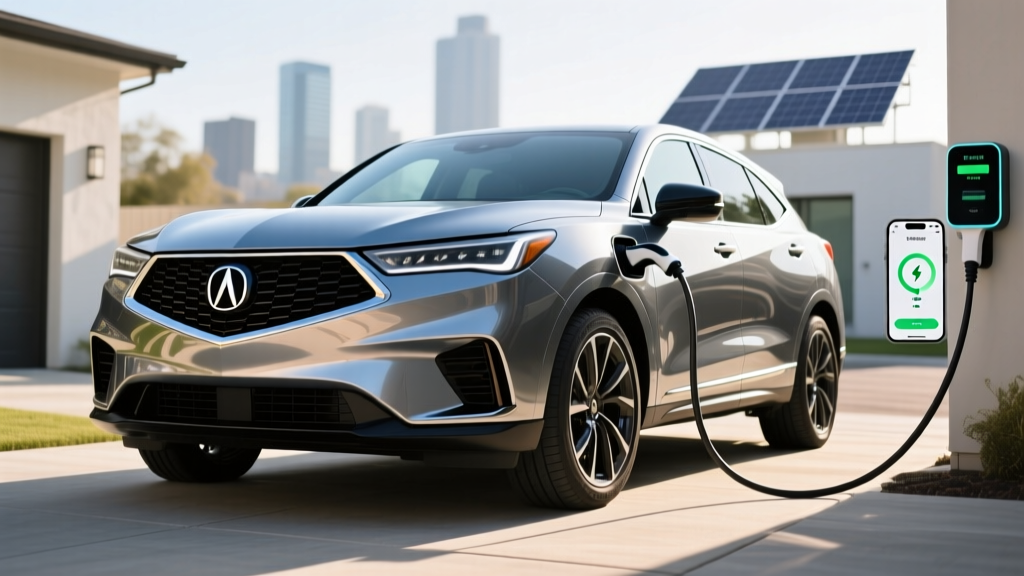
For home charging, the onboard 11.5 kW charger means a full 0–100% charge takes roughly 9.5 hours on a Level 2 wall connector — ideal for overnight replenishment. Acura includes a dual-level mobile charge cord with the vehicle, though most owners will install a dedicated 240V/48A home station. The ZDX ships with a CCS1 connector, and Acura provides access to a growing network of chargers via the Acura app, including future compatibility with NACS-equipped Tesla Superchargers through an adapter (expected availability varies by region).
Performance and Driving Dynamics
The ZDX A-Spec AWD delivers 490 horsepower from its dual-motor setup, achieving a 0–60 mph time of approximately 5.0 seconds. The Type S bumps output to 500 hp with a retuned suspension, larger Brembo brakes, and a 4.5-second sprint. Both AWD variants use an electronically controlled torque distribution system that can send up to 100% of rear-axle torque to a single wheel during aggressive cornering — a signature Acura trait carried over from the MDX Type S.
Ride quality in the A-Spec is compliant and quiet, with well-damped road isolation. The Type S stiffens the setup noticeably, trading some comfort for flatter cornering. At 5,800–6,000 lbs depending on trim, the ZDX carries its Ultium mass predictably, though the steering lacks the precision feedback of lighter competitors like the Genesis GV60 or Porsche Macan EV. Regenerative braking offers three levels via paddle shifters, but the ZDX does not support true one-pedal driving to a full stop — a notable omission compared to Chevrolet and Hyundai EVs.
Pricing, Tax Credits, and Total Cost
The 2026 ZDX lineup breaks down as follows:
| Trim | Base MSRP | As-Tested (typical options) | Federal Credit Eligibility |
|---|---|---|---|
| A-Spec RWD | $58,545 | $60,500 | Up to $7,500 (see caveats) |
| A-Spec AWD | $62,045 | $64,800 | Up to $7,500 (see caveats) |
| Type S AWD | $73,045 | $76,500 | Up to $7,500 (see caveats) |
Federal Tax Credit (§30D) Caveats: The ZDX is assembled in Spring Hill, Tennessee, which satisfies the North American assembly requirement. However, full $7,500 eligibility depends on two factors: (1) the critical minerals and battery component sourcing thresholds set by the IRS, which tighten annually, and (2) buyer income caps ($300,000 joint / $225,000 head of household / $150,000 single). The ZDX's MSRP falls under the $80,000 SUV cap, so all trims qualify on price. Always verify current-year sourcing compliance on IRS.gov before purchase, and confirm point-of-sale transfer availability with your dealer.
After a potential $7,500 credit, the A-Spec AWD effectively starts around $54,500 — undercutting the BMW iX xDrive50 ($87,000) and Audi Q8 e-tron ($74,000) significantly. State incentives (California's $2,000 CVRP, for example) may further reduce cost, but vary by jurisdiction.
Interior, Tech, and Standout Features
The ZDX cabin uses an 11.3-inch touchscreen running Acura's Google Built-in infotainment system with native Google Maps, Google Assistant, and Play Store apps. A 11.0-inch digital instrument cluster provides customizable range and navigation previews. Wireless Apple CarPlay and Android Auto are standard, as is a 14-speaker Bang & Olufsen audio system on A-Spec and a 17-speaker system on Type S.
AcuraWatch driver-assist features include adaptive cruise control with stop-and-go, lane centering, blind-spot monitoring, and rear cross-traffic braking. This is a SAE Level 2 system — the driver must remain attentive with hands on or near the wheel at all times. The ZDX does not offer hands-free highway driving comparable to GM's Super Cruise (reserved for Cadillac) or Ford's BlueCruise.
Notable drawbacks include the absence of a front trunk (frunk) — the Ultium platform packaging here prioritized cabin space — and rear visibility compromised by the sloping roofline. Third-row seating is available but best suited for children; adults will find it tight on legroom (28.4 inches) compared to the MDX's third row.
Pros and Cons
- Competitive 310–325 mi EPA range in A-Spec trims
- 190 kW DC charging with 10–80% in ~32 min
- Strong value proposition vs BMW iX and Audi Q8 e-tron
- Type S offers genuine performance (4.5 sec 0–60)
- Google Built-in infotainment is responsive and useful
- Federal tax credit eligible (subject to sourcing/income rules)
- No frunk (front trunk) for additional storage
- No true one-pedal driving mode
- Third row is cramped for adults
- Steering lacks feedback vs sportier EV SUVs
- Type S range drops to 285 mi EPA (real-world ~240 mi)
- No hands-free Level 2+ highway driving feature
Who Should Buy the Acura ZDX?
The ZDX is best suited for luxury-minded families and commuters who want a three-row electric SUV without paying BMW or Audi prices. The A-Spec AWD hits the sweet spot: 310 miles of range, dual-motor traction for inclement weather, and a $62,000 starting price that drops further with incentives. Road trippers will appreciate the 190 kW charging, though the ~32-minute 10–80% time is merely competitive, not class-leading (the Hyundai Ioniq 5 and Kia EV6 achieve 10–80% in ~18 minutes at 240+ kW).
The Type S appeals to driving enthusiasts who want Acura performance heritage in an electric package, but the 285-mile EPA range (and ~240-mile real-world figure) makes it less ideal for frequent long-distance travel. If towing is a priority, note the ZDX is rated for 3,500 lbs — adequate for light trailers but below the Rivian R1S (7,700 lbs) or Tesla Model X (5,000 lbs).
Frequently Asked Questions
What is the real-world range of the 2026 Acura ZDX?
The EPA rates the A-Spec RWD at 325 miles and the AWD at 310 miles, but expect 260–280 miles in highway driving at 70+ mph. The Type S achieves roughly 240–255 miles real-world. Cold weather (below 32°F) reduces range by 15–25%.
How fast does the ZDX charge at home and on the road?
At home on Level 2 (240V/48A), the ZDX charges at 11.5 kW, adding about 34 miles per hour or a full charge in ~9.5 hours. On DC fast chargers, it peaks at 190 kW with a 10–80% time of approximately 32 minutes.
Does the 2026 Acura ZDX qualify for the $7,500 federal tax credit?
It qualifies on MSRP (under the $80,000 SUV cap) and North American assembly (Tennessee). Full eligibility depends on battery sourcing compliance (which changes annually) and buyer income limits. Verify on IRS.gov and ask your dealer about point-of-sale transfer.
Is the ZDX worth buying vs the BMW iX or Tesla Model X?
The ZDX offers better value than the iX (which starts at $87,000) and comparable range, though the iX has a more premium interior and faster 200 kW charging. The Model X has more range (348 mi) and towing capacity but costs $80,000+. The ZDX wins on price-to-range ratio in the luxury EV SUV segment.
Does the ZDX have a third row?
Yes, an optional third row is available, but it's best for children. Adult legroom in the third row is limited to 28.4 inches, and cargo space behind the third row drops to roughly 10 cu ft.
What is the battery warranty on the Acura ZDX?
Acura covers the Ultium battery pack for 8 years or 100,000 miles, whichever comes first, with a capacity retention threshold of 70% of original capacity.