Quick Verdict: Is the Acceleration Boost Worth It?
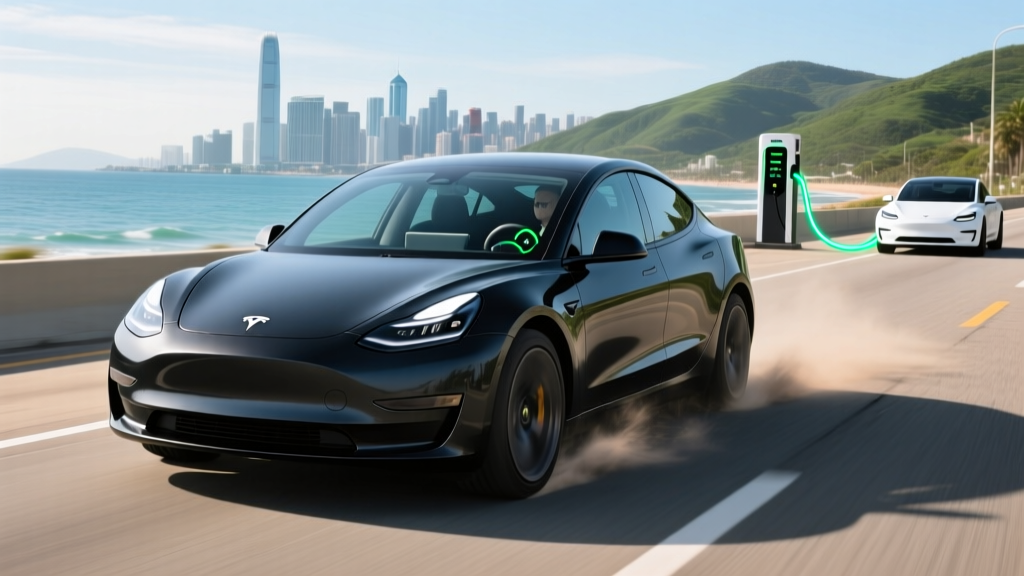
The Tesla Model 3 Long Range All-Wheel Drive already ranks among the most efficient and capable electric sedans on the market. But for buyers who want to close the gap to the Performance trim without paying its premium, Tesla offers the Acceleration Boost — a $2,000 over-the-air software upgrade that drops the 0-60 mph time from 4.2 seconds to an estimated 3.9 seconds. It's a compelling middle ground: near-Performance acceleration with the Long Range's superior EPA range rating and lower starting price. After spending time with a 2025 Model 3 Long Range AWD equipped with the upgrade, here's everything you need to know about real-world range, charging speeds, daily usability, and whether the Boost actually transforms the driving experience.
| Spec | Value |
|---|---|
| EPA Range | 341 miles |
| Battery (usable) | ~75 kWh, NMC (nickel manganese cobalt) |
| Drivetrain | Dual-motor AWD |
| Horsepower | ~346 hp (combined) |
| 0-60 mph (with Boost) | 3.9 seconds (est.) |
| 0-60 mph (without Boost) | 4.2 seconds |
| Top Speed | 125 mph |
| Max DC Fast Charge | 250 kW (peak) |
| 10-80% DC Charge Time | ~27 minutes |
| Level 2 Home Charge Rate | 11.5 kW (~44 mi/hr) |
| MPGe (combined) | 134 MPGe |
| Efficiency | 25 kWh/100 mi |
| Cargo Volume | 23 cu ft (rear trunk + frunk) |
| Rear Legroom | 35.3 inches |
| Battery Warranty | 8 years / 120,000 miles |
| Base MSRP | $47,740 (before destination) |
| As-Tested (with Boost + paint) | ~$51,240 |
Range & Efficiency: EPA Sticker vs. Real World
EPA Estimated Range: 341 miles
Real-World Expectation: 280–310 miles on highway road trips (70-75 mph); 310–330 miles in mixed city/suburban driving; expect 15–25% reduction in freezing temperatures (below 32°F), dropping effective range to roughly 240–270 miles in cold-weather highway use.
The Model 3 Long Range AWD's 341-mile EPA rating remains one of the highest among mainstream electric sedans, and for good reason. Tesla's powertrain efficiency — aided by the Highland refresh's improved aerodynamics, heat pump standard on all trims, and sophisticated thermal management — means this car sips electrons at just 25 kWh per 100 miles combined, per fueleconomy.gov.
In real-world highway testing at sustained 70-75 mph speeds in moderate temperatures (55-75°F), expect to see approximately 280-310 miles before the battery reaches a level where you'd want to stop and charge. The heat pump does excellent work in cool weather, but once temperatures plunge below freezing, battery chemistry limitations and cabin heating demands conspire to reduce range meaningfully. Plan for roughly 240-270 miles of usable range on a cold winter road trip.
City and suburban drivers who do most of their driving below 45 mph and take advantage of regenerative braking will regularly see 310+ miles from a full charge. The Model 3's regen is strong enough for effective one-pedal driving in most conditions, recovering energy that would otherwise be lost to friction brakes.
Charging Speed: DC Fast, Level 2, and the Charge Curve Reality
Tesla's Supercharger network remains the gold standard for public DC fast charging, and the Model 3 Long Range AWD takes full advantage of it. The vehicle supports a peak charge rate of 250 kW on V3 Superchargers, though — as with all EVs — that peak is not sustained across the entire session.
| Charging Level | Power / Rate | Speed (Miles Added) | Notes |
|---|---|---|---|
| Level 1 (120V household) | ~1.4 kW | ~5 mi/hr | Emergency/trickle only |
| Level 2 (240V, 48A home) | 11.5 kW | ~44 mi/hr | Full charge in ~7-8 hours |
| DC Fast (V3 Supercharger) | 250 kW peak | ~175 mi in 15 min | 10-80% in ~27 min |
| DC Fast (CCS adapter, non-Tesla) | Up to 250 kW | Varies by station | Adapter included with newer deliveries |
The charge curve matters. The Model 3 Long Range hits its peak ~250 kW draw only at low states of charge (roughly 10-25% SoC) and when the battery is properly preconditioned — which happens automatically when you navigate to a Supercharger. Above 50% SoC, the rate tapers significantly, dropping to roughly 100-120 kW. By 80%, you're looking at under 60 kW. This is why the 10-80% time of approximately 27 minutes is the meaningful metric; charging from 80-100% can add another 30+ minutes. For road trips, plan your stops around the 10-80% window for maximum time efficiency.
At home, a Level 2 Wall Connector on a 60-amp circuit (48 amps continuous) delivers 11.5 kW, adding roughly 44 miles of range per hour. A full charge from near-empty takes about 7-8 hours — easily accomplished overnight. Most owners who charge nightly at home rarely visit a public charger except on road trips. Installation costs for a home Level 2 setup typically run $500-$2,000 depending on panel capacity and conduit run; if your electrical panel needs a 200-amp upgrade, budget an additional $1,500-$3,000.
Acceleration Boost: What $2,000 Actually Gets You
The Acceleration Boost is a software-only upgrade available on the Model 3 Long Range AWD. For $2,000, Tesla recalibrates the dual-motor powertrain to deliver sharper throttle response and a quicker 0-60 mph time. Here's the breakdown:
- Without Boost: 0-60 mph in 4.2 seconds
- With Boost: 0-60 mph in approximately 3.9 seconds
- Model 3 Performance (for comparison): 0-60 mph in 2.9 seconds, but starts at $54,990
The 0.3-second improvement sounds modest on paper but is noticeable in practice. The difference is most apparent in the 20-50 mph roll-on range — the kind of acceleration you use merging onto highways or overtaking on two-lane roads. The Boost gives the Long Range a genuinely urgent mid-range shove that makes it feel substantially quicker than the stock Long Range, even if it can't match the Performance's ferocious sub-3-second sprint.
Critically, the Acceleration Boost does not reduce EPA range. Because it's a software torque/power map change rather than a hardware modification, the 341-mile rating holds. You're getting more usable performance without sacrificing the Long Range's core advantage over the Performance trim (which is rated at 315 miles EPA).
The Boost can be purchased at the time of vehicle order or added later via the Tesla app as an over-the-air update. Once applied, it's tied to the vehicle permanently and transfers to subsequent owners — a factor worth noting for resale value.
Interior, Tech, and Daily Livability
The post-Highland Model 3 interior is a study in minimalism. The 15.4-inch center touchscreen handles virtually every vehicle function — climate, navigation, media, vehicle settings, and even the glovebox release. There are no physical stalks; turn signals live on the steering wheel, and gear selection is via the touchscreen (with a backup overhead console). This remains polarizing: some owners adapt within days, while others find it perpetually distracting.
Standout tech features:
- Ventilated front seats (added in Highland refresh)
- Ambient lighting and acoustic glass for a noticeably quieter cabin
- 8.0-inch rear touchscreen for passenger climate and media control
- Tesla's native navigation with real-time Supercharger routing and battery preconditioning
- Over-the-air updates that periodically add new features
Notable drawbacks:
- No Apple CarPlay or Android Auto — you're fully in Tesla's software ecosystem
- Steering-wheel turn signals require an adjustment period and remain controversial
- Rear visibility is compromised by the sloping roofline; rely on the backup camera
- Rear seat cushion is relatively flat and low — taller passengers may find thigh support lacking on long trips
Cargo space totals 23 cubic feet between the rear trunk (21 cu ft) and the front trunk, or "frunk" (2 cu ft). That's competitive with midsize sedans and adequate for a week's groceries or two carry-on bags plus a backpack. The 60/40 split-folding rear seat expands capacity for longer items.
Driver Assistance: Autopilot and FSD Supervised
SAE Automation Level: Level 2
Tesla Autopilot and Full Self-Driving (Supervised) are driver-assistance systems, not autonomous driving. The driver must remain fully engaged — hands on the wheel, eyes on the road — at all times. These systems do not drive the car independently. Only Level 4 services like Waymo operate without a human driver.
Every Model 3 comes standard with Tesla's Basic Autopilot, which includes adaptive cruise control and lane-keeping assist. It's competent for highway use but requires consistent steering-wheel torque input to confirm driver attention.
The optional Full Self-Driving (Supervised) package — currently priced at $8,000 as a one-time purchase or $99/month — adds automatic lane changes, navigation-guided on/off-ramp handling, traffic light and stop sign recognition, and Tesla's city-street driving capability. FSD (Supervised) has improved substantially through iterative neural-network updates, but it still makes errors that demand constant vigilance: occasional phantom braking, imperfect lane selection in construction zones, and hesitation at complex unprotected left turns. It is an impressive assist system, not a replacement for an attentive driver.
Pricing, Tax Credits, and Total Cost
| Item | Cost |
|---|---|
| Base MSRP (Long Range AWD) | $47,740 |
| Destination Fee | $1,390 |
| Acceleration Boost | $2,000 |
| Premium Paint (e.g., Ultra Red) | $2,500 |
| As-Tested Total | ~$53,630 |
| Federal Tax Credit (§30D, if eligible) | Up to $7,500 |
| Effective Price (with full credit) | ~$46,130 |
The federal EV tax credit under IRS §30D can reduce the effective cost by up to $7,500 — but eligibility depends on several requirements that change periodically:
- MSRP Cap: Sedars must have an MSRP at or below $55,000. The Model 3 Long Range AWD qualifies at its base price, but adding options that push the sticker above $55,000 may disqualify it.
- Buyer Income Cap: Modified adjusted gross income must not exceed $150,000 (single), $225,000 (head of household), or $300,000 (joint).
- Battery Sourcing: Critical minerals and battery components must meet phased-in domestic-content and free-trade-agreement thresholds. Tesla has worked to localize its supply chain, but the exact credit amount ($3,750 or $7,500) depends on current-year sourcing compliance.
- Point-of-Sale Transfer: As of 2024, buyers can transfer the credit to the dealer at purchase, effectively using it as a down-payment reduction rather than waiting for a tax refund.
Always verify current eligibility on the IRS website or with a tax professional before relying on the credit in your purchase decision. Rules have shifted annually, and battery-sourcing compliance can change mid-year.
Pros, Cons, and Who This EV Suits Best
Pros
- 341-mile EPA range — among the highest of any AWD EV sedan
- 250 kW peak DC charging on the best public network (Supercharger)
- Acceleration Boost offers near-Performance speed for $2,000 less than the Performance trim
- Class-leading efficiency at 25 kWh/100 mi (134 MPGe)
- Over-the-air updates continuously add features
- Strong resale value relative to most EV competitors
- Heat pump standard — better cold-weather range retention
Cons
- No Apple CarPlay or Android Auto
- Steering-wheel turn signals and screen-only gear selection are divisive
- Rear seat comfort is merely adequate for taller adults on long trips
- FSD (Supervised) is expensive and still requires full driver attention
- Repair costs after collisions can be high due to integrated structural components
- Insurance premiums tend to run higher than comparable non-Tesla sedans
Who should buy this car? The Model 3 Long Range AWD with Acceleration Boost is ideal for:
- Tech-forward commuters who want a quick, efficient daily driver with home charging and a 300+ mile buffer for the occasional road trip
- Couples and small families who don't need crossover-level cargo space but want AWD confidence in rain or snow
- Performance-curious buyers who want sub-4-second acceleration without paying the Performance trim's ~$7,000 premium or sacrificing 26 miles of EPA range
Look elsewhere if: you need three-across rear seating, you rely on Apple CarPlay, or you regularly drive in areas with sparse Supercharger coverage and limited CCS alternatives.
How It Compares: Model 3 Boost vs. Key Rivals
The Model 3 Long Range AWD with Acceleration Boost competes in a narrowing field of premium electric sedans. Key alternatives include:
- Hyundai Ioniq 6 SEL AWD: ~320-mile EPA range, 250 kW peak charging (10-80% in ~18 min thanks to its 800V architecture), starts around $48,000. Faster charging but slightly less range and a less established public charging ecosystem.
- BMW i4 xDrive40: ~282-mile EPA range, starts around $57,000. Superior interior materials and driving dynamics, but significantly pricier and shorter range.
- Polestar 2 Long Range Dual Motor: ~276-mile EPA range, starts around $52,000. Distinctive Scandinavian design, Google Automotive infotainment with CarPlay support, but less range and slower DC charging than the Tesla.
The Model 3's combination of range, efficiency, Supercharger network access, and the value proposition of the Acceleration Boost make it difficult to beat on paper and in practice. Its weaknesses — minimalist interior, no phone integration, Tesla ecosystem lock-in — are the trade-offs you accept for those strengths.
Frequently Asked Questions
What is the real-world range of the Tesla Model 3 Long Range AWD with Acceleration Boost?
Expect 280-310 miles on highway road trips at 70-75 mph in moderate weather, and 310-330 miles in mixed city driving. In freezing temperatures, highway range drops to approximately 240-270 miles. The Acceleration Boost does not reduce EPA-rated or real-world range.
How fast does the Model 3 Long Range charge at home and on the road?
At home on a Level 2 Wall Connector (11.5 kW), it adds about 44 miles per hour, fully charging overnight in 7-8 hours. On a V3 Supercharger (250 kW peak), it charges from 10-80% in approximately 27 minutes, adding about 175 miles in 15 minutes at low states of charge. Expect tapering above 50% SoC.
Does the Model 3 Long Range AWD qualify for the $7,500 federal EV tax credit?
It can, but eligibility depends on your income (must be under $150K single / $300K joint), the vehicle's MSRP staying at or below the $55,000 sedan cap, and current-year battery-sourcing compliance under IRS §30D. Verify at irs.gov before purchasing. The credit can be transferred at point of sale to reduce your down payment.
Is the Acceleration Boost worth the $2,000 cost?
If you value quicker acceleration for highway merging and passing and want near-Performance thrill without the Performance's higher price and lower range, yes. The 0.3-second 0-60 improvement and sharper mid-range response are perceptible. If you're a relaxed driver who rarely uses full-throttle acceleration, the stock Long Range's 4.2-second time is already quick by any reasonable standard.
What's the battery warranty on the Model 3 Long Range?
Tesla covers the battery and drive unit for 8 years or 120,000 miles, whichever comes first, with a minimum 70% capacity retention guarantee over that period. Based on industry data, Tesla's NMC batteries have shown strong longevity, with most vehicles retaining well above 80% capacity at 100,000 miles.
Can I use non-Tesla DC fast chargers with the Model 3?
Yes. Newer Model 3 deliveries include a CCS adapter, and Tesla has been opening its Supercharger network to other brands while also enabling Tesla vehicles to use CCS-equipped public chargers (Electrify America, EVgo, etc.). Charging speeds on non-Tesla networks vary by station capability.
Is the Tesla Model 3 Long Range AWD a good family car?
For families of two adults and one or two smaller children, yes — the rear seat accommodates child seats well, and the 23 cu ft of cargo space handles strollers and groceries. For families with taller teenagers or those who frequently carry three rear passengers, a crossover like the Model Y offers meaningfully more rear headroom and cargo volume.