Quick Verdict: What AAA and Real Owners Say About the 2026 Tesla Model Y
The Tesla Model Y remains one of the most searched, compared, and debated electric vehicles on the market — and organizations like AAA have taken notice. When buyers search for "AAA Tesla" evaluations, they're typically looking for an independent, data-backed assessment of whether Tesla's best-selling crossover actually delivers on its promises. In this review, we go beyond surface-level impressions to give you the exact numbers: EPA range, real-world highway and cold-weather expectations, DC fast-charging curves, Level 2 home charging rates, battery chemistry trade-offs, and the full pricing picture including 2026 federal tax credit eligibility under IRS §30D.
The 2026 Tesla Model Y (refreshed for the current generation) continues to set the benchmark for efficiency and charging infrastructure access, but it's not without compromises. Ride quality, panel fit, and the absence of traditional physical controls remain polarizing. Here's everything you need to decide if it's the right EV for your driveway.
2026 Tesla Model Y Core Specifications
| Spec | Long Range AWD | Performance AWD | Standard Range RWD |
|---|---|---|---|
| EPA Range | 320 miles | 295 miles | 300 miles |
| Battery (usable) | 78.1 kWh (NMC) | 78.1 kWh (NMC) | 60 kWh (LFP) |
| Drivetrain | Dual Motor AWD | Dual Motor AWD | Single Motor RWD |
| Horsepower | 384 hp | 510 hp | 295 hp |
| 0–60 mph | 4.8 sec | 3.5 sec | 5.8 sec |
| MPGe (combined) | 122 MPGe | 111 MPGe | 128 MPGe |
| Efficiency (kWh/100mi) | 28 kWh/100mi | 30 kWh/100mi | 26 kWh/100mi |
| Max DC Fast Charge | 250 kW | 250 kW | 175 kW |
| 10–80% DC Time | ~25 min | ~25 min | ~30 min |
| Level 2 Home Rate | 11.5 kW (~44 mi/hr) | 11.5 kW (~44 mi/hr) | 11.5 kW (~44 mi/hr) |
| Base MSRP | $48,990 | $53,990 | $44,990 |
| Cargo Volume (rear seats up) | 30.2 cu ft | 30.2 cu ft | 30.2 cu ft |
| Cargo Volume (rear seats folded) | 72.0 cu ft | 72.0 cu ft | 72.0 cu ft |
| Front Trunk (Frunk) | 4.1 cu ft | 4.1 cu ft | 4.1 cu ft |
| Rear Legroom | 41.6 in | 41.6 in | 41.6 in |
Source: EPA fueleconomy.gov, Tesla.com specifications. Figures reflect 2026 model year.
Real-World Range: What the EPA Sticker Doesn't Tell You
Long Range AWD: EPA 320 miles — expect approximately 265–285 miles in mixed highway driving at 70–75 mph. In freezing temperatures (below 32°F), plan for 210–240 miles due to battery chemistry limitations and cabin heating demands.
Performance AWD: EPA 295 miles — expect approximately 245–260 miles highway, 190–215 miles in cold weather.
Standard Range RWD: EPA 300 miles — expect approximately 250–270 miles highway. LFP chemistry actually handles cold slightly better than NMC in terms of long-term degradation, but you'll still see a 15–20% range reduction in sub-freezing conditions.
The Model Y's efficiency is genuinely class-leading. At 26–28 kWh per 100 miles, it extracts more miles per kilowatt-hour than nearly every competing crossover. On a 75°F day driving 65 mph on flat terrain, hitting 300+ miles in the Long Range is realistic. But most buyers drive faster than 65 mph, carry passengers, and live in climates that aren't always mild. AAA's own testing methodology and independent EV range tests consistently show that highway speeds above 70 mph reduce effective range by 10–15% compared to EPA estimates. Add winter conditions and the gap widens further.
The key mitigating factor: Tesla's heat pump (standard on all 2026 Model Y trims) significantly reduces the energy penalty of cabin heating compared to older resistive-heater EVs. You'll still lose range in cold weather, but less than competitors without heat pumps.
Charging Speed: DC Fast Charging and Home Level 2
Charging speed is arguably the Model Y's strongest practical advantage, largely because of Tesla's Supercharger network — widely regarded as the most reliable public DC fast-charging infrastructure in North America. But the vehicle's onboard charging hardware matters just as much as the network it plugs into.
| Charging Level | Power | Speed (Miles Added per Hour) | Notes |
|---|---|---|---|
| Level 1 (120V household) | ~1.4 kW | ~4–5 mi/hr | Emergency/top-up only; overnight adds ~50 mi |
| Level 2 (240V home) | 11.5 kW | ~44 mi/hr | Full charge in ~7–8 hours; ideal daily solution |
| DC Fast Charge (Long Range/Perf) | Peak 250 kW | ~1,000 mi/hr at peak | 10–80% in ~25 min; tapers sharply above 80% |
| DC Fast Charge (Standard Range) | Peak 175 kW | ~700 mi/hr at peak | 10–80% in ~30 min; LFP can charge to 100% daily |
Understanding the charge curve: The 250 kW peak on Long Range and Performance trims is only sustained roughly between 10–30% State of Charge (SoC). From 30–60%, expect approximately 150–175 kW. Above 80%, the rate drops to under 50 kW to protect the battery. This is why we quote 10–80% times rather than 0–100% — charging the final 20% can take as long as the first 70%.
NACS connector advantage: The 2026 Model Y uses the North American Charging Standard (NACS) port natively. While other automakers are transitioning to NACS in 2025–2026, Tesla owners have always had seamless Supercharger access without adapters. With Ford, GM, Rivian, and others now gaining Supercharger access via adapters or native NACS ports, the exclusivity advantage is narrowing — but native integration still means fewer connection headaches.
Home charging setup: The Model Y accepts up to 11.5 kW on Level 2, which requires a 60-amp circuit (48-amp continuous draw). Most homes with a 200-amp electrical panel can accommodate this, but older homes with 100-amp panels may need an upgrade — budget $1,500–$3,000 for a panel upgrade if necessary. The Tesla Wall Connector costs approximately $475 and delivers the full 11.5 kW. Installation by a licensed electrician typically runs $500–$2,000 depending on the distance from your panel to the charging location.
Battery Chemistry: LFP vs NMC — Which Model Y Should You Choose?
The 2026 Model Y lineup splits battery chemistry by trim, and this decision has real ownership implications:
| Factor | LFP (Standard Range RWD) | NMC (Long Range / Performance) |
|---|---|---|
| Energy Density | Lower — smaller battery, less range | Higher — more range in same space |
| Degradation | Slower long-term; tolerates 100% SoC | Faster if regularly charged to 100% |
| Daily Charge Recommendation | 100% daily is fine | 80% daily; 100% for trips only |
| Cold Performance | Slightly worse range in cold | Better cold-weather energy delivery |
| Cycle Life | 3,000+ cycles to 80% capacity | 1,500–2,000 cycles to 80% capacity |
| Cost | Lower — enables cheaper trim | Higher — premium trims |
If you're a commuter who charges at home every night and rarely road-trips, the LFP Standard Range is arguably the smarter long-term ownership play. You can charge to 100% daily without degradation anxiety, and the battery will likely outlast the car. If you need maximum range for frequent road trips or live in a cold climate where every mile counts, the NMC Long Range is worth the premium — just follow the 80% daily charge guideline.
Pricing, Trims, and Federal Tax Credit Eligibility
| Trim | Base MSRP | As-Tested (Typical Options) | Est. Price After §30D Credit |
|---|---|---|---|
| Standard Range RWD | $44,990 | $46,490 (w/ FSD transfer) | ~$37,490 (if eligible) |
| Long Range AWD | $48,990 | $51,490 (w/ premium interior) | ~$41,490 (if eligible) |
| Performance AWD | $53,990 | $56,990 (w/ FSD + red paint) | ~$46,490 (if eligible) |
Federal tax credit (IRS §30D) eligibility for 2026: The Model Y qualifies for up to $7,500 in federal tax credits, but eligibility is not universal. Here's what determines whether you can claim it, per IRS guidelines:
- MSRP Cap: The vehicle must have an MSRP at or below $80,000 (SUVs/crossovers). All 2026 Model Y trims clear this threshold.
- Buyer Income Cap: Modified adjusted gross income must not exceed $150,000 (single), $225,000 (head of household), or $300,000 (joint filing).
- Battery Sourcing: A percentage of critical minerals and battery components must be sourced from the US or free-trade-agreement partners. Tesla's shifting supply chain means eligibility can change mid-year — always verify current status on the IRS qualified vehicles list before purchasing.
- Point-of-Sale Transfer: As of 2024, you can transfer the credit to the dealer at purchase, reducing your out-of-pocket cost immediately rather than waiting for tax filing. This applies to 2026 purchases as well.
Critical caveat: Battery sourcing requirements tighten annually. Always confirm current-year eligibility at fueleconomy.gov and consult a tax professional before relying on the credit in your purchase decision.
Performance, Ride, and Daily Driving Impressions
The Model Y's performance figures speak for themselves — a 3.5-second 0–60 time in the Performance trim puts it in sports car territory, and even the Standard Range RWD at 5.8 seconds is quicker than most gas-powered crossovers. Dual-motor AWD trims provide confident traction in rain and light snow, with torque vectoring that feels intuitive rather than intrusive.
The 2026 refresh improved ride quality with retuned dampers and better sound insulation — complaints about the harsh, crashy ride that plagued pre-2025 models have been substantially addressed. It's still firmer than a Hyundai Ioniq 5 or Ford Mustang Mach-E, but it no longer feels punishing over expansion joints and potholes.
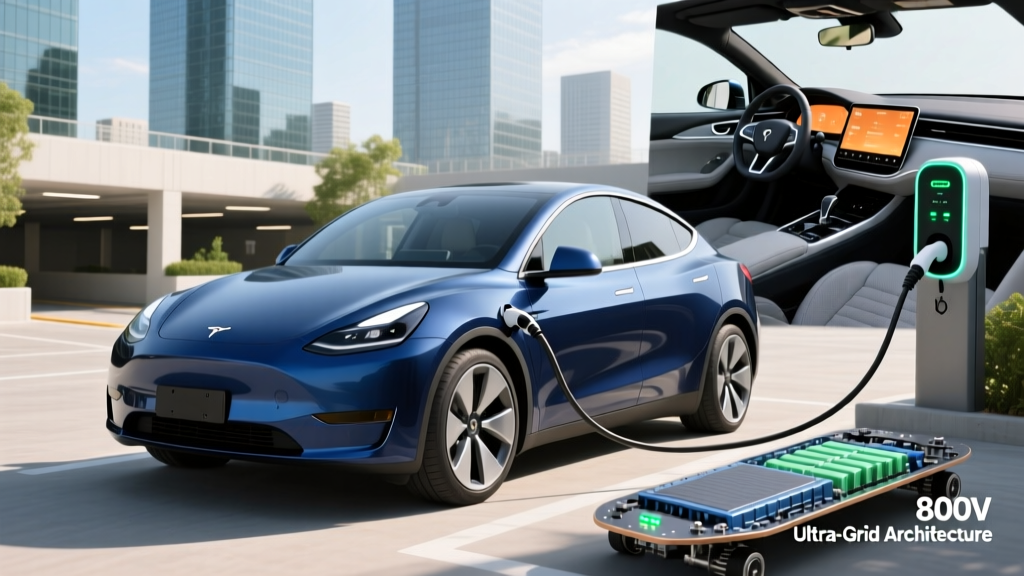
Interior and tech: The minimalist interior remains love-it-or-hate-it. Virtually all controls live on the 15.4-inch center touchscreen — there's no traditional instrument cluster, no physical climate buttons, and the turn signals are now on the steering wheel (no stalks). The infotainment system is responsive and feature-rich (Netflix, YouTube, gaming while charging), but the lack of Apple CarPlay and Android Auto continues to frustrate smartphone-integration buyers. Wireless phone charging and USB-C ports (front and rear) are standard.
Driver assistance (SAE Level 2): Tesla's Autopilot comes standard and includes adaptive cruise control, lane centering, and automatic emergency braking. Full Self-Driving (Supervised) is an optional $8,000 upgrade (or $99/month subscription) that adds automated lane changes, navigation-on-autopilot, and traffic light recognition. However, FSD remains an SAE Level 2 system — the driver must remain fully engaged, hands on or near the wheel, and eyes on the road at all times. It is not autonomous driving. Tesla's camera-only vision approach (no LiDAR or radar) means performance can degrade in heavy rain, fog, or direct low-angle sun glare.
Who the 2026 Tesla Model Y Suits Best
- Commuters with home charging: 300+ mile range covers virtually any daily commute, and Level 2 home charging means you start every morning with a full battery.
- Tech-forward families: Excellent cargo space (72 cu ft with seats folded), good rear legroom (41.6 in), and over-the-air updates that add features over time.
- Road trippers who value charging infrastructure: Tesla's Supercharger network remains the most reliable and widespread DC fast-charging option, with 250 kW V3 stalls along every major US corridor.
- Efficiency-focused buyers: At 26–28 kWh/100mi, the Model Y costs approximately $0.04–$0.06 per mile to charge on a national-average residential electricity rate of $0.16/kWh — roughly one-third the per-mile fuel cost of a comparable gas crossover.
- Buyers who prioritize physical buttons and traditional instrument clusters
- Those needing Apple CarPlay/Android Auto integration
- Heavy towing — the Model Y is rated for 3,500 lbs (Long Range AWD), below some competitors
- Buyers in areas with limited Supercharger density who want to use third-party DC networks (CCS adapters work but add friction)
Biggest Pros and Cons
- Class-leading efficiency (26–28 kWh/100mi)
- Supercharger network access — most reliable DC charging
- Strong real-world performance across all trims
- Over-the-air updates continuously add features
- Spacious cargo area (72 cu ft) with practical frunk
- Improved ride quality in 2026 refresh
- Heat pump standard for better cold-weather efficiency
- Strong resale value relative to most EVs
- No Apple CarPlay or Android Auto
- All-screen controls polarizing; no physical buttons
- Turn signals on steering wheel (no stalks) take adaptation
- FSD is expensive and remains Level 2 (not autonomous)
- Rear visibility limited by sloping roofline
- Insurance costs higher than segment average
- Panel fit variability still reported by some owners
- Supercharger exclusivity eroding as competitors gain access
Warranty Coverage and Battery Longevity
Tesla's warranty structure is competitive but not class-leading:
- Basic Vehicle Warranty: 4 years / 50,000 miles
- Battery & Drive Unit Warranty: 8 years / 120,000 miles (Long Range & Performance) or 8 years / 100,000 miles (Standard Range)
- Battery Capacity Threshold: Tesla warrants that the battery will retain at least 70% of its original capacity during the warranty period. If degradation drops below 70%, Tesla will repair or replace the battery.
Real-world degradation data from Tesla's own fleet reports and third-party tracking (such as Recurrent Auto) suggests that NMC Model Y batteries typically retain 90–95% capacity after 100,000 miles. LFP batteries in the Standard Range trim show even slower degradation curves, with many owners reporting 95%+ retention at similar mileages. Battery replacement outside of warranty, should it ever be needed, currently costs between $12,000–$16,000 depending on the pack — though this figure has been declining as battery costs fall industry-wide.
Is the 2026 Model Y Worth It vs. Key Competitors?
The Model Y doesn't exist in a vacuum. Its primary rivals include the Hyundai Ioniq 5, Ford Mustang Mach-E, Kia EV6, and the upcoming refreshed Chevrolet Equinox EV. Here's how the decision framework breaks down:
Choose the Tesla Model Y if: You prioritize charging infrastructure reliability, want the most efficient crossover in the segment, value over-the-air feature updates, and don't mind a screen-centric interface. The Supercharger network remains a decisive advantage for frequent road-trippers.
Choose the Hyundai Ioniq 5 or Kia EV6 if: You want 800V ultra-fast charging (up to 350 kW on compatible stations), prefer physical buttons alongside a touchscreen, need Apple CarPlay/Android Auto, or want a more compliant ride. The Ioniq 5's 10–80% time on a 350 kW charger is approximately 18 minutes vs. the Model Y's ~25 minutes on a 250 kW Supercharger.
Choose the Ford Mustang Mach-E if: You prefer a more traditional crossover driving feel, want BlueCruise (which allows hands-free driving on pre-mapped highways — still SAE Level 2), or need a dealer service network you can walk into locally.
Frequently Asked Questions
What is the real-world range of the 2026 Tesla Model Y?
The EPA rates the Long Range AWD at 320 miles, but expect approximately 265–285 miles in real-world highway driving at 70–75 mph. In freezing temperatures, plan for 210–240 miles. The Standard Range RWD (300 EPA) delivers roughly 250–270 miles highway in mild conditions.
How fast does the Model Y charge at home and on the road?
On a Level 2 home charger (240V, 60-amp circuit), the Model Y charges at 11.5 kW, adding approximately 44 miles of range per hour — a full overnight charge. On DC fast charging, Long Range and Performance trims peak at 250 kW and reach 10–80% in approximately 25 minutes. The Standard Range peaks at 175 kW with a 10–80% time of about 30 minutes.
Does the 2026 Tesla Model Y qualify for the $7,500 federal tax credit?
It can, but eligibility depends on your income (must be under $150K single / $300K joint), the vehicle's MSRP (all trims qualify under the $80K SUV cap), and current battery-sourcing compliance. The credit can be applied at the point of sale, reducing your purchase price immediately. Always verify current eligibility on the IRS qualified vehicles list before purchasing, as sourcing requirements change.
How does AAA rate Tesla vehicles?
AAA has historically given Tesla models positive ratings in its annual EV ownership cost studies, noting strong efficiency and lower-than-average fuel costs. However, AAA's surveys have also flagged owner concerns about build quality consistency, service center wait times, and the learning curve of a screen-only interface. AAA's charging cost research consistently shows that home-charged EVs like the Model Y offer significant per-mile savings over gasoline vehicles.
Is Tesla's Full Self-Driving worth the $8,000 cost?
For most buyers, no — not at the current price point. FSD (Supervised) is an SAE Level 2 driver-assist system, meaning you must remain fully engaged and ready to take over at any moment. It handles highway lane changes and navigation well in good conditions, but struggles with construction zones, complex intersections, and inclement weather. The $99/month subscription option is a lower-risk way to try it. Competing systems like GM's Super Cruise and Ford's BlueCruise offer hands-free highway driving (still Level 2) on mapped roads at no additional hardware cost.
What are the biggest drawbacks of the Model Y?
The most common owner complaints center on the lack of Apple CarPlay/Android Auto, the all-touchscreen control scheme (no physical climate or volume knobs), the steering-wheel-mounted turn signals, and higher-than-average insurance premiums. Some buyers also note that panel fit and paint quality, while improved in 2026, still lag behind legacy automakers like Hyundai and BMW.