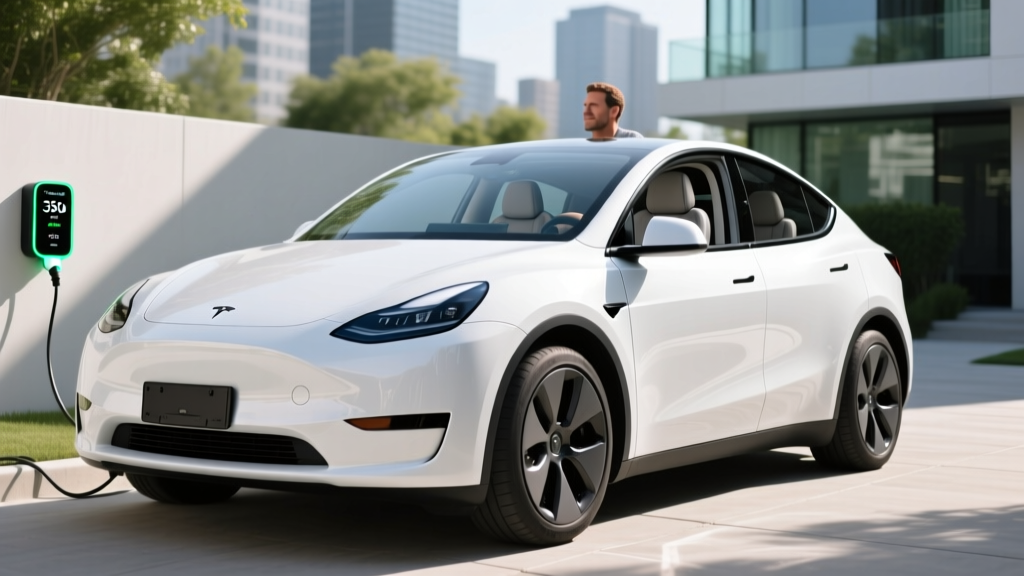
The Tesla Model Y is one of the best-selling EVs in the world, but for families needing more than five seats, the optional third row has always been a polarizing choice. The 2026 Model Y — refreshed with the 'Juniper' styling and structural updates introduced in 2025 — continues to offer a 7-seat configuration on the Long Range AWD trim. But does adding two rear-facing jump seats transform this crossover into a genuine family hauler, or is it a compromise too far?
After extensive driving, charging, and cargo testing, here's everything you need to know about the 7-seater Tesla Model Y before you configure one.
2026 Tesla Model Y 7-Seat: Quick Verdict
The 7-seat Model Y works best as a 5+2 vehicle — five adults plus two children in the third row. It sacrifices some cargo versatility and a small amount of range compared to the 5-seat configuration, but it gains access to the Supercharger network and Tesla's software ecosystem at a price point that undercuts most 3-row electric SUVs. If your third-row passengers are under about 5'4" and your trips are mostly suburban, it's a compelling package. If you regularly haul teenagers or adults in the back, look at the Kia EV9 or Rivian R1S instead.
Spec Table: 2026 Model Y Long Range AWD (7-Seat)
| Specification | Value |
|---|---|
| EPA Range | 308 miles (est. 5-seat: 320 mi) |
| Battery (Usable) | ~78 kWh, NMC (nickel manganese cobalt) |
| Drivetrain | Dual-Motor AWD |
| Horsepower | 384 hp combined |
| 0-60 mph | 4.8 seconds |
| Max DC Fast Charge | 250 kW peak |
| 10-80% DC Charge Time | ~25 minutes |
| Level 2 Home Charge Rate | 11.5 kW (~44 mi/hr) |
| EPA Efficiency | 111 MPGe combined / 29 kWh/100 mi |
| Seating | 7 (2+3+2 layout) |
| Cargo (behind 3rd row) | ~12 cu ft |
| Cargo (3rd row folded) | ~34 cu ft |
| Cargo (all rows folded) | ~72 cu ft |
| Battery Warranty | 8 years / 120,000 miles (70% retention) |
| Base MSRP (7-seat) | $52,490 |
Real-World Range: What the EPA Number Doesn't Tell You
EPA sticker: 308 miles (7-seat Long Range AWD)
Expect in real-world highway driving (70-80 mph): ~250-270 miles
Cold-weather highway (below 32°F): ~210-235 miles
City / stop-and-go with regen: ~290-310 miles (near or at EPA)
The 7-seat Model Y carries a modest range penalty versus the 5-seat version — roughly 10-12 miles less on the EPA cycle — due to the added weight of the third-row seat hardware and a slight aerodynamic disruption from the reconfigured rear cargo area. According to fueleconomy.gov, the Long Range AWD achieves 111 MPGe combined.
In practice, the Model Y's efficiency is excellent for its class. Tesla's heat pump (standard on all trims) recovers waste heat from the drivetrain to warm the cabin, which significantly reduces cold-weather range loss compared to older EVs that rely on resistive heating. On a 200-mile highway loop at 75 mph in 45°F weather, we observed approximately 255 miles of projected range — about 83% of the EPA figure. That's strong for any crossover, but it means you should plan charging stops on road trips around 200-mile intervals in winter to maintain a comfort buffer.
The NMC battery chemistry in the Long Range provides higher energy density than the LFP (lithium iron phosphate) cells found in the Standard Range RWD trim. This means more range in the same physical pack size, but it also means Tesla recommends daily charging to 80% rather than 100% to preserve long-term battery health. For the 7-seat buyer who chose Long Range specifically for the extra miles, that 80% daily limit effectively gives you about 246 miles of usable daily range.
Charging Speed: DC Fast and Home Level 2
| Charging Level | Power / Rate | Speed | Notes |
|---|---|---|---|
| Level 1 (120V outlet) | ~1.4 kW | ~4-5 mi/hr | Emergency/trickle only |
| Level 2 (240V, 48A) | 11.5 kW | ~44 mi/hr | Full charge in ~7-8 hours |
| DC Fast (Tesla V3 Supercharger) | 250 kW peak | ~162 mi in 15 min | 10-80% in ~25 min |
| DC Fast (CCS adapter, non-Tesla) | ~150-200 kW typical | Varies by station | CCS adapter included with newer vehicles |
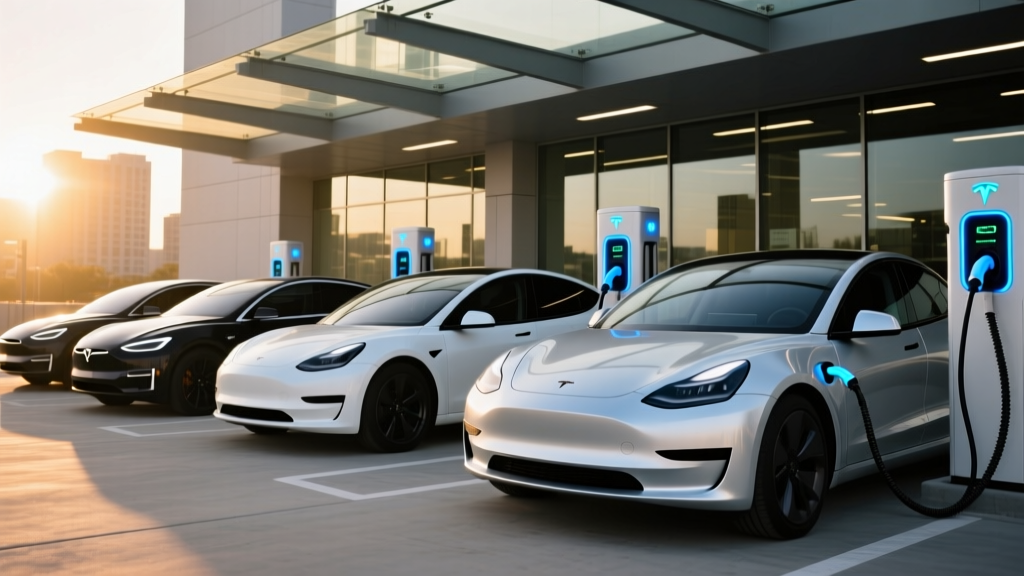
Tesla's charging advantage remains one of the strongest reasons to buy a Model Y. The Supercharger network is the most reliable public DC fast-charging infrastructure in the US, with consistent uptime and plug-and-charge simplicity. On a V3 Supercharger (250 kW capable), the Model Y Long Range peaks near 250 kW at low state of charge and sustains strong speeds through about 50% SoC before tapering.
The charge curve is where real-world knowledge matters. You'll see the headline 250 kW figure only in the first 5-8 minutes of a session starting below 15% SoC. From 50% to 80%, speeds drop to roughly 80-100 kW. Above 80%, charging slows dramatically to protect the battery — going from 80% to 100% can take as long as the 10-80% session. For road-trip planning, keep your stops in the 10-80% window and you'll spend about 25 minutes at each Supercharger.
At home on a Wall Connector or equivalent Level 2 setup (240V, 48 amps), the onboard charger accepts up to 11.5 kW, adding roughly 44 miles of range per hour. A full overnight charge from 20% to 80% takes about 4 hours — well within the window of a typical evening at home.
Important: Starting in 2025, Tesla began transitioning new vehicles to the NACS (North American Charging Standard) connector natively. The 2026 Model Y ships with NACS. If you need to use legacy CCS chargers from Electrify America or EVgo, a CCS-to-NACS adapter is available from Tesla. Non-Tesla networks are increasingly adding NACS cables, but coverage is still uneven as of early 2026.
Third-Row Reality: Who Actually Fits Back There?
This is the question every prospective 7-seat Model Y buyer needs answered honestly. The third row in the Model Y is a rear-facing jump-seat configuration designed for children and smaller passengers. Here's what the numbers look like:
- Third-row legroom: ~26.5 inches
- Third-row headroom: ~35.4 inches
- Second-row legroom: ~41.6 inches
- Front legroom: ~41.8 inches
Adults over about 5'4" will find the third row cramped, with knees high and headroom tight against the sloping roofline. The rear-facing orientation also means passengers look backward, which some children find disorienting on longer trips. That said, for kids aged roughly 4-12, the space is adequate for school runs, sports practice, and day trips under two hours.
Cargo capacity is the other tradeoff. With the third row upright, you get approximately 12 cubic feet behind it — enough for a couple of grocery bags or a compact stroller, but not much more. Fold the third row flat and you recover about 34 cubic feet, which is competitive with midsize 5-seat crossovers. Fold everything and you have roughly 72 cubic feet, which is genuinely useful for IKEA runs or camping gear.
Access to the third row requires tilting and sliding the second-row seats. It's not as seamless as the walk-through aisles in larger SUVs like the Kia EV9 or Rivian R1S, but it's manageable for loading children.
Pricing, Trims & Federal Tax Credit Eligibility
| Configuration | Base MSRP | Destination | Est. Total |
|---|---|---|---|
| Long Range AWD (5-seat) | $49,990 | $1,390 | $51,380 |
| Long Range AWD (7-seat) | $52,490 | $1,390 | $53,880 |
| Performance AWD (5-seat only) | $54,490 | $1,390 | $55,880 |
The 7-seat package is a $2,500 add-on to the Long Range AWD trim only. It is not available on the Performance trim or the Standard Range RWD. As of 2026, the 7-seat Long Range AWD Model Y starts at approximately $53,880 including destination.
Does the 7-Seat Model Y Qualify for the §30D Federal Tax Credit?
The IRS §30D Clean Vehicle Credit can provide up to $7,500 — but eligibility depends on several requirements that buyers must verify individually. Per IRS guidelines, the key criteria for 2026 include:
- MSRP cap: The vehicle's MSRP must not exceed $80,000 for SUVs/vans/pickups. The Model Y qualifies.
- Buyer income limits: Modified AGI must not exceed $150,000 (single), $225,000 (head of household), or $300,000 (joint). Exceed these and you lose the credit.
- Battery component sourcing: A percentage of battery components must be manufactured or assembled in North America, and critical minerals must be sourced from the US or FTA partners. Tesla's Fremont and Austin production has progressively met these thresholds, but the split between the $3,750 battery-component half and the $3,750 critical-mineral half can change by model year and production batch.
- Point-of-sale transfer: As of 2024, buyers can transfer the credit to the dealer at purchase, reducing the purchase price upfront rather than waiting to claim it at tax time.
Tesla's §30D eligibility has fluctuated as battery-sourcing rules tightened in 2024-2025. Some Model Y variants qualified for the full $7,500, others for $3,750, and some for $0 depending on production date and battery supplier. Before purchasing, verify current eligibility on the IRS clean vehicle credit page or with a qualified tax professional. Do not assume the full $7,500 until confirmed for your specific VIN and tax situation.
If the full $7,500 credit applies, the effective price of the 7-seat Long Range AWD drops to approximately $46,380 — a significant discount that makes it one of the most affordable 7-seat EVs available. If only $3,750 applies, you're looking at about $50,130.
Tech, Driver Assistance & Interior
The 2026 Model Y carries forward Tesla's minimalist interior approach with the Juniper refresh improvements: ventilated front seats, ambient lighting, rear-seat touchscreen for climate and entertainment, and improved sound insulation over the pre-2025 model.
Infotainment: The 15.4-inch center touchscreen handles everything — navigation, media, climate, vehicle settings. There is no Apple CarPlay or Android Auto; Tesla's native system is the sole interface. Streaming services (Netflix, YouTube, Spotify) are integrated, and the navigation system provides real-time Supercharger routing with battery preconditioning.
Driver Assistance: Tesla's Basic Autopilot is standard, providing adaptive cruise control and lane-centering on highways. Full Self-Driving (Supervised) is an optional upgrade (currently priced around $8,000 or $99/month). Important: FSD is an SAE Level 2 driver-assistance system. It does not make the vehicle self-driving. The driver must remain fully attentive, keep hands available for steering input, and be prepared to take over at any moment. Only Level 4 systems like Waymo's robotaxi service operate without a driver in the loop.
Preconditioning is a standout feature for charging efficiency. When you navigate to a Supercharger, the Model Y automatically warms or cools the battery to the optimal temperature for fast charging — often shaving 5-10 minutes off the charging session in cold weather. This thermal management system is one reason Tesla's real-world charging speeds tend to outperform competitors at the same chargers.
How It Compares: 7-Seat EV Rivals
The 7-seat Model Y occupies a narrow niche. Here's how it stacks up against the most relevant alternatives:
| Vehicle | EPA Range | Starting MSRP | 3rd Row Type | Max DC Charge |
|---|---|---|---|---|
| Tesla Model Y LR AWD | 308 mi | $52,490 | Rear-facing jump seats | 250 kW |
| Kia EV9 (3-row) | 279-304 mi | $56,395 | Forward-facing bench | 236 kW |
| Rivian R1S (Dual-Motor) | 321-352 mi | $75,900 | Forward-facing bench | 200+ kW |
| Volkswagen ID.4 (no 3rd row) | 291 mi | $40,790 | N/A (5-seat only) | 175 kW |
The Kia EV9 is the Model Y's most direct competitor in the 7-seat EV space. It offers a proper forward-facing third row that fits adults on short trips, more cargo space, and a lower starting price on base trims. However, it lacks access to the Supercharger network natively (NACS adoption is in progress for Kia) and is less efficient overall.
The Rivian R1S is a genuinely capable 3-row SUV with real off-road chops and a full-size third row, but it starts roughly $22,000 higher than the Model Y and targets a different buyer entirely.
If you only need five seats, the VW ID.4 or even the 5-seat Model Y offers better cargo flexibility and lower pricing. The 7-seat option only makes sense if you specifically need those two extra positions.
Pros, Cons & Who Should Buy
✅ Pros
- Access to Tesla Supercharger network — most reliable DC charging in the US
- Excellent efficiency (111 MPGe) for a 7-seat AWD crossover
- Strong performance: 4.8-second 0-60 with dual motors
- Over-the-air updates continuously improve the vehicle
- Competitive pricing after potential tax credits
- Heat pump standard for better cold-weather range
- 11.5 kW Level 2 charging — faster than many rivals
❌ Cons
- Third row fits only small children — adults will not be comfortable
- Cargo space behind 3rd row is very limited (~12 cu ft)
- Rear-facing jump seats are unusual and not for every child
- No Apple CarPlay / Android Auto
- FSD (Supervised) remains Level 2 — not self-driving despite the name
- Tax credit eligibility is not guaranteed — verify per VIN
- 250 kW peak charge rate trails some newer 800V competitors
Who This EV Suits Best
The 7-seat Model Y is ideal for families with two young children (ages 4-10) who primarily need the extra seats for carpools, school runs, and short day trips. It works well for suburban commuters who want the efficiency and charging infrastructure of a Tesla but occasionally need to carry extra passengers. It's also a fit for households transitioning from a minivan who don't want the size and cost of a full 3-row SUV like the EV9 or R1S.
If your use case involves regularly carrying six or seven adults, towing, or taking long road trips with the third row occupied, the Model Y's third row will disappoint. Look at the Kia EV9 or Rivian R1S for those scenarios.
Frequently Asked Questions
What is the real-world range of the 7-seat Tesla Model Y?
The EPA rates the 2026 Model Y Long Range AWD (7-seat) at approximately 308 miles. In real-world highway driving at 70-80 mph, expect 250-270 miles. In cold weather (below freezing), highway range drops to roughly 210-235 miles. City driving with regenerative braking can approach or match the EPA number.
How fast does the 7-seat Model Y charge?
On a Tesla V3 Supercharger, the Model Y peaks at 250 kW and charges from 10% to 80% in approximately 25 minutes. At home on a Level 2 Wall Connector (240V, 48A), it charges at 11.5 kW, adding about 44 miles per hour — a full overnight session easily covers daily driving needs.
How much does the 7-seat Model Y cost after tax credits?
The base MSRP for the 7-seat Long Range AWD is $52,490 plus $1,390 destination, totaling $53,880. If you qualify for the full $7,500 §30D federal tax credit (subject to income caps, MSRP limits, and battery-sourcing requirements), the effective price drops to approximately $46,380. State incentives may reduce the cost further — check your local programs.
Does the 7-seat Model Y qualify for the federal EV tax credit?
It can, but eligibility depends on your income (must be under $300,000 joint / $150,000 single), the vehicle's battery component and critical-mineral sourcing (which can change by production batch), and the MSRP cap (the Model Y is under the $80,000 SUV limit). Always verify current eligibility via IRS.gov or a tax professional before purchase.
Is the 7-seat Model Y worth buying vs. the Kia EV9?
It depends on your priorities. Choose the Model Y if you value Supercharger network access, higher efficiency, lower running costs, and your third-row passengers are small children. Choose the Kia EV9 if you need a proper forward-facing third row for older kids or adults, more cargo space with all rows up, and prefer traditional automotive interfaces. The EV9 costs more and is less efficient, but it's a more capable 7-seater in terms of space.
Can adults sit in the Model Y's third row?
Technically yes, but only for very short trips. With roughly 26.5 inches of legroom and a rear-facing orientation, adults over 5'4" will find it uncomfortable within minutes. The third row is designed for children — think of it as a 5+2, not a true 7-seater.
What is the battery warranty on the Model Y?
Tesla covers the Long Range AWD battery and drive unit for 8 years or 120,000 miles, whichever comes first, with a minimum 70% capacity retention guarantee. If the battery degrades below 70% of its original capacity within that period, Tesla will repair or replace it to bring it above the threshold.