If you're shopping for a pre-owned electric car, you've likely seen references to the $4,000 electric vehicle tax credit — officially known as the Previously-Owned Clean Vehicle Credit under IRS §25E. Unlike the new-vehicle §30D credit that can reach $7,500, the used-EV credit caps at $4,000 (or 30% of the sale price, whichever is lower). For a $25,000 used Tesla Model 3 or Chevrolet Bolt EUV, that's a meaningful price reduction that can flip the math on EV ownership.
But eligibility rules are strict, and the credit is just one variable in the total cost equation. Below, we break down what it takes to qualify, then model a realistic 5-year ownership cost against a comparable gas car — including the expenses most calculators conveniently ignore.
The $4,000 Used EV Tax Credit: Who Actually Qualifies?
The §25E credit for previously-owned clean vehicles has more moving parts than most buyers realize. Here's the eligibility checklist as of the 2026 tax year:
- Credit amount: 30% of the sale price, up to a maximum of $4,000
- Vehicle sale price cap: Must be $25,000 or less
- Vehicle age requirement: Model year must be at least 2 years older than the calendar year of purchase (for 2026 purchases, model year 2024 or earlier)
- Buyer income limits (MAGI): $75,000 single / $112,500 head of household / $150,000 married filing jointly
- First-time transfer: The vehicle must not have been transferred to a qualified buyer after August 16, 2022 (i.e., you must be the first qualifying used buyer of this specific VIN under this credit)
- Purchase channel: Must be bought from a licensed dealer (private-party sales do not qualify)
- Vehicle type: Must be a qualified plug-in EV or fuel cell vehicle with a battery capacity of at least 7 kWh
- Frequency limit: One §25E credit per taxpayer every 3 years
- Point-of-sale transfer: Available — you can transfer the credit to the dealer at purchase for an immediate price reduction
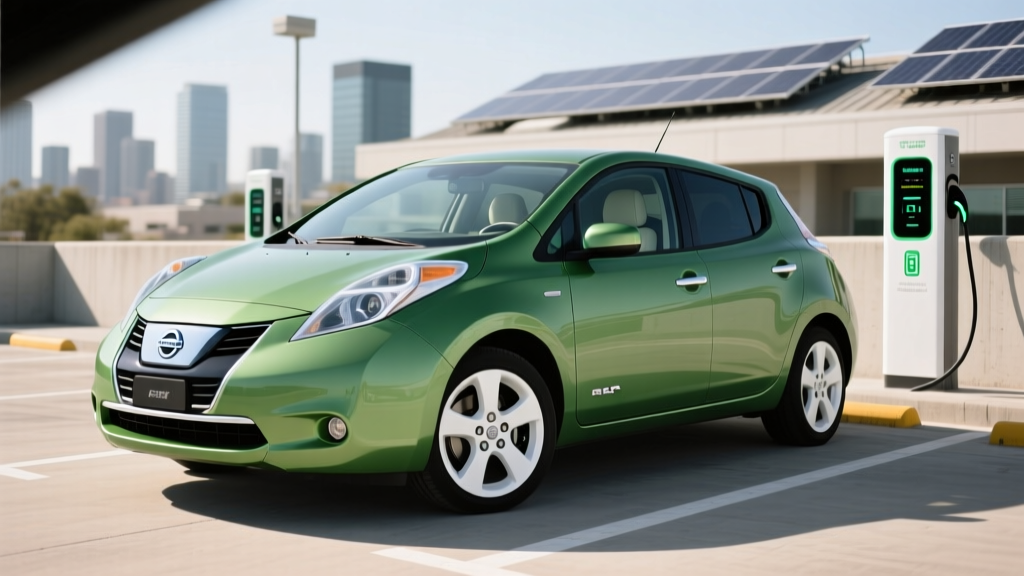
That $25,000 sale price cap is the tightest constraint. It rules out most used luxury EVs and newer long-range models still holding value above that threshold. However, it aligns well with 2-4 year old mainstream EVs: a 2023 Chevrolet Bolt EV, a 2022 Nissan Leaf (62 kWh), or a base 2023 Hyundai Kona Electric can all land under $25K at dealerships in 2026.
For the most current rules, always cross-check with the IRS clean vehicle credits page, as legislation and guidance continue to evolve.
5-Year Total Cost of Ownership: Used EV vs. Gas Car
To model real ownership costs, we're comparing a representative used EV (2023 Chevrolet Bolt EV 2LT, purchased at $23,500 before credit) against a similarly priced used gas car (2023 Honda Civic EX, purchased at $23,500). Both are driven 12,000 miles per year for 5 years.
| Cost Category | Used EV (Bolt EV) | Used Gas (Civic EX) |
|---|---|---|
| Purchase Price | $23,500 | $23,500 |
| Tax Credit (§25E) | −$4,000 | $0 |
| Net Purchase | $19,500 | $23,500 |
| Charging / Fuel (5 yr) | $3,420 | $8,250 |
| Insurance (5 yr) | $9,600 | $7,800 |
| Maintenance (5 yr) | $1,200 | $3,500 |
| Depreciation (5 yr) | $8,500 | $7,000 |
| Total 5-Year Cost | $42,220 | $50,050 |
| Cost Per Mile | $0.70 | $0.83 |
Assumptions: Electricity at $0.14/kWh national average; gas at $3.45/gallon; Bolt EV efficiency 28 kWh/100mi; Civic at 33 MPG combined. Insurance based on national EV average premium ~$160/mo vs. ~$130/mo for gas. Depreciation estimated from current resale trends. Your numbers will vary by state, utility rate, and driving profile.
The used EV comes out roughly $7,800 ahead over five years, driven primarily by the $4,000 credit and $4,830 in fuel savings. But note where the EV loses ground: insurance costs $1,800 more and depreciation runs $1,500 higher. These are the line items that erase the savings for some buyers.
Charging vs. Gas: The Per-Mile Math
EV (Bolt EV): 28 kWh per 100 miles × $0.14/kWh = $0.039 per mile (home charging)
Gas (Civic EX): 100 miles ÷ 33 MPG × $3.45/gallon = $0.105 per mile
Savings: $0.066 per mile, or roughly $792 per year at 12,000 miles
The savings widen dramatically if you have access to off-peak utility rates. Many utilities offer time-of-use plans where overnight charging drops to $0.07–$0.09/kWh, cutting the EV's per-mile cost to around $0.022. Over 60,000 miles, that's a $4,980 fuel advantage.
Public DC fast charging tells a different story. Networks like Electrify America and EVgo typically charge $0.35–$0.55/kWh. If you rely exclusively on public fast charging (350 kW peak rates tapering above 80% SoC), your per-mile cost rises to $0.10–$0.15 — roughly equal to or exceeding gas. The fuel savings case for EVs depends heavily on home or workplace Level 2 access.
For detailed efficiency ratings across models, fueleconomy.gov provides EPA-tested kWh/100mi and MPGe figures for every EV sold in the US.
Maintenance Savings: Where EVs Consistently Win
EVs eliminate the maintenance items that drive gas-car service bills. No engine oil, no transmission fluid, no spark plugs, no timing belts, no exhaust system. Regenerative braking handles most deceleration, so brake pads often last 80,000–120,000 miles before replacement.
| Maintenance Item | EV (5-Year Cost) | Gas Car (5-Year Cost) |
|---|---|---|
| Oil Changes | $0 | $600–$900 |
| Transmission Fluid | $0 | $150–$300 |
| Brake Pads | $0–$250 | $400–$800 |
| Engine Air Filter | $0 | $100–$200 |
| Cabin Air Filter | $100–$150 | $100–$150 |
| Tire Rotation/Replacement | $800–$1,200 | $600–$1,000 |
| Coolant/Other | $50–$100 | $200–$400 |
| Total Estimated | $950–$1,700 | $2,150–$3,750 |
The one area where EVs can cost more: tires. EVs are heavier (the Bolt EV weighs 3,563 lbs vs. the Civic at 2,877 lbs) and deliver instant torque, which accelerates tread wear. Budget for tire replacement at 30,000–40,000 miles rather than the 50,000+ miles typical for gas cars.
The Insurance Reality: Why EVs Cost More to Insure
EV insurance premiums typically run 15–25% higher than comparable gas vehicles. According to industry data, the average EV insurance cost sits around $160–$190/month nationally, compared to $120–$145 for equivalent gas models.
The reasons are structural, not arbitrary:
- Higher repair costs: Battery pack damage in a collision can total a vehicle that would otherwise be repairable. High-voltage safety protocols require specialized technician training.
- Parts cost: EV-specific components (battery modules, power electronics, thermal management) carry higher replacement costs than conventional drivetrain parts.
- Total-loss frequency: Insurers are more likely to declare an EV a total loss after moderate collision damage due to battery safety concerns, even when the structural damage is minor.
- Vehicle value: Even used EVs tend to have higher insured values than comparable gas cars in the same segment.
Some insurers now offer EV-specific policies with discounts for home charging or low mileage. Shopping quotes from at least three carriers — including EV-friendly insurers — can narrow the premium gap to $15–$30/month rather than the $50+ gap some buyers experience.
Depreciation: The Wildcard in EV Ownership
EV depreciation has been volatile. In 2023–2024, used EV values dropped sharply — some models losing 40–50% of their original MSRP within two years — driven by Tesla's aggressive new-vehicle price cuts, an influx of off-lease models, and evolving tax credit rules that shifted demand.
As of 2026, the depreciation picture has stabilized somewhat but still lags behind gas vehicles in most segments:
- Mainstream EVs (Bolt, Kona Electric, Leaf): Depreciating roughly 45–55% over 5 years from original MSRP
- Premium EVs (Model 3, Model Y, Ioniq 5): Depreciating 40–50% over 5 years
- Comparable gas sedans (Civic, Corolla): Depreciating 30–40% over 5 years
For the used-EV buyer, this is actually good news: you're purchasing after the steepest depreciation hit. A 2023 Bolt EV that originally stickered at $36,500 may now sell for $20,000–$24,000 — meaning the first owner absorbed $12,000–$16,000 in depreciation. Your remaining 5-year depreciation from that $23,500 purchase point is more moderate, estimated at $8,000–$9,000.
The risk: battery degradation concerns can suppress resale values as EVs age past the 8-year/100,000-mile federal battery warranty threshold. Models with strong battery health data and transferable warranties hold value better.
State, Local, and Utility Incentives
Important: State and local EV incentives vary enormously by jurisdiction and change frequently. The figures below are representative examples, not guarantees. Always verify current programs with your state energy office, local air quality district, and utility provider before making a purchase decision.
Beyond the federal $4,000 credit, many buyers can stack additional incentives:
- State rebates: States like California (CVRP), Colorado, Massachusetts, and New York offer $1,000–$5,000 in additional rebates for used EV purchases, often income-tiered
- Utility rebates: Many electric utilities offer $250–$1,000 rebates for home Level 2 charger installation, plus time-of-use rate plans that cut charging costs by 30–50%
- HOV lane access: Several states grant solo carpool-lane access to EVs regardless of occupancy — a time savings that has real economic value in congested metro areas
- Registration fee offsets: Some states charge higher annual EV registration fees ($50–$200) to replace lost gas tax revenue, which partially offsets fuel savings
In a best-case scenario (California buyer with moderate income, utility rebate, and HOV access), total incentives can reach $6,000–$8,000 on a used EV. In states with no additional programs, the federal $4,000 credit may be the only incentive available.
Which Used EVs Qualify for the $4,000 Credit?
Based on current dealer pricing and the $25,000 sale price cap, these models frequently qualify for the §25E credit in 2026:
- 2022–2023 Chevrolet Bolt EV / Bolt EUV: 259/247 mi EPA range, 65 kWh battery (NMC), ~$18,000–$24,000 used
- 2022–2023 Nissan Leaf (62 kWh): 212 mi EPA range, CHAdeMO connector, ~$17,000–$22,000 used
- 2022–2023 Hyundai Kona Electric: 258 mi EPA range, 64 kWh battery, ~$20,000–$24,500 used
- 2022–2023 Kia Niro EV: 243 mi EPA range, 64.8 kWh battery, ~$21,000–$25,000 used
- 2022–2023 Volkswagen ID.4 (base): 260 mi EPA range, 82 kWh battery, ~$22,000–$25,000 used
Note: Tesla Model 3 and Model Y from 2021–2022 occasionally list under $25,000 at dealers, but pricing varies significantly by mileage, condition, and region. Always confirm the final sale price — including dealer fees — stays at or below the $25,000 cap to preserve credit eligibility.
Frequently Asked Questions
Can I get the $4,000 credit as a point-of-sale discount?
Yes. Under current IRS rules, you can transfer the §25E credit to the dealer at the time of purchase, reducing your out-of-pocket cost immediately rather than waiting to claim it on your tax return. The dealer must be registered with the IRS Energy Credits Online system. Confirm this with the dealer before signing paperwork.
What if my income is slightly above the limit?
The income caps are based on modified adjusted gross income (MAGI) for the tax year in which you take delivery. If your MAGI exceeds $75,000 (single) or $150,000 (joint) by even $1, you lose the entire credit — there's no phase-out. If you're near the threshold, consult a tax professional about whether timing the purchase into a different tax year or adjusting deductions could bring you under the cap.
Does the battery have to be a certain size?
Yes. The vehicle must have a battery capacity of at least 7 kWh to qualify. This effectively excludes mild hybrids and very early plug-in hybrids but includes virtually all modern BEVs and most PHEVs from 2018 onward.
Can I claim the credit if I buy from a private seller?
No. The §25E credit requires purchase from a licensed motor vehicle dealer. Private-party transactions, even if the vehicle otherwise qualifies, are not eligible.
How does the used-EV credit interact with the new-EV credit?
They're separate credits under different sections of the tax code (§25E for used, §30D for new). However, the §25E credit can only be claimed once per taxpayer every 3 years. If you claimed it in 2024, you cannot claim it again until 2027. The vehicle itself must also not have been previously transferred under this credit since August 16, 2022.
Is a used EV a better deal than a new EV with the $7,500 credit?
It depends on the model. A new EV at $35,000 with the full $7,500 §30D credit nets $27,500. A qualifying used version of the same model at $22,000 with the $4,000 §25E credit nets $18,000 — a $9,500 savings. However, the new EV includes a full factory warranty, the latest battery chemistry and charging hardware, and potentially lower insurance. Run both scenarios with your specific insurance quotes and expected mileage to compare.
The $4,000 electric vehicle tax credit makes used EVs genuinely compelling for buyers who can navigate the eligibility requirements. The key is running the full ownership math — not just the purchase price — before signing. Fuel savings are real and substantial, maintenance costs drop significantly, but higher insurance premiums and steeper depreciation partially offset those gains. For buyers with home charging access, moderate annual mileage, and qualifying income, the 5-year savings typically land in the $5,000–$10,000 range. That's not life-changing money, but it's enough to make a well-chosen used EV the most cost-efficient car in the driveway.