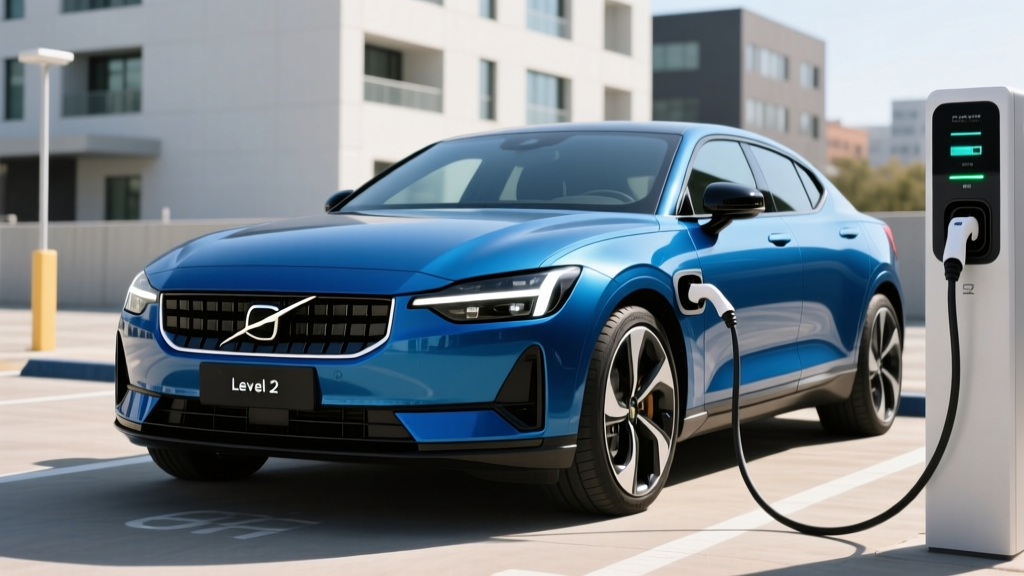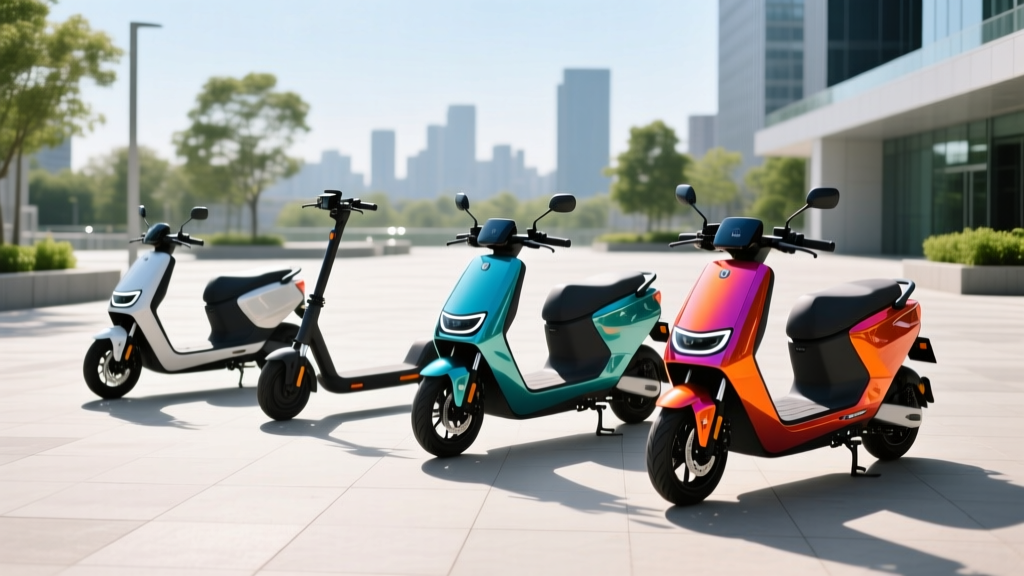
If you're researching 4 wheel electric scooters for adults, you're likely weighing a compact, low-speed electric vehicle against a full-sized EV or gas car for local commuting, errands, or campus travel. Here's the practical truth upfront: these scooters typically offer 15–40 miles of real-world range per charge, cost $1,500–$5,000 to purchase, and run on standard 120V household outlets — but they are not highway-capable, rarely qualify for the federal §30D EV tax credit, and are best understood as neighborhood electric vehicles (NEVs) or personal mobility devices rather than car replacements.
Quick Answer: Who Should Buy a 4 Wheel Electric Scooter?
A 4 wheel electric scooter makes sense if your daily driving is under 20 miles, you live in a mild climate, you need a low-cost commuter for roads with speed limits under 35 mph, and you have access to a standard 120V outlet for overnight charging. If you need highway speeds, all-weather capability, or passenger/cargo space, a full EV like the Chevrolet Equinox EV (starting ~$33,000, 319 mi EPA range) or a PHEV like the Toyota Prius Prime (44 mi electric-only range) will serve you better.
What Exactly Are 4 Wheel Electric Scooters for Adults?
The term "4 wheel electric scooter for adults" spans a wide product category. At one end, you'll find enclosed mobility-style scooters (often called NEVs or Low-Speed Vehicles under FMVSS 500) with steering wheels, seats, and top speeds of 20–25 mph. At the other end, there are open-platform electric quad-scooters — essentially stand-up or seated electric kick scooters with an extra wheel for stability — topping out around 15–20 mph.
Neither category is the same as a full battery electric vehicle (BEV). A BEV like the Tesla Model Y or Hyundai Ioniq 5 uses a high-voltage traction battery (60–84 kWh, typically NMC or LFP chemistry), liquid thermal management, and DC fast charging at 150–350 kW. A 4 wheel scooter typically runs on a much smaller battery pack — often 0.5 to 3.0 kWh of lithium-ion or lead-acid cells — and charges exclusively via Level 1 (120V AC), drawing 0.1 to 0.5 kW.
Key Specifications to Expect
| Specification | Typical Range (4-Wheel Scooters) | Full BEV Comparison (e.g., Chevy Equinox EV) |
|---|---|---|
| Battery Capacity | 0.5–3.0 kWh | 85 kWh (usable) |
| Motor Power | 500W–2,000W (0.7–2.7 HP) | 213 HP (159 kW) |
| Top Speed | 15–25 mph | 112+ mph |
| Real-World Range | 15–40 miles | 250–319 miles (EPA) |
| Charge Time (full) | 6–10 hours (120V) | ~9 hrs (Level 2, 11.5 kW); ~20 min 10-80% (DCFC) |
| Charging Connector | Standard 120V plug or proprietary | NACS / CCS1 / J1772 |
| Weight | 150–500 lbs | 4,000–4,800 lbs |
| Passenger Capacity | 1–2 | 5 |
| Purchase Price | $1,500–$5,000 | $33,000–$45,000+ MSRP |
Real-World Range and Efficiency: What to Actually Expect
Manufacturer range claims for 4 wheel electric scooters often cite 30–50 miles, but those figures assume flat terrain, a 150-lb rider, 10–12 mph speeds, and moderate temperatures. In practice, expect the following adjustments:
- Hills and headwinds: A 5% grade can reduce range by 25–40%. Scooters with 500W motors struggle on sustained inclines; look for 1,000W+ if your route is hilly.
- Cold weather: Lithium-ion battery performance drops 20–35% below 40°F. Lead-acid packs (still common in budget models) fare even worse, losing up to 50% capacity in freezing temps.
- Speed: Aerodynamic drag scales with the square of velocity. Running at 25 mph instead of 15 mph can cut range by 30–40%, even at these low speeds.
- Rider weight and cargo: Every additional 50 lbs reduces range roughly 5–8% depending on terrain.
Real-World Range Reality: A scooter rated at 40 miles by the manufacturer will typically deliver 25–35 miles in mixed use (moderate hills, 180-lb rider, 18 mph average). In winter conditions (below 35°F), expect 18–25 miles. Always size your battery for your worst-case commute, not the best-case spec sheet.
Cost Breakdown: Purchase, Charging, Maintenance, and Insurance
The economic case for a 4 wheel electric scooter hinges on dramatically lower operating costs versus a gas car — but the savings only matter if the scooter actually replaces car trips rather than supplementing them.
| Cost Category | 4-Wheel Scooter | Gas Car (30 MPG avg) | Full BEV (e.g., Equinox EV) |
|---|---|---|---|
| Purchase Price | $2,500 (mid-range) | $28,000 (used avg) | $35,000 (after potential credits) |
| Federal Tax Credit | $0 (does not qualify under §30D) | $0 | Up to $7,500 (subject to income/MSRP/sourcing rules — see IRS §30D guidelines) |
| Annual "Fuel" (electricity/gas) | $40–$80/yr (at $0.15/kWh, 5,000 mi/yr) | $1,500–$2,000/yr (at $3.50/gal) | $500–$800/yr (home charging) |
| 5-Year Fuel Total | $200–$400 | $7,500–$10,000 | $2,500–$4,000 |
| Maintenance (5 yrs) | $100–$300 (tires, brakes) | $2,500–$4,000 | $800–$1,500 |
| Insurance (5 yrs) | $0–$500 (often uninsured) | $5,000–$8,000 | $6,000–$10,000 |
| 5-Year Total Cost | $2,800–$3,700 | $38,000–$50,000 | $44,300–$50,500 |
| Cost Per Mile | $0.01–$0.02 | $0.15–$0.20 | $0.09–$0.12 |
Important caveat: These numbers assume the scooter replaces 5,000 miles/year of car travel. If you still need a car for highway trips, groceries, and bad weather, the scooter is an additional cost, not a replacement. Many households find a PHEV (like the Toyota RAV4 Prime, 42 mi electric-only range) covers both local electric commuting and longer gas trips in a single vehicle.
Battery Chemistry, Longevity, and Replacement Costs
Battery technology is where 4 wheel electric scooters diverge sharply from full EVs — and where buyers often get burned.
| Factor | Lead-Acid (Budget Scooters) | Lithium-Ion / NMC (Mid-Range) | LFP (Premium Scooters / Full EVs) |
|---|---|---|---|
| Energy Density | 30–50 Wh/kg | 150–250 Wh/kg | 140–180 Wh/kg |
| Weight (for 1 kWh) | ~25 lbs | ~9 lbs | ~12 lbs |
| Cycle Life | 200–400 cycles | 500–1,000 cycles | 2,000–4,000 cycles |
| Expected Lifespan | 1–3 years | 3–5 years | 7–10+ years |
| Replacement Cost | $200–$500 | $400–$800 | $600–$1,200 |
| Cold-Weather Performance | Poor (50% loss at freezing) | Moderate (20–35% loss) | Moderate (20–30% loss) |
| Common In | Sub-$1,500 scooters | $1,500–$3,500 scooters | Premium scooters, full BEVs |
Most 4 wheel scooters under $2,000 use sealed lead-acid (SLA) batteries. These are heavy, degrade quickly, and must be replaced every 1–3 years — a recurring $200–$500 cost that erodes the "low operating cost" advantage. Lithium-ion packs last significantly longer but add $300–$800 to the purchase price. LFP (lithium iron phosphate) packs, the same chemistry used in the Tesla Model 3 Standard Range and Ford Mustang Mach-E Select, offer the best longevity but are rare in the scooter category.
Pro tip: Always ask the manufacturer for the battery's cycle-life rating and whether cells are user-replaceable. A $2,500 scooter with a $400 battery replacement every 2 years costs more over 5 years than a $3,500 scooter with a 5-year lithium pack.
Charging Setup: What You Actually Need at Home
Unlike full EVs that benefit from Level 2 (240V) home chargers delivering 7–11.5 kW, most 4 wheel electric scooters charge via a standard 120V wall outlet at 0.1–0.5 kW. This means:
- No electrical upgrade needed for most users — a standard garage or outdoor outlet suffices.
- Charge time is long but manageable: A 1.5 kWh battery at 0.3 kW takes about 5 hours for a full charge. Overnight charging (8–10 hours) covers even larger packs.
- Safety matters: Use a dedicated 15A or 20A circuit. Avoid extension cords longer than 25 feet (voltage drop slows charging and can overheat wiring). If charging outdoors, use a GFCI-protected outlet and a weatherproof cover.
Some premium enclosed NEVs (like certain models from FMVSS-regulated manufacturers) include onboard chargers that accept 240V, cutting charge times to 2–3 hours. If your daily mileage exceeds 25 miles and you need mid-day top-ups, this is worth seeking out.
Common Misconceptions About 4 Wheel Electric Scooters
| Myth | Fact |
|---|---|
| "They qualify for the $7,500 federal EV tax credit." | The IRS §30D credit applies to new clean vehicles with 4 wheels, a gross vehicle weight under 14,000 lbs, and specific battery-sourcing and critical-mineral requirements. Most 4 wheel scooters do not meet the battery capacity threshold (at least 7 kWh for full credit) or the MSRP/income caps. Always verify on IRS.gov before assuming eligibility. |
| "They're street-legal everywhere." | Street legality varies by state and municipality. Many states classify low-speed vehicles (LSVs) under specific statutes requiring headlights, turn signals, seat belts, and VIN registration. Others restrict scooters to private property or bike paths. Check your state DMV before purchasing. |
| "They're maintenance-free." | Tires, brake pads, controllers, and batteries all require periodic replacement. Budget $50–$100/year for consumables. |
| "Range is the same year-round." | Cold weather reduces lithium-ion range 20–35% and lead-acid range up to 50%. If you live where winters drop below freezing, plan for significantly shorter trips. |
| "They can replace my car." | For a single person with a sub-15-mile commute in fair weather, possibly. For families, highway commuters, or anyone in extreme climates, they supplement a car — they don't replace one. |
Decision Framework: Should You Buy a Scooter, a PHEV, or a Full EV?
If-Then Buying Guide
- Choose a 4 wheel electric scooter if: Your daily trips are under 20 miles, you already own a car for longer trips, you live in a warm climate, you have secure storage/charging at home, and your budget is under $5,000.
- Choose a PHEV (e.g., Toyota Prius Prime, 44 mi EV range, 52 MPG combined) if: You want electric-only local commuting but need gas-engine flexibility for road trips, you have one vehicle slot, and your budget is $30,000–$40,000.
- Choose a full BEV (e.g., Chevy Equinox EV, 319 mi EPA, ~$33,000 base) if: You have home Level 2 charging, your daily driving is under 200 miles, you want highway capability, you qualify for the §30D tax credit, and you're ready for a primary vehicle purchase.
- Stick with your gas car if: You lack reliable home charging, you frequently drive over 300 miles in a day, you live in an area with sparse DC fast-charging infrastructure, or your budget can't accommodate an EV premium.
First-Time Buyer Checklist
If you're buying your first electrified vehicle — whether it's a scooter or a full BEV — verify these before signing:
- Battery chemistry and warranty: Lithium-ion or LFP preferred; lead-acid only if you accept frequent replacements. Minimum 1-year battery warranty (2+ years ideal).
- Real-world range test: Ask for independent range data, not just manufacturer claims. Subtract 25% for hills, 30% for cold weather.
- Local legality: Confirm with your state DMV whether the scooter requires registration, insurance, or is restricted to certain road types.
- Charging logistics: Verify you have a dedicated 120V outlet within cord reach of your parking spot. Confirm the charger is UL-listed or ETL-certified.
- Service and parts availability: Can you get replacement tires, controllers, and battery packs locally? Budget brands often lack dealer networks.
- Total 5-year cost: Add purchase price + 5 years of battery replacements + electricity + any registration/insurance. Compare against a used gas car or PHEV for the same period.
Frequently Asked Questions
Do 4 wheel electric scooters for adults qualify for the federal EV tax credit?
Almost never. The IRS §30D clean vehicle credit requires a battery capacity of at least 7 kWh (for the full $7,500), specific critical-mineral and battery-component sourcing, an MSRP under $55,000 (cars) or $80,000 (SUVs/trucks/vans), and buyer income below $150,000 (single) or $300,000 (joint). Most 4 wheel scooters have batteries under 3 kWh and do not meet these thresholds. Some states offer separate e-bike or micromobility rebates — check your state energy office.
How long does a 4 wheel electric scooter battery last?
Lead-acid batteries typically last 200–400 charge cycles (1–3 years with daily use). Lithium-ion NMC packs last 500–1,000 cycles (3–5 years). LFP packs can exceed 2,000 cycles (7–10 years). Lifespan depends on depth of discharge, temperature exposure, and charging habits — avoiding full 0% discharges and extreme heat extends life significantly.
Can I ride a 4 wheel electric scooter on public roads?
It depends on your state and local laws. Enclosed NEVs/LSVs that meet FMVSS 500 standards (headlights, seat belts, VIN) are street-legal on roads with speed limits up to 35 mph in many states. Open-platform scooters are often restricted to bike lanes, paths, or private property. Always check your state DMV and local ordinances before riding on public roads.
How does the cost per mile compare to a gas car?
At $0.15/kWh (national average residential electricity rate), a 4 wheel scooter consuming 40 Wh/mile costs about $0.006/mile in electricity — roughly 25x cheaper than a 30 MPG gas car at $3.50/gallon ($0.12/mile). However, when you factor in battery replacement ($400 every 3 years for lead-acid), the true cost rises to approximately $0.02–$0.04/mile, still significantly cheaper than gas.
What's the difference between a 4 wheel scooter and a full EV?
A full BEV has a 60–100+ kWh battery, 150–350 kW DC fast-charging capability, highway speeds (100+ mph), 250–400+ miles of EPA range, and qualifies as a passenger vehicle under all traffic laws. A 4 wheel scooter typically has a 0.5–3.0 kWh battery, charges at under 0.5 kW, tops out at 15–25 mph, and delivers 15–40 miles of range. They serve fundamentally different use cases — scooters for hyper-local trips, BEVs for full transportation needs.
Is a 4 wheel scooter safer than a 2 wheel electric scooter?
The fourth wheel provides significantly better stability at low speeds and when stationary, reducing tip-over risk. However, 4 wheel scooters offer no crash protection (no airbags, crumple zones, or safety cage), and their low speed makes them vulnerable in mixed traffic with cars. Neither NHTSA nor IIHS crash-tests this category. Always wear a helmet and avoid roads with speed limits above 35 mph.