Quick Answer: Is a 3 Wheeled EV Right for You?
A 3 wheeled EV is a niche commuter vehicle — typically classified as a motorcycle or autocycle — that seats one or two passengers with EPA ranges between 60 and 102 miles and prices from roughly $15,000 to $22,000 before incentives. These vehicles excel at short urban commutes (under 40 miles round-trip) with home Level 2 charging access, but they are not a replacement for a conventional EV or gas car if you need highway road-trip capability, cargo space, or all-weather comfort. Expect real-world range to drop 20-35% in cold weather or at sustained highway speeds above 65 mph. Federal tax credit eligibility under IRS §30D is limited and depends on battery sourcing, your income, and whether the manufacturer still has credits available.
What Exactly Is a 3 Wheeled EV?
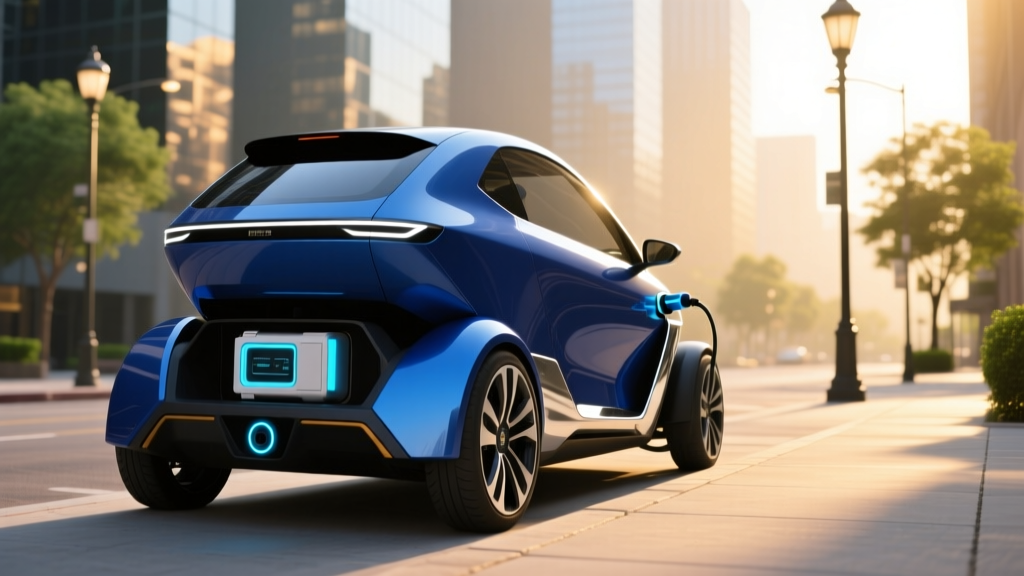
The term "3 wheeled EV" covers a small but distinct category of electric vehicles with three wheels — usually two in front and one in the rear (delta configuration), or one front and two rear (tadpole). In most U.S. states, these are legally classified as motorcycles or autocycles, which has major implications for licensing, insurance, and where you can drive them.
The two most prominent models available (or recently available) in the U.S. market include:
- Arcimoto FUV (Fun Utility Vehicle): A tandem two-seat, three-wheeled EV built in Oregon. The Long Range variant offers an EPA-estimated 102 miles of range from a 12.0 kWh usable battery pack (NMC lithium-ion). Peak motor output is 77 hp. Base MSRP was approximately $21,900 for the Long Range trim. Note: Arcimoto filed for bankruptcy in late 2023; as of 2026, new units are no longer in production, though used inventory and parts support persist through third-party networks.
- ElectraMeccanica Solo: A single-seat, three-wheeled commuter EV with an EPA-estimated 100-mile range from a 17.3 kWh battery (NMC). Motor output is 82 hp. The Solo was priced at approximately $18,500 before incentives. ElectraMeccanica was acquired by Xos, Inc. in 2023, and the Solo passenger vehicle was discontinued in favor of commercial electric trucks. Used units remain on the secondary market.
Both vehicles illustrate a key ownership reality: the 3 wheeled EV market is extremely small, and manufacturer stability is a genuine risk. If you're considering one, factor in long-term parts availability and resale uncertainty.
Range, Charging, and Efficiency: The Numbers
| Specification | Arcimoto FUV (Long Range) | ElectraMeccanica Solo |
|---|---|---|
| EPA Range | 102 miles | 100 miles |
| Real-World Range (highway/cold) | ~65-80 miles | ~65-80 miles |
| Battery Capacity (usable) | 12.0 kWh (NMC) | 17.3 kWh (NMC) |
| Motor Output | 77 hp | 82 hp |
| 0-60 mph | ~7.5 seconds | ~8.0 seconds |
| Top Speed | ~85 mph | ~85 mph |
| Level 1 Charging (120V) | ~1.4 kW, ~8 hrs (0-100%) | ~1.4 kW, ~12 hrs (0-100%) |
| Level 2 Charging (240V) | ~3.3 kW, ~3.5 hrs | ~3.3 kW, ~5 hrs |
| DC Fast Charging | Not available | Not available |
| MPGe (combined) | ~130 MPGe | ~115 MPGe |
| Weight | ~1,400 lbs | ~1,700 lbs |
| Cargo Volume | ~4 cu ft (rear bin) | ~6 cu ft (rear trunk) |
Real-World Range Reality
Both the FUV and Solo carry EPA ratings around 100 miles, but real-world conditions shrink that significantly. At sustained 70 mph highway speeds, expect roughly 70-80 miles of usable range. In freezing temperatures (below 32°F), NMC batteries in small, uninsulated packs can lose 25-35% of capacity — dropping effective range to 60-70 miles. Neither vehicle has a heat pump; cabin heating draws directly from the traction battery, further reducing range in winter. These vehicles are best suited for commutes under 35 miles one-way with home charging available.
Charging Limitations
The biggest practical limitation of current 3 wheeled EVs is the absence of DC fast charging. With only Level 2 (3.3 kW) onboard chargers, a full charge takes 3.5 to 5 hours. This means mid-day top-ups during a workday are feasible if you have Level 2 access, but highway road trips with quick 20-minute DC charges are not possible. You are effectively confined to a radius defined by your battery and your willingness to wait hours for a recharge.
Cost Breakdown: 3 Wheeled EV vs Gas Car vs Conventional EV
| Cost Factor | 3 Wheeled EV (e.g., Used Solo ~$12,000) | Gas Compact Car (e.g., 2026 Honda Civic, ~$26,000) | Conventional EV (e.g., 2026 Chevy Equinox EV, ~$33,000) |
|---|---|---|---|
| Purchase Price | $10,000-$18,000 (used market) | $26,000-$30,000 | $33,000-$43,000 |
| Federal Tax Credit (§30D) | Likely $0 (discontinued/sourcing) | $0 (ICE vehicle) | Up to $7,500 (if eligible) |
| Fuel/Energy Cost (annual, 12,000 mi) | ~$480 (at $0.15/kWh) | ~$1,560 (at $3.25/gal, 30 MPG) | ~$540 (at $0.15/kWh) |
| Annual Maintenance | ~$150 (tires, cabin filter) | ~$600 (oil, brakes, filters) | ~$250 (tires, cabin filter, fluid) |
| Insurance (annual avg) | $900-$1,500 (motorcycle classification) | $1,200-$1,600 | $1,400-$2,000 |
| 5-Year Total Fuel + Maint. | ~$3,150 | ~$10,800 | ~$3,950 |
Key takeaway: The energy-cost advantage of a 3 wheeled EV over a gas car is real — roughly $1,080/year in fuel savings at 12,000 miles driven. Over five years, that's about $5,400 saved on fuel alone. Maintenance savings add another $2,250. However, these savings must be weighed against the severely limited utility, uncertain resale value, and the fact that a used conventional EV (like a Nissan Leaf or Chevy Bolt) offers 150-250+ miles of range, DC fast charging, and full crash protection for $15,000-$22,000 on the secondary market.
Tax Credits and Incentives: What Actually Applies
Federal tax credit eligibility for 3 wheeled EVs is complicated and generally unfavorable as of 2026:
IRS §30D Federal EV Tax Credit Requirements
- Vehicle MSRP cap: Vans/SUVs/trucks ≤$80,000; sedans/other ≤$55,000. Most 3 wheelers fall under the $55,000 sedan cap — this is not a barrier.
- Buyer income cap: Modified AGI ≤$150,000 (single), ≤$300,000 (joint). Many buyers will qualify on income.
- Battery sourcing requirements: Critical minerals and battery components must meet phased-in percentage thresholds from U.S. or FTA-partner countries. Small-volume manufacturers like Arcimoto and ElectraMeccanica often did not certify compliance before discontinuation.
- Manufacturer availability: Both the Arcimoto FUV and ElectraMeccanica Solo are discontinued. New purchases are not possible from the manufacturer. Used EVs may qualify for the separate §25E used-EV credit (up to $4,000 or 30% of sale price, whichever is less, with stricter income caps of $75,000 single / $150,000 joint and a sale price cap of $25,000).
- Point-of-sale transfer: For new eligible EVs, the credit can be transferred to the dealer at purchase. For used EVs under §25E, point-of-sale transfer is also available through registered dealers.
Always verify current eligibility on IRS.gov before making a purchase decision. State incentives vary widely — check your state energy office or AFDC for local rebates.
Real-World Ownership Considerations
Home Charging Is Essential
Without DC fast charging, a 3 wheeled EV is only practical if you have reliable home charging. A standard 120V outlet (Level 1, ~1.4 kW) can fully recharge the FUV overnight in about 8 hours, which works for daily commuting. A 240V Level 2 home charger (3.3 kW) cuts this to 3-4 hours. If you live in an apartment without charging access or rely on street parking, a 3 wheeled EV is effectively impractical.
Climate and Weather Limitations
Three-wheeled EVs have minimal weather protection compared to enclosed cars. The Arcimoto FUV has an optional removable roof and windshield but no full climate control system. The Solo has a fully enclosed cabin with heating, but its small battery means running the heater cuts range significantly. In regions with harsh winters (sustained sub-30°F temperatures, snow, ice), these vehicles are seasonal commuters at best. In rain-prone or extreme-heat climates, comfort is also a concern.
Safety and Crash Protection
This is the most significant trade-off. Three-wheeled EVs are classified as motorcycles or autocycles and are not required to meet the same crash-test standards as passenger cars. Neither the FUV nor the Solo has been rated by the NHTSA or the IIHS. You're trading the protection of airbags, crumple zones, and a steel safety cage for a lighter, more exposed vehicle. Wear a helmet if required by your state, and understand that in a collision with a conventional vehicle, the physics are not in your favor.
Insurance and Licensing
Because most states classify 3 wheelers as motorcycles, you may need a motorcycle endorsement on your driver's license. Insurance is typically written through motorcycle policies, which can be cheaper than auto insurance ($900-$1,500/year depending on your state and driving record) but may offer less coverage. Some states (like California with its "autocycle" classification) have specific rules — verify with your local DMV.
Myths vs Facts About 3 Wheeled EVs
| Myth | Fact |
|---|---|
| "They qualify for the full $7,500 federal tax credit." | Both major 3 wheeled EV manufacturers (Arcimoto, ElectraMeccanica) have discontinued production. New purchases aren't possible. Used units may qualify for the §25E credit (up to $4,000) if priced under $25,000 and buyer income is under $75K single / $150K joint. |
| "100 miles of range is enough for anyone's commute." | The EPA 100-mile figure drops to 60-80 miles at highway speeds or in cold weather. If your round-trip commute exceeds 60 miles, you'll need mid-day charging — and without DC fast charging, that means hours plugged in. |
| "They're as safe as a small car." | They are not. Three-wheeled EVs lack the crash-test certification, airbags, and structural protection of even the smallest conventional cars. Treat them like motorcycles in terms of risk. |
| "They're the cheapest way to go electric." | A used Nissan Leaf (150+ mile range, DC fast charging, full crash safety) can be found for $12,000-$18,000 and offers far more utility and protection per dollar. |
| "They can use carpool/HOV lanes." | This varies by state. Some states allow autocycles in HOV lanes with a clean-air sticker; others do not. Verify with your state DOT before relying on this benefit. |
Decision Framework: Should You Buy a 3 Wheeled EV?
Choose a 3 Wheeled EV If:
- Your daily commute is under 35 miles round-trip, mostly on surface streets (under 55 mph)
- You have reliable Level 1 or Level 2 home charging
- You live in a mild climate (rarely below 40°F or above 95°F)
- You already own a conventional car for longer trips, bad weather, and cargo hauling
- You're buying on the used market for under $15,000 and accept the resale-value risk
- You find the open-air or compact-commuter experience genuinely appealing
Choose a Conventional Used EV Instead If:
- You need more than 80 miles of real-world range
- You want DC fast charging for road trips or mid-day top-ups
- You carry passengers or cargo regularly
- You drive in harsh winter conditions
- You want crash-test-rated safety (NHTSA/IIHS)
- You want this to be your only vehicle
- You value long-term parts availability and manufacturer support
Choose a PHEV or Gas Car If:
- You don't have home charging access
- Your daily commute exceeds 50 miles
- You frequently take road trips over 100 miles
- You need maximum safety, cargo space, or passenger capacity
Frequently Asked Questions
Are 3 wheeled EVs street-legal in all 50 states?
Yes, but registration and licensing requirements vary. Most states classify them as motorcycles or autocycles, which may require a motorcycle endorsement on your license. A few states have specific "autocycle" categories with different rules. Check with your state DMV before purchasing.
Can I charge a 3 wheeled EV at public charging stations?
You can use Level 2 public chargers (J1772 connector), but you cannot use DC fast chargers (CCS, NACS, or CHAdeMO) because these vehicles don't have DC fast-charge capability. Public Level 2 charging at 3.3 kW adds roughly 20-25 miles of range per hour — usable for a mid-day top-up at work, but not for quick highway stops.
How long will the battery last?
Both the FUV and Solo use NMC lithium-ion batteries. Typical NMC degradation is approximately 2-3% per year under normal use, meaning after 5 years you might see 85-90% of original capacity. However, replacement batteries for discontinued vehicles are extremely difficult to source, which is a significant long-term ownership risk. Neither Arcimoto nor ElectraMeccanica offered industry-standard 8-year/100,000-mile battery warranties comparable to major automakers.
Is a 3 wheeled EV safer than a motorcycle?
Somewhat, but not by a wide margin. The enclosed or semi-enclosed cabin provides weather protection and a roll-cage structure (in the FUV's case), which is better than a traditional motorcycle. However, you still lack the mass, crumple zones, and multi-airbag systems of a passenger car. In a collision with a 4,000-pound SUV, the physics heavily favor the larger vehicle.
What's the best alternative to a 3 wheeled EV?
For similar budget ($12,000-$20,000 used), consider a used Chevy Bolt EV/EUV (259-mile EPA range, DC fast charging, NHTSA 5-star safety, widely available on the used market) or a used Nissan Leaf (149-226 miles depending on battery, widely serviced). Both offer dramatically more range, safety, utility, and long-term support than any 3 wheeled EV currently available.
Will new 3 wheeled EV models be available soon?
As of early 2026, no major manufacturer has announced a new production 3 wheeled EV for the U.S. market. The segment remains extremely niche. Aptera Motors has been developing a solar-equipped 3 wheeler with a claimed 1,000-mile range, but it has not reached volume production and delivery timelines have shifted multiple times. Treat any announced specs as preliminary until independent EPA testing and deliveries are confirmed.