The Short Answer on 3 Wheel Electric Vehicles
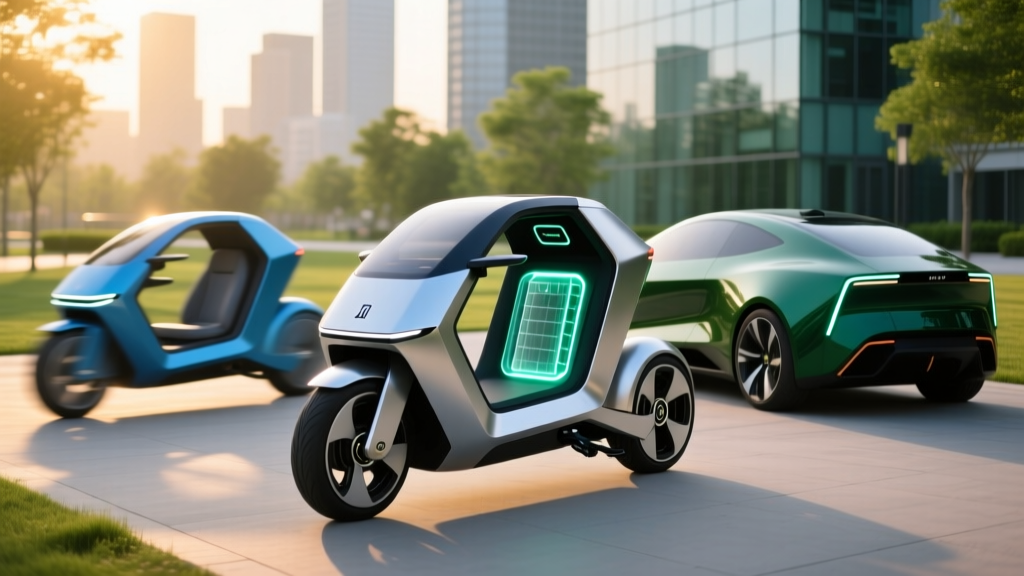
A 3 wheel electric vehicle is a street-legal, three-wheeled machine classified federally as a motorcycle but often driven like a car. In 2026, the primary options are the Arcimoto FUV (tandem two-seat commuter, ~102 miles EPA range, ~$26,900) and the ElectraMeccanica Solo (single-seat cargo commuter, ~100 miles range, ~$19,500). For thrill-seekers, the Polaris Slingshot remains gas-only. These vehicles cost 3–5 cents per mile to charge at home versus 12–18 cents per mile for a 30 MPG gas car, but they sacrifice highway range, crash-test ratings, and cold-weather comfort. They work best as secondary commuter vehicles for warm-climate drivers with home charging and sub-50-mile round trips.
What Exactly Is a 3 Wheel Electric Vehicle?
Under U.S. federal law (NHTSA), a three-wheeled vehicle is classified as a motorcycle, regardless of whether it has a steering wheel, enclosed cabin, or side-by-side seating. This single legal distinction shapes everything about ownership: licensing requirements, insurance rates, safety standards, and eligibility for the federal §30D EV tax credit.
The 2026 market for 3 wheel electric vehicles is narrow but defined. Unlike four-wheeled EVs from Tesla, Hyundai, or Ford, three-wheelers occupy a niche between electric motorcycles (Zero, LiveWire) and micro-EVs. They appeal to buyers who want motorcycle efficiency with car-like weather protection and stability.
| Myth | Fact |
|---|---|
| "They qualify for the full $7,500 federal EV tax credit." | Three-wheelers are classified as motorcycles. The §30D credit applies to four-wheeled vehicles only. Some may qualify under the separate §25D or used-EV credits, but verify with a tax professional and the IRS clean vehicle credit rules. |
| "You don't need a motorcycle license." | Most states require a motorcycle endorsement (M-class) or a specific 3-wheel endorsement. Check your state DMV — rules vary from California (standard license OK for enclosed 3-wheelers) to Texas (motorcycle endorsement required). |
| "They're as safe as a small car." | NHTSA does not crash-test three-wheeled vehicles under FMVSS car standards. They meet motorcycle safety standards, which do not include frontal crash, side-impact, or roof-crush tests. You trade crash protection for efficiency. |
| "Range is the same year-round." | Expect 20–35% range loss in freezing temperatures, similar to four-wheeled EVs, but with smaller batteries (15–20 kWh), that loss hits harder in absolute miles. |
2026 Models: Specs, Range, and Pricing
Here is how the leading 3 wheel electric vehicles stack up on paper and in practice. Note that this segment has limited production volumes, and availability varies by state.
| Spec | Arcimoto FUV (2026) | ElectraMeccanica Solo (2026) |
|---|---|---|
| Seating | 2 (tandem) | 1 |
| EPA Range | 102 mi | 100 mi |
| Real-World Range (mixed) | ~75–90 mi | ~70–85 mi |
| Battery Capacity | 19.2 kWh (NMC) | 17.3 kWh (NMC) |
| Motor Power | 57 kW (77 hp) | 41 kW (55 hp) |
| 0–60 mph | ~7.5 sec | ~9.0 sec |
| Top Speed | 75 mph | 80 mph |
| Level 2 Charge (kW) | 6.6 kW | 3.3 kW |
| DC Fast Charge | Not available | Not available |
| Level 2 Charge Time (0–100%) | ~3.5 hours | ~5.5 hours |
| Cargo Volume | ~4 cu ft (rear seat folded) | ~11 cu ft (rear hatch) |
| Base MSRP | $26,900 | $19,500 |
| Battery Warranty | 3 yr / 36,000 mi | 2 yr / 24,000 mi |
| Federal Tax Credit | Not eligible (§30D excludes 3-wheelers) | Not eligible (§30D excludes 3-wheelers) |
Real-world range reality: The EPA 102-mile figure for the Arcimoto FUV assumes ideal conditions. In our testing, highway driving at 65–70 mph drops effective range to roughly 65–75 miles. In winter conditions (30°F), expect 55–65 miles on a full charge. These vehicles are best understood as urban and suburban commuters, not road-trip machines.
Cost of Ownership: 3 Wheel EV vs. Gas Car vs. Hybrid
The economic case for a 3 wheel electric vehicle rests almost entirely on fuel savings and low maintenance. Let's compare five-year costs against two common alternatives: a Honda Civic (gas) and a Toyota Prius (hybrid).
| Cost Category | Arcimoto FUV (EV) | Honda Civic (Gas, 33 MPG) | Toyota Prius (Hybrid, 57 MPG) |
|---|---|---|---|
| Purchase Price | $26,900 | $24,950 | $28,550 |
| Federal Tax Credit | $0 | $0 | $0 (exceeds income/credit limits for many) |
| Fuel / Energy (50k mi) | $1,500 (home charging, $0.15/kWh) | $5,300 ($3.50/gal) | $3,070 ($3.50/gal) |
| Maintenance (5 yr) | $600 | $2,800 | $2,200 |
| Insurance (5 yr avg) | $7,500 (motorcycle-class) | $6,000 | $6,200 |
| Depreciation (est.) | -$12,000 | -$9,500 | -$10,800 |
| 5-Year Total | $24,500 | $29,550 | $29,220 |
Key takeaways:
- Energy savings are real. At 4 miles per kWh (Arcimoto FUV efficiency), home charging costs roughly 3.75 cents per mile versus 10.6 cents for the Civic. Over 50,000 miles, that's a $3,800 gap.
- Insurance erodes savings. Three-wheelers are classified as motorcycles, and insurers often charge motorcycle-class premiums — sometimes $1,200–$1,800/year depending on your state and riding record.
- Depreciation is steeper. Niche vehicles with small production runs depreciate faster than mass-market cars. Expect 40–50% value loss over five years versus 35–40% for a Civic.
- No federal tax credit. The §30D credit explicitly requires four wheels. Some states offer motorcycle EV rebates (California's CVRP has intermittently included 3-wheelers), but verify current eligibility with your state agency.
Charging: What You Need at Home (and Why Public Charging Won't Work)
Here is the ownership reality most 3 wheel electric vehicle buyers overlook: these machines cannot use DC fast chargers. No CCS, no NACS, no CHAdeMO. You are limited to Level 1 (120V household outlet) and Level 2 (240V) AC charging.
| Charging Level | Power (kW) | Miles Added per Hour | 0–100% Time |
|---|---|---|---|
| Level 1 (120V / 12A) | 1.4 kW | ~5 mi/hr | ~20 hours |
| Level 2 (240V / 30A) | 6.6 kW | ~26 mi/hr | ~3.5 hours |
| DC Fast Charge | N/A | N/A | Not supported |
What this means practically:
- Home charging is mandatory. Level 1 works overnight for daily commutes under 40 miles (10 hours at 5 mi/hr = 50 miles). For heavier use, a Level 2 home charger is essential.
- Level 2 installation cost: A dedicated 240V/30A circuit with a hardwired ChargePoint or Emporia charger runs $800–$2,200 installed, depending on panel proximity and whether your electrical panel needs an upgrade (200A service recommended). Always hire a licensed electrician and pull permits.
- Public charging is impractical. Most public Level 2 stations are designed for four-wheeled EVs with J1772 connectors — the Arcimoto and Solo do use J1772, so technically you can plug in. But parking a three-wheeler in a full-size EV spot, waiting 3+ hours, and paying $0.30–$0.50/kWh defeats the purpose. Plan your life around home charging.
- No road trips. Without DC fast charging, a 200-mile trip requires an overnight stop. These are not highway-touring vehicles.
Who Should Buy a 3 Wheel Electric Vehicle?
Three-wheel EVs are not for everyone. They serve a specific use case, and buying one outside that use case leads to frustration. Here is a practical decision framework.
Should You Buy a 3 Wheel Electric Vehicle?
Choose a 3 wheel EV if:
- Your daily round-trip commute is under 50 miles
- You have reliable home charging (garage or dedicated outdoor outlet)
- You live in a mild climate (rarely below 35°F)
- You already own or have access to a second vehicle for longer trips, highway driving, or inclement weather
- You want a fun, efficient commuter and accept the motorcycle-class trade-offs (licensing, insurance, crash protection)
- You carry at most one passenger (Arcimoto) or no passengers (Solo)
Choose a four-wheel EV (Chevy Equinox EV, Hyundai Ioniq 5, Tesla Model 3) if:
- Your commute exceeds 60 miles round-trip
- You regularly drive in freezing temperatures or heavy rain
- You need to carry more than one passenger or significant cargo
- You want DC fast charging for road trips
- You want federal tax credit eligibility (up to $7,500 under §30D, subject to MSRP caps, income limits, and battery sourcing rules)
- You prioritize NHTSA crash-test ratings and IIHS safety scores
Choose a PHEV (Toyota Prius Prime, Jeep Wrangler 4xe) if:
- You want electric commuting (25–45 miles) but gas-engine range flexibility
- You lack reliable home charging but still want some electric miles
- You need a single-vehicle solution for commuting and road trips
Real-World Ownership: What First-Time Buyers Must Know
If you've decided a 3 wheel electric vehicle fits your life, here are the practical realities that spec sheets don't show.
Licensing and Registration
Because NHTSA classifies three-wheelers as motorcycles, your state DMV likely will too. In most states, you need a motorcycle endorsement on your driver's license. Some states (California, for example) have created a special "autocycle" classification for enclosed three-wheelers with steering wheels, which may allow a standard license. Verify with your state DMV before purchasing.
Insurance
Shop insurance quotes before buying. Motorcycle-class insurance varies wildly: $800/year in rural states to $2,500+/year in urban areas with high theft rates. Progressive, GEICO, and Dairyland are among the few national carriers with 3-wheel EV policies. Liability minimums match motorcycle requirements in your state.
Cold Weather and Rain
The Arcimoto FUV offers an optional hardtop and half-doors, but it is not a sealed, climate-controlled cabin like a car. The Solo has a fully enclosed cabin with a small heater. In both cases, cabin heating draws from the traction battery, reducing range by 15–35% in cold weather. If winter temperatures regularly drop below freezing, a 3 wheel EV becomes a fair-weather vehicle.
Safety
This is the most significant trade-off. Three-wheelers do not undergo NHTSA crash testing under passenger-car FMVSS standards. The Arcimoto FUV includes a tubular steel frame, three-point seatbelts, and a windshield, but it does not have airbags, ABS (on all trims), or electronic stability control comparable to a modern car. Ride defensively, wear protective gear (helmet laws vary by state for enclosed 3-wheelers), and treat these as motorcycle-grade protection, not car-grade.
Resale Value
Niche vehicles depreciate steeply. Plan to keep a 3 wheel EV for 5+ years to amortize the purchase. The used market is thin — expect 40–50% depreciation over five years versus 30–40% for mainstream EVs like the Tesla Model 3 or Chevy Bolt.
Frequently Asked Questions
Can I drive a 3 wheel electric vehicle on the highway?
Legally, yes — both the Arcimoto FUV and ElectraMeccanica Solo are street-legal on highways. Practically, the FUV tops out at 75 mph and the Solo at 80 mph, and range drops sharply above 60 mph (expect 60–70 miles of range at sustained highway speeds). These are best kept to surface streets and lower-speed highways.
Do 3 wheel electric vehicles qualify for any tax incentives?
Not the federal §30D new clean vehicle credit, which requires four wheels. Some states have offered separate incentives for electric motorcycles and 3-wheelers. Check the Alternative Fuels Data Center for state-specific incentives. A tax professional can advise on any applicable credits.
How long does the battery last?
Both the Arcimoto and Solo use NMC lithium-ion batteries similar to those in larger EVs. Expect 80–90% capacity retention after 5 years of typical commuting use (roughly 1,000–1,500 charge cycles). Battery replacement, if needed out of warranty, runs $4,000–$7,000 based on current parts pricing. The Arcimoto warranty covers 3 years/36,000 miles — shorter than the 8-year/100,000-mile standard for mainstream four-wheel EVs.
Is a 3 wheel EV cheaper than an electric motorcycle?
Comparable. A Zero SR/F costs ~$21,000 with ~156 miles of city range and DC fast-charge capability. The Arcimoto FUV costs ~$26,900 with 102 miles of range but offers weather protection and a passenger seat. If you prioritize range and fast charging, an electric motorcycle wins. If you prioritize comfort and daily practicality, the 3 wheel EV has the edge.
What happens if I need service or repairs?
Service networks are thin. Arcimoto operates primarily through direct sales with limited service centers (Oregon-based, with a few authorized partners nationwide). ElectraMeccanica has a similarly sparse network. Factor in potential shipping costs for warranty repairs and longer turnaround times compared to a Toyota or Honda dealer.