Quick Verdict: The Budget Used-EV Benchmark
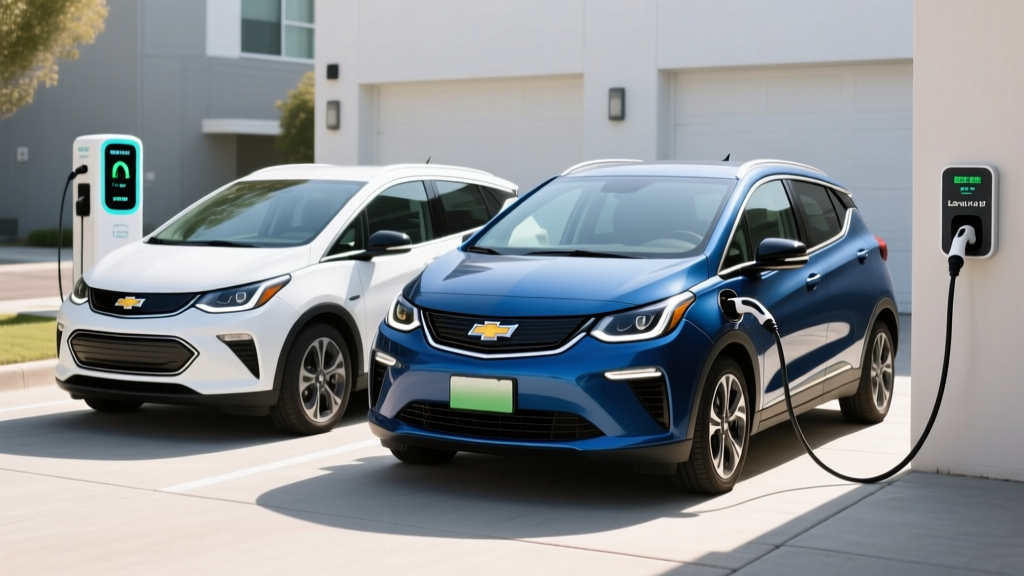
The 2022 Chevrolet Bolt EV (and its stretched sibling, the Bolt EUV) occupies a rare position in the 2026 used-EV market: a compact hatchback and subcompact crossover that deliver genuine 250+ mile range at prices that frequently qualify for the $4,000 federal used-EV tax credit. GM's decision to slash Bolt pricing in its final model year created a wave of low-mileage examples that now represent some of the most accessible long-range battery-electric vehicles available.
But value comes with trade-offs. The Bolt's DC fast-charging speed — capped at 55 kW — is its most significant limitation, making road trips a patience exercise compared to modern 150–250 kW architectures. If your driving is predominantly local or commuter-focused with reliable home Level 2 access, the 2022 Bolt remains a compelling ownership proposition. If you regularly drive 300+ miles between charging stops, look elsewhere.
| Spec | Bolt EV (1LT / 2LT) | Bolt EUV (LT / Premier) |
|---|---|---|
| EPA Range | 259 miles | 247 miles |
| Battery (usable) | 65 kWh (NMC) | 65 kWh (NMC) |
| EPA Efficiency | 120 MPGe (28 kWh/100 mi) | 115 MPGe (29 kWh/100 mi) |
| Motor Output | 200 hp / 266 lb-ft | 200 hp / 266 lb-ft |
| Drivetrain | FWD (single motor) | FWD (single motor) |
| 0–60 mph | ~6.5 sec | ~7.0 sec |
| Max DC Fast Charge | 55 kW (CCS1) | 55 kW (CCS1) |
| Level 2 Charge Rate | 11.5 kW (48A) | 11.5 kW (48A) |
| Cargo Volume | 16.6 cu ft (rear seats up) | 16.3 cu ft (rear seats up) |
| Rear Legroom | 36.0 in | 39.1 in |
| Battery Warranty | 8 yr / 100,000 mi | 8 yr / 100,000 mi |
Real-World Range: What the EPA Sticker Doesn't Tell You
The 2022 Bolt uses a 65 kWh (usable) nickel-manganese-cobalt (NMC) lithium-ion battery pack. NMC chemistry offers higher energy density than LFP, which is how GM fits 259 miles into a compact hatchback footprint. However, NMC degrades slightly faster than LFP over hundreds of charge cycles and prefers not to sit at 100% state of charge for extended periods.
In EPA testing, the Bolt EV achieves 120 MPGe combined (28 kWh per 100 miles), which translates to roughly $0.04–$0.06 per mile at average US residential electricity rates (~$0.16/kWh). That's a fraction of the $0.12–$0.15 per mile a comparable 30 MPG gas car costs at $3.50/gallon.
One practical note for 2026 buyers evaluating used examples: the Bolt's battery management system includes a buffer above and below the displayed state of charge, meaning you won't see dramatic range cliff behavior near 0%. GM's 8-year/100,000-mile battery warranty guarantees the pack will retain at least 60% of its original capacity — though most 2022 examples with under 40,000 miles show degradation in the low single digits based on owner-reported data.
Charging Speed: The Bolt's Biggest Compromise
Charging is where the 2022 Bolt's age shows most clearly. GM equipped the Bolt with a 55 kW peak DC fast-charging rate via its CCS1 connector — a specification that was merely adequate in 2022 and looks increasingly dated against competitors accepting 150–350 kW.
| Charging Level | Power (kW) | Speed (miles of range/hour) | Notes |
|---|---|---|---|
| Level 1 (120V household) | ~1.4 kW | ~4 mi/hr | Emergency/trickle only |
| Level 2 (240V, 48A) | 11.5 kW | ~39 mi/hr | Full charge in ~6.5 hours |
| Level 2 (240V, 32A) | 7.7 kW | ~26 mi/hr | Common portable/public Level 2 |
| DC Fast (CCS1, 50+ kW station) | 55 kW peak | ~100 mi in 30 min | 10–80% in ~60 minutes |
The 10–80% DC fast-charge time of approximately 60 minutes is the number that matters for road-trip planning. At a typical highway rest stop, that means an hour-long lunch break per charge session — workable for occasional trips but frustrating compared to a Hyundai Ioniq 5's 18-minute 10–80% on a 350 kW charger.
The Bolt's charge curve is relatively flat from 10% to roughly 60% SoC, holding near its 55 kW peak, then tapering progressively above 70%. Charging from 80–100% on DC is slow enough that GM recommends completing that final segment on Level 2 at home.
For daily use, home Level 2 charging is where the Bolt excels. Its 11.5 kW onboard charger is among the most powerful in its class, meaning a 240V/48A home station replenishes the full 65 kWh battery in about 6.5 hours — easily overnight. If your home electrical panel supports a 60A circuit, a quality Level 2 station like a ChargePoint Home Flex or Emporia Vue paired with a NEMA 14-50 outlet or hardwired installation delivers the Bolt's maximum Level 2 rate. Budget $800–$2,000 for a professional Level 2 home installation depending on panel proximity and local permit requirements.
Driving Impressions & Performance
The Bolt's single front-mounted permanent-magnet motor produces 200 horsepower and 266 lb-ft of torque — available instantly from 0 RPM as is characteristic of EVs. The result is a 0–60 mph time of roughly 6.5 seconds for the hatchback and 7.0 seconds for the heavier EUV, which makes the Bolt genuinely quick off the line and confident for highway merging.
Ride quality is compliant for a compact EV, though the 17-inch wheels with 215/50 tires transmit some road imperfections. The low center of gravity from the underfloor battery pack keeps body roll well-controlled in corners, and the steering is accurate if light. One-pedal driving mode, activated via a steering-wheel paddle, provides aggressive regenerative deceleration that allows genuine single-pedal operation in stop-and-go traffic — reducing brake wear substantially.
Notable driving limitation: the Bolt EV has no official towing rating. The EUV can be equipped with a dealer-installed hitch for light-duty cargo accessories, but neither variant is suitable for trailer towing. If you need tow capability, look at larger EV SUVs.
Interior, Tech & Driver Assistance
The 2022 Bolt's interior reflects its budget positioning. Hard plastics dominate the lower dash and door panels, though the 10.2-inch infotainment touchscreen is responsive and supports wireless Apple CarPlay and Android Auto. A 10.2-inch digital driver display replaces analog gauges and provides configurable range, efficiency, and navigation readouts.
The Bolt EUV's key practical advantage is rear-seat space: 39.1 inches of rear legroom versus the EV's 36.0 inches, making the EUV meaningfully more comfortable for adult rear passengers and rear-facing child seats. Both variants offer a 60/40 split-folding rear seat that expands cargo space to 56.2 cu ft (EV) and 56.9 cu ft (EUV) with seats folded.
Driver assistance (SAE Level 2): Available Chevrolet Safety Assist 2 includes automatic emergency braking, forward collision alert, lane keep assist, following distance indicator, and adaptive cruise control. The Bolt EUV Premier trim was the first GM vehicle offered with Super Cruise — GM's hands-free highway driving system that operates on over 400,000 miles of mapped divided highways in North America. Super Cruise is a legitimate Level 2 system requiring driver attention monitoring via an infrared camera on the steering column; it is not autonomous driving.
One ergonomic complaint common among owners: the Bolt uses a column-mounted electronic shifter and touch-sensitive climate controls that lack physical buttons, which some drivers find distracting to operate while driving.
Pricing, Trims & Federal Tax Credit Eligibility
The 2022 Bolt was sold in two body styles with multiple trims, all of which were priced aggressively after GM's mid-cycle price cut:
| Model / Trim | Original MSRP | Est. 2026 Used Price (30–40k mi) | Used-EV Credit Eligible? |
|---|---|---|---|
| Bolt EV 1LT | $31,500 | $14,000–$17,000 | Yes (if ≤$25,000 sale price) |
| Bolt EV 2LT | $34,700 | $16,000–$19,000 | Yes (if ≤$25,000 sale price) |
| Bolt EUV LT | $33,500 | $15,000–$18,000 | Yes (if ≤$25,000 sale price) |
| Bolt EUV Premier | $38,400 | $18,000–$22,000 | Yes (if ≤$25,000 sale price) |
Federal used-EV tax credit (IRS §25E): The 2022 Bolt is a strong candidate for the up-to-$4,000 used clean vehicle credit, which equals 30% of the sale price capped at $4,000. To qualify, the vehicle must:
- Be purchased from a licensed dealer (private-party sales excluded)
- Have a sale price of $25,000 or less
- Be at least 2 model years old (2022 models qualify from 2024 onward)
- Buyer AGI must not exceed $75,000 (single), $112,500 (head of household), or $150,000 (joint)
- The vehicle's battery must be at least 7 kWh (Bolt's 65 kWh easily qualifies)
Most 2022 Bolt examples in the 2026 used market fall under the $25,000 threshold, making the $4,000 credit widely accessible. This credit can be transferred to the dealer at the point of sale as an immediate price reduction. Always verify eligibility via the IRS §25E guidelines and consult a tax professional before purchase, as rules are subject to legislative change.
Note: the §30D new vehicle credit is no longer applicable since the Bolt was discontinued after the 2023 model year and is not available new in 2026.
Pros, Cons & Who Should Buy
Pros
- 259-mile EPA range at a sub-$20K used price (after credit)
- Strong 11.5 kW Level 2 home charging — overnight replenishment
- Peppy 200 hp motor with instant torque and one-pedal driving
- Excellent efficiency: 120 MPGe / 28 kWh per 100 miles
- Bolt EUV offers Super Cruise on mapped highways (Premier trim)
- Low running costs: ~$0.05/mile on home electricity
- Widely eligible for $4,000 used-EV federal tax credit
Cons
- Slow 55 kW DC fast charging — 60 min for 10–80%
- CCS1 connector only; no NACS without adapter (limited Supercharger access)
- Budget interior materials; touch-sensitive climate controls
- No AWD option; FWD only limits traction in deep snow
- No towing capability
- Discontinued model — long-term parts availability uncertain
- Recall history: 2021–2022 battery recall (fire risk) — verify completion on any used example
Best suited for: Budget-conscious commuters, second-car households, apartment dwellers with workplace or reliable Level 2 access, and new EV owners who want maximum range per dollar without road-trip demands. The Bolt EUV variant specifically suits small families needing rear-seat space for child seats with occasional highway cruising via Super Cruise.
Look elsewhere if: You regularly drive 200+ miles between charging stops, need fast DC charging for frequent road trips, require AWD for mountain/snow driving, or need towing capacity.
Frequently Asked Questions
What is the real-world range of the 2022 Chevy Bolt?
The EPA rates the Bolt EV at 259 miles and the EUV at 247 miles. In real-world mixed driving at moderate speeds in mild weather, expect 230–250 miles. Sustained 70+ mph highway driving reduces range to approximately 220–240 miles. In freezing temperatures with cabin heating, plan for 180–200 miles of usable range before needing to charge.
How fast does the 2022 Bolt charge at home and on the road?
At home on a 240V/48A Level 2 station, the Bolt charges at 11.5 kW — adding roughly 39 miles of range per hour and fully recharging in about 6.5 hours. On DC fast chargers, the Bolt peaks at 55 kW, taking approximately 60 minutes to charge from 10% to 80%. This is the Bolt's most significant limitation versus 2026 competitors.
Does the 2022 Chevy Bolt qualify for any federal tax credit in 2026?
The §30D new-vehicle credit no longer applies since the Bolt is discontinued. However, the IRS §25E used-EV credit offers up to $4,000 (30% of sale price, capped at $4,000) if purchased from a dealer for $25,000 or less, and buyer income is within limits. Most 2022 Bolt examples on the used market qualify. Confirm with your dealer and tax professional.
Is the 2022 Bolt worth buying vs. competitors in 2026?
Against used alternatives like the Nissan Leaf (shorter range, CHAdeMO connector), Hyundai Kona Electric (similar range, faster DC charging at 100 kW), and Tesla Model 3 (longer range, Supercharger network, but higher used pricing), the Bolt wins on pure value per mile of range. If fast DC charging is a priority, the used Kona Electric or Kona's successor is a stronger pick. If charging infrastructure access matters most, a used Model 3 with NACS access to Superchargers may justify its premium.
Was the 2022 Bolt affected by the battery fire recall?
GM issued recalls for certain 2017–2022 Bolt EVs and 2022 Bolt EUVs related to battery cell manufacturing defects that posed a fire risk. GM replaced affected battery packs under warranty. Before purchasing any used 2022 Bolt, verify via the NHTSA recall lookup (using the VIN) that all recall repairs were completed. A Bolt with a replaced battery pack may actually have a newer, healthier pack than an unaffected original.
Can the 2022 Bolt use Tesla Superchargers?
The 2022 Bolt uses the CCS1 connector. GM has not issued a NACS adapter for the Bolt as it has for newer Ultium-platform vehicles. As of 2026, Bolt owners can access Electrify America, EVgo, ChargePoint, and other CCS1-compatible networks. Some Supercharger stations with Magic Dock adapters may technically accommodate the Bolt, but compatibility is not officially supported by GM for this model year, and the 55 kW charge rate means Supercharger speeds provide no benefit over standard 50 kW CCS stations.