The Short Answer
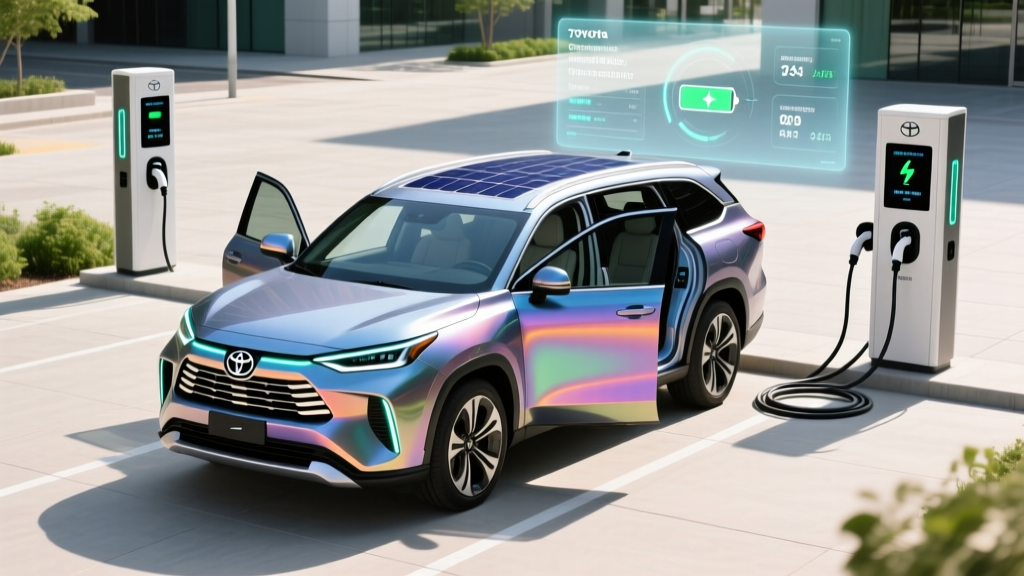
Toyota confirmed the 2027 Highlander electric three-row SUV details as part of its expanded North American EV lineup, signaling a battery-electric successor to the long-running gas Highlander. As of early 2026, Toyota has outlined a target of approximately 300+ miles of EPA-estimated range, an 800V-class architecture enabling DC fast charging up to roughly 250 kW, and three-row seating for up to seven passengers. Pricing is expected to start in the low-to-mid $50,000 range before incentives. However, final EPA certification, exact battery capacity, and trim-level pricing remain preliminary until the vehicle goes on sale, likely in late 2026 as a 2027 model year. If you need a three-row electrified SUV today, the current Highlander Hybrid or the all-electric Kia EV9 remain your real-world options.
What Toyota Has Actually Confirmed (and What's Still Preliminary)
Toyota's EV roadmap announcements have pointed to a three-row electric SUV positioned in the Highlander segment, built on an evolution of the company's dedicated EV platform. Here is a breakdown of what is confirmed versus what remains estimated based on Toyota's stated targets and platform capabilities:
| Specification | Status | Details |
|---|---|---|
| Vehicle class | Confirmed | Three-row electric SUV, 6-7 passenger seating |
| Platform | Confirmed | Evolved dedicated BEV architecture (800V-class) |
| EPA range target | Preliminary | 300+ miles (est. ~300–340 mi depending on trim) |
| Battery capacity | Estimated | ~90–105 kWh usable (likely NMC chemistry) |
| Peak DC fast charge rate | Preliminary | Up to ~250 kW |
| 10–80% charge time | Estimated | ~22–28 minutes (based on 800V architecture) |
| Level 2 onboard charger | Estimated | ~11 kW (~37 mi/hr at 240V) |
| Horsepower | Estimated | ~300–400 hp (dual-motor AWD expected) |
| 0–60 mph | Estimated | ~5.5–6.5 seconds |
| Towing capacity | Estimated | ~3,500–5,000 lbs |
| Starting MSRP | Estimated | ~$52,000–$56,000 (base trim) |
| Federal tax credit (§30D) | TBD | Depends on battery sourcing & MSRP caps at launch |
| On-sale date | Preliminary | Late 2026 as a 2027 model year |
| Battery warranty | Estimated | 8 years / 100,000 miles (Toyota's standard EV warranty) |
The critical distinction here: Toyota has confirmed the vehicle's existence and its general positioning, but final EPA range, battery specs, pricing, and tax-credit eligibility will not be locked in until closer to launch. Any source presenting exact numbers as final right now is speculating.
How It Compares: Electric vs. Gas Highlander vs. Hybrid
The Highlander nameplate has been a family-SUV staple for two decades. The electric version will compete not only with rival EVs but also with Toyota's own Highlander Hybrid and the gas-only Grand Highlander. Here is a data-driven comparison based on current models and projected specs for the electric variant:
| Metric | 2027 Highlander EV (Est.) | 2026 Highlander Hybrid | 2026 Grand Highlander Gas |
|---|---|---|---|
| Powertrain | Dual-motor BEV (AWD) | 2.5L 4-cyl hybrid (AWD) | 2.4L turbo 4-cyl (AWD) |
| EPA range / efficiency | ~300–340 mi / ~90 MPGe | 35 MPG combined | 24 MPG combined |
| Energy/fuel cost per mile | ~$0.04–$0.06 (home charging) | ~$0.10 (at $3.50/gal) | ~$0.15 (at $3.50/gal) |
| Annual fuel/energy (15k mi) | ~$600–$900 | ~$1,500 | ~$2,190 |
| Starting MSRP | ~$52,000–$56,000 | ~$42,000 | ~$40,000 |
| Seating | 6–7 passengers | 7–8 passengers | 7–8 passengers |
| Towing | ~3,500–5,000 lbs (est.) | 3,500 lbs | 5,000 lbs |
| Maintenance (annual avg.) | ~$300–$400 | ~$500–$600 | ~$600–$700 |
The takeaway: The electric Highlander will carry a higher upfront price — roughly $10,000–$14,000 more than the hybrid — but offers substantially lower per-mile energy costs and reduced maintenance. At 15,000 miles per year, the annual fuel savings over the gas Grand Highlander could reach $1,300–$1,500, meaning the price premium could be recovered in roughly 7–10 years through fuel savings alone, or faster if the federal tax credit applies.
Real Costs of Ownership: Purchase, Charging, and Maintenance
Buying an electric three-row SUV involves different cost categories than a gas vehicle. Here is a realistic five-year ownership cost projection for the 2027 Highlander Electric compared to the current Highlander Hybrid, assuming 15,000 miles per year:
| Cost Category | Highlander EV (Est.) | Highlander Hybrid |
|---|---|---|
| Purchase price (base MSRP) | $54,000 | $42,000 |
| Federal tax credit (§30D) | –$3,750 to –$7,500 (if eligible) | $0 |
| Home Level 2 charger install | $800–$2,000 | $0 |
| Energy/fuel (5 years, 75k mi) | $3,000–$4,500 | $7,500 |
| Maintenance (5 years) | $1,500–$2,000 | $2,500–$3,000 |
| Insurance (5-year avg.) | $9,000–$11,000 | $7,500–$9,000 |
| Estimated depreciation | $22,000–$27,000 | $16,000–$19,000 |
| 5-Year Total (pre-credit) | ~$67,300–$73,500 | ~$58,000–$63,500 |
| 5-Year Total (with max credit) | ~$59,800–$66,000 | ~$58,000–$63,500 |
Several important nuances affect these numbers:
- Federal tax credit (§30D): Under current IRS rules, the credit ranges from $3,750 to $7,500 depending on battery component and critical-mineral sourcing requirements. The vehicle must also meet MSRP caps ($80,000 for SUVs) and buyer income limits ($300,000 joint / $150,000 single). Toyota's battery sourcing strategy will determine how much credit the Highlander Electric qualifies for at launch — this is not guaranteed.
- Insurance: EVs typically cost 15–25% more to insure than equivalent gas vehicles due to higher repair costs and parts pricing. Get quotes before purchasing.
- Depreciation: EV depreciation has been volatile. Toyota's brand reputation for reliability may help, but the used EV market is still establishing long-term residuals.
- Home charging setup: A Level 2 home charger (240V, 48A) is nearly essential for a large-battery SUV. Expect to pay $800–$2,000 for equipment and installation, potentially more if your electrical panel needs a 200A upgrade ($1,500–$3,000 additional).
Charging Reality: What 250 kW Actually Means for a Family SUV
Toyota's move to an 800V-class architecture is significant. This is the same voltage class used by Hyundai/Kia's E-GMP platform and the Porsche Taycan, enabling faster DC charging and thinner, lighter wiring. But peak charge rate is not sustained charge rate — here is what to realistically expect:
Charging Expectations — Real World vs. Peak Rate
Peak rate: ~250 kW (at low state of charge, optimal battery temperature)
Sustained average (10–80%): ~160–190 kW typical
10–80% charge time: ~22–28 minutes at a 350 kW-capable station
Miles added in 15 minutes: ~130–170 miles (highway driving)
Level 2 home charging (11 kW): ~9–10 hours from 10–80%, or roughly 37 miles of range per hour of charging
Note: Charging speed tapers significantly above 80% state of charge. Preconditioning the battery — which Toyota is expected to support via navigation-linked thermal management — is essential to achieving peak rates at DC stations.
For a family hauling kids and cargo on road trips, the 10–80% time matters more than the peak kW number. A ~25-minute fast-charge stop every 200–250 miles is workable for most families, especially when paired with rest stops and meal breaks. But if your typical road trip involves remote areas with sparse DC charging infrastructure, this is a real planning consideration — not a dealbreaker, but a fact.
Real-World Ownership Considerations Before You Commit
A three-row electric SUV is a major purchase. Here are the practical factors that will determine whether the 2027 Highlander Electric works for your household:
Home Charging Access
This is the single biggest determinant of EV satisfaction. If you can install a Level 2 charger at home (garage or driveway with 240V access), you will wake up to a full battery every morning, and public charging becomes an occasional road-trip concern rather than a daily chore. If you live in an apartment or lack dedicated parking, relying on public Level 2 or DC fast charging for a ~100 kWh battery is expensive and time-consuming. Confirm your charging situation before ordering.
Climate Impact on Range
Lithium-ion batteries lose efficiency in cold weather. Expect 15–30% range reduction in sustained sub-freezing temperatures, depending on whether the vehicle uses a heat pump (likely, given Toyota's recent EV designs). A 320-mile EPA rating could drop to 225–270 real-world miles in January in Minnesota. If you live in a cold climate and regularly drive long distances in winter, factor this into your range needs.
Driving Patterns
Highway driving at 75+ mph reduces range more than city driving due to aerodynamic drag. Regenerative braking recovers energy in stop-and-go traffic, making EVs more efficient in urban use. If 90% of your driving is local and under 60 miles per day, any 300+ mile EV will cover your needs with room to spare. If you regularly tow a trailer or drive 300+ miles in a single day, plan for at least one DC fast-charge stop.
Common Misconceptions — Fact-Checked
| Myth | Fact |
|---|---|
| "The battery will need replacing in 5 years and cost $20,000." | Modern NMC and LFP batteries are designed to retain 70–80% capacity after 150,000–200,000 miles. Toyota's expected warranty covers 8 years/100,000 miles at a minimum 70% capacity threshold. Full replacement is rare and typically only needed after major damage. |
| "I'll get the full $7,500 federal tax credit automatically." | The §30D credit depends on battery sourcing (critical minerals and component assembly in North America or FTA-partner countries), MSRP caps ($80,000 for SUVs), and buyer income limits. Not every EV qualifies for the full amount. Check IRS.gov for current eligibility. |
| "An electric SUV can't tow." | EVs deliver instant torque, making them capable tow vehicles. The Rivian R1S tows 7,700 lbs; the Kia EV9 tows up to 5,000 lbs. The Highlander Electric is expected in the 3,500–5,000 lb range — adequate for small boats and utility trailers. Towing does reduce range by 30–50%, however. |
| "Charging takes too long for road trips." | A 10–80% charge in ~25 minutes at a 250 kW station adds 150+ miles. Most families stop for 20–30 minutes every 2–3 hours anyway for restrooms and food. The real issue is charger availability and reliability in certain corridors, not the charge time itself. |
| "Toyota is behind on EVs, so this will be disappointing." | Toyota's bZ4X had a rough launch, but the company has since committed to next-gen platforms with 800V architecture, improved battery chemistry, and faster charging. The Highlander Electric represents their second-generation EV effort — expect meaningful improvements over the bZ4X. |
Decision Framework: Should You Wait or Buy Now?
Choose the 2027 Highlander Electric (wait) if:
- You want a three-row EV from a brand with a strong reliability and resale reputation
- You have home Level 2 charging access (or can install it)
- Your daily driving is under 80 miles, with occasional 200–300 mile road trips
- You can wait until late 2026 or 2027 to purchase
- You want Toyota Safety Sense and Toyota's dealer/service network for long-term support
Choose an alternative now if:
- You need a three-row EV immediately — consider the Kia EV9 (EPA 304 mi, starts ~$56,000, up to 5,000-lb towing) or the Rivian R1S (EPA 321–410 mi, starts ~$79,900)
- You want a proven three-row electrified SUV today — the Toyota Highlander Hybrid (35 MPG, starts ~$42,000) is available now with no charging requirements
- You lack home charging and live in an area with limited public DC infrastructure — a hybrid is far more practical
- You regularly tow heavy loads over long distances — gas or hybrid remains more practical until charging infrastructure catches up on rural corridors
- You want the lowest possible upfront cost — the hybrid or gas Grand Highlander saves $10,000–$14,000 at purchase
Frequently Asked Questions
Will the 2027 Highlander Electric qualify for the $7,500 federal tax credit?
It depends on Toyota's battery sourcing at launch. Under current IRS §30D rules, the credit is split into two halves: $3,750 for battery components manufactured in North America and $3,750 for critical minerals sourced from the U.S. or FTA-partner countries. Toyota has been working to localize its EV battery supply chain (including its North Carolina battery plant), but final eligibility won't be confirmed until closer to launch. Buyer income caps ($300,000 joint / $150,000 single) and the $80,000 SUV MSRP cap also apply.
How does the Highlander Electric compare to the Kia EV9?
The Kia EV9 is the closest current rival: three rows, ~304 miles EPA range, up to 236 kW DC charging, and a starting price around $56,000. The Highlander Electric is expected to be similar in size and capability, but Toyota's brand reputation for long-term reliability and potentially stronger resale value could differentiate it. Direct comparison will only be possible once final specs are published.
What battery chemistry will Toyota use?
Toyota has used both NMC (nickel manganese cobalt) and is developing LFP (lithium iron phosphate) batteries. For a premium three-row SUV targeting 300+ miles, NMC is more likely due to its higher energy density. LFP offers longer cycle life and lower cost but is heavier per kWh, making it better suited to smaller or more affordable models. Toyota has also announced bipolar battery packaging for improved space efficiency.
Can I charge at Tesla Superchargers?
Toyota has committed to adopting the NACS (North American Charging Standard) connector for its future EVs in North America. The 2027 Highlander Electric is expected to ship with a native NACS port, granting access to Tesla's Supercharger network — currently the largest and most reliable DC fast-charging network in the U.S. with over 25,000 stalls. This is a significant advantage over vehicles still using CCS that require adapters.
Is the third row actually usable for adults?
Based on the current Highlander's proportions, expect the third row to be best suited for children or shorter adults on brief trips — similar to the Kia EV9 and most midsize three-row SUVs. Cargo space behind the third row will likely be in the 15–20 cubic foot range, expanding to 40+ cubic feet with the third row folded. Toyota has not yet published official interior dimensions.
What if I can't charge at home?
Public DC fast charging a ~100 kWh battery from 10–80% at $0.35–$0.50/kWh costs roughly $25–$40 per session. Doing this 3–4 times per month adds $75–$160 in monthly energy costs — still less than gas, but significantly more than home Level 2 charging at $0.12–$0.18/kWh. If home charging is truly impossible, consider whether a plug-in hybrid or conventional hybrid better fits your situation until charging access improves.