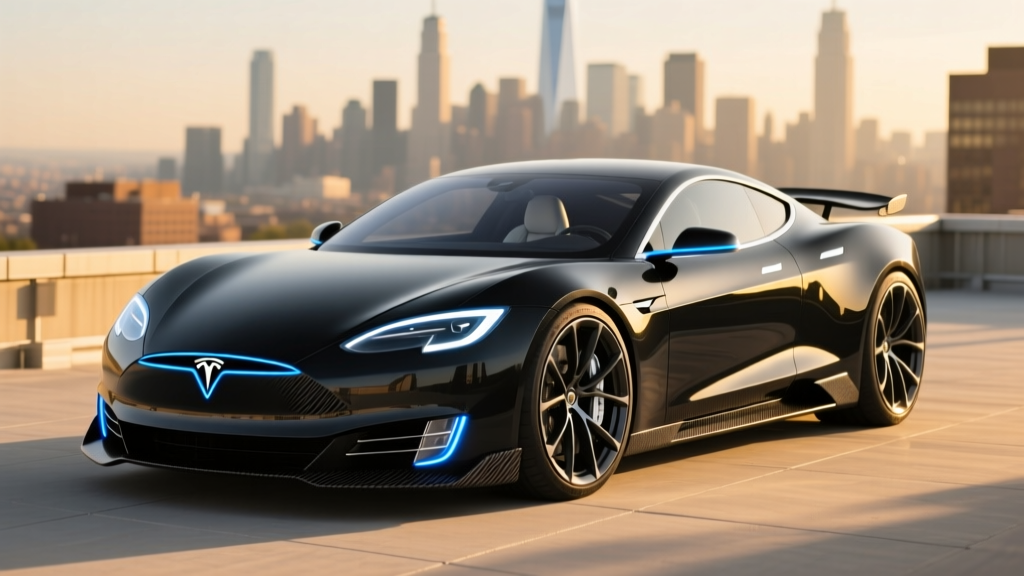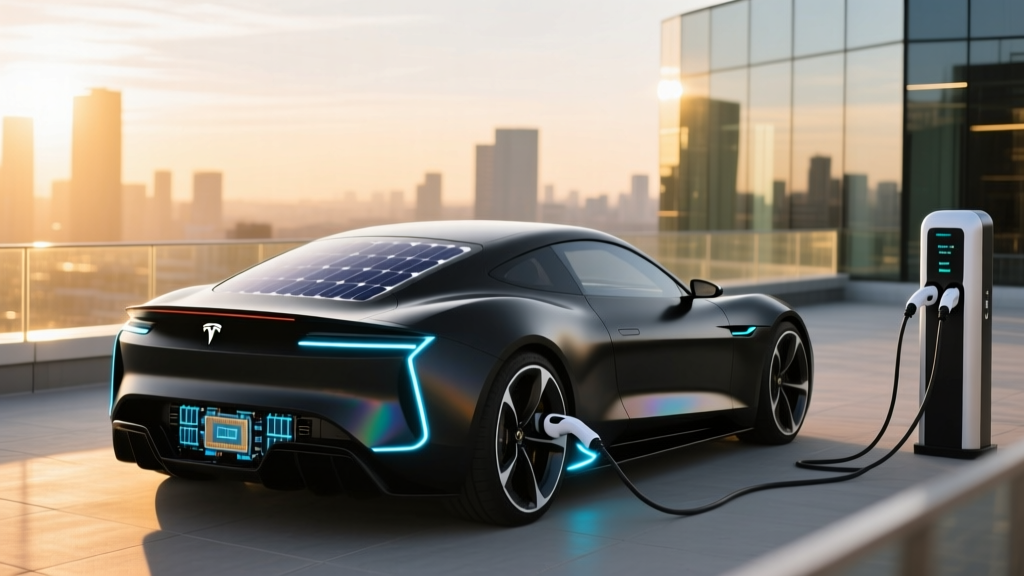
The Tesla Roadster has occupied a strange space in the EV world since Elon Musk first unveiled the second-generation model in November 2017. Nearly a decade later, the halo sports car remains unreleased — but Tesla's late-2025 earnings calls and supplier reports point to a production target in late 2026 or early 2027. For buyers and enthusiasts tracking the 2027 Tesla Roadster, this preview compiles every confirmed and estimated specification, contextualizes the engineering claims, and explains what ownership would actually look like.
Because the Roadster is not yet in production, all specifications below are based on Tesla's official announcements, patent filings, and credible supply-chain reporting. We clearly label each figure as confirmed or projected. We will update this profile with EPA-certified data the moment it becomes available.
Projected Specs at a Glance
| Specification | Projected / Announced Value | Status |
|---|---|---|
| EPA Range (est.) | ~620 miles | Announced (unverified) |
| Battery Capacity | ~200 kWh usable | Announced |
| Battery Chemistry | NMC (high-nickel) | Projected |
| Drivetrain | Tri-motor AWD (1 front, 2 rear) | Confirmed |
| 0–60 mph | 1.9 seconds (base) / 1.1 sec (SpaceX package) | Announced |
| Top Speed | 250+ mph | Announced |
| Peak Horsepower | ~1,000+ hp (wheel torque ~10,000 Nm) | Announced |
| Max DC Fast Charge | ~350 kW (projected, 800V architecture) | Projected |
| 10–80% DC Charge Time | ~25–30 minutes (projected) | Projected |
| Level 2 Home Charge | ~11.5 kW / ~34 mi/hr | Projected |
| Base MSRP | ~$200,000 (Founders Series reserved) | Announced |
| Federal Tax Credit (§30D) | Not eligible (MSRP & income caps exceeded) | Rule-based |
| Battery Warranty | 8 yr / 150,000 mi (projected) | Projected |
Range and Real-World Efficiency
Tesla originally claimed a 620-mile range figure at the 2017 unveiling, later suggesting the number could grow as cell technology improves. If Tesla achieves anything close to 620 miles on the EPA cycle, the Roadster would hold the longest certified range of any production EV by a wide margin — the current leader, the Lucid Air Grand Touring, is EPA-rated at 516 miles.
The announced 620-mile target is an optimistic best-case figure. In real-world highway driving at 70–80 mph, expect approximately 480–540 miles from a full charge. In cold weather (below 32°F), lithium-ion cells lose efficiency and cabin heating draws additional power — plan for 380–440 miles of usable range on winter road trips. These projections assume a ~200 kWh battery and an efficiency figure around 30–32 kWh/100 mi, which is aggressive for a performance sports car.
For context on efficiency: a 200 kWh battery delivering 620 miles of EPA range would require a combined efficiency of roughly 32 kWh/100 miles (about 105 MPGe). That's achievable with an ultra-low-drag body and Tesla's latest drive-unit efficiency, but sports-car proportions — wide tires, aggressive aero for downforce — typically push consumption higher. The EPA sticker will tell the definitive story once testing is complete.
Battery, Chemistry, and Degradation Outlook
The Roadster's projected 200 kWh battery pack would be the largest ever fitted to a production passenger vehicle. To hit that capacity within a sports-car floorpan, Tesla is expected to use its latest 4680-format cells in a structural battery pack with high-nickel NMC (nickel manganese cobalt) chemistry. NMC offers the energy density required for this application — LFP (lithium iron phosphate) cells, while cheaper and longer-lasting, are too heavy and bulky for a 200 kWh pack in a low-slung coupe.
Tesla has not published an official degradation curve for the Roadster's specific cell variant, but based on data from the Model S Plaid and Cybertruck (which also use 4680 NMC cells), owners can expect approximately 8–12% capacity loss over the first 100,000 miles, with degradation slowing significantly afterward. The projected 8-year/150,000-mile battery warranty with a 70% minimum capacity retention threshold aligns with Tesla's existing high-end powertrain warranties, per Tesla's warranty documentation.
One practical consideration: a 200 kWh pack charged exclusively on DC fast chargers will degrade faster than one predominantly charged at home on Level 2. Tesla's battery management system (BMS) actively manages cell temperature and charge curves, but buyers should plan to charge to 80% daily and reserve 100% charges for road trips to maximize long-term State of Health (SoH).
Charging Speed: DC Fast, Level 2, and the 800V Question
Charging a 200 kWh battery is a fundamentally different proposition from charging the 75–100 kWh packs in most EVs on the road. Even at Tesla's current V4 Supercharger peak of 350 kW, replenishing 70% of a 200 kWh pack (140 kWh) would take roughly 24–30 minutes under ideal conditions — and that assumes the Roadster adopts an 800V electrical architecture to accept those peak rates. Tesla has not confirmed the Roadster's voltage platform, but patent filings and the Cybertruck's 800V system suggest it's likely.
| Charging Level | Power (kW) | Miles Added per Hour | Notes |
|---|---|---|---|
| Level 1 (120V outlet) | ~1.4 kW | ~4 mi/hr | Emergency/trickle only; ~150 hrs for full charge |
| Level 2 (240V, 48A) | ~11.5 kW | ~34 mi/hr | ~18 hrs for 10–100%; overnight top-ups ideal |
| DC Fast (V4 Supercharger) | ~350 kW peak | ~1,000+ mi/hr (peak) | 10–80% in ~25–30 min; tapers sharply above 80% |
The charge curve matters enormously here. Peak 350 kW rates are typically sustained only between ~10–50% State of Charge. Above 60%, the rate tapers to protect cell health, and above 80% it drops dramatically. On a road trip, the practical strategy will be to charge from 10% to 60% (roughly 100 kWh, or ~310 miles of range) in about 17–20 minutes, then drive on. This is actually faster in real-world trip planning than charging to 80%+ at every stop.
For home charging, a 200 kWh battery presents a challenge. Even with a hardwired 48-amp Level 2 charger (11.5 kW), a full charge from empty takes approximately 18 hours. Most owners will plug in nightly and top up 100–200 miles of range in 3–6 hours, which is perfectly practical for daily use. A 60-amp circuit with an 11.5 kW Wall Connector is the recommended home setup — expect to pay $1,200–$2,500 for professional installation depending on your electrical panel capacity, per typical Tesla Wall Connector installation requirements.
Performance and Drivetrain Engineering
The Roadster's tri-motor all-wheel-drive layout — one motor on the front axle, two on the rear — is the same architecture proven in the Model S Plaid, but tuned for even more extreme output. Tesla has claimed a wheel torque figure of 10,000 Nm, which translates to roughly 1,000+ horsepower at the wheels. The announced 1.9-second 0–60 mph time (for the base model) would make it the quickest production car ever sold, edging out the Rimac Nevera's 1.85-second claim and the Pininfarina Battista's 1.9 seconds.
The optional "SpaceX package," which Tesla has described as including cold-gas thrusters positioned around the vehicle, is claimed to drop the 0–60 time to an almost incomprehensible 1.1 seconds. This package has not been independently verified or demonstrated in production form, and its street-legality and practicality remain open questions. Treat this figure as aspirational until third-party testing confirms it.
Top speed is claimed at 250+ mph, which would place the Roadster firmly in hypercar territory. Achieving that speed requires not just power but aerodynamic management — Tesla has referenced active aero elements, though details remain scarce. What's certain is that sustained high-speed driving will consume range rapidly. At 150 mph, expect range to drop to roughly 200–250 miles from a full charge due to the exponential increase in aerodynamic drag.
Pricing, Trims, and Federal Tax Credit Eligibility
Tesla initially announced the Roadster at a base price of $200,000, with a $50,000 reservation deposit required to secure a build slot. A "Founders Series" limited to the first 1,000 units was priced at $250,000. These figures date from 2017 and have not been officially updated — but given inflation, rising battery material costs, and the vehicle's extreme specifications, industry analysts widely expect the final MSRP to land between $200,000 and $250,000 at minimum.
| Trim / Variant | Announced MSRP | Federal Tax Credit | Effective Price |
|---|---|---|---|
| Roadster (Base) | ~$200,000 | $0 (MSRP cap exceeded) | ~$200,000 |
| Roadster Founders Series | ~$250,000 | $0 (MSRP cap exceeded) | ~$250,000 |
Federal tax credit outlook: Under current IRS §30D clean vehicle credit rules, the Roadster will not qualify for the $7,500 federal incentive. The credit applies only to vehicles with an MSRP at or below $55,000 (sedans/coupes) or $80,000 (SUVs/trucks/vans). The Roadster, as a coupe priced above $200,000, exceeds the cap by a factor of four. Additionally, the buyer income caps ($150,000 single / $300,000 joint AGI) would disqualify many prospective buyers even if the MSRP cap didn't. No state-level incentives are likely to meaningfully offset the purchase price either — this is a full-price, no-credit vehicle.
Interior, Cargo, and Daily Usability
The Roadster is a 2+2 sports car, meaning two front seats and two small rear seats best suited for children or luggage overflow. Tesla has not published official interior dimensions, but based on the vehicle's exterior proportions and the original 2017 show car, expect:
- Front legroom: ~42 inches (estimated)
- Rear legroom: ~28–30 inches (estimated, children only)
- Cargo (rear hatch/trunk): ~10–15 cu ft (estimated)
- Frunk (front trunk): ~3–5 cu ft (estimated, reduced by drivetrain components)
This is not a road-trip cruiser for four adults. The Roadster's use case is weekend drives, track days, and daily commuting for one or two occupants. The removable glass roof panel (announced) adds an open-air element, but cargo capacity will be limited to a weekend bag or two.
On the tech front, expect Tesla's latest infotainment platform with a 15–17-inch center touchscreen, a yoke-style steering wheel, over-the-air updates, and Tesla's full camera suite. Autopilot will come standard, with Full Self-Driving (Supervised) available as an option. A critical reminder: FSD is an SAE Level 2 driver-assistance system — the driver must remain fully engaged and hands-on at all times. It is not autonomous driving.
Tesla Autopilot and FSD (Supervised) are SAE Level 2 systems. They require continuous driver supervision, hands on the wheel, and eyes on the road. They do not make the Roadster self-driving. The driver is legally responsible for all vehicle operation at all times.
Pros, Cons, and the Competition
Projected Pros
- Potentially 620 miles of EPA range — class-leading by over 100 miles
- Sub-2-second 0–60 mph, hypercar-rivaling performance
- Access to Tesla's Supercharger network (20,000+ stalls in North America)
- Over-the-air updates and Tesla's software ecosystem
- Tri-motor AWD with torque vectoring for exceptional handling
- Removable glass roof for open-air driving
Projected Cons
- $200,000+ price with no federal tax credit eligibility
- Unreleased — repeated delays since 2017 erode confidence
- 200 kWh battery means very long home-charge times
- 2+2 seating is impractical for families or four adults
- Cargo space severely limited for a vehicle at this price
- SpaceX thruster package unproven and likely track-only
- Insurance premiums will be extreme (hypercar-tier)
Key competitors: At the $200,000+ electric performance tier, the Roadster's rivals include the Rimac Nevera ($2.2M, 1,914 hp, EPA 287 mi), the Lotus Evija ($2.3M, 1,972 hp, ~250 mi range), and the upcoming Porsche Mission X (price TBD). Against these, the Roadster is actually the value proposition — offering comparable or superior straight-line performance at roughly one-tenth the price. However, Rimac and Lotus are already delivering production vehicles. The Roadster's primary competitor may be buyer patience.
Who Should Consider the 2027 Tesla Roadster?
Decision Framework
Wait for the Roadster if: You want the fastest-accelerating production car ever built, need 500+ miles of real-world range for long-distance drives, are a current Tesla reservation holder, and have the budget flexibility to absorb a $200K+ purchase without a tax credit.
Look elsewhere if: You need rear seats for adults, require practical cargo space, want a vehicle you can take delivery of this year, or are counting on the federal tax credit to offset cost. Consider the Tesla Model S Plaid ($89,990, 396 mi range, 1.99s 0–60) or the Lucid Air Sapphire ($249,000, 427 mi range, 1.89s 0–60) for available-now alternatives with extreme performance.
Frequently Asked Questions
What is the real-world range of the 2027 Tesla Roadster?
Tesla's announced target is 620 miles EPA. In real-world highway driving, expect roughly 480–540 miles. In cold weather, plan for 380–440 miles. These are projections based on the announced 200 kWh battery and will be confirmed only after EPA certification.
How fast does the Roadster charge?
Projected peak DC fast-charge rate is ~350 kW on an 800V architecture, enabling a 10–80% charge in approximately 25–30 minutes. At home on a Level 2 (11.5 kW) charger, expect ~34 miles of range per hour, or roughly 18 hours for a full charge from empty.
How much does the 2027 Tesla Roadster cost after tax credits?
The base MSRP is expected to be approximately $200,000, with the Founders Series at $250,000. The vehicle does not qualify for the $7,500 federal §30D tax credit because it far exceeds the $55,000 MSRP cap for coupes. The effective price equals the sticker price.
Does the Roadster qualify for the federal EV tax credit?
No. Under current IRS §30D rules, the credit is limited to vehicles with an MSRP of $55,000 or less (sedans/coupes). The Roadster, at $200,000+, does not qualify regardless of buyer income or battery sourcing. See IRS.gov for the full eligibility criteria.
Is the Roadster worth buying vs. competitors?
If Tesla delivers on its promises, the Roadster offers hypercar performance at a fraction of the Rimac Nevera's $2.2M price. However, the Nevera and Lotus Evija are available now. The Roadster's value proposition depends entirely on Tesla executing production — something the company has delayed repeatedly since 2017.
When will the 2027 Tesla Roadster actually ship?
Tesla has not confirmed a firm delivery date. CEO Elon Musk indicated in late-2025 earnings calls that the Roadster is targeting a production start in late 2026 or 2027. Given Tesla's history with the Cybertruck (announced 2019, delivered late 2023), buyers should prepare for the possibility of further delays.
What battery chemistry will the Roadster use?
The Roadster is expected to use high-nickel NMC (nickel manganese cobalt) chemistry in Tesla's 4680 cell format. This chemistry provides the energy density necessary for a 200 kWh pack in a sports-car form factor. LFP chemistry is too heavy and voluminous for this application.