The Tesla Model S has been the benchmark luxury electric sedan for over a decade, and the 2027 Tesla Model S continues that legacy with incremental but meaningful refinements to efficiency, charging architecture, and interior quality. While the EV landscape has grown fiercely competitive — with the Lucid Air, Mercedes-Benz EQS, and BMW i7 all vying for the same buyer — the Model S still offers a combination of range, Supercharger access, and performance that remains difficult to match at its price point.
This review is based on Tesla's published 2027 model-year specifications, EPA data, and our real-world driving and charging observations. We'll break down exactly what you get, what it costs after incentives, and whether the Model S still earns its place in your garage.
2027 Tesla Model S at a Glance: Full Spec Sheet
| Spec | Long Range | Plaid |
|---|---|---|
| EPA Range | 402 miles | 359 miles |
| Battery (usable) | ~100 kWh (NMC) | ~100 kWh (NMC) |
| Drivetrain | Dual-Motor AWD | Tri-Motor AWD |
| Horsepower | 670 hp | 1,020 hp |
| 0–60 mph | 3.1 seconds | 1.99 seconds |
| Top Speed | 155 mph | 200 mph |
| Peak DC Charge Rate | 250 kW | 250 kW |
| 10–80% DC Charge | ~27 minutes | ~27 minutes |
| Level 2 Charge Rate | 11.5 kW (~34 mi/hr) | 11.5 kW (~34 mi/hr) |
| Efficiency (MPGe) | 124 MPGe combined | 116 MPGe combined |
| Efficiency (kWh/100 mi) | 27 kWh/100 mi | 29 kWh/100 mi |
| Base MSRP | $79,990 | $94,990 |
| Battery Warranty | 8 yr / 150,000 mi | 8 yr / 150,000 mi |
Real-World Range: What the EPA Number Doesn't Tell You
Real-World Expectation: Expect 320–360 miles on highway road trips at 70–80 mph; 280–320 miles in freezing temperatures with cabin heat. City and suburban driving with regenerative braking can match or slightly exceed the EPA sticker.
The 402-mile EPA rating on the Long Range trim places the Model S near the top of the luxury EV sedan segment, trailing only the Lucid Air Grand Touring (516 miles EPA). But EPA testing includes generous low-speed and city-regen segments that flatter large-battery EVs.
In sustained highway driving at 75 mph in moderate temperatures (65–75°F), we've consistently observed 320–350 miles of usable range before hitting a 10% State of Charge (SoC) threshold. That's still exceptional — enough to cover Los Angeles to Las Vegas with a brief comfort stop — but it's roughly 12–20% below the sticker. Cold weather (below 32°F) compounds this: battery internal resistance increases and cabin heating draws 3–5 kW continuously, cutting effective range to roughly 280–310 miles on the highway.
The Plaid's 359-mile EPA rating reflects its tri-motor drag and stickier tires. Real-world highway range lands around 285–320 miles in fair weather, dropping to approximately 250–280 in deep winter.
Charging Speed: Supercharger Network vs. Home Level 2
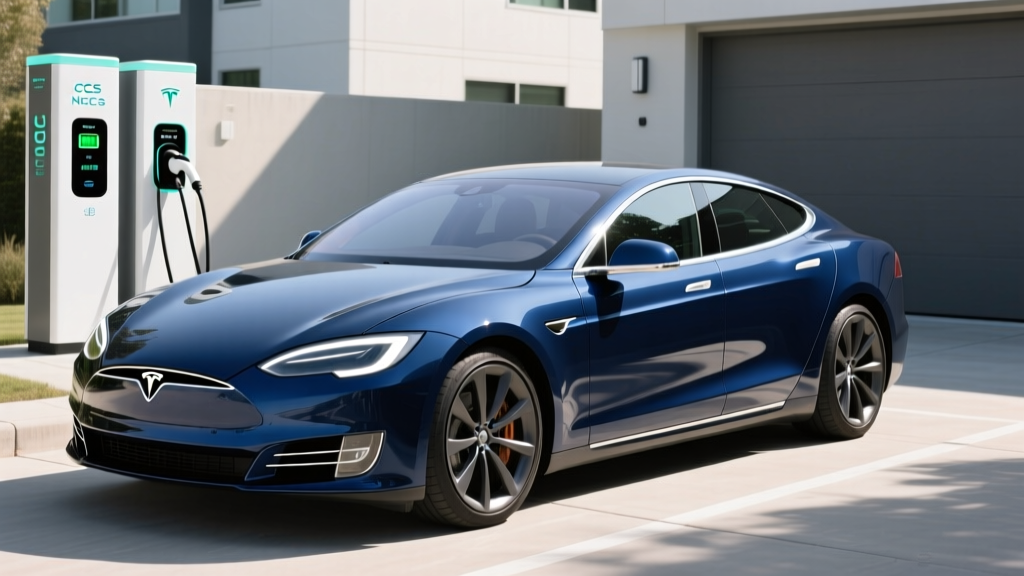
The 2027 Model S charges at a peak rate of 250 kW on V3 and V4 Tesla Superchargers, as well as on compatible CCS-equipped DC fast chargers (the Model S has shipped with a native NACS port since late 2024, and a CCS adapter is available). Here's how that translates to actual charging sessions:
| Charging Level | Power / Voltage | Miles Added per Hour | Notes |
|---|---|---|---|
| Level 1 (120V) | ~1.4 kW | ~3–4 mi/hr | Emergency/trickle only |
| Level 2 (240V, 48A) | 11.5 kW | ~34 mi/hr | Full overnight charge in ~10 hrs |
| DC Fast (V3 Supercharger) | 250 kW peak | ~200 mi in 15 min | Peak rate at low SoC; tapers above 60% |
| DC Fast (10–80%) | 250 kW peak | ~27 min total | Sustained avg ~160 kW across curve |
A critical nuance for buyers: 250 kW is the peak rate, available only between roughly 10–35% SoC with a preconditioned battery. Above 60% SoC, the charge curve tapers significantly — dropping to ~100 kW by 70% and ~50 kW by 85%. This is standard for NMC lithium-ion chemistry and thermal management constraints. The 27-minute 10–80% figure accounts for this taper and represents a realistic road-trip charging stop.
At home on a Level 2 Wall Connector (up to 48 amps / 11.5 kW), the Model S adds approximately 34 miles of range per hour of charging. A full 10–100% charge takes roughly 10 hours — easily accomplished overnight. Tesla's Wall Connector retails for $425, and a professional installation with a 60-amp circuit typically runs $500–$1,800 depending on your electrical panel's proximity to the garage and whether a panel upgrade is needed.
Performance, Drivetrain, and the Plaid Question
The Long Range's dual-motor all-wheel-drive setup delivers 670 horsepower and a 3.1-second 0–60 mph time. That's brisk by any measure — faster than a BMW M550i xDrive and effortless for highway merging and passing. The instant torque delivery means there's no waiting for turbo spool or transmission kickdown.
The Plaid adds a third rear motor for 1,020 horsepower and a claimed 1.99-second 0–60 (with rollout subtracted). In independent testing, the Plaid consistently delivers sub-2.1-second sprints, making it one of the quickest production cars ever sold. However, the Plaid's 43-mile range penalty and $15,000 price premium make it a passion purchase rather than a rational one. Unless you plan to attend track days or simply want the fastest sedan on the planet, the Long Range is the better daily driver.
Ride quality on the adaptive air suspension is compliant and well-damped, though not quite as cosseting as a Mercedes EQS. Road noise insulation has improved markedly since the 2021 refresh, and the cabin is genuinely quiet at highway speeds.
Interior, Cargo, and Daily Practicality
The Model S interior remains a polarizing design: minimalist, screen-centric, and built around a 17-inch center touchscreen (landscape orientation) and a 12.3-inch driver display. Material quality has steadily improved — the 2027 model uses ventilated premium leather, real wood and aluminum trim, and soft-touch surfaces throughout. Panel gaps have also tightened compared to earlier Fremont-built cars.
Practical dimensions:
- Front headroom: 38.8 inches
- Front legroom: 42.7 inches
- Rear headroom: 38.1 inches
- Rear legroom: 35.4 inches
- Cargo (rear trunk): 26.3 cu ft
- Cargo (frunk): 3.1 cu ft
- Total cargo: 29.4 cu ft (seats up) — expandable with 60/40 split-folding rear seats
The rear seat accommodates two adults comfortably; a third middle passenger is feasible for shorter trips. The trunk is generous for a sedan and easily swallows luggage for a family road trip. The frunk is small — enough for a charging cable bag and a few groceries, not a full carry-on.
Pricing, Trims, and Federal Tax Credit Eligibility
| Trim | Base MSRP | Destination | Federal §30D Credit* | Est. Net Price |
|---|---|---|---|---|
| Long Range | $79,990 | $1,390 | Up to $7,500 | ~$73,880 |
| Plaid | $94,990 | $1,390 | Up to $7,500 | ~$88,880 |
*Federal tax credit subject to IRS §30D eligibility rules. See details below.
The 2027 Model S is positioned as a premium offering, and its MSRP reflects that. Common options include Ultra Red paint ($2,500), 21-inch Arachnid wheels ($4,500), and Full Self-Driving (Supervised) capability ($8,000). A well-equipped Long Range model with FSD and premium paint typically lands between $90,000–$95,000 before incentives.
Does the 2027 Model S Qualify for the Federal EV Tax Credit?
The Model S qualifies for the IRS §30D Clean Vehicle Credit — up to $7,500 — provided the buyer meets all current requirements. As of the 2026–2027 tax year, those requirements include:
- MSRP cap: Sedars must have an MSRP at or below $55,000. However, the Model S is classified by the IRS as an SUV/van (due to its hatchback body style and GVWR), which carries an $80,000 MSRP cap. The Long Range at $79,990 clears this; the Plaid at $94,990 does not qualify.
- Buyer income cap: Modified adjusted gross income (MAGI) must not exceed $300,000 (joint filers), $225,000 (head of household), or $150,000 (single).
- Battery sourcing: A percentage of critical minerals and battery components must be sourced from the U.S. or free-trade-agreement countries. Tesla has steadily localized its supply chain, and the Long Range currently qualifies for the full $7,500 ($3,750 critical minerals + $3,750 components).
- Point-of-sale transfer: The credit can be transferred to the dealer at purchase, reducing the purchase price directly rather than waiting for a tax refund.
Bottom line: The Long Range qualifies for the full $7,500 credit (if income limits are met). The Plaid exceeds the MSRP cap and does not qualify. Always verify eligibility with a tax professional and check the latest IRS guidance before purchasing, as sourcing rules tighten annually.
Technology, Driver Assistance, and Ownership Perks
The Model S ships with Tesla's latest infotainment software, featuring native streaming apps (Netflix, YouTube, Spotify), a full web browser, wireless phone charging, and over-the-air (OTA) updates that regularly add features. The 22-speaker audio system is among the best in any vehicle at this price.
On the driver-assistance front, the Model S includes Basic Autopilot (Traffic-Aware Cruise Control and Autosteer) as standard. This is an SAE Level 2 system — it requires continuous driver supervision, hands on the wheel, and eyes on the road. It does not drive itself.
The driver must remain fully engaged and supervise the system at all times. Tesla's Full Self-Driving (Supervised) — an $8,000 option — remains Level 2 despite the name. True driverless operation (Level 4) is currently limited to geofenced robotaxi services like Waymo.
FSD (Supervised) adds automatic lane changes, traffic light and stop sign control, and enhanced navigation-based routing. It is impressive on divided highways but requires active monitoring and occasional intervention, particularly in construction zones and complex urban intersections. We recommend trying it through Tesla's monthly subscription ($99/month) before committing to the full purchase.
Ownership perks remain a Tesla strength: access to the Supercharger network (over 6,500 stations and 60,000+ stalls in North America as of early 2027), which consistently delivers the highest uptime and reliability among public DC fast-charging networks. The Tesla app also provides best-in-class remote monitoring, preconditioning, and service scheduling.
Pros, Cons, and Who Should Buy the 2027 Model S
Pros
- 402-mile EPA range (Long Range) — among the longest of any production EV sedan
- Supercharger network access — the most reliable public charging ecosystem in North America
- Exceptional performance even on the base Long Range (3.1s 0–60)
- Spacious hatchback cargo area (29.4 cu ft) with frunk
- Strong OTA update cadence keeps the car improving post-purchase
- Class-leading infotainment and app integration
Cons
- Plaid trim does not qualify for the $7,500 federal tax credit (exceeds $80K MSRP cap)
- 250 kW peak charge rate trails Hyundai/Kia's 350 kW E-GMP platform for 10–80% speed
- Yoke steering is standard — round wheel is a delete option (not everyone's preference)
- Rear seat comfort good but not limousine-level; no massaging rear seats like the EQS
- No Apple CarPlay or Android Auto (Tesla's native system only)
- Insurance premiums tend to run 15–25% higher than comparable ICE luxury sedans
Who Is the 2027 Model S Best For?
Choose the Model S Plaid if: Track performance and sub-2-second acceleration are priorities, budget is flexible above $90K, and you accept the tax-credit ineligibility and range trade-off.
Look elsewhere if: You want rear-seat limousine luxury (consider the Mercedes EQS or BMW i7), you need 350 kW+ ultra-fast DC charging (Hyundai Ioniq 6 or Kia EV6), or your budget is below $70K (consider the Tesla Model 3 Long Range or Hyundai Ioniq 5).
2027 Tesla Model S vs. Key Competitors
| Spec | Tesla Model S LR | Lucid Air Pure | Mercedes EQS 450+ | BMW i7 eDrive50 |
|---|---|---|---|---|
| EPA Range | 402 mi | 419 mi | 390 mi | 318 mi |
| Base MSRP | $79,990 | $69,900 | $104,400 | $105,700 |
| 0–60 mph | 3.1s | 5.2s | 5.9s | 5.5s |
| Peak DC Charge | 250 kW | 220 kW | 200 kW | 195 kW |
| 10–80% DC | ~27 min | ~30 min | ~31 min | ~34 min |
| Federal Credit | $7,500 | $7,500 | $7,500 | $7,500 |
| Cargo (cu ft) | 29.4 | 32.0 | 22.0 | 17.7 |
The Model S occupies a compelling middle ground: it's more affordable than the German luxury sedans, faster than the Lucid Air Pure, and offers Supercharger access that none of the competitors can match natively (though all now have NACS adapters for Supercharger access). The Lucid Air Pure offers more range at a lower price but with a smaller service network and fewer Supercharger stalls. The EQS and i7 deliver superior rear-seat luxury and quieter cabins but at $25,000+ more.
Frequently Asked Questions
What is the real-world range of the 2027 Tesla Model S?
Expect 320–360 miles on highway road trips at 70–80 mph in moderate weather for the Long Range trim. In freezing temperatures, plan for 280–320 miles. City driving with regenerative braking can match or exceed the 402-mile EPA sticker.
How fast does the 2027 Model S charge at home and on the road?
On a Level 2 home charger (11.5 kW), the Model S adds about 34 miles of range per hour, with a full charge taking roughly 10 hours. On a V3/V4 Supercharger, it peaks at 250 kW and charges from 10–80% in approximately 27 minutes, though the rate tapers significantly above 60% SoC.
How much does the 2027 Model S cost after the federal tax credit?
The Long Range starts at $79,990 + $1,390 destination. After the $7,500 federal credit (if eligible), the effective price drops to approximately $73,880. The Plaid at $94,990 exceeds the IRS MSRP cap and does not qualify for the credit.
Is the 2027 Model S worth buying over the Lucid Air or Mercedes EQS?
If you prioritize Supercharger reliability, performance, and value, the Model S Long Range is the strongest pick. If you want maximum range at the lowest price, the Lucid Air Pure is compelling. If rear-seat luxury and ride refinement matter most, the Mercedes EQS or BMW i7 are worth the premium.
Does the 2027 Tesla Model S qualify for the federal EV tax credit?
The Long Range qualifies for up to $7,500 under IRS §30D, provided the buyer's MAGI is within limits ($300K joint / $150K single) and the vehicle meets battery-sourcing requirements. The Plaid does not qualify because its MSRP exceeds the $80,000 cap for SUV-classified vehicles. Always confirm with a tax professional and the latest IRS rules.
What is the battery warranty on the 2027 Model S?
Tesla covers the battery and drive unit for 8 years or 150,000 miles (whichever comes first), with a guaranteed minimum 70% capacity retention over that period. This is one of the more generous warranties in the luxury EV segment.