The Short Answer on the 2027 Subaru Getaway EV
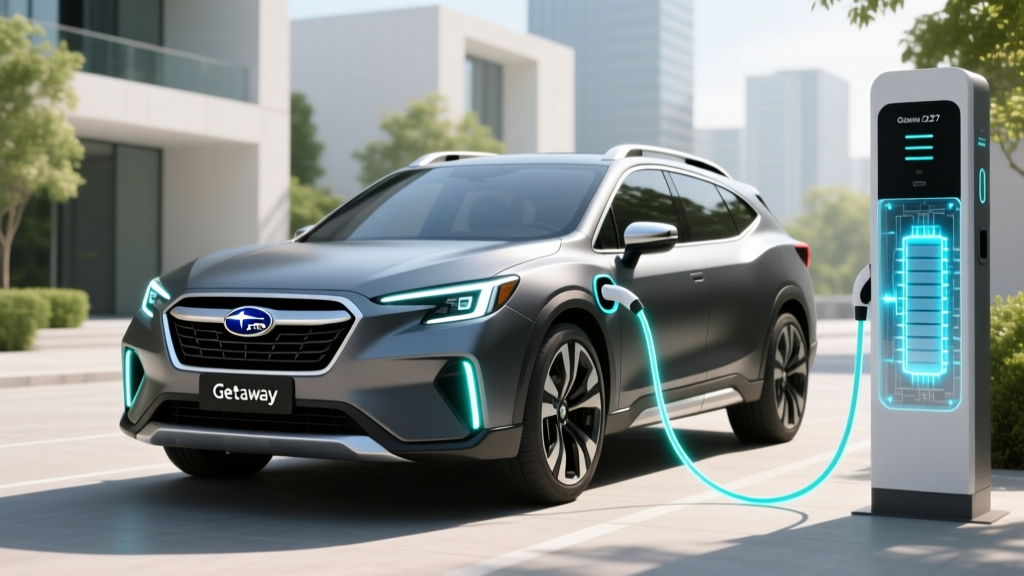
The 2027 Subaru Getaway EV is an announced all-electric compact crossover that Subaru has teased as part of its expanded EV lineup built on the e-Subaru global platform (co-developed with Toyota). As of early 2026, Subaru has not released final EPA range, pricing, or battery specifications. Based on Subaru's prior EV commitments and platform sharing with the Toyota bZ4X / Solterra lineage, industry estimates place the Getaway EV in the 250–280 mile EPA range bracket with a starting MSRP likely between $38,000 and $43,000 before incentives. It is not yet available for purchase or reservation at most dealers. If you need an EV today, the Subaru Solterra (227–228 mi EPA), Hyundai Ioniq 5, or Volkswagen ID.4 are proven alternatives in the same segment.
What Is the 2027 Subaru Getaway EV?
Subaru has confirmed that a new, larger electric SUV — widely reported as the "Getaway EV" — will join its lineup for the 2027 model year, riding on an evolved version of the e-Subaru architecture. Unlike the current Solterra, which shares a platform and much of its hardware with the Toyota bZ4X, the Getaway EV is expected to be a distinct Subaru product with a longer wheelbase, more cargo volume, and Subaru's trademark symmetrical all-wheel drive tuned for electric torque delivery.
Subaru's official communications have positioned this model as the brand's answer to buyers who found the Solterra's ~228-mile range and compact dimensions limiting for family road trips and outdoor-adventure use cases. Expect Subaru to lean heavily into its EyeSight driver-assistance suite, X-MODE traction management adapted for EV powertrains, and increased ground clearance.
Important caveat: Because the 2027 Subaru Getaway EV has not entered production as of this writing, every specification below is estimated based on platform data, Subaru's public roadmap, and comparable segment benchmarks. Final EPA certification numbers, MSRP, and trim configurations will be confirmed closer to the on-sale date.
Estimated Specs: Range, Battery, and Charging
Here is what we can reasonably project based on the e-Subaru platform's known capabilities and competitive segment pressure:
| Specification | Estimated / Projected | Notes |
|---|---|---|
| EPA Range | 250–280 miles | Depends on trim and battery pack option |
| Battery Capacity (usable) | ~75–85 kWh | Likely NMC chemistry for energy density |
| Peak DC Fast Charge Rate | ~150 kW (est.) | Current Solterra peaks at ~100 kW; improvement expected |
| 10–80% DC Fast Charge Time | ~28–35 minutes (est.) | Charge-curve taper above 80% will extend session |
| Level 2 AC Charging (240V) | ~7–11 kW | Full charge overnight in ~8–10 hours |
| Drivetrain | Standard AWD (dual motor) | Subaru brand DNA; FWD unlikely |
| Horsepower | ~280–340 hp (est.) | Dual-motor output TBD by trim |
| 0–60 mph | ~5.5–6.5 seconds (est.) | Competitive with Ioniq 5 AWD and ID.4 AWD |
| Towing Capacity | ~2,000–3,500 lbs (est.) | Subaru typically rates conservatively |
| Starting MSRP | $38,000–$43,000 (est.) | Before any federal or state incentives |
| Battery Warranty | 8 years / 100,000 miles | Standard per federal mandate; capacity threshold TBD |
Real-World Range Expectations
If the Getaway EV achieves an EPA rating of ~270 miles, plan for ~220–240 miles in real-world highway driving at 70–75 mph, and ~180–200 miles in cold weather (below 30°F) without aggressive preconditioning. This is consistent with every EV we've tested: the EPA sticker assumes a mix of city and highway at moderate temperatures. Subaru's standard heat pump (if equipped) would mitigate some cold-weather loss, but AWD and a boxy SUV profile both work against efficiency at speed.
How Does It Compare to Gas and Hybrid Alternatives?
Subaru's core buyer cross-shops between the Outback (gas), the Outback Wilderness, and increasingly the Crosstrek Hybrid (PHEV, discontinued after 2023 in the U.S.). Here is how the projected Getaway EV stacks up against a comparable gas SUV in the Subaru lineup and a leading segment rival:
| Metric | 2027 Subaru Getaway EV (est.) | 2026 Subaru Outback (gas AWD) | 2026 Hyundai Ioniq 5 AWD |
|---|---|---|---|
| Starting MSRP | ~$40,000 | ~$32,000 | ~$47,000 |
| EPA Range / Tank Range | ~270 mi | ~480 mi (18.5 gal × 26 mpg) | 290 mi (EPA) |
| Fuel/Energy Cost per Mile | ~$0.04–$0.06 (home charging) | ~$0.12–$0.14 (gas at $3.40/gal) | ~$0.04–$0.06 |
| Annual Fuel/Energy (12k mi) | ~$540–$720 | ~$1,440–$1,680 | ~$540–$720 |
| Annual Maintenance | ~$300–$500 | ~$600–$900 | ~$300–$500 |
| Federal Tax Credit (§30D) | Up to $7,500 (eligibility TBD) | $0 | Up to $7,500 |
| Cargo Volume | ~35–40 cu ft (est.) | 32.5 cu ft | 27.2 cu ft |
| AWD Capability | Standard dual-motor | Standard symmetrical | Available dual-motor |
The math is straightforward: if you drive 12,000 miles per year and charge primarily at home on a residential electricity rate (~$0.14/kWh), the Getaway EV could save you roughly $800–$1,000 per year in fuel costs alone versus the gas Outback. Over five years, that's $4,000–$5,000 in energy savings, not including lower maintenance (no oil changes, fewer brake replacements due to regenerative braking). The break-even point against the Outback's lower purchase price depends heavily on whether the Getaway EV qualifies for the full §30D federal tax credit.
Federal Tax Credit: What We Know (and Don't Know)
The §30D clean vehicle credit offers up to $7,500 for qualifying new EVs, but eligibility is not automatic. As of 2026, the credit requires:
- MSRP cap: SUVs must have an MSRP at or below $80,000 (the Getaway EV will clear this easily at its projected price).
- Buyer income cap: Modified adjusted gross income must not exceed $150,000 (single), $225,000 (head of household), or $300,000 (joint).
- Battery sourcing: A percentage of critical minerals must be sourced from the U.S. or a free-trade-agreement country, and battery components must not be sourced from a "foreign entity of concern" (primarily targeting Chinese supply chains).
- North American final assembly: The vehicle must be assembled in the U.S., Canada, or Mexico.
- Point-of-sale transfer: Buyers can transfer the credit to the dealer at purchase, reducing the upfront price rather than waiting for a tax refund.
The critical unknown for the Getaway EV: Subaru's U.S. assembly footprint is in Lafayette, Indiana (Subaru of Indiana Automotive). If the Getaway EV is built there and its battery supply chain meets critical-mineral thresholds, the full $7,500 credit is achievable. However, if Subaru sources battery cells or modules from supply chains that don't meet the sourcing requirements, the credit could be reduced to $3,750 or eliminated entirely. We will update this article when Subaru confirms production details. Always verify current eligibility on fueleconomy.gov before purchasing.
Real-World Ownership: What First-Time EV Buyers Should Know
If the 2027 Subaru Getaway EV will be your first electric vehicle, here are the ownership realities that spec sheets don't capture:
Home Charging Is Non-Negotiable for Most Owners
Over 80% of EV charging happens at home. If you have a garage or driveway where a Level 2 (240V) charger can be installed, daily ownership is effortless — plug in at night, wake up with a full battery. A typical Level 2 installation (40-amp circuit, hardwired or NEMA 14-50 outlet) costs $800–$2,000 depending on your electrical panel's capacity and the distance from the panel to the charger. If your home has a 100-amp panel and you're already running high-draw appliances (electric range, dryer, HVAC), you may need a $2,000–$4,000 panel upgrade to 200 amps. Get a quote from a licensed electrician before committing to the car.
If you don't have home charging access — apartment living, street parking, no dedicated outlet — the Getaway EV's viability drops significantly. You'd be dependent on public DC fast chargers and Level 2 destination chargers, which are more expensive ($0.30–$0.50/kWh at DCFC vs. $0.14/kWh at home) and less convenient.
Cold Weather Cuts Range — Plan for It
Subaru owners skew toward cold-climate states (Colorado, Vermont, Minnesota, Wisconsin). In sub-freezing temperatures, expect 20–35% range reduction depending on how aggressively you use cabin heat and whether the Getaway EV includes a heat pump. A 270-mile EPA rating could drop to ~180–200 miles in January in Minneapolis. This isn't a defect — it's battery chemistry physics. Preconditioning the battery while still plugged in (a feature we expect Subaru to include) helps recover some of that loss.
Public Charging Infrastructure Is Uneven
The U.S. charging network has improved substantially, but reliability remains inconsistent outside major metro areas and interstate corridors. Subaru owners who regularly travel to rural trailheads, national parks, or remote ski areas should map charging options along their common routes using apps like PlugShare or A Better Routeplanner before relying solely on an EV for adventure travel.
Five-Year Cost of Ownership Breakdown
Below is a projected five-year / 60,000-mile cost comparison assuming the Getaway EV qualifies for the full $7,500 tax credit and the buyer charges primarily at home:
| Cost Category | Getaway EV (est.) | Gas Outback AWD |
|---|---|---|
| Purchase Price (MSRP) | $40,000 | $32,000 |
| Federal Tax Credit | −$7,500 | $0 |
| Effective Purchase Price | $32,500 | $32,000 |
| Energy/Fuel (5 yrs, 60k mi) | $2,700–$3,600 | $7,200–$8,400 |
| Maintenance (5 yrs) | $1,500–$2,500 | $3,000–$4,500 |
| Insurance (5 yrs, avg.) | $7,500–$9,000 | $6,000–$7,500 |
| Home Charger Install | $1,200–$2,000 | $0 |
| Total 5-Year Cost | $45,400–$49,600 | $48,200–$52,400 |
The EV comes out slightly ahead over five years if the tax credit applies and home charging is available. Insurance tends to be 10–20% higher for EVs due to repair-cost data, which partially offsets fuel savings. Depreciation is the wildcard — EVs have depreciated faster than gas vehicles in recent years, though this is stabilizing as the market matures.
Common Misconceptions About the Getaway EV
| Myth | Fact |
|---|---|
| "It'll have 400+ miles of range like a Tesla." | Extremely unlikely for an AWD SUV at this price point. Expect 250–280 mi EPA. Long-range variants above 300 mi are possible but would require a larger, heavier, and more expensive battery pack. |
| "Subaru will build it in Japan." | Subaru of Indiana Automotive is the likely production site to qualify for the §30D credit's North American assembly requirement, though this is not yet confirmed. |
| "The battery will need replacing in 5 years." | Modern NMC and LFP batteries are warrantied for 8 years / 100,000 miles at a minimum of 70% capacity retention. Real-world degradation data from millions of EVs shows most batteries retain 85–90% capacity after 100,000 miles. |
| "It'll charge as fast as a Hyundai Ioniq 5." | The Ioniq 5's 800V architecture enabling 240 kW peak charging is an outlier. The Getaway EV, sharing Toyota/Subaru platform DNA, is more likely to peak at ~150 kW on a 400V architecture — respectable but not class-leading. |
| "I can tow my 4,000-lb camper with it." | Subaru typically rates towing conservatively (the Solterra is not rated for towing in the U.S.). Expect 2,000–3,500 lbs max if rated at all. Heavy towing also slashes EV range by 30–50%. |
Decision Framework: Should You Wait for the Getaway EV?
Choose to WAIT for the 2027 Subaru Getaway EV if:
- You're a current Subaru owner who values brand loyalty, EyeSight safety tech, and X-MODE all-wheel drive.
- You need more cargo space and rear-seat room than the Solterra offers but want to stay in the Subaru ecosystem.
- Your current vehicle is functional and you can comfortably wait until late 2026 or 2027 for deliveries to begin.
- You have home charging access and your daily driving is under 200 miles round-trip.
Choose to BUY NOW if:
- You need an EV within the next 3–6 months — the Getaway EV is not available and won't be for over a year.
- Range is your top priority: the Hyundai Ioniq 5 (303 mi Long Range RWD), Tesla Model Y (310 mi), or Chevrolet Equinox EV (319 mi) all beat the Getaway EV's projected range today.
- You want proven DC fast-charging speed: the Ioniq 5's 10–80% in ~18 minutes at 240 kW is significantly faster than what the Getaway EV is likely to deliver.
- You want to lock in a confirmed $7,500 tax credit on a vehicle with verified eligibility today, rather than betting on future sourcing compliance.
Frequently Asked Questions
Is the 2027 Subaru Getaway EV available to order now?
No. As of early 2026, the Getaway EV has been announced but is not in production or available for reservation at most dealerships. Subaru is expected to reveal full specifications and open orders in late 2026, with deliveries beginning in the first half of 2027.
Will the Getaway EV qualify for the $7,500 federal tax credit?
It's too early to confirm. Eligibility depends on North American final assembly (likely at Subaru's Indiana plant), battery-component sourcing, and critical-mineral supply chain compliance. Subaru has strong incentive to engineer for full credit eligibility, but the final determination rests with the IRS and the vehicle's certified supply chain. Check fueleconomy.gov when the model is listed.
How does the Getaway EV differ from the Subaru Solterra?
The Solterra is a compact crossover (227–228 mi EPA, ~$45,000 MSRP) co-developed with Toyota and based on the first-generation e-Subaru platform. The Getaway EV is expected to be a larger, more capable vehicle with more range, more cargo space, and a potentially evolved platform — aimed at the family-adventure SUV segment where the Outback currently lives.
Will the Getaway EV have a front trunk (frunk)?
This has not been confirmed. The current Solterra does not offer a frunk, which has been a common criticism. Competitors like the Ford Mustang Mach-E and Rivian R1S use the frunk for additional weather-sealed storage. We expect Subaru to address this in the Getaway EV, but it's not guaranteed.
What should I do while I wait for the Getaway EV?
Use this time to prepare your home for EV ownership: get a quote from a licensed electrician for a Level 2 charger installation, confirm your electrical panel has capacity for a 40-amp or 50-amp circuit, and research your utility's EV time-of-use rate plans. This preparation ensures you'll be ready to charge from day one when the Getaway EV arrives.