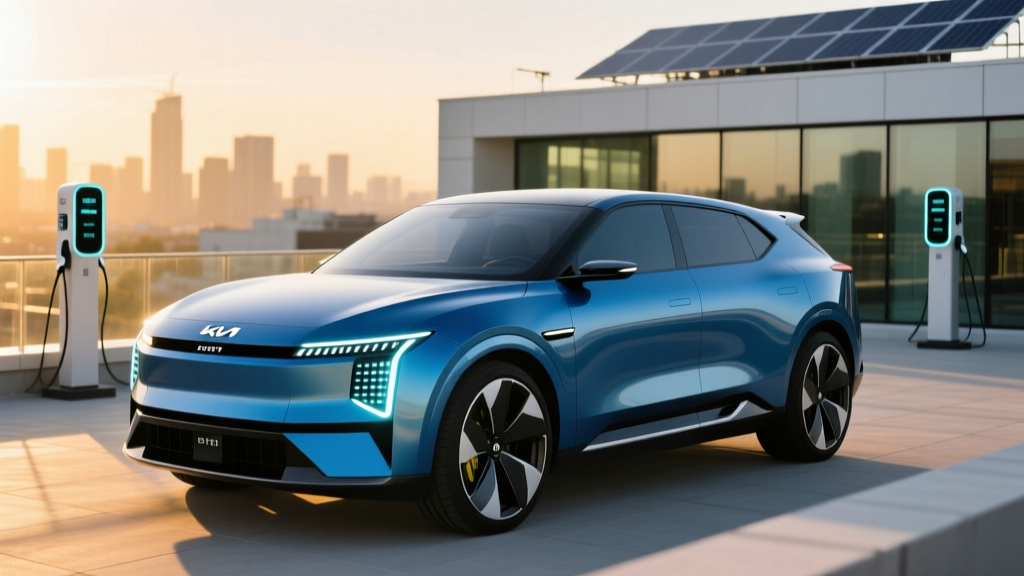
The three-row electric SUV segment has heated up since Kia launched the EV9 for the 2024 model year, and the upcoming 2027 Kia EV9 is expected to carry forward the formula that made it a standout: a spacious cabin, 800-volt DC fast-charging architecture, and a starting price that undercuts most luxury rivals. As of this writing, Kia has not released official 2027 model-year specifications. What follows is a data-driven preview based on the current-generation EV9's EPA-certified figures, confirmed powertrain hardware, and reasonable projections for what the 2027 model year may bring.
Think of this as your research foundation. When Kia publishes final 2027 specs—likely in late 2026—we will update this page with certified numbers.
2027 Kia EV9 Quick Specs (Projected)
The table below reflects carryover specifications from the current generation. Any mid-cycle refresh changes for 2027 will be noted once confirmed.
| Spec | Light RWD (Standard Range) | Wind / Land AWD | GT-Line AWD |
|---|---|---|---|
| Battery (usable) | 76.1 kWh | 99.8 kWh | 99.8 kWh |
| Chemistry | NMC (nickel manganese cobalt) | NMC | NMC |
| EPA Range | 230 mi | 280–304 mi | 270 mi |
| MPGe (combined) | 84 MPGe | 83–89 MPGe | 83 MPGe |
| Horsepower | 215 hp | 379 hp | 379 hp |
| 0–60 mph | 7.6 sec | 5.0 sec | 5.0 sec |
| Drivetrain | RWD (single motor) | AWD (dual motor) | AWD (dual motor) |
| Peak DC Fast Charge | ~175 kW | ~210 kW | ~210 kW |
| 10–80% DC Time | ~24 min | ~24 min | ~24 min |
| Level 2 Home Charge (kW) | 10.9 kW | 10.9 kW | 10.9 kW |
| Base MSRP (est.) | $56,395 | $65,395 | $75,395 |
Sources: EPA Fueleconomy.gov, Kia America press materials. Prices include destination. Actual 2027 MSRP may vary.
Range and Real-World Efficiency
The EV9's 99.8 kWh (usable) NMC battery pack in the long-range trims delivers an EPA-rated 304 miles in the Wind RWD configuration and 280 miles in the dual-motor AWD Wind trim. The GT-Line AWD, with its larger 21-inch wheels, drops to 270 miles. The base Light RWD trim carries a smaller 76.1 kWh pack for 230 miles.
The EPA sticker is a laboratory average blending city and highway driving at moderate temperatures. In real-world use:
- Highway cruising (70–75 mph): Expect 240–260 miles from the 304-mile trim. The EV9's boxy shape creates more aerodynamic drag than a sedan, and efficiency drops noticeably above 65 mph.
- Cold weather (below 32°F): Plan for 20–30% range reduction. A 280-mile AWD EV9 in a Midwest winter may deliver 195–225 miles per charge, depending on cabin heating use and whether the heat pump is active.
- City/suburban driving: You may exceed the EPA number slightly thanks to regenerative braking recapturing energy at lower speeds.
The EV9's efficiency of roughly 34–36 kWh/100 miles (depending on trim) is competitive for a 5,000+ lb three-row SUV but trails smaller crossovers like the Hyundai Ioniq 5 or Tesla Model Y.
Charging Speed: DC Fast and Home Level 2
Kia's 800-volt electrical architecture is the EV9's biggest charging advantage. While most competitors in this price range use 400V systems limited to 150 kW, the EV9 can accept peak DC fast-charge rates around 210 kW on the large-battery trims when connected to a 350 kW-capable charger (such as Electrify America or Ionity stations).
| Charging Level | Power / Voltage | Speed (miles added per hour) | Notes |
|---|---|---|---|
| Level 1 (120V household) | ~1.4 kW | ~3–4 mi/hr | Emergency/top-up only; full charge takes days |
| Level 2 (240V home) | 10.9 kW (48A) | ~29–32 mi/hr | Full 0–100% in ~10 hours; ideal overnight charge |
| DC Fast (peak) | ~210 kW (800V) | N/A (time-based) | 10–80% in ~24 min; requires 350 kW station |
| DC Fast (150 kW station) | ~150 kW | N/A (time-based) | 10–80% in ~32 min; more common at EA/EVgo |
Charging-curve reality check: The 210 kW peak is not sustained across the entire session. The EV9's charge curve is aggressive from 10–55% SoC, then tapers progressively. From 80–100%, charging slows dramatically to protect battery longevity—expect the final 20% to add 15–20 minutes. For road trips, plan your stops around the 10–80% window for the fastest throughput.
At home, a 48-amp Level 2 wallbox on a 240V/60A circuit replenishes roughly 30 miles of range per hour. A full overnight session easily covers a daily commute plus errands. Installation costs for a Level 2 home charger typically range from $500 to $2,500 depending on panel capacity and conduit run length—budget for a 200-amp electrical panel upgrade if your home currently has 100-amp service.
Performance and Drivetrain
The EV9's dual-motor AWD configuration delivers 379 horsepower and 516 lb-ft of torque, propelling this 5,400-pound SUV to 60 mph in approximately 5.0 seconds. That's genuinely quick for a three-row family hauler and makes highway merging effortless.
The single-motor RWD Light trim offers 215 hp and a 7.6-second 0–60 time—adequate for daily driving but noticeably less urgent when the vehicle is fully loaded with passengers and cargo. If you live in a region with snow or frequently drive on unpaved roads, the AWD trims are worth the range and cost trade-off for the added traction and stability.
Regenerative braking is adjustable through multiple levels via steering-wheel paddles, and the strongest setting enables near one-pedal driving in city traffic. The EV9 also features a "Boost" button on GT-Line trims that temporarily increases torque output for passing maneuvers.
Interior Space, Cargo, and Tech
Three-row EVs are still rare, and the EV9's cabin is one of its strongest selling points. Here are the key dimensions:
- First-row legroom: 41.4 inches
- Second-row legroom: 42.8 inches (captain's chairs) / 39.5 inches (bench)
- Third-row legroom: 32.0 inches — usable for children or short-trip adults, tight for long journeys
- Cargo behind 3rd row: 20.2 cu ft
- Cargo behind 2nd row: 43.5 cu ft
- Cargo behind 1st row (max): 81.7 cu ft
- Frunk (front trunk): 1.8 cu ft (enough for a charging cable bag or small groceries)
The second-row captain's chairs on Wind and GT-Line trims slide and recline, and available "Relaxation" seats in the Land trim offer powered leg rests for charging-stop naps. The EV9 also offers a V2L (Vehicle-to-Load) adapter, letting you power laptops, camping equipment, or a small appliance from the high-voltage battery at up to 3.6 kW—useful for tailgating or emergency backup.
On the tech front, the EV9 runs Kia's dual 12.3-inch panoramic display setup with wireless Apple CarPlay and Android Auto, a head-up display with augmented-reality navigation, and Kia's Highway Driving Assist 2 (HDA2) — a Level 2 driver-assistance system that handles adaptive cruise, lane centering, and lane-change assist on divided highways. The driver must remain engaged with hands on the wheel at all times; this is not autonomous driving.
Pricing, Trims, and Federal Tax Credit
The 2027 EV9 is projected to carry forward the current trim lineup with modest price adjustments. Here is the estimated pricing structure:
| Trim | Drivetrain | Est. MSRP (incl. destination) | Est. After §30D Credit |
|---|---|---|---|
| Light RWD | RWD | $56,395 | ~$48,895* |
| Wind RWD | RWD | $60,395 | ~$52,895* |
| Wind AWD | AWD | $65,395 | ~$57,895* |
| Land AWD | AWD | $71,395 | ~$63,895* |
| GT-Line AWD | AWD | $75,395 | ~$67,895* |
*After-credit prices assume full $7,500 §30D eligibility. Actual credit varies by buyer.
The IRS §30D Clean Vehicle Credit can reduce your federal tax liability by up to $7,500, but eligibility depends on multiple factors that change frequently:
- MSRP cap: SUVs/vans must have an MSRP at or below $80,000. All current EV9 trims qualify.
- Buyer income cap: Modified AGI must not exceed $150,000 (single), $225,000 (head of household), or $300,000 (joint). Exceed these thresholds and the credit phases out.
- Battery sourcing: The credit is split into two halves ($3,750 each) based on critical-mineral sourcing and battery-component manufacturing requirements. Sourcing rules tighten annually; verify current-year compliance at IRS.gov qualified vehicle list.
- Point-of-sale transfer: Eligible buyers can transfer the credit to the dealer at purchase, reducing the out-of-pocket price immediately rather than waiting for a tax refund.
Critical note: The EV9 is manufactured at Kia's West Point, Georgia plant, which helps with domestic assembly requirements. However, battery-component and critical-mineral sourcing compliance can change between model years. Always verify the specific VIN against the IRS qualified-vehicle list before purchasing. Consult a tax professional for your individual situation.
Warranty and Long-Term Ownership
Kia backs the EV9 with one of the strongest warranty packages in the segment:
- Basic vehicle: 5 years / 60,000 miles
- Powertrain: 10 years / 100,000 miles
- High-voltage battery: 10 years / 100,000 miles (covers capacity loss below 70% of original)
- Roadside assistance: 5 years / 60,000 miles
The 70% capacity-retention threshold on the battery warranty is standard for the industry. In practice, modern NMC packs with active thermal management (as equipped in the EV9) typically degrade 8–12% over the first 100,000 miles based on fleet data from similar Kia/Hyundai platforms. If you charge primarily at home on Level 2 and avoid frequent DC fast-charging to 100%, you can expect the battery to retain 88–92% of its original capacity at the 5-year mark.
Who the 2027 Kia EV9 Is For
Choose the EV9 if:
- You need genuine three-row seating for a family and want electric.
- You take road trips and value 800V fast-charging at 210 kW (10–80% in ~24 min).
- You want V2L capability for camping, tailgating, or emergency power.
- You prefer a traditional SUV design over the polarizing styling of the Tesla Model X or Rivian R1S.
Look elsewhere if:
- Your daily commute exceeds 150 miles round-trip and you lack home charging — the 230-mile base trim won't suffice, and the 280-mile AWD trims require planning.
- You need best-in-class range: the Tesla Model X (348 mi EPA) or Rivian R1S with Max Pack (~400 mi) go farther.
- You want Level 4 autonomous driving capability — no consumer EV offers this today.
2027 Kia EV9 Pros and Cons
✓ Pros
- True 3-row seating with usable cargo space
- 800V architecture enables ~24 min 10–80% DC charging
- Competitive pricing vs. luxury 3-row EVs
- 10-year/100,000-mi battery and powertrain warranty
- V2L capability (3.6 kW output)
- Comfortable, well-appointed interior with relaxation seats
- Qualifies for §30D credit (verify sourcing per VIN)
✗ Cons
- Base Light RWD trim has only 230 mi range — inadequate for road trips
- Boxy shape hurts highway efficiency (range drops at 70+ mph)
- Third row is tight for adults on long journeys
- No front trunk (frunk) space beyond cable storage
- Higher trims push past $75K, reducing value proposition
- HDA2 is competent but not class-leading vs. GM Super Cruise
- Cold-weather range loss is significant without garage parking
Frequently Asked Questions
What is the real-world range of the 2027 Kia EV9?
For the long-range AWD trims (280 mi EPA), expect roughly 240–260 miles on highway road trips at 70 mph and 195–225 miles in cold weather below freezing. City driving with regenerative braking may match or slightly exceed the EPA sticker. The base 230-mile RWD trim is best suited for commuters with home charging and limited road-trip needs.
How fast does the EV9 charge at home and on the road?
At home on a 240V Level 2 charger (48A / 10.9 kW), the EV9 adds about 30 miles of range per hour and fully charges overnight in roughly 10 hours. On a 350 kW DC fast charger, the 800V system peaks at ~210 kW and charges from 10–80% in approximately 24 minutes. At more common 150 kW stations, the same session takes about 32 minutes.
Does the 2027 Kia EV9 qualify for the $7,500 federal tax credit?
All current EV9 trims fall under the $80,000 MSRP cap for SUVs, and the vehicle is assembled in Georgia. However, the full $7,500 credit depends on your income (AGI caps apply), the battery's critical-mineral and component sourcing for the specific model year, and your tax liability. The credit can be transferred to the dealer at point of sale. Always verify your specific VIN on the IRS qualified vehicle list and consult a tax professional.
Is the 2027 EV9 worth buying over the Tesla Model X or Rivian R1S?
It depends on priorities. The EV9 undercuts the Model X and R1S by $20,000–$40,000 at base pricing and offers competitive charging speed and interior quality. The Model X wins on range (348 mi) and Supercharger network access. The R1S offers more off-road capability and available Max Pack range (~400 mi) but at a significantly higher price. For most families seeking a practical, well-priced three-row EV, the EV9 is the value leader.
What battery chemistry does the EV9 use?
The EV9 uses NMC (nickel manganese cobalt) lithium-ion cells across all trims. NMC offers higher energy density than LFP (lithium iron phosphate), which is important in a large, heavy SUV where range per kWh matters. The trade-off is that NMC batteries are more sensitive to sustained high-state-of-charge storage and extreme heat; for longest battery life, charge to 80% for daily use and only charge to 100% before long trips.
Can the EV9 tow, and how does towing affect range?
The AWD EV9 is rated to tow up to 5,000 pounds when properly equipped. Towing a trailer will reduce range by 30–50% depending on trailer weight, aerodynamic profile, and terrain. If you plan to tow frequently, the 280-mile AWD trims become more practical, but expect real-world range with a loaded trailer to drop to 150–190 miles.
Disclaimer: This article is based on current-generation Kia EV9 specifications as published by the EPA and Kia America. The 2027 model year has not been officially detailed as of this writing. Final 2027 pricing, range, and feature availability may differ. Always confirm specifications with your dealer and verify tax-credit eligibility with the IRS and a qualified tax professional before purchasing.