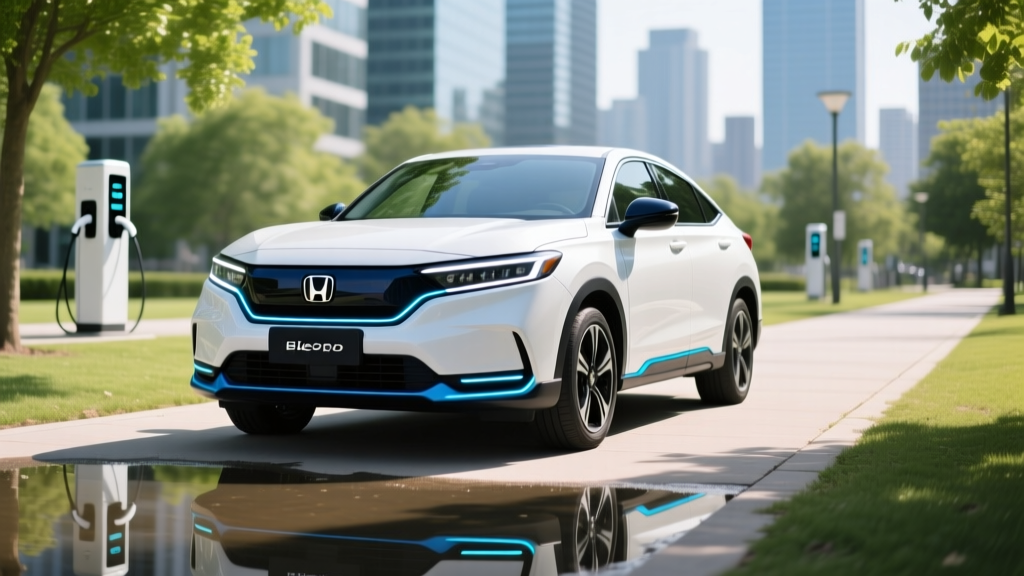
Bottom line up front: As of early 2026, Honda has not officially announced a "2027 Honda Insight Electric Crossover." The Insight nameplate was discontinued after the 2022 model year as a hybrid sedan, and Honda's current EV strategy centers on the Prologue (launched 2024) and the upcoming Honda 0 Series vehicles built on a dedicated EV platform. If Honda revives the Insight badge as a battery-electric crossover, the earliest realistic reveal would be late 2026 or 2027 — and any specs circulating now are speculative. This guide breaks down what Honda's published EV roadmap suggests, what a revived Insight EV crossover would need to compete, and how to evaluate your options today.
Where the Honda Insight Stands Today
The Honda Insight launched in 1999 as one of the first mass-market hybrids sold in the United States. It ran through three generations — most recently as a compact hybrid sedan closely related to the Civic — before Honda discontinued it after the 2022 model year to consolidate its hybrid lineup under the Civic Hybrid and Accord Hybrid nameplates.
Honda's electrification strategy since then has pivoted in two directions:
- Near-term: Expanding hybrid variants across the Civic, CR-V, and Accord lineups.
- Long-term BEV: The Honda Prologue (built on GM's Ultium platform) and the Honda 0 Series, a family of dedicated EVs on Honda's own architecture expected to debut globally starting 2026.
Honda has committed to offering a full EV lineup by 2040, with 100% of global sales being EVs and fuel-cell vehicles by that date, per the company's official roadmap. A compact crossover EV wearing the Insight name is plausible within that framework — but it has not been confirmed.
What a Honda Insight EV Crossover Would Need to Compete
If Honda positions a revived Insight as an electric compact crossover, it would enter one of the most competitive segments in the U.S. market. Here's what the benchmark vehicles in this class deliver as of the 2026 model year:
| Spec | Hyundai Ioniq 5 (2026) | Tesla Model Y LR (2026) | Honda Prologue (2026) | VW ID.4 (2026) |
|---|---|---|---|---|
| EPA Range | 303 mi | 320 mi | 296 mi | 275 mi |
| Battery (usable) | 77.4 kWh (NMC) | ~75 kWh (NMC) | 85 kWh (NMC) | 82 kWh (NMC) |
| Peak DC Fast Charge | 240 kW | 250 kW | 150 kW | 175 kW |
| 10–80% Charge Time | ~18 min | ~22 min | ~33 min | ~28 min |
| 0–60 mph | 5.1 sec (AWD) | 5.0 sec (AWD) | 6.5 sec (AWD) | 6.7 sec (AWD) |
| Base MSRP | $42,600 | $44,990 | $47,400 | $39,735 |
Any Honda Insight EV crossover would need to hit at least 280–310 miles of EPA range, support 200+ kW DC fast charging, and price below $40,000 to be competitive. Honda's 0 Series platform — which the company says will feature thin batteries, aerodynamic efficiency, and advanced ADAS — is the most likely underpinning for such a vehicle.
EV Crossover vs. Hybrid: The Cost Comparison Buyers Actually Need
Many shoppers searching for a "Honda Insight electric" are cross-shopping a compact EV crossover against Honda's existing hybrid options, particularly the CR-V Hybrid. Here's how the economics stack up over five years, assuming 15,000 miles per year:
| Cost Factor | Compact EV Crossover (est.) | Honda CR-V Hybrid (2026) |
|---|---|---|
| Purchase Price (base MSRP) | $38,000–$42,000 | $34,750 |
| Federal Tax Credit (§30D) | Up to $7,500* | $0 (not a BEV/PHEV) |
| Effective Purchase Price | $30,500–$34,500 | $34,750 |
| Annual Fuel/Energy Cost | $540 (home charging, $0.14/kWh) | $1,260 (37 MPG combined, $3.10/gal) |
| 5-Year Energy Cost | $2,700 | $6,300 |
| Maintenance (5-yr est.) | $1,800 | $3,200 |
| Insurance (5-yr est.) | $8,500 | $7,200 |
| 5-Year Total (purchase + energy + maint. + ins.) | $43,500–$47,500 | $51,450 |
*The §30D federal tax credit is subject to MSRP caps ($55,000 for SUVs/crossovers), buyer income limits ($150K single / $300K joint), battery sourcing requirements, and point-of-sale transfer availability. Always verify current eligibility at IRS.gov before purchasing.
The EV crossover wins on total cost over five years if the buyer qualifies for the full tax credit and has reliable home charging access. Without the credit or with reliance on public DC fast charging (at $0.35–$0.55/kWh), the annual energy cost jumps to $1,350–$2,100, narrowing the gap significantly.
Real-World Ownership: What First-Time EV Buyers Must Know
If a Honda Insight EV crossover arrives, here's what will determine whether it works for your daily life:
Home Charging Access Is Non-Negotiable for Most Buyers
Over 80% of EV charging happens at home. A Level 2 home charger (240V, 32–48 amps, 7.7–11.5 kW) adds roughly 25–37 miles of range per hour of charging — enough to fully replenish a 75 kWh battery overnight. Installation costs range from $500 (simple outlet near the panel) to $3,000+ (panel upgrade, long conduit runs). If you live in an apartment or lack a dedicated parking space with electrical access, an EV crossover becomes significantly harder to own.
Real-World Range vs. EPA Stickers
EPA range estimates assume a mix of city and highway driving at moderate temperatures. In practice:
- Highway driving at 75+ mph: Expect 85–90% of EPA range.
- Cold weather (below 30°F): Expect 70–80% of EPA range due to cabin heating demands and battery chemistry limitations.
- Combined real-world: Most drivers see 80–90% of the EPA sticker in mixed use.
A vehicle rated at 300 miles EPA realistically delivers 240–270 miles on a cold-weather highway trip. Plan road trips around 200-mile segments between charging stops for comfort.
DC Fast Charging Curves Are Not Flat
When manufacturers advertise a "250 kW peak charge rate," that's the maximum the vehicle can accept — typically between 10–30% State of Charge (SoC). Above 50% SoC, charging speed tapers significantly. Above 80%, it drops to roughly 40–60 kW. This is why the 10–80% time is the more meaningful metric than peak kW alone. On a road trip, plan to charge to 80% and move on rather than waiting for a full charge at a tapering rate.
Common Misconceptions About a Honda Insight EV
| Myth | Fact |
|---|---|
| "The 2027 Insight EV is confirmed and available for pre-order." | Honda has not announced a 2027 Insight EV crossover. Any pre-order or reservation claims are unsubstantiated as of early 2026. |
| "A Honda EV will definitely qualify for the $7,500 tax credit." | Credit eligibility depends on battery sourcing, critical mineral content, MSRP, and buyer income. Honda's current Prologue (built on GM's Ultium platform) has had partial credit eligibility that has shifted with IRS rule updates. Always check current status. |
| "An EV crossover costs more to own than a hybrid, period." | With the federal credit, home charging, and lower maintenance, a compact EV crossover can undercut a hybrid on 5-year total cost. Without those advantages, the hybrid wins on economics. |
| "EV batteries need replacing every few years." | Modern NMC and LFP batteries are warrantied for 8 years/100,000 miles at 70% capacity retention minimum. Real-world degradation data shows most EV batteries retain 85–90% capacity after 100,000 miles. |
| "I can charge on any public network." | Connector compatibility matters. Honda Prologue uses CCS1. Honda's 0 Series vehicles are expected to adopt NACS (Tesla's connector). Network access depends on your vehicle's connector. Tesla Superchargers are opening to NACS-equipped non-Tesla EVs, but CCS vehicles need an adapter. |
Decision Framework: Should You Wait or Buy Now?
Wait for a potential Honda Insight EV crossover if:
- You're committed to the Honda brand and want a compact electric crossover specifically.
- Your current vehicle has 18+ months of reliable life left, giving you time for a potential reveal and launch.
- You want Honda's next-gen Honda Sensing ADAS suite and Honda 0 Series platform technology.
- You have home charging access already installed or confirmed installable.
Buy a current EV crossover now if:
- You need a vehicle within 6 months.
- You want to lock in current §30D tax credit eligibility before potential rule changes.
- Models like the Hyundai Ioniq 5, Tesla Model Y, or VW ID.4 already meet your range, charging, and budget needs.
- You want real-world ownership data and reliability history rather than first-model-year risk.
Stick with a Honda hybrid (CR-V Hybrid, Civic Hybrid) if:
- You lack home charging access and cannot install it.
- You frequently drive in extreme cold or remote areas with limited charging infrastructure.
- Your budget is under $35,000 and you cannot absorb the EV price premium even after credits.
- You drive over 300 miles regularly and don't want to plan charging stops.
Federal Tax Credit: Current Rules for 2026
If a Honda Insight EV crossover launches, its §30D credit eligibility will depend on several factors that shift frequently:
- MSRP cap: $55,000 for SUVs/crossovers/vans; $25,000 for sedans.
- Buyer income cap: Modified AGI of $150,000 (single), $225,000 (head of household), $300,000 (joint).
- Battery sourcing: A percentage of critical minerals must be sourced from the U.S. or free-trade-agreement countries; battery components must be manufactured or assembled in North America. These percentages increase annually.
- Point-of-sale transfer: Buyers can transfer the credit to the dealer for an immediate price reduction at purchase, rather than waiting to claim it on their tax return.
- FEOC restriction: Vehicles with battery components or critical minerals from a "foreign entity of concern" (primarily China) are ineligible.
Given Honda's manufacturing footprint and the GM partnership for the Prologue, credit eligibility is plausible but not guaranteed. Honda's 0 Series vehicles, built on Honda's own platform, may have different sourcing profiles. Verify at the time of purchase on IRS.gov or through the DOE's qualifying vehicle list at fueleconomy.gov.
Frequently Asked Questions
Is the 2027 Honda Insight electric crossover officially confirmed?
No. As of early 2026, Honda has not announced a vehicle with this name. The Insight was discontinued after 2022. Honda's upcoming EV products fall under the Honda 0 Series branding. Any "2027 Insight EV" references are speculative or based on unverified rumors.
What Honda electric vehicles can I buy right now?
The Honda Prologue is Honda's only battery-electric vehicle currently on sale in the U.S. It offers up to 296 miles of EPA range, 150 kW peak DC fast charging, and starts at $47,400. Honda also offers hybrid versions of the CR-V, Accord, and Civic.
Will a future Honda EV crossover use NACS or CCS?
Honda has announced that its 0 Series vehicles will adopt the NACS (North American Charging Standard) connector. The current Prologue uses CCS1 since it is built on GM's Ultium platform. A future Honda-designed compact crossover would likely use NACS, granting access to Tesla's Supercharger network without an adapter.
How much would a Honda Insight EV crossover cost?
This is entirely speculative, but a competitive compact EV crossover in 2027 would need to price between $35,000 and $42,000 to compete with the VW ID.4, Hyundai Ioniq 5, and upcoming models from other manufacturers. Honda's pricing strategy will likely aim for the lower end of that range to drive volume.
Should I wait for Honda's next EV or buy something else now?
If you need a vehicle soon, current options like the Hyundai Ioniq 5, Tesla Model Y, and VW ID.4 offer strong range, fast charging, and proven reliability. If you can wait 12–18 months and want a Honda specifically, watching for Honda 0 Series announcements is worthwhile. If you don't need an EV, Honda's hybrid lineup (CR-V Hybrid at 40 MPG combined) is an excellent low-risk option.