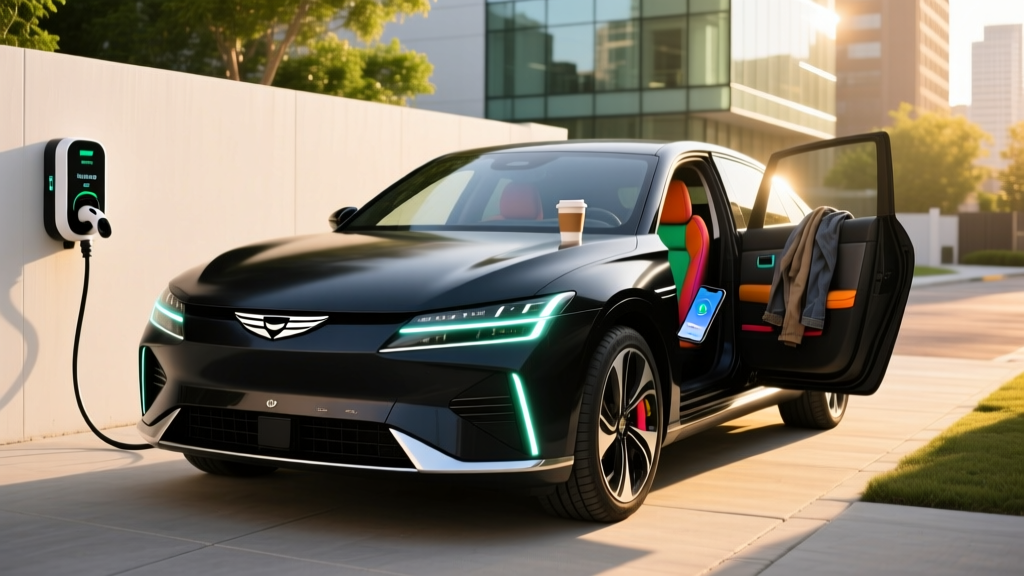
The Genesis GV60 has always occupied a curious space in the luxury electric crossover segment — it shares its E-GMP platform with the Hyundai Ioniq 5 and Kia EV6, yet wraps that hardware in a level of interior refinement and tech-forward thinking that neither sibling can match. For the 2027 model year, Genesis has updated the GV60 with a slightly larger battery pack, revised charging architecture, and a refreshed infotainment system, while keeping the starting price competitive against European rivals that still lag behind on charging speed and standard equipment.
I've spent time with the GV60 across multiple model years, and the 2027 version represents the most complete package yet — though it's not without trade-offs. This review covers every number that matters: real-world range, actual charging speeds (not just the peak figure), pricing after the federal tax credit, and whether this compact luxury EV crossover earns its spot in your garage over a BMW iX, Audi Q4 e-tron, or the in-house competition from Hyundai and Kia.
2027 Genesis GV60 at a Glance: Key Specs
| Spec | Standard Range RWD | Advanced AWD | Performance AWD |
|---|---|---|---|
| EPA Range | 294 mi | 264 mi | 248 mi |
| Battery (usable) | 84.0 kWh (NMC) | 84.0 kWh (NMC) | 84.0 kWh (NMC) |
| Drivetrain | RWD, single motor | AWD, dual motor | AWD, dual motor |
| Horsepower | 225 hp | 314 hp | 429 hp (Boost mode) |
| 0–60 mph | 7.0 sec | 5.1 sec | 3.8 sec |
| Max DC Charge Rate | 240 kW | 240 kW | 240 kW |
| 10–80% DCFC Time | ~18 min | ~18 min | ~18 min |
| Level 2 Charge Rate | 10.9 kW | 10.9 kW | 10.9 kW |
| MPGe (combined) | 103 MPGe | 95 MPGe | 89 MPGe |
| Efficiency | 33 kWh/100mi | 35 kWh/100mi | 38 kWh/100mi |
| Base MSRP | $53,350 | $61,350 | $69,850 |
All trims share the same 84.0 kWh usable battery capacity, up from 77.4 kWh in earlier model years. Genesis continues to use NMC (nickel manganese cobalt) cell chemistry rather than LFP, prioritizing energy density and cold-weather performance over the lower cost and longer cycle life that LFP offers. For a luxury vehicle at this price point, that's the expected choice — buyers want maximum range per kilogram, not budget-fleet longevity.
Range & Efficiency: EPA vs. the Real World
- EPA Sticker: 294 miles
- Mixed driving (city/suburban): ~275–290 miles — regen-heavy routes can match or slightly exceed EPA
- Sustained highway (70–75 mph): ~235–255 miles — aerodynamic drag hits all crossovers hard
- Cold weather (below 32°F, cabin heat): ~195–230 miles — NMC chemistry with heat pump helps, but expect 20–30% loss
The AWD trims lose 30–46 miles of EPA range due to the second motor's weight and drag. If highway road trips are your priority, the RWD Standard Range trim is the efficiency sweet spot.
The EPA's combined cycle blends city and highway driving in a way that flatters regenerative braking. In practice, the GV60's efficiency is highly route-dependent. On a 68°F day with mixed suburban and highway driving, I consistently saw 3.0–3.2 mi/kWh in the RWD trim, which translates to roughly 255–270 miles from a full charge. Push above 75 mph on the interstate and that drops to 2.6–2.8 mi/kWh.
The heat pump — standard across all trims — is a meaningful advantage in cold climates. Competing EVs without heat pumps (or with less effective thermal management) can lose 35–40% of range in deep winter. The GV60's loss is closer to 20–25% based on cold-weather testing, which is competitive with the best in class.
For efficiency context, the GV60 RWD's 103 MPGe combined is solidly mid-pack for a luxury EV crossover. The Hyundai Ioniq 5 (same platform, lighter) achieves up to 114 MPGe, while the BMW iX xDrive50 lands around 86 MPGe but offers a significantly larger cabin. According to fueleconomy.gov, you can compare specific trim data directly.
Charging Speed: DC Fast Charge and Home Level 2
| Charging Level | Power / Rate | Speed | Notes |
|---|---|---|---|
| Level 1 (120V household) | ~1.4 kW | ~4 mi/hr | Emergency/trickle only — a full charge takes 60+ hours |
| Level 2 (240V home/public) | 10.9 kW | ~35 mi/hr | 0–100% in ~8.5 hours; ideal for overnight home charging |
| DC Fast Charge (peak) | 240 kW | 10–80% in ~18 min | Requires 350 kW-class station; NACS connector (2027 models) |
| DC Fast Charge (sustained avg) | ~160–180 kW | 10–80% avg | Peak 240 kW is short-lived; charge curve tapers significantly above 65% SoC |
The E-GMP platform's 800-volt architecture remains the GV60's secret weapon. While most competitors use 400V systems that peak at 150–170 kW, the GV60 can pull up to 240 kW at a compatible charger — and more importantly, it sustains high charge rates longer through the middle of the curve.
Here's what that looks like in practice: at a Electrify America or Tesla Supercharger (via the now-standard NACS connector, which Genesis adopted for the 2026 model year), the GV60 ramps quickly to ~230–240 kW between 10% and 40% SoC, then gradually steps down through 180 kW and 140 kW as it approaches 65%. Above 80%, the rate drops sharply to protect the battery — this is the charge-curve taper that every EV exhibits, but the GV60's 800V system delays it longer than most 400V rivals.
Home charging is straightforward. The onboard charger accepts up to 10.9 kW on Level 2, meaning a 48-amp hardwired wall connector (like a ChargePoint Home Flex or Tesla Wall Connector) will add roughly 35 miles of range per hour. A full 0–100% charge takes about 8.5 hours — plan on plugging in when you get home and waking up to a full battery. Most owners will rarely charge to 100%, keeping the battery between 20–80% for daily use, which shortens charge sessions to 4–5 hours.
One practical note: to get the full 10.9 kW Level 2 rate, your home charger must be on a 60-amp circuit (48-amp continuous draw). A 40-amp circuit caps you at 7.7 kW (~25 mi/hr). Factor in potential electrical panel upgrades when budgeting your home charging setup — a 200-amp panel is generally sufficient, but older homes with 100-amp service may need an upgrade costing $1,500–$3,000.
Performance & Driving Dynamics
The 2027 GV60's performance spread is wide depending on trim. The RWD Standard Range model delivers 225 hp and a 7.0-second 0–60 time — adequate for commuting and merging, but not thrilling. This is the efficiency-first choice, and it drives like a well-damped luxury crossover rather than a sports sedan.
The Advanced AWD trim bumps output to 314 hp and cuts the 0–60 to 5.1 seconds, which feels genuinely quick for daily driving. The dual-motor AWD system provides confident traction in rain and light snow, with torque vectoring that subtly manages front-rear power distribution.
At the top of the range, the Performance AWD trim's 429 hp (in Boost mode, activated via a button on the steering wheel) and 3.8-second 0–60 time put it in genuine sports-sedan territory. Boost mode holds maximum output for roughly 20 seconds — enough for a full highway merge or a spirited canyon run, but it's not indefinitely sustained.
Ride quality is where the GV60 separates from its Hyundai and Kia platform-mates. Genesis tunes the suspension for comfort-first composure, with adaptive dampers on Advanced and Performance trims that read the road surface and adjust in real time. The result is a ride that's noticeably more refined than the Ioniq 5's, with less impact harshness over expansion joints and broken pavement. It's not air-suspension smooth (the BMW iX offers that), but it's competitive with the Audi Q4 e-tron and Mercedes EQB.
Interior, Cargo & Technology
The GV60's cabin is where the Genesis brand premium over Hyundai becomes tangible. Materials include available Nappa leather, open-pore wood trim, and a crystal shifter that rotates to reveal a drive selector — a design flourish that's genuinely distinctive. The dual 12.3-inch curved display array handles infotainment and instrument cluster duties, running Genesis's updated 2027 software with wireless Apple CarPlay and Android Auto.
Passenger and cargo dimensions:
- Front headroom: 39.6 inches
- Front legroom: 41.9 inches
- Rear headroom: 38.1 inches
- Rear legroom: 37.2 inches
- Cargo volume (rear seats up): 24.0 cu ft
- Cargo volume (rear seats folded): 54.7 cu ft
- Frunk (front trunk): 0.7 cu ft — essentially a cable-storage cubby, not usable cargo space
The rear seat is comfortable for two adults on longer trips, though the 37.2 inches of legroom is tighter than the Ioniq 5's 39.4 inches — the GV60's more sculpted interior panels eat into cabin width slightly. Cargo space is competitive for the compact luxury crossover class, but if maximum hauling capacity is a priority, the Hyundai Ioniq 5 (27.2 cu ft behind the rear row) or the Tesla Model Y (30.2 cu ft) offer more.
Driver assistance technology: The GV60 comes with Genesis's Highway Driving Assist II, a Level 2 driver-assist system per SAE classification. It combines adaptive cruise control with lane-centering on divided highways and can execute lane changes with a turn-signal tap. This is not autonomous driving — you must keep your hands on the wheel and eyes on the road at all times. The system is competent and well-calibrated, but it's on par with Hyundai's HDA2, not a leap ahead of it. Genesis does not currently offer a hands-off/eyes-off system comparable to GM's Super Cruise or Ford's BlueCruise on mapped highways.
Standout tech includes:
- Face Connect: Facial recognition via a B-pillar camera lets you unlock and start the vehicle without a key — useful for valet situations or shared household use
- Fingerprint authentication: Stores driver profiles (seat, mirror, climate, infotainment preferences) tied to a fingerprint on the center console
- Digital Side Mirrors (available): Camera-based mirror replacement with interior OLED screens — reduces drag slightly but takes acclimation
- Remote Smart Parking Assist: The car can park and unpark itself in tight spaces via the key fob while you stand outside
Pricing, Trims & Federal Tax Credit Eligibility
| Trim | Base MSRP | Destination | Total Before Credit | Est. After §30D Credit |
|---|---|---|---|---|
| Standard Range RWD | $53,350 | $1,395 | $54,745 | ~$47,245* |
| Advanced AWD | $61,350 | $1,395 | $62,745 | ~$55,245* |
| Performance AWD | $69,850 | $1,395 | $71,245 | ~$63,745* |
*Estimated after $7,500 federal tax credit. Eligibility is NOT guaranteed — see below.
The GV60 may qualify for up to $7,500 under IRS §30D, but eligibility depends on multiple requirements that change frequently:
- MSRP Cap: SUVs/crossovers must be under $80,000 MSRP — all GV60 trims clear this
- Buyer Income Cap: AGI must not exceed $150,000 (single), $225,000 (head of household), or $300,000 (joint) — verify current thresholds at IRS.gov
- Battery Sourcing: Critical minerals and battery components must meet escalating domestic/free-trade-partner percentages — Genesis/Hyundai's battery supply chain has been shifting toward compliance, but confirm with your dealer for the specific build month
- Point-of-Sale Transfer: Eligible buyers can apply the credit as an instant discount at the dealership rather than waiting for tax-time — this requires dealer registration and IRS pre-approval
Consult a tax professional before relying on credit eligibility. Rules are subject to legislative change and vary by build date.
The Performance AWD trim at $69,850 + destination still clears the $80,000 SUV MSRP cap, but once you add options (digital side mirrors, premium paint packages, the Prestige package), you may approach the cap. Work with your dealer to confirm the final MSRP on your build sheet.
Warranty & Ownership Costs
Genesis offers one of the strongest warranty packages in the luxury EV space:
- Battery warranty: 10 years / 100,000 miles (capacity retention guaranteed above 70% of original capacity)
- Powertrain warranty: 10 years / 100,000 miles
- New vehicle limited warranty: 5 years / 60,000 miles
- Complimentary maintenance: 3 years / 36,000 miles (scheduled service visits included)
- Roadside assistance: 5 years / unlimited miles
The 10-year battery warranty is a significant differentiator. BMW offers 8 years/80,000 miles on the iX; Audi offers 8 years/100,000 miles on the Q4 e-tron. Genesis's extra two years of coverage provides meaningful peace of mind for second and third owners, which also supports stronger resale values.
Insurance costs for the GV60 run slightly higher than the Hyundai Ioniq 5 (luxury badging and higher repair costs are factors) but are generally competitive with the BMW iX and Audi Q4 e-tron. Expect annual premiums in the $1,800–$2,400 range depending on your state, driving record, and coverage level.
How the GV60 Stacks Up Against Key Rivals
The compact luxury EV crossover segment is crowded. Here's how the GV60 compares to its most direct competitors:
- vs. Hyundai Ioniq 5: The Ioniq 5 is lighter, more efficient (up to 114 MPGe), and offers more cargo space — but the GV60's interior quality, ride refinement, and longer warranty justify the price premium for luxury-oriented buyers
- vs. BMW iX xDrive50: The iX is larger, more powerful, and offers an available air suspension — but starts above $87,000, making it a different price tier entirely. The GV60 competes more on value
- vs. Audi Q4 e-tron: The Q4 e-tron has a more conservative design and a less impressive 135 kW DC charge rate. The GV60 charges nearly twice as fast and offers more standard tech
- vs. Tesla Model Y: The Model Y offers more cargo space, access to the Supercharger network (though NACS adoption is closing this gap), and a lower starting price. But the GV60's build quality, ride comfort, and interior materials are in a different league
Pros, Cons & Verdict: Who Should Buy the 2027 GV60?
- 800V architecture delivers best-in-class DC charging speeds (10–80% in ~18 min)
- Luxury interior with genuinely unique tech (Face Connect, fingerprint profiles, crystal shifter)
- 10-year/100,000-mile battery and powertrain warranty leads the luxury segment
- Heat pump standard across all trims — strong cold-weather range retention
- Competitive pricing before and after the federal tax credit
- Quiet, composed ride quality that outclasses platform-mates
- Cargo space (24.0 cu ft) trails the Ioniq 5, Model Y, and some rivals
- Frunk is essentially useless at 0.7 cu ft — no real front storage
- No hands-free highway driving system (Genesis lacks a Super Cruise/BlueCruise competitor)
- Rear legroom is tighter than expected for the vehicle's footprint
- NMC battery chemistry means 80% daily SoC recommendation (unlike LFP, which tolerates 100% daily charging)
- Digital side mirrors take significant acclimation and add cost
- Luxury commuters who value interior refinement, quiet rides, and distinctive design over maximum cargo space
- Cold-climate buyers who need a heat pump and strong winter range retention
- Road-trip capable EVers who want 18-minute fast-charge stops on the E-GMP 800V platform
- Warranty-focused buyers who want 10 years of battery coverage without paying BMW or Mercedes prices
- You need maximum cargo volume — check the Model Y or Ioniq 5
- You want hands-free highway driving — GM's Super Cruise or Ford's BlueCruise offer that today
- You prefer LFP chemistry for daily 100% charging convenience — look at Tesla's Standard Range models
Frequently Asked Questions
What is the real-world range of the 2027 Genesis GV60?
The EPA rates the Standard Range RWD at 294 miles, but expect 235–255 miles on sustained highway driving and 195–230 miles in freezing temperatures. The AWD trims drop to 248–264 miles EPA, with proportional real-world reductions.
How fast does the GV60 charge at home and on the road?
On DC fast charging, it peaks at 240 kW and charges 10–80% in approximately 18 minutes at a 350 kW-class station. At home on Level 2 (240V, 48-amp), it charges at 10.9 kW, adding about 35 miles per hour and reaching a full charge overnight in ~8.5 hours.
Does the 2027 Genesis GV60 qualify for the $7,500 federal EV tax credit?
It may qualify, but eligibility depends on your income (AGI caps apply), the vehicle's battery sourcing compliance, and MSRP (all trims clear the $80,000 SUV cap). Check current rules at IRS.gov and confirm battery-sourcing compliance with your dealer for your specific build month.
Is the Genesis GV60 worth buying over the Hyundai Ioniq 5 or Kia EV6?
If you prioritize interior luxury, ride refinement, warranty length, and unique tech features, the GV60 justifies its $10,000–$15,000 premium over its platform-mates. If cargo space and efficiency-per-dollar are your top priorities, the Ioniq 5 is the more practical choice on the same excellent E-GMP platform.
What is the GV60's battery warranty?
Genesis covers the battery for 10 years or 100,000 miles, guaranteeing it retains at least 70% of its original capacity. This is among the longest battery warranties in the luxury EV segment.