Quick Answer: The 2027 EV Highlander at a Glance
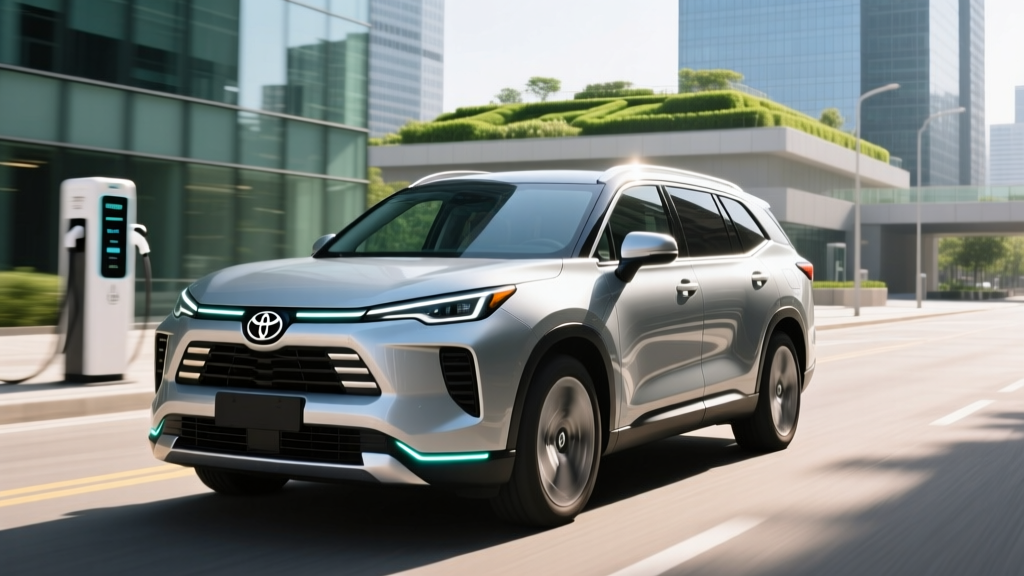
The 2027 Toyota Grand Highlander EV (sometimes searched as the "2027 EV Highlander") is Toyota's first dedicated battery-electric three-row SUV for the U.S. market. As of mid-2026, Toyota has confirmed the model's development alongside its bZ Large SUV concept, with production expected to begin in late 2026 for the 2027 model year. Preliminary estimates suggest an EPA range around 280–320 miles, a ~90–100 kWh usable battery pack, DC fast charging up to 150–180 kW, and a starting MSRP in the $48,000–$55,000 range before incentives. These specs are unconfirmed and subject to change before launch.
Why Toyota Is Building an Electric Highlander
Toyota has been notably cautious in the U.S. BEV market, leaning heavily on its hybrid dominance — the current gas-electric Grand Highlander Hybrid achieves an EPA-estimated 36 MPG combined, making it one of the most efficient three-row SUVs available. But regulatory pressure, competitive launches from Kia (EV9), Hyundai (Ioniq 9), and Volkswagen (ID.Buzz and upcoming ID.8), and Toyota's own bZ electric lineup expansion have pushed the automaker to electrify its flagship family hauler.
The 2027 EV Highlander slots into the growing three-row electric SUV segment, where buyers want 250+ miles of range, fast charging for road trips, and seating for six or seven — all without the fuel bills of a 5,000-pound gas vehicle.
Projected Specs: Range, Battery, and Charging
Because the 2027 EV Highlander has not yet gone on sale, the figures below are estimates based on Toyota's bZ platform announcements, supplier leaks, and segment benchmarks. We'll update this section when Toyota publishes official EPA-certified numbers.
| Specification | Estimated / Preliminary | Segment Benchmark (Kia EV9) |
|---|---|---|
| EPA Range (est.) | 280–320 miles | 279–304 miles (EPA, fueleconomy.gov) |
| Battery Capacity (usable, est.) | 90–100 kWh (NMC) | 99.8 kWh (NMC) |
| DC Fast Charge (peak, est.) | 150–180 kW | 210 kW (peak) |
| 10–80% DC Charge Time (est.) | ~25–30 minutes | ~24 minutes |
| Level 2 AC Charging (est.) | 11 kW (~7.7 kW onboard) | 10.9 kW |
| Horsepower (est.) | 300–380 hp (dual motor AWD) | 379 hp (GT AWD) |
| 0–60 mph (est.) | 5.5–6.5 seconds | 4.9 seconds (GT AWD) |
| Seating | 6 or 7 passengers | 6 or 7 passengers |
| Connector | NACS (Tesla-style, confirmed for new Toyota EVs) | NACS (2025+ models) |
Real-World Range Reality Check
If Toyota achieves a 300-mile EPA rating, plan for approximately 240–265 miles on sustained highway driving at 70–75 mph, and 200–230 miles in sub-freezing winter conditions. Cold weather reduces battery efficiency and increases cabin heating demand — even with a heat pump, which we expect Toyota to include. On road trips, factor in charging stops every 200–220 miles to keep the battery in the fast-charging sweet spot (10–80% SoC).
Charging at Home and on the Road
The 2027 EV Highlander will almost certainly use the NACS (North American Charging Standard) connector, giving it native access to Tesla Superchargers — currently the most reliable and extensive DC fast-charging network in the U.S. This is a significant advantage over CCS-only vehicles, which rely on Electrify America, EVgo, and other networks with more variable uptime.
| Charging Level | Power (kW) | Miles Added per Hour | Best Use Case |
|---|---|---|---|
| Level 1 (120V household outlet) | ~1.4 kW | ~3–5 mi/hr | Emergency / overnight trickle |
| Level 2 (240V home charger, 48A) | ~11.5 kW | ~30–38 mi/hr | Daily overnight charging (full in ~9–10 hrs) |
| DC Fast Charging (est. peak) | 150–180 kW | ~500–600 mi/hr (peak) | Road trips; 10–80% in ~25–30 min |
Home charging installation is the biggest variable for new EV owners. A Level 2 hardwired charger (like a ChargePoint Home Flex or Tesla Wall Connector) on a 60-amp circuit typically costs $1,200–$2,500 installed, depending on panel proximity and local permitting. If your home's electrical panel needs an upgrade to 200 amps, add $1,500–$3,500. Without home charging access, owning a large-battery EV becomes significantly less convenient and more expensive, as public DC fast charging costs roughly $0.35–$0.55/kWh versus $0.12–$0.18/kWh for residential electricity.
EV Highlander vs. Gas Grand Highlander: The Numbers
Here's where the ownership math gets interesting. We compared the projected 2027 EV Highlander against the current Grand Highlander Hybrid — Toyota's own benchmark — over a 5-year / 75,000-mile ownership period.
| Cost Category | 2027 EV Highlander (est.) | 2025 Grand Highlander Hybrid |
|---|---|---|
| Base MSRP | ~$50,000 | $45,460 (LE AWD, toyota.com) |
| Federal Tax Credit (§30D) | Up to $7,500 (if eligible — see caveats below) | None (HEV, not plug-in) |
| Effective Purchase Price | ~$42,500 | $45,460 |
| Fuel/Energy (5 yrs, 75k mi) | ~$3,800–$5,200 (home + public mix) | ~$8,100 (at $3.50/gal, 36 MPG) |
| Maintenance (5 yrs) | ~$1,200–$1,800 | ~$3,500–$4,500 |
| Insurance (5 yrs, est.) | ~$9,500–$11,000 | ~$8,000–$9,500 |
| Estimated 5-Year Total Cost | ~$57,000–$59,500 | ~$65,000–$67,500 |
The EV Highlander's lower running costs — particularly fuel savings of $3,000–$4,300 over five years — can offset its higher sticker price, if you qualify for the federal tax credit and charge mostly at home. Insurance tends to run 10–20% higher on EVs due to higher repair costs and parts pricing.
§30D Federal Tax Credit: Key Requirements (2026 Rules)
- MSRP cap: SUVs must be priced at or below $80,000
- Buyer income cap: $150,000 single / $225,000 head of household / $300,000 joint (modified AGI)
- Battery sourcing: Critical minerals and battery components must meet escalating domestic/free-trade-partner thresholds — Toyota's supply chain compliance is not yet confirmed for this model
- Point-of-sale transfer: Eligible buyers can apply the credit as an upfront dealer discount rather than waiting for tax filing
- Always verify: Rules change — check IRS.gov Clean Vehicle Credits before purchasing
Common Misconceptions About the 2027 EV Highlander
| Myth | Fact |
|---|---|
| "It will have 400+ miles of range." | Three-row SUVs with 100 kWh batteries and 5,000+ lb curb weight realistically achieve 280–320 miles EPA. Physics limits energy density — no current production BEV in this class exceeds 330 miles. |
| "Charging takes too long for road trips." | A 25–30 minute 10–80% DC fast charge aligns with a rest stop. On a 600-mile trip, you'd add roughly 50–60 minutes of charging total — comparable to gas stops for food and rest. |
| "The battery will need replacing in 5 years." | Modern NMC and LFP packs are engineered for 1,000–2,000+ full cycles before reaching 70–80% State of Health. Toyota's battery warranty is expected to cover 8 years/100,000 miles at a minimum 70% capacity retention threshold. |
| "It will be fully self-driving." | Toyota's ADAS (likely an advanced version of Toyota Safety Sense) will be SAE Level 2 — meaning the driver must remain fully engaged at all times. This is not autonomous driving. |
| "I can tow just as much as the gas version." | EV towing range drops 30–50% due to aerodynamic drag on trailers. Expect a max tow rating of ~3,500–5,000 lbs, with real-world range cut nearly in half when towing. |
Ownership Reality Check: Who Should (and Shouldn't) Wait
Not every family is ready for a large three-row EV. The decision depends on your charging situation, climate, driving patterns, and budget. Here's a practical framework:
Choose the 2027 EV Highlander If:
- You have home charging access (garage or driveway with a 240V circuit) — this is the single biggest factor in EV satisfaction
- Your daily driving is under 80 miles round-trip, meaning overnight Level 2 charging covers nearly all needs
- You take 2–4 road trips per year and can plan around DC fast-charging stops
- You want to reduce fuel spending and qualify for the §30D tax credit
- You live in a mild-to-moderate climate (or accept 20–30% winter range loss)
Stick With the Grand Highlander Hybrid If:
- You cannot install home charging (apartment, street parking, HOA restrictions)
- You regularly tow trailers or boats over 3,000 lbs
- You live in a region with sparse DC fast-charging infrastructure (rural areas, parts of the Mountain West)
- You drive 400+ miles in a single day frequently and don't want to plan charging stops
- Upfront cost is a primary concern and you don't qualify for the federal tax credit
What First-Time EV Buyers Should Know Before Committing
If the 2027 EV Highlander is your first electric vehicle, here are the non-obvious realities no brochure will tell you:
- kW vs. kWh matters: kW (kilowatts) measures power — how fast you charge. kWh (kilowatt-hours) measures energy — how big the battery is. A 100 kWh battery charged at 150 kW does not fill in 40 minutes; the charge curve tapers significantly above 80% SoC to protect battery health.
- Preconditioning is essential: Before arriving at a DC fast charger, the battery must be warmed (or cooled) to optimal temperature. Toyota's navigation system should route through preconditioning — use it, or your peak charge rate may be half of advertised.
- Tire costs are higher: EVs are heavier and produce instant torque, wearing tires 20–30% faster than gas vehicles. Budget $1,200–$1,800 for a set of replacement EV-rated tires every 30,000–40,000 miles.
- The 12V battery still exists: EVs have a small 12V auxiliary battery for electronics. It can die just like a gas car's — and yes, you may need a jump for the 12V system even though the main traction battery is full.
- Insurance quotes vary wildly: Get quotes before ordering. Some insurers surcharge EVs significantly; others offer discounts. Shopping around can save $500–$1,000/year.
What We're Still Waiting to Confirm
Until Toyota releases official specifications and opens orders, the following remain open questions:
- Exact battery chemistry: Will Toyota offer an LFP (lithium iron phosphate) option for a lower-cost, longer-cycle-life base trim, or stick exclusively with NMC for energy density?
- Charging curve specifics: Peak kW is only part of the story — sustained charging rate between 20–60% SoC determines actual road-trip speed. We need independent testing data.
- §30D eligibility: Battery sourcing compliance is model-specific and can change mid-year. Toyota must certify each trim's supply chain to the IRS.
- Third-row and cargo practicality: Battery packaging can intrude on interior volume. We'll measure real cargo cubic feet once a production vehicle is available.
- ADAS capabilities: Whether Toyota offers hands-free highway driving (like GM's Super Cruise or Ford's BlueCruise) or stays with hands-on Toyota Safety Sense will significantly affect the ownership experience.
Is the 2027 EV Highlander available to order now?
No. As of mid-2026, Toyota has confirmed the vehicle's development but has not opened reservations or published final specifications. Production is expected to begin in late 2026 for the 2027 model year, with first deliveries likely in early-to-mid 2027.
Will it qualify for the $7,500 federal tax credit?
Possibly, but it's not guaranteed. Eligibility depends on the buyer's income, the vehicle's MSRP (must be ≤$80,000 for SUVs), and battery component/critical mineral sourcing requirements under IRS §30D rules. Toyota has not yet confirmed supply-chain compliance for this specific model. Always verify eligibility before purchase.
How does it compare to the Kia EV9 or Hyundai Ioniq 9?
The Kia EV9 (EPA 279–304 mi, $54,900–$73,900 MSRP) is the current segment leader with available 210 kW DC charging and NACS compatibility on 2025+ models. The Hyundai Ioniq 9 is expected to compete closely. The 2027 EV Highlander's advantage will likely be Toyota's brand loyalty, dealer network, and projected reliability reputation — but it needs competitive charging speed and range to win cross-shoppers.
Can I charge a Toyota EV at a Tesla Supercharger?
Yes. Toyota has confirmed NACS adoption for its new electric vehicles, meaning the 2027 EV Highlander will have native Tesla Supercharger access without an adapter. This is a major practical advantage for road-trip charging.
What will maintenance cost compared to the gas Grand Highlander?
EVs eliminate oil changes, spark plugs, timing belts, and transmission fluid services. Expect annual maintenance of $200–$400 versus $600–$900 for the gas hybrid. The main wear items are tires (heavier vehicle), cabin air filters, brake fluid checks, and wiper blades. Regenerative braking significantly extends brake pad life.