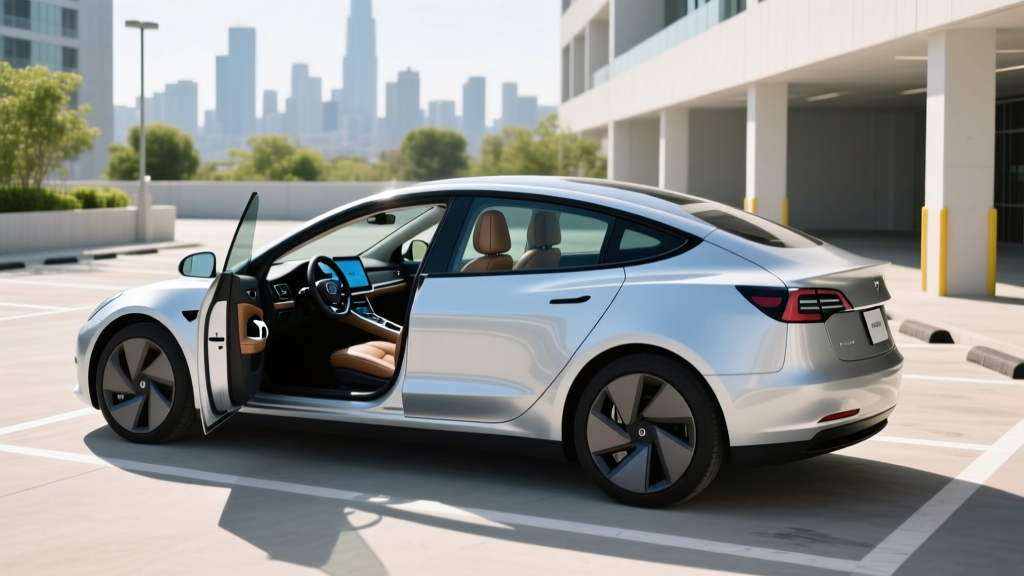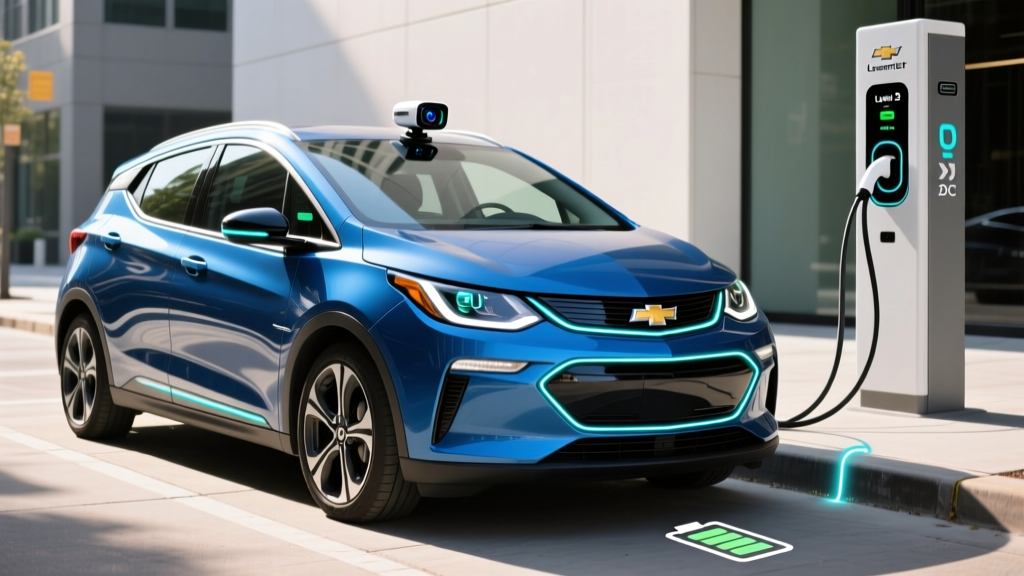
The original Chevrolet Bolt EV and EUV were discontinued after the 2023 model year, but General Motors confirmed a next-generation Bolt built on the updated Ultium platform. The 2027 Chevy Bolt is expected to arrive in showrooms in late 2026 as an early 2027 model-year vehicle. This preview covers announced and estimated specifications, with a particular focus on the 2027 Chevy Bolt safety features, range, charging, and ownership economics. Because final EPA certification and NHTSA crash testing have not been completed at the time of writing, figures marked as "estimated" are based on GM press releases, platform data from the Equinox EV (which shares the Ultium architecture), and industry analysis. We will update this review with confirmed numbers once they are published.
What We Know About the 2027 Chevy Bolt So Far
GM CEO Mary Barra confirmed the next-generation Bolt in early 2024, promising an affordable, American-built EV on the Ultium platform with NACS charging capability. The new Bolt is positioned to undercut the Equinox EV in price, targeting the sub-$30,000 segment before incentives. It will be assembled at the Orion Assembly plant in Michigan, which GM retooled for Ultium-based production.
Key confirmed details from GM's official newsroom:
- Ultium battery platform (shared with Equinox EV, Blazer EV)
- Native NACS charge port (Tesla Supercharger access without adapter)
- Available Super Cruise hands-free driving on compatible highways
- Production at Orion Assembly, Michigan
- Targeted as GM's most affordable EV
2027 Chevy Bolt Safety Features: ADAS and Crash Protection
The 2027 Chevy Bolt safety features represent a significant generational leap over the outgoing Bolt EV, which earned an IIHS Top Safety Pick rating but lacked some of the advanced driver-assistance hardware now standard across GM's lineup. The new Bolt is expected to feature the latest iteration of Chevy Safety Assist as standard equipment, with Super Cruise available on higher trims.
Standard Chevy Safety Assist (Expected)
Based on the current Equinox EV and Trax, the 2027 Bolt should include the following as standard across all trims:
- Automatic Emergency Braking (AEB) with pedestrian and cyclist detection
- Forward Collision Alert with following-distance indicator
- Lane Keep Assist with Lane Departure Warning
- Following Distance Indicator
- IntelliBeam automatic high beams
- Rear Cross Traffic Alert with automatic braking
- Blind Zone Steering Assist (lane-change intervention)
- HD Rear Vision Camera with dynamic guidelines
Available Upgrades: Super Cruise and Enhanced Packages
GM has confirmed that Super Cruise — its hands-free Level 2 driver-assistance system — will be available on the next-gen Bolt. This is a first for the Bolt nameplate and puts it in rare company among sub-$35,000 EVs. Super Cruise operates on over 750,000 miles of compatible highways in North America, using a combination of LiDAR-mapped road data, GPS, cameras, and radar, with a driver-attention camera monitoring eye position.
Additional available safety features expected on LT and RS trims:
- HD Surround Vision (360-degree camera system)
- Enhanced Automatic Parking Assist
- Rear Pedestrian Alert
- Traffic Sign Recognition
- Adaptive Cruise Control — Advanced (with stop-and-go and curve-speed management)
- Reverse Automatic Braking
Crash-Test Ratings (Pending)
As of this writing, neither NHTSA nor IIHS has published crash-test results for the 2027 Bolt. The outgoing Bolt EV earned a 5-star overall NHTSA rating and an IIHS Top Safety Pick (with specific headlight ratings). The stiffer Ultium platform — with its battery pack integrated into the floor structure — is expected to improve torsional rigidity and crash energy management. We will update this section as soon as test results are released.
Range, Battery, and Efficiency
The outgoing Bolt EV offered 259 miles of EPA range on a 65 kWh (usable) NMC battery. The next-generation Bolt moves to the Ultium platform, which supports larger, more energy-dense battery packs. Based on the Equinox EV's 85 kWh usable pack and GM's stated goal of improved range, we estimate the 2027 Bolt will carry a battery in the 65–75 kWh usable range, depending on trim.
| Spec | Estimated Value |
|---|---|
| EPA Range (est.) | 250–280 miles |
| Battery Capacity (usable, est.) | 65–75 kWh |
| Battery Chemistry | NMC (Ultium, nickel-rich) |
| Efficiency (est.) | 110–120 MPGe / 28–30 kWh/100mi |
| Max DC Fast Charge (est.) | 150 kW peak |
| 10–80% DC Charge Time (est.) | ~28–32 minutes |
| Level 2 Home Charging | 11.5 kW onboard charger (~38 mi/hr) |
| Drivetrain | FWD (single motor, front) |
| Horsepower (est.) | 200–213 hp |
| 0–60 mph (est.) | ~7.0 seconds |
| Charge Port | NACS (native Tesla Supercharger) |
| Battery Warranty | 8 yr / 100,000 mi (expected) |
LFP vs. NMC: What Chemistry Means for Bolt Buyers
GM's Ultium platform primarily uses NMC (nickel-manganese-cobalt) chemistry, which offers higher energy density than LFP (lithium iron phosphate). This means more range in a physically smaller pack — critical for a compact hatchback like the Bolt. The trade-off is that NMC batteries are generally more sensitive to sustained 100% state-of-charge storage and tend to degrade slightly faster over 10+ years than LFP. However, GM's battery management system includes a top-end buffer (typically 3–5% of gross capacity hidden from the user) to protect long-term health. For most owners charging to 80–90% daily and using 100% only for road trips, NMC degradation over 8 years should remain within the warranty threshold of 70% capacity retention.
Charging Speed and Infrastructure Access
The biggest practical upgrade for the 2027 Bolt is the native NACS charge port. The outgoing Bolt used CCS1, which meant no direct Tesla Supercharger access without an adapter (and the Bolt was never officially supported by Tesla's adapter program). The new Bolt will plug directly into Tesla Superchargers, Electrify America NACS stalls, and any other NACS-equipped network — dramatically expanding the available fast-charging footprint.
| Level | Power | Miles Added per Hour | Notes |
|---|---|---|---|
| Level 1 (120V) | ~1.4 kW | ~4 mi/hr | Emergency/trickle only |
| Level 2 (240V, 48A) | 11.5 kW | ~38 mi/hr | Full overnight charge in ~7 hr |
| DC Fast (NACS) | Up to 150 kW peak | ~150 mi in 15 min (est.) | Tapers significantly above 80% |
Understanding the Charge Curve
The estimated 150 kW peak charge rate is not sustained across the entire session. Like all EVs, the Bolt will accept peak power only in the lower state-of-charge range (roughly 10–40% SoC), then taper progressively. A 10–80% session should take approximately 28–32 minutes at a capable NACS stall (V3 Supercharger or equivalent). The 80–100% top-off may add another 25–35 minutes. For road-trip planning, plan stops around the 10–80% window to minimize time at the charger.
At home, a 48-amp Level 2 charger on a 60-amp circuit (the most common residential EVSE setup) will deliver the full 11.5 kW, adding roughly 38 miles of range per hour. A full 0–100% charge takes approximately 7 hours — easily achievable overnight. Installation of a 240V/60A circuit typically costs $800–$2,000 depending on panel proximity and local permit requirements. If your home's electrical panel is at or near capacity (common in older homes with 100A service), a panel upgrade to 200A may be necessary, adding $1,500–$3,500.
Pricing, Trims, and Federal Tax Credit Eligibility
GM has stated the next-generation Bolt will be its most affordable EV. Based on current Equinox EV pricing ($33,000–$43,000 range) and GM's positioning comments, we estimate the following trim structure:
| Trim | Est. MSRP | Key Features |
|---|---|---|
| LT (base) | ~$28,000 | Chevy Safety Assist, 11" infotainment, NACS |
| 2LT | ~$32,000 | Heated seats/steering, 360° camera, adaptive cruise |
| RS | ~$35,000 | Sport appearance, Super Cruise eligible, larger wheels |
Does the 2027 Bolt Qualify for the Federal EV Tax Credit?
Under current IRS §30D rules, the federal clean vehicle credit provides up to $7,500 for qualifying new EVs. However, eligibility depends on several requirements that must all be met simultaneously:
- MSRP Cap: The vehicle's MSRP must not exceed $55,000 for sedans/hatchbacks (the Bolt easily clears this)
- Buyer Income Cap: Modified adjusted gross income must not exceed $150,000 (single), $225,000 (head of household), or $300,000 (joint) — based on the year of delivery or the prior year, whichever is lower
- Battery Sourcing: A percentage of critical minerals and battery components must be sourced from the U.S. or free-trade-agreement countries (these thresholds increase annually — for 2026 delivery, 80% critical minerals and 100% battery components from qualifying sources are required)
- Final Assembly: Must occur in North America (confirmed — Orion Assembly, Michigan)
- Point-of-Sale Transfer: Buyers can elect to transfer the credit to the dealer at purchase, reducing the out-of-pocket price directly rather than waiting to claim it on their tax return
If the Bolt meets all sourcing requirements — which GM has been working aggressively to achieve through its Ultium Cells joint venture with Samsung SDI and domestic supply chain investments — the effective price after the full $7,500 credit could drop the base LT to approximately $20,500. This would make it the most affordable new EV in the U.S. market by a significant margin. However, sourcing compliance is not guaranteed for every model year and should be verified on the IRS eligible-vehicle list at the time of purchase.
Interior, Cargo, and Technology
The outgoing Bolt EUV offered 56.3 cubic feet of cargo space with rear seats folded and 39.1 inches of rear legroom. The next-generation Bolt, riding on the more space-efficient Ultium platform, is expected to match or slightly exceed these figures. GM has not published final interior dimensions, but the Equinox EV (a compact SUV on the same platform) offers 26.4 cu ft behind the rear seats and 57.2 cu ft total — suggesting the Bolt hatchback will land in the 23–25 cu ft (rear seats up) and 55–58 cu ft (rear seats folded) range.
Infotainment and Connectivity
Based on current GM vehicles, expect:
- 11-inch diagonal touchscreen (standard, possibly 11.3" on RS)
- Wireless Apple CarPlay and Android Auto
- Google Built-In (on higher trims — Google Maps, Google Assistant, Play Store)
- Wi-Fi hotspot capability
- Wireless phone charging pad
- MyChevrolet app with remote start, charge monitoring, and preconditioning
Notable Drawbacks
- No AWD option: The Bolt is expected to remain front-wheel-drive only, which limits appeal in heavy-snow regions compared to AWD competitors
- Charging speed is moderate: At ~150 kW peak, the Bolt charges slower than Hyundai/Kia's 800V E-GMP vehicles (which peak at 240+ kW and do 10–80% in ~18 minutes)
- Towing not rated: Like the outgoing Bolt, this is a passenger hatchback — do not expect a towing rating
- Super Cruise availability: Likely limited to RS trim or as a costly option package, not standard
Who the 2027 Chevy Bolt Is Best For
✅ Ideal for:
- Daily commuters driving 30–80 miles round trip who can charge at home overnight
- Budget-conscious EV buyers who want a new EV under $30,000 before incentives
- Urban and suburban drivers who value compact dimensions for parking and maneuverability
- Tesla Supercharger network users who want native NACS access without an adapter
- First-time EV buyers transitioning from a gas compact car
❌ Not ideal for:
- Frequent long-distance road trippers who need 300+ miles of range and ultra-fast charging
- Families needing 3 rows or significant cargo volume (look at the Equinox EV or Blazer EV)
- Snow-belt drivers who require AWD for winter traction
- Towing users — this vehicle is not designed for trailer use
2027 Bolt vs. Key Competitors
| Attribute | 2027 Chevy Bolt (est.) | 2026 Hyundai Kona Electric | 2026 Nissan Leaf (if continued) |
|---|---|---|---|
| EPA Range | ~265 mi | 261 mi | 212 mi (SV+) |
| DC Fast Charge | ~150 kW (NACS) | ~100 kW (CCS) | ~100 kW (CHAdeMO) |
| Charge Port | NACS | CCS1 | CHAdeMO |
| Base MSRP | ~$28,000 | ~$33,000 | ~$29,000 |
| Hands-Free ADAS | Super Cruise (avail.) | None | ProPILOT (hands-on) |
The Bolt's primary competitive advantages are its expected price point and native NACS connectivity. The Kona Electric offers a proven platform with slightly more confirmed specs today, but its CCS port limits Supercharger access. The Leaf's future beyond 2026 remains uncertain, and its CHAdeMO connector is increasingly unsupported at new charging stations.
Frequently Asked Questions
What is the real-world range of the 2027 Chevy Bolt?
Based on estimated EPA figures of ~265 miles, expect approximately 220–240 miles in warm-weather highway driving and 180–200 miles in freezing conditions. City driving with frequent regenerative braking can actually exceed the EPA rating, potentially reaching 270+ miles in mild stop-and-go conditions.
How fast does the 2027 Bolt charge?
At a NACS DC fast charger, the estimated peak rate is 150 kW, achieving 10–80% in approximately 28–32 minutes. At home on a 240V Level 2 charger (48A), the 11.5 kW onboard charger adds about 38 miles per hour, fully replenishing the battery overnight in roughly 7 hours.
How much does the 2027 Bolt cost after tax credits?
If the base LT starts at ~$28,000 MSRP and qualifies for the full $7,500 federal credit (subject to income, sourcing, and assembly rules), the effective price drops to approximately $20,500 before state incentives, destination charges, or dealer fees. Always verify eligibility at the point of purchase.
Is the 2027 Bolt worth buying vs. competitors?
If price is your primary concern and you can charge at home, the Bolt is likely the best value in the sub-$30,000 EV segment — especially with native Supercharger access. If you need AWD, faster DC charging, or more cargo space, consider the Equinox EV, Hyundai Ioniq 5, or Tesla Model 3 at higher price points.
Does the 2027 Bolt qualify for the federal EV tax credit?
It is expected to qualify, given its U.S. assembly, sub-$55,000 MSRP, and GM's domestic battery sourcing efforts. However, the final determination depends on the specific battery-sourcing percentages at time of delivery and your personal income. Check the IRS eligible vehicle list and consult a tax professional.
What are the biggest pros and cons?
- Expected sub-$28,000 base price
- Native NACS / Supercharger access
- Super Cruise availability (rare in this segment)
- Strong standard safety suite
- Compact, easy to park
- Overnight home charging practicality
- FWD only — no AWD option
- Moderate DC fast-charge speed vs. 800V rivals
- Range adequate but not class-leading
- No towing capability
- Final specs and pricing unconfirmed
- Super Cruise likely gated to higher trims
This article will be updated with confirmed EPA, NHTSA, IIHS, and MSRP data once GM publishes final specifications and the vehicle enters production. Last updated based on information available as of mid-2026.