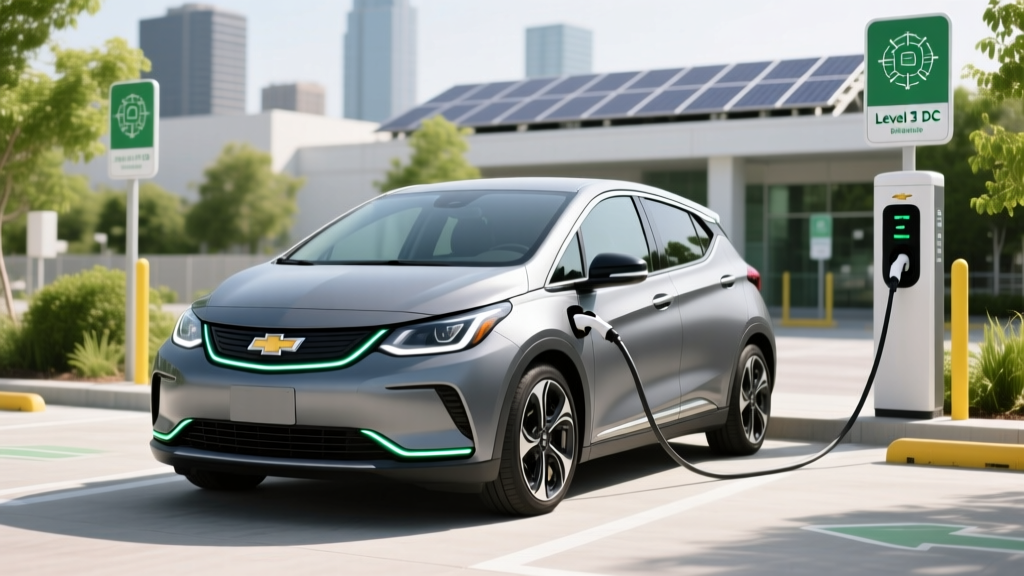
Chevrolet confirmed the next-generation Bolt will return on GM's Ultium platform, and industry watchers expect a significant refresh — colloquially called the 2027 Chevy Bolt facelift — to carry the nameplate into its second electrified chapter. While Chevrolet has not yet released final specifications or opened order books, we can piece together a credible picture from GM's Ultium architecture, the current Bolt EUV's proven formula, and statements from GM executives. This preview synthesizes what is known, what is projected, and what buyers should watch for.
Important note: As of this writing, the 2027 Bolt facelift has been announced but is not yet available for purchase. All specifications below are preliminary or projected based on GM's Ultium platform capabilities and prior Bolt generation data. Final EPA certification figures may differ.
Platform and Powertrain: The Ultium Upgrade
The original Bolt (2017–2023) rode on GM's older BEV2 architecture with a 65 kWh nickel-manganese-cobalt (NMC) lithium-ion pack. The next-generation Bolt moves to the Ultium platform, the same modular skateboard underpinning the Cadillac Lyriq, Chevrolet Blazer EV, and GMC Hummer EV. This shift brings three critical improvements:
- Wireless battery management system (wBMS): Reduces wiring harness weight by up to 90% compared to conventional BMS, improving packaging efficiency and reducing potential failure points.
- NCMA chemistry: GM's Ultium cells use a nickel-cobalt-manganese-aluminum formulation that lowers cobalt content by 70% versus the previous Bolt's NMC cells, reducing cost and supply-chain risk.
- Native NACS port: The new Bolt will ship with the North American Charging Standard (Tesla-style) connector as standard, granting access to the Supercharger network without an adapter.
| Attribute | Projected / Estimated | Notes |
|---|---|---|
| Platform | GM Ultium (BEV3) | FWD expected; AWD possible on higher trims |
| Battery Capacity (usable) | ~65–75 kWh | NCMA chemistry (Ultium) |
| EPA Range | ~260–300 mi (est.) | Pending EPA certification |
| Peak DC Fast Charge | ~150–175 kW | Native NACS connector |
| 10–80% DCFC Time | ~25–30 min (est.) | Based on Ultium charge curves |
| Level 2 Home Charging | 11.5 kW / ~37 mi/hr | Requires 48A circuit |
| Motor Output | ~200–213 hp | Single front motor (FWD) |
| 0–60 mph | ~6.5–7.0 sec (est.) | Improved over prior Bolt's 6.5s |
| Drivetrain | FWD (AWD TBD) | Single-motor FWD confirmed for base |
| Starting MSRP | ~$28,000–$32,000 | Before any incentives |
Range and Efficiency: What to Expect in the Real World
The previous-generation Bolt EV achieved an EPA-estimated 259 miles on a full charge; the longer Bolt EUV hit 247 miles despite a larger battery, due to increased weight and less aerodynamic profile. GM has signaled that the Ultium-based Bolt will improve on both, targeting a projected EPA range in the 260–300 mile range depending on trim and wheel size.
- EPA Estimate: ~260–300 miles (pending certification)
- Highway (70–75 mph sustained): Expect ~210–250 miles — EVs lose 15–20% at sustained highway speeds due to aerodynamic drag
- Cold Weather (below 32°F): Expect ~175–220 miles — lithium-ion internal resistance increases and cabin heating draws significant energy; a heat pump (if equipped) would mitigate this by ~10–15%
- Combined real-world daily driving: ~230–270 miles in moderate temperatures with mixed city/highway use
Efficiency should land in the neighborhood of 115–125 MPGe combined (roughly 27–30 kWh/100 mi), consistent with the compact EV segment. The prior Bolt EV achieved 120 MPGe combined per fueleconomy.gov. If GM keeps the curb weight near 3,600–3,800 lbs and improves aero, a slight efficiency gain is plausible.
Charging: NACS Native and Meaningfully Faster
The biggest charging story for the 2027 Bolt facelift is the transition from CCS1 to native NACS. This means access to Tesla's Supercharger network — the most reliable DC fast-charging network in North America — without carrying a CCS-to-NACS adapter. Based on Ultium platform behavior observed in the Equinox EV and Blazer EV, here is what we project:
| Charging Level | Power | Speed / Time | Connector |
|---|---|---|---|
| Level 1 (120V household) | 1.4 kW | ~4 mi/hr | NACS (J3400) |
| Level 2 (240V home) | 11.5 kW | ~37 mi/hr (full charge ~7–8 hrs) | NACS (J3400) |
| DC Fast Charge | ~150–175 kW peak | 10–80% in ~25–30 min | NACS (J3400) |
Charging curve reality check: Like all Ultium vehicles, the Bolt will not sustain peak kW for the entire session. Expect the charge rate to taper significantly above 80% state of charge (SoC) — this is normal lithium-ion behavior to protect cell longevity. For daily driving, charging to 80% is recommended; reserve 100% fills for road-trip mornings.
For home charging, a 48-amp Level 2 wall connector on a 60-amp dedicated circuit will deliver the full 11.5 kW. If your electrical panel is older or near capacity, budget $500–$2,000 for a panel upgrade — consult a licensed electrician for a site assessment before purchase.
Performance and Driving Dynamics
The original Bolt's 200-hp front motor delivered a surprisingly punchy 0–60 mph time of roughly 6.5 seconds, thanks to instant electric torque. The 2027 facelift is expected to retain a similar single-motor FWD layout on base trims, with output in the 200–213 hp range. A dual-motor AWD variant is possible on higher trims, following the pattern established by the Equinox EV and Blazer EV.
Ride and handling should improve with Ultium's lower center of gravity and stiffer structural pack integration. GM has also committed to refining the one-pedal driving mode and regenerative braking calibration — areas where the original Bolt received mixed reviews for abruptness at low speeds.
Interior, Cargo, and Technology
The 2027 Bolt will likely grow slightly in exterior dimensions compared to the outgoing model, which measured 169.5 inches long (Bolt EV) and 173.5 inches (Bolt EUV). Expect a wheelbase stretch that translates to improved rear-seat legroom — the previous Bolt EUV offered 39.1 inches rear legroom, competitive for the subcompact crossover class.
Projected interior and cargo specs:
- Cargo volume (behind rear seats): ~18–22 cu ft (est.)
- Cargo volume (rear seats folded): ~50–56 cu ft (est.)
- Front headroom / legroom: ~40 / 42 in (similar to EUV)
- Rear headroom / legroom: ~38 / 38 in (improved over prior Bolt EV)
On the tech front, expect GM's latest 17.7-inch diagonal infotainment touchscreen (as seen in the Equinox EV) running Google Built-In with native Google Maps, Google Assistant, and Play Store apps. Wireless Apple CarPlay and Android Auto should remain standard. A 11-inch digital driver display is likely across all trims.
Driver-assistance features will include Chevy Safety Assist as standard: automatic emergency braking, forward collision alert, lane keep assist, following distance indicator, and IntelliBeam headlights. Super Cruise (GM's hands-free Level 2 highway driving system) should be available on higher trims, offering hands-free operation on over 750,000 miles of compatible highways in North America.
Pricing, Trims, and Federal Tax Credit Eligibility
GM executives have stated publicly that the next-generation Bolt will target an MSRP starting under $30,000, making it one of the most affordable new EVs on the market. Based on GM's current pricing strategy and Ultium cost reductions, here is a projected trim breakdown:
| Trim | Est. MSRP | Est. After §30D Credit* |
|---|---|---|
| LT (base) | $28,000–$29,500 | $20,500–$22,000 |
| 2LT (mid) | $31,000–$33,000 | $23,500–$25,500 |
| RS or Premier (top) | $34,000–$37,000 | $26,500–$29,500 |
*Federal tax credit amounts are estimates. Actual eligibility depends on IRS §30D rules including buyer income caps, vehicle MSRP caps, battery component sourcing, and critical mineral requirements. See IRS.gov §30D guidelines for current-year requirements. Point-of-sale transfer is available for eligible buyers, reducing the purchase price at the dealer.
Key §30D eligibility factors to verify before purchase:
- MSRP cap: Vans, SUVs, and pickup trucks are capped at $80,000; sedans and hatchbacks at $55,000. The Bolt should clear this easily.
- Buyer income cap: Modified AGI cannot exceed $150,000 (single), $225,000 (head of household), or $300,000 (joint). Check your prior-year or current-year tax return.
- Battery sourcing: The $7,500 credit splits into two $3,750 halves — one for critical minerals sourcing and one for battery component manufacturing. GM's Ultium cells are assembled in the U.S. (Lordstown, OH and Lansing, MI), but critical-mineral compliance varies by model year. Confirm the specific VIN's eligibility on the IRS clean vehicle report at the time of purchase.
- Point-of-sale transfer: Eligible buyers can transfer the credit to the dealer at purchase, effectively reducing the out-of-pocket price rather than waiting for a tax refund.
Warranty and Long-Term Ownership
GM's standard EV warranty coverage is expected to carry over from current Ultium models:
- Battery pack: 8 years / 100,000 miles (whichever comes first), covering capacity retention below 70% of original
- Powertrain (motor, inverter, reduction gear): 8 years / 100,000 miles
- Bumper-to-bumper: 3 years / 36,000 miles
- Corrosion perforation: 6 years / 100,000 miles
Ultium's NCMA chemistry is designed for longevity, with GM targeting 400,000+ miles of usable life under normal conditions. Real-world degradation data for the Bolt-specific pack won't be available until the vehicle has been on the road for 1–2 years, but early Ultium vehicles (Lyriq, Blazer EV) have shown modest degradation curves consistent with industry norms (~8–12% capacity loss over 5 years / 75,000 miles).
Pros, Cons, and Who Should Buy
- Sub-$30,000 starting MSRP — among the cheapest new EVs available
- Native NACS charging — direct Supercharger access without adapter
- 260–300 mi projected range covers most daily and commuting needs
- Proven Ultium platform with strong warranty coverage
- Super Cruise availability for hands-free highway driving (Level 2)
- Compact footprint ideal for urban parking and tight garages
- FWD only on base trims — no AWD for snow-belt buyers (unless upper trim adds it)
- DC fast-charge speed (~150–175 kW) trails Hyundai/Kia's 800V architecture (~240–350 kW)
- Final specs and pricing unconfirmed — early reservation holders face uncertainty
- Compact cargo area compared to crossover competitors (Equinox EV, Ioniq 5)
- No V2L (vehicle-to-load) confirmed — limits campsite/emergency power use
- Choose the Bolt if: You want the most affordable long-range EV with Supercharger access, primarily commute under 60 miles daily, and can charge at home overnight. It's ideal as a first EV or a household's second car.
- Look elsewhere if: You need AWD for mountain or heavy-snow driving, regularly tow (the Bolt is not rated for towing), take frequent 400+ mile road trips (a larger pack or faster-charging platform like the Ioniq 5 or Model Y would suit better), or need maximum cargo space for family hauling.
Frequently Asked Questions
What is the real-world range of the 2027 Chevy Bolt facelift?
With a projected EPA estimate of 260–300 miles, expect approximately 230–270 miles in mixed real-world driving at moderate temperatures. Highway-only driving at 75 mph will reduce this to roughly 210–250 miles, and cold-weather driving (below freezing) may drop range to 175–220 miles depending on cabin heating demands and whether a heat pump is equipped.
How fast does the 2027 Bolt charge at home and on the road?
At home on a Level 2 (240V) charger, the Bolt should add approximately 37 miles of range per hour at 11.5 kW, reaching a full charge overnight in 7–8 hours. On DC fast chargers, the projected peak rate of 150–175 kW should deliver a 10–80% charge in approximately 25–30 minutes. Charging above 80% slows considerably to protect battery health.
Does the 2027 Chevy Bolt qualify for the $7,500 federal EV tax credit?
The Bolt is expected to qualify for at least a partial §30D credit, given its U.S.-assembled Ultium battery and sub-$55,000 MSRP. However, eligibility depends on battery critical-mineral sourcing rules, buyer income caps ($150K single / $300K joint), and the specific VIN's compliance at time of purchase. Always verify on the IRS clean vehicle credit page before committing. Point-of-sale transfer is available for eligible buyers.
Is the 2027 Bolt worth buying vs. competitors like the Equinox EV or Model 3?
The Bolt's primary advantage is price — it undercuts the Chevrolet Equinox EV (~$33,000 base) and Tesla Model 3 (~$38,990 base) significantly. If budget is your top priority and you don't need AWD, maximum cargo space, or the fastest DC charging, the Bolt is a compelling choice. If you need more interior room, the Equinox EV is a natural step-up within the Chevy showroom. If you want the most mature Supercharger experience and over-the-air updates, the Model 3 remains the benchmark — but at a $10,000+ premium.
When will the 2027 Chevy Bolt facelift be available to order?
GM has confirmed the next-generation Bolt is in development on the Ultium platform but has not announced a specific on-sale date. Industry estimates place production start in late 2026 or early 2027, with deliveries following shortly after. Check Chevrolet's official EV page for updates as the launch approaches.
Will the new Bolt have Super Cruise?
Yes, Super Cruise — GM's hands-free Level 2 highway driving assist — is expected to be available on higher trims. It operates on mapped divided highways and requires the driver to remain attentive (monitored by a driver-facing camera). It is not a self-driving system and does not handle city streets, construction zones, or unmapped roads.