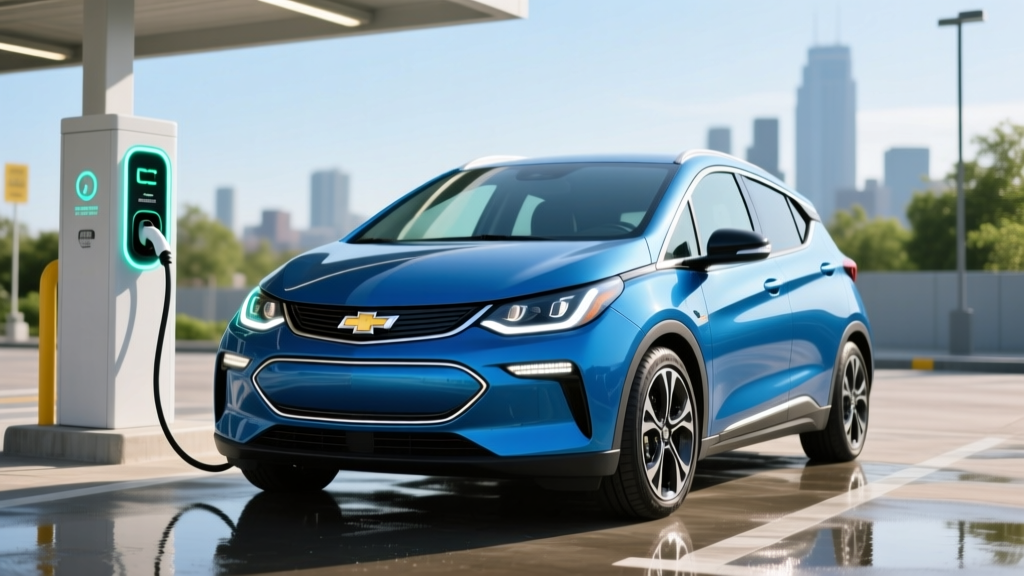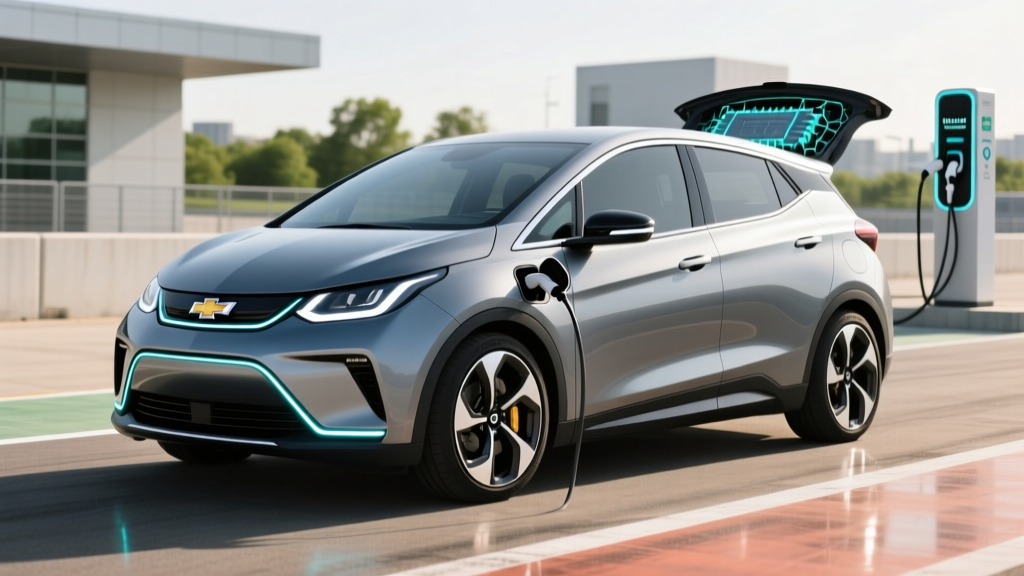
What the Latest 2027 Chevy Bolt EV Spy Shots Tell Us
The Chevrolet Bolt EV was discontinued after the 2023 model year, but General Motors confirmed a next-generation Bolt built on the Ultium platform. Recent 2027 Chevy Bolt EV spy shots captured by automotive photographers show a slightly taller, more crossover-like hatchback undergoing cold-weather testing in northern Michigan and hot-weather validation in Death Valley. While Chevrolet has not published final specifications, the camouflaged mules, combined with supply-chain filings and platform engineering disclosures, let us piece together a credible picture of what the next Bolt will offer when it reaches dealers — likely in late 2026 as a 2027 model.
This article breaks down every confirmed and strongly indicated detail: battery chemistry, projected range, the long-awaited switch to NACS for DC fast charging, performance estimates, pricing, and federal tax credit eligibility under current IRS §30D rules. Where data is preliminary, we label it clearly.
Platform, Battery, and Chemistry: The Ultium Upgrade
The original Bolt rode on GM's BEV2 platform with an LG-sourced NMC (nickel-manganese-cobalt) lithium-ion pack. The next-generation Bolt shifts to GM's Ultium platform — the same architecture underpinning the Equinox EV, Blazer EV, and Cadillac Lyriq. This is the single most consequential change for the Bolt nameplate.
Spy shots show a wheelbase stretched roughly 2–3 inches over the outgoing Bolt, consistent with the Ultium skateboard's modular battery tray. Supply-chain indicators and GM battery cell joint-venture announcements (Ultium Cells LLC, a partnership with LG Energy Solution) point to an NMC-based pouch cell configuration for the Bolt, rather than LFP (lithium iron phosphate). This is a critical distinction:
| Attribute | NMC (Likely Bolt) | LFP (e.g., Tesla Model 3 RWD) |
|---|---|---|
| Energy density | Higher — more range per kg | Lower — heavier pack for same range |
| Cycle life | ~1,000–1,500 cycles | ~3,000+ cycles |
| Cold-weather performance | Better low-temp conductivity | Greater range loss in freezing temps |
| Cost per kWh | Higher (cobalt/nickel) | Lower (iron/phosphate) |
| Recommended SoC daily | 80% for longevity | 100% OK daily |
Based on the physical dimensions visible in spy photos and GM's stated Ultium module scalability, we project a usable battery capacity of approximately 65–70 kWh. This would represent a meaningful increase over the outgoing Bolt's 65 kWh pack, while benefiting from Ultium's improved thermal management and more efficient power electronics.
Projected Range and Efficiency
The outgoing 2023 Bolt EV achieved an EPA-estimated 259 miles on a full charge. GM executives have publicly stated the next-gen Bolt will deliver "more range and dramatically better charging." Industry analysts project the 2027 Bolt EV will target an EPA-estimated range of 260–290 miles, depending on trim and wheel size.
EPA estimate: ~260–290 miles (preliminary, unconfirmed)
Highway driving (70+ mph): Expect ~215–245 miles — aerodynamic drag reduces efficiency at sustained speed
Cold weather (below 32°F): Expect ~180–220 miles — cabin heating and battery resistance reduce usable capacity by 20–30%
Combined real-world daily driving: ~235–265 miles in moderate conditions
Note: These projections are based on comparable Ultium-platform vehicles like the Equinox EV (EPA 319 mi, ~65 kWh usable) and real-world testing patterns. Final EPA numbers will be published at fueleconomy.gov upon certification.
Efficiency should land in the neighborhood of 110–120 MPGe combined (roughly 28–31 kWh/100 mi), competitive with the Hyundai Kona Electric and slightly behind the Tesla Model 3 RWD's exceptional 132 MPGe. The Bolt's hatchback shape, while practical, creates more drag than a sleek sedan.
Charging: The NACS Switch and DC Speed Upgrade
The single biggest criticism of the original Bolt was its painfully slow DC fast charging — capped at 55 kW, taking nearly an hour for a 10–80% session. The 2027 Bolt EV spy shots reveal a NACS (North American Charging Standard) port, confirming GM's commitment to the Tesla-designed connector now adopted industry-wide.
This is transformative for Bolt owners. NACS provides access to Tesla's Supercharger network — over 25,000 stalls in North America — without an adapter, plus compatibility with Electrify America, EVgo, and other networks deploying NACS cables.
| Charging Level | Power / Rate | Speed | Use Case |
|---|---|---|---|
| Level 1 (120V) | ~1.4 kW | ~4–5 mi/hr | Emergency / overnight trickle |
| Level 2 (240V home) | ~11.5 kW (estimated) | ~35–40 mi/hr | Daily home charging, ~7 hr 0–100% |
| DC Fast Charge | ~150 kW peak (estimated) | ~10–80% in ~28–32 min | Road trips, public stations |
The projected 150 kW peak DC charge rate represents a nearly 3x improvement over the old Bolt. However, buyers should understand the charge curve: peak kW is sustained only between roughly 10–50% state of charge, then tapers progressively. A 10–80% session will average closer to 100–110 kW. This is competitive with the Hyundai Kona Electric and Volkswagen ID.4, though not class-leading — the Hyundai Ioniq 5 peaks at 240 kW on 800V architecture.
For home Level 2 charging, the expected 11.5 kW onboard charger means a full charge in about 7 hours on a 48-amp circuit (60-amp breaker). Most owners charging from 20–80% daily will need only 4–5 hours, easily accomplished overnight on a standard Level 2 home station.
Performance and Drivetrain
Spy shots show a single rear-mounted motor configuration on most test mules, though one variant appeared with what could be a dual-motor setup (likely reserved for a future Bolt EUV or AWD variant). Based on Ultium motor options and the Bolt's positioning as an affordable commuter:
| Spec | Estimated Value |
|---|---|
| Drivetrain | RWD (single motor); AWD possible later |
| Horsepower | ~200–213 hp |
| Torque | ~236 lb-ft |
| 0–60 mph | ~6.5–7.0 seconds (estimated) |
| Top speed | ~105 mph (electronically limited) |
The shift from the old Bolt's FWD layout to RWD (enabled by Ultium's rear motor option) improves weight distribution and driving dynamics. The outgoing Bolt's 200 hp and 6.5-second 0–60 should carry forward or improve slightly. This is adequate for merging and passing — the Bolt was never a performance EV, and that's fine at its price point.
Interior, Cargo, and Technology
The spy shots show a noticeably roomier cabin. The stretched wheelbase translates to improved rear-seat legroom — we project ~38 inches of rear legroom (up from 35.9 inches in the old Bolt), making the back seat genuinely usable for adults on longer trips.
Cargo volume should increase to approximately 20–22 cubic feet behind the rear seats and ~55–58 cubic feet with seats folded, aided by a slightly longer load floor and the elimination of the old Bolt's bulky power electronics packaging under the hood. A modest frunk (front trunk) is possible on the Ultium platform, though spy shots don't confirm one.
Technology highlights expected based on current GM vehicles:
- 11.3-inch diagonal infotainment touchscreen running Google Built-In (Maps, Assistant, Play Store)
- 11-inch digital instrument cluster
- Wireless Apple CarPlay and Android Auto
- Super Cruise availability (GM's Level 2 hands-free driver-assist, SAE Level 2 — driver must remain attentive) on mapped highways, likely on higher trims
- Standard Chevy Safety Assist: automatic emergency braking, lane-keep assist, following distance indicator, IntelliBeam headlights
- Vehicle-to-load (V2L) capability — use the Bolt's battery to power devices or tools (a Ultium platform feature)
Pricing, Trims, and Federal Tax Credit Eligibility
GM has signaled the next-generation Bolt will reclaim its title as one of the most affordable EVs in America. Based on current supply-chain cost reductions for Ultium cells and competitive pressure from the Tesla Model 3, Nissan Leaf successor, and Hyundai Kona Electric:
| Trim | Est. Base MSRP | Est. After §30D Credit* |
|---|---|---|
| LT (base) | ~$27,000–$29,000 | ~$19,500–$21,500 |
| 2LT (mid) | ~$31,000–$33,000 | ~$23,500–$25,500 |
| Premier (top) | ~$35,000–$37,000 | ~$27,500–$29,500 |
*Federal tax credit estimates assume full $7,500 eligibility under IRS §30D. Actual credit depends on buyer income, vehicle MSRP caps, battery component sourcing, and critical mineral requirements. See checklist below.
The 2027 Bolt's sub-$55,000 MSRP clears the IRS cap for passenger vehicles (sedans/hatchbacks must be under $55,000). However, eligibility for the full $7,500 credit depends on several factors that change annually:
- ✅ MSRP cap: Vehicle must be under $55,000 (passenger car) — Bolt clears this easily
- ⚠️ Buyer income cap: AGI must not exceed $150,000 (single) / $300,000 (married filing jointly)
- ⚠️ Battery sourcing: Battery components must be manufactured/assembled in North America (phased percentages increase yearly); critical minerals must be sourced from the U.S. or FTA partners
- ✅ Final assembly: Must occur in North America — Bolt is built at GM's Orion Assembly (Michigan) or updated facility
- ✅ Point-of-sale transfer: Eligible buyers can apply the credit as an immediate dealer discount rather than waiting for tax filing
Rules are subject to change. Always verify current eligibility at irs.gov and consult a tax professional before purchasing.
Warranty Coverage
GM provides strong battery and powertrain protection across its EV lineup. Based on current Ultium-vehicle warranties:
- Battery pack: 8 years / 100,000 miles (whichever comes first), covering capacity loss below 60% of original
- Electric powertrain (motor, power electronics): 8 years / 100,000 miles
- Bumper-to-bumper: 3 years / 36,000 miles
- Corrosion: 6 years / 100,000 miles
The 60% capacity retention threshold is standard for the industry but worth noting: if your Bolt's battery degrades to 59% of its original capacity within 8 years or 100,000 miles, GM will repair or replace it. In practice, Ultium packs with active liquid thermal management are projected to retain 85–90% capacity at 100,000 miles based on early Lyriq and Equinox EV fleet data.
Competitive Landscape: Bolt vs. the Affordable EV Field
The 2027 Bolt enters a segment that has matured significantly since the original Bolt's 2017 debut. Here's how projected specs stack up against likely competitors:
| Spec | Chevy Bolt EV | Tesla Model 3 RWD | Hyundai Kona Electric |
|---|---|---|---|
| Est. Range (EPA) | 260–290 mi | 272 mi | 261 mi |
| Est. Base Price | ~$27–29K | ~$38K | ~$33K |
| DC Fast Charge Peak | ~150 kW | ~170 kW | ~100 kW |
| Body Style | Hatchback | Sedan | Subcompact SUV |
| Charging Standard | NACS | NACS (native) | CCS / NACS adapter |
The Bolt's projected advantage is clear: lowest entry price in a field of credible EVs. The trade-off is slightly less range than the Model 3 and slower DC charging than both competitors. For buyers prioritizing affordability and practicality over maximum range or fastest charging, the Bolt's value proposition is compelling.
- Lowest projected MSRP among Ultium/NACS-compatible EVs
- NACS native — direct Supercharger access, no adapter
- ~3x faster DC charging vs. old Bolt
- Improved rear-seat legroom and cargo space
- Super Cruise availability (Level 2 hands-free on highways)
- V2L capability for camping, tools, or emergency power
- Hatchback practicality with folding rear seats
- Range likely 260–290 mi — not class-leading
- DC charge rate (~150 kW) slower than Ioniq 5 or Model 3
- NMC chemistry means 80% daily SoC recommended (not 100% like LFP)
- No confirmed AWD option at launch
- Interior materials likely hard plastics at base price point
- Still unconfirmed — specs may shift before production
Who Should Wait for the 2027 Chevy Bolt EV?
Based on projected specs and pricing, the next-generation Bolt is best suited for:
- Budget-conscious EV shoppers who want a new, modern EV under $30,000 before incentives — potentially under $20,000 after the federal credit
- Daily commuters driving 30–60 miles round-trip who can charge at home overnight and rarely need DC fast charging
- Second-car households adding an EV for local errands and commuting while keeping a gas or hybrid vehicle for long road trips
- First-time EV buyers who want a proven nameplate with dealer support, a strong battery warranty, and Google Built-In infotainment
- Renters or apartment dwellers who can use workplace or public Level 2 charging — the NACS connector opens up more public options
The Bolt is not ideal for frequent long-distance road trippers (the 260–290 mile range and ~150 kW charging mean more stops than a Model 3 or Ioniq 5), those who need AWD for snow-belt climates (unless a dual-motor variant arrives), or buyers who demand the longest possible cycle life that LFP chemistry provides.
Frequently Asked Questions
When will the 2027 Chevy Bolt EV be available to buy?
GM has confirmed the next-generation Bolt is in development but has not announced an exact on-sale date. Based on typical automotive development timelines and spy shot activity, a reveal is likely in mid-to-late 2026, with deliveries beginning in late 2026 or early 2027 as a 2027 model-year vehicle.
What is the real-world range of the 2027 Bolt EV?
The EPA estimate has not been published yet. Based on Ultium platform data from the Equinox EV and the Bolt's projected ~65–70 kWh battery, we estimate 260–290 miles EPA. Real-world highway driving will yield approximately 215–245 miles, and cold-weather driving (below freezing) may drop to 180–220 miles depending on conditions and cabin heating use.
How fast does the 2027 Bolt charge?
Projected DC fast charging peaks at approximately 150 kW, enabling a 10–80% charge in roughly 28–32 minutes. At home on a Level 2 (240V, 48-amp) charger, expect about 35–40 miles of range added per hour, with a full charge in approximately 7 hours. This is a massive improvement over the old Bolt's 55 kW DC limit.
Does the 2027 Chevy Bolt qualify for the $7,500 federal tax credit?
Based on current IRS §30D rules, the Bolt is projected to qualify for the full $7,500 credit, given its sub-$55,000 MSRP and North American assembly. However, eligibility depends on the buyer's adjusted gross income (under $150K single / $300K married), battery component sourcing requirements (which tighten yearly), and critical mineral rules. Always check irs.gov for the latest requirements and consult a tax professional.
Is the 2027 Bolt worth waiting for vs. buying an EV now?
If you need an EV immediately and can afford $33,000–$38,000, the Hyundai Kona Electric, Tesla Model 3, and Chevy Equinox EV are all available now with proven specs. If your budget is under $30,000 and you can wait 12–18 months, the next-gen Bolt could offer the best value in the segment — but remember that tax credit rules, pricing, and specs may shift before launch.
Will the 2027 Bolt have a front trunk (frunk)?
Spy shots do not definitively confirm a frunk. The Ultium platform supports one, and some GM EVs (like the Silverado EV) include front storage, but the Bolt's compact packaging and cost targets may limit front cargo space. We'll confirm at the official reveal.
What connector does the 2027 Bolt use — NACS or CCS?
Spy shots strongly indicate a native NACS (Tesla-style) charge port. This means direct compatibility with Tesla Superchargers and other NACS-equipped networks without needing an adapter — a significant advantage over CCS-equipped vehicles that require adapters for Supercharger access.
Sources: General Motors Ultium platform disclosures, EPA fueleconomy.gov, IRS Clean Vehicle Credits, automotive spy photography archives. All projected specifications are preliminary and subject to change upon official vehicle reveal.