Quick Verdict: The Budget EV King Returns Refreshed
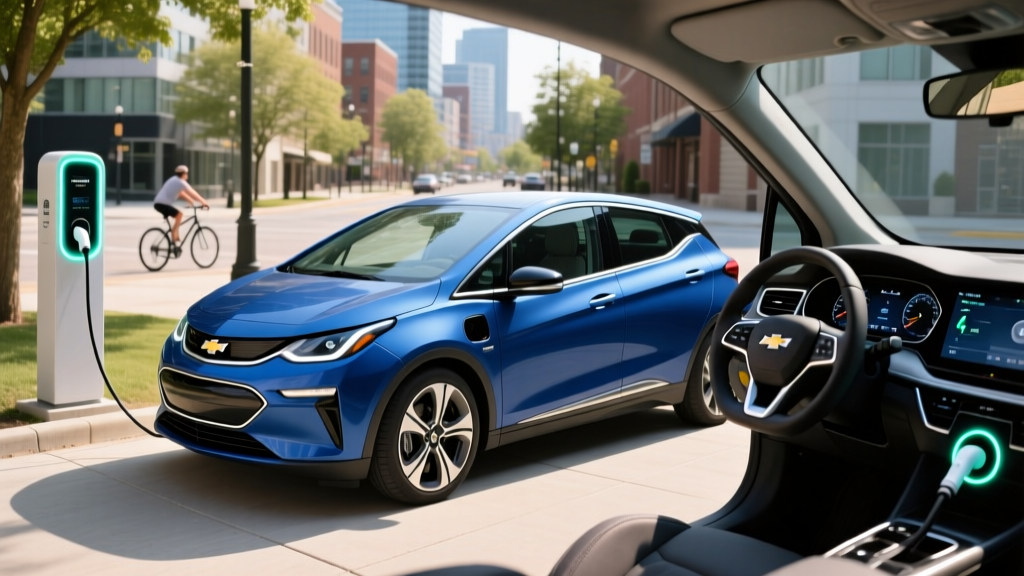
The 2027 Chevrolet Bolt EV arrives as a ground-up redesign of the platform that originally defined affordable electric mobility. Built on GM's updated Ultium-derived architecture, the new Bolt targets the exact buyers who made its predecessor a best-seller: commuters, urban dwellers, and cost-conscious EV adopters who need practical range without a premium price tag. For Cincinnati drivers navigating I-71 commutes and Ohio's cold winters, the 2027 Bolt presents a compelling — if imperfect — package.
| Spec | Value |
|---|---|
| EPA Range (estimated) | 260 miles |
| Battery Capacity | 65 kWh (usable), LFP chemistry |
| Peak DC Fast Charge | 150 kW (CCS/NACS adapter available) |
| 10–80% DC Charge Time | ~28 minutes (est.) |
| Level 2 Home Charging | 11.5 kW (~38 mi/hr) |
| 0–60 mph | ~7.0 seconds (est.) |
| Horsepower | 200 hp (single motor, FWD) |
| Efficiency | 120 MPGe combined (est.) / 28 kWh/100mi |
| Base MSRP | $28,900 (1LT) / $32,400 (2LT) |
| Battery Warranty | 8 years / 100,000 miles |
Range and Efficiency: What Cincinnati Drivers Can Actually Expect
Chevrolet targets an EPA-estimated 260 miles of range for the 2027 Bolt EV, a meaningful jump from the outgoing model's 259-mile rating despite the switch to LFP (lithium iron phosphate) battery chemistry. LFP cells trade some energy density for superior cycle life and thermal stability — a worthwhile tradeoff for a commuter-focused vehicle.
On the EPA sticker, you'll see 260 miles. In real-world Cincinnati driving, plan for:
- City/commute driving (mild weather): 250–265 miles — LFP excels in stop-and-go with excellent regen efficiency
- Highway cruising (I-71 at 70 mph): 210–230 miles — aerodynamic drag and single-speed gearing reduce efficiency at sustained speed
- Cold weather (below 32°F): 175–200 miles — LFP chemistry suffers more cold-weather range loss than NMC; preconditioning helps but won't eliminate the penalty
- Worst case (highway + 15°F + hills): ~160 miles — plan charging stops accordingly on winter road trips to Columbus or Dayton
The 65 kWh usable battery paired with a heat pump (standard on 2LT, optional on 1LT) helps mitigate winter losses. Cincinnati's moderate-but-variable climate — where January lows average 22°F and July highs hit 88°F — means you'll see the full range spectrum across seasons. For a 30-mile round-trip commute, even worst-case winter range leaves a comfortable buffer.
Efficiency lands around 120 MPGe combined (estimated) or roughly 28 kWh per 100 miles. That's competitive with the Hyundai Kona Electric and slightly behind the Tesla Model 3 RWD, but entirely acceptable for this price segment. The front-wheel-drive layout prioritizes efficiency over performance, and the 200-hp single motor provides adequate acceleration without excessive energy draw.
Charging Speed: The Bolt's Biggest Upgrade — and Its Lingering Limitation
The previous Bolt's most criticized flaw was its sluggish DC fast-charging speed, which peaked at just 55 kW. The 2027 model addresses this head-on with a 150 kW peak DC charge rate, enabled by the new Ultium-based platform's improved thermal management.
| Charging Level | Power | Miles Added per Hour | Notes |
|---|---|---|---|
| Level 1 (120V household) | 1.4 kW | ~4 mi/hr | Emergency/trickle only; ~65 hours for full charge |
| Level 2 (240V home, 48A) | 11.5 kW | ~38 mi/hr | Full charge in ~6 hours; ideal overnight setup |
| DC Fast Charge (peak) | 150 kW | ~250 mi/hr (peak) | 10–80% in ~28 min; tapers significantly above 80% |
Charging curve reality: The 150 kW peak is achieved between roughly 10–40% state of charge (SoC). From 40–60%, expect ~110–120 kW. From 60–80%, the rate drops to ~75 kW. Above 80%, charging slows dramatically to protect the LFP cells — plan on an additional 25–30 minutes if you need a full charge at a DC station. This taper is more pronounced than NMC chemistries, and it's the tradeoff for LFP's longevity advantage.
For home charging, the 11.5 kW onboard charger is a strong point. A Level 2 home installation on a 60-amp circuit (48-amp continuous) will fully replenish the battery overnight in about 6 hours. For Cincinnati homeowners, budget $800–$2,000 for a quality Level 2 charger plus electrician installation, depending on your panel capacity and whether a 200-amp service upgrade is needed.
The 2027 Bolt comes with a CCS1 port standard, but GM's transition to NACS means a Tesla Supercharger adapter is included in the box, granting access to the expanding Supercharger network — a major practical advantage for road trips along I-75 or I-70.
Performance and Driving Dynamics
The 2027 Bolt's single front-mounted motor produces an estimated 200 horsepower and 236 lb-ft of torque. The 0–60 mph time lands around 7.0 seconds — quick enough for confident highway merging and city driving, though not sporty by EV standards. This is a deliberate choice: Chevrolet prioritized efficiency and cost over performance, keeping the Bolt accessible and affordable.
Driving dynamics are competent rather than exciting. The low center of gravity (battery pack under the floor) gives the Bolt better body control than its predecessor, and the steering is appropriately weighted for urban maneuvering. Regenerative braking offers multiple levels, including a one-pedal driving mode that Cincinnati drivers will appreciate on the city's hills — particularly in neighborhoods like Mount Adams or Clifton where steep grades are routine.
Ride quality benefits from the updated platform's improved suspension tuning. Road noise is well-managed at city speeds but becomes noticeable above 65 mph on coarse-surface highways like sections of I-275. The Bolt is a comfortable commuter, not a grand tourer.
Interior, Cargo, and Technology
The 2027 Bolt's cabin represents a generational leap in material quality and technology. The centerpiece is a 17.7-inch diagonal infotainment screen running GM's latest Ultifi software, paired with an 11-inch digital instrument cluster. Wireless Apple CarPlay and Android Auto are standard, as is a Wi-Fi hotspot.
Cargo and passenger dimensions:
- Front headroom: 40.0 inches
- Front legroom: 42.1 inches
- Rear headroom: 38.0 inches
- Rear legroom: 36.2 inches
- Cargo volume (rear seats up): 23.5 cu ft
- Cargo volume (rear seats folded): 56.8 cu ft
- No front trunk (frunk) — the FWD layout uses that space for drivetrain components
Rear-seat space is adequate for adults on shorter trips but tight for taller passengers on longer drives. The cargo area is generous for the hatchback segment, easily swallowing groceries, luggage for two, or a week's worth of commuting gear. The 60/40 split-folding rear seats expand utility for Cincinnati IKEA runs or weekend trips to Hocking Hills.
Driver assistance (SAE Level 2): The Bolt offers GM's Super Cruise as an available option on the 2LT trim — a significant addition for this price class. Super Cruise provides hands-free driving on compatible divided highways (over 750,000 miles of mapped roads in North America), with driver monitoring via a steering-column camera. Note: this is SAE Level 2 automation, meaning you must remain attentive and ready to take over at all times. Standard safety features include automatic emergency braking, lane-keep assist, adaptive cruise control, and blind-spot monitoring.
Pricing, Trims, and Federal Tax Credit Eligibility
The 2027 Chevy Bolt EV launches in two trims:
| Trim | Base MSRP | Est. Federal Credit (§30D) | Effective Price |
|---|---|---|---|
| 1LT | $28,900 | Up to $7,500* | ~$21,400* |
| 2LT (Super Cruise avail.) | $32,400 | Up to $7,500* | ~$24,900* |
| 2LT + Sunroof + SC Pkg | $36,200 | Up to $7,500* | ~$28,700* |
*Federal tax credit eligibility depends on buyer income, battery sourcing, and MSRP caps under IRS §30D rules. Point-of-sale transfer available at participating dealers. See IRS.gov clean vehicle credits for current requirements.
§30D Tax Credit Requirements (2026 rules):
- MSRP cap: Vehicle must be under $55,000 (sedans/hatchbacks) — Bolt qualifies easily
- Buyer income cap: AGI must not exceed $150,000 (single) / $300,000 (joint) — verify with your tax professional
- Battery sourcing: Critical minerals and battery components must meet phased-in domestic/FAT content thresholds — GM has been aggressively re-shoring supply chains, but confirm eligibility at point of sale via the fueleconomy.gov credit lookup tool
- Point-of-sale transfer: You can apply the credit as an instant rebate at the dealer rather than waiting for tax filing — confirm dealer participation
Ohio does not currently offer a state EV purchase incentive, though Cincinnati-area buyers should check for local utility rebates from Duke Energy for home charger installation.
Ownership Costs and Warranty
GM backs the 2027 Bolt with a competitive warranty package:
- Battery & powertrain: 8 years / 100,000 miles (covers capacity loss below 70% of original)
- Limited vehicle warranty: 3 years / 36,000 miles
- Corrosion protection: 6 years / 100,000 miles
- Roadside assistance: 5 years / 100,000 miles
LFP chemistry gives the Bolt a longevity edge: these cells typically retain 85–90% capacity after 1,000 full charge cycles (roughly 260,000 miles at this vehicle's range). For a Cincinnati commuter driving 12,000 miles annually, the battery should outlast the vehicle's practical lifespan.
Estimated 5-year total cost of ownership: Assuming $0.13/kWh home charging (Duke Energy residential rate), 12,000 miles/year, and no major repairs, annual fuel cost is approximately $470 — compared to roughly $1,600 for a 30-MPG gas equivalent at $3.50/gallon. That's a ~$5,650 fuel savings over five years, before factoring in lower maintenance costs (no oil changes, reduced brake wear from regen).
Who Should Buy the 2027 Chevy Bolt EV?
- Your daily commute is under 80 miles round-trip (Cincinnati to Mason, Hamilton, or Florence, KY)
- You have access to home Level 2 charging
- Budget is your primary concern — this is the cheapest way into a 250+ mile EV
- You value low running costs over performance or prestige
- You want Super Cruise availability at an affordable price point
- You regularly drive 200+ miles in cold weather without charging access en route
- You need AWD for unplowed roads (consider the Hyundai Ioniq 5 or Subaru Solterra)
- You need a frunk or maximum cargo volume (consider a crossover-style EV)
- You prioritize rapid DC charging for frequent road trips (the Bolt's taper above 80% adds time)
Pros, Cons, and the Competition
- Sub-$22,000 effective price after tax credit — best value in EVs
- 260-mile EPA range is ample for most commuters
- LFP battery offers excellent long-term durability
- Super Cruise availability is rare at this price
- NACS adapter included — Supercharger access from day one
- Strong hatchback cargo utility
- FWD only — no AWD option for Ohio winters
- DC charging tapers heavily above 80% SoC
- Cold-weather range loss is more pronounced than NMC competitors
- No frunk (front trunk) for additional storage
- Rear seat is tight for tall adults on long trips
- Super Cruise requires subscription after trial period
Versus key competitors: The Hyundai Kona Electric (261 mi EPA, ~$33,000) offers slightly more range and faster DC charging but costs ~$4,000 more before credits. The Nissan Leaf remains cheaper but is limited by its CHAdeMO connector and smaller battery. The Tesla Model 3 RWD (~$39,000 before credit) is quicker and charges faster but sits in a higher price bracket. For pure value per mile of range, the 2027 Bolt is difficult to beat.
Frequently Asked Questions
What is the real-world range of the 2027 Chevy Bolt?
Expect 250–265 miles in mild city driving, 210–230 miles on the highway, and 175–200 miles in freezing Cincinnati winters. The EPA sticker says 260 miles, but cold weather and sustained highway speeds both reduce that figure meaningfully.
How fast does the 2027 Bolt charge?
On a DC fast charger, it peaks at 150 kW and charges from 10–80% in approximately 28 minutes, though the rate tapers significantly above 80%. At home on a Level 2 (240V/48A) charger, you'll add about 38 miles of range per hour, with a full charge taking roughly 6 hours.
Does the 2027 Chevy Bolt qualify for the $7,500 federal tax credit?
The Bolt's MSRP is well under the $55,000 cap, making it potentially eligible. However, your personal eligibility depends on income limits (AGI under $150K single / $300K joint), and the vehicle must meet battery critical-mineral and component sourcing thresholds under IRS §30D. Confirm eligibility at the dealer via the point-of-sale transfer system, and consult a tax professional for your specific situation.
Is the 2027 Bolt worth buying vs. the Hyundai Kona Electric or Tesla Model 3?
If budget is your top priority and you have home charging, the Bolt delivers the best cost-per-mile-of-range in the segment. The Kona Electric charges faster and offers AWD in some markets, while the Model 3 is quicker and has a more robust charging ecosystem — but both cost significantly more. The Bolt wins on value; the others win on performance and charging speed.
How does the Bolt handle Cincinnati winters?
LFP batteries lose more range in cold weather than NMC — plan for 175–200 miles on a full charge in sub-freezing temps. The available heat pump (standard on 2LT) helps, and preconditioning while plugged in is essential. FWD with traction control handles light snow adequately, but dedicated winter tires are recommended for unplowed side streets.
Can I use Tesla Superchargers with the 2027 Bolt?
Yes. GM includes a NACS adapter with the 2027 Bolt, granting access to Tesla's Supercharger network. The CCS1 port remains the native connector for Electrify America, EVgo, and other networks.