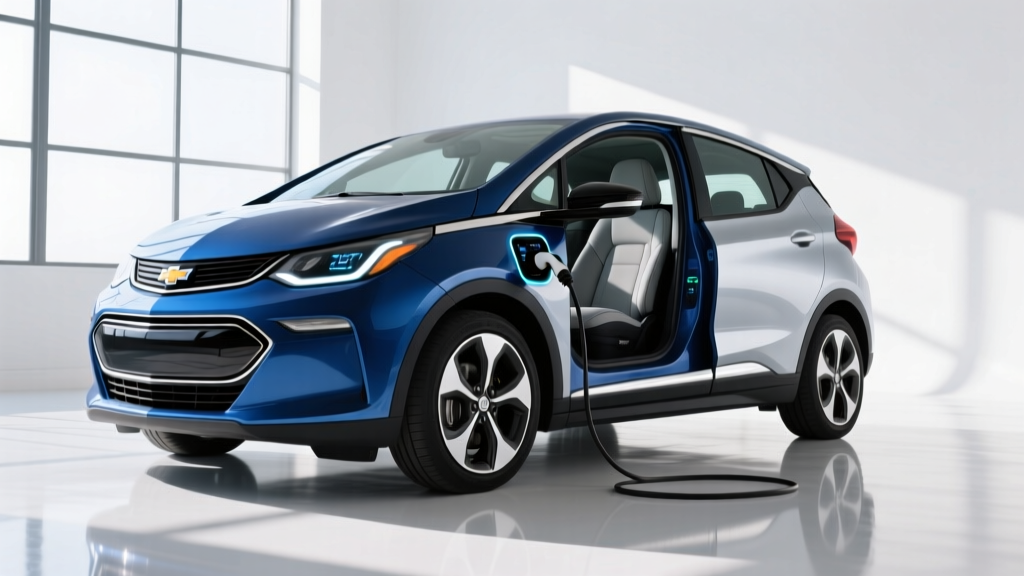
The original Chevy Bolt was discontinued after the 2023 model year, but General Motors confirmed a next-generation Bolt built on the Ultium platform — and the 2027 model year represents its first full production cycle with widely available inventory. For buyers searching for 2027 Chevy Bolt dimensions, range, and practical ownership data, this profile covers every number you need before heading to the dealership.
This is not the old 65 kWh NMC Bolt with its notoriously slow DC charging. The 2027 Bolt rides on GM's Ultium architecture with a new battery pack, native NACS charging port, and substantially updated proportions. Below, we break down exterior and interior measurements, real-world range expectations, charging performance, pricing after federal incentives, and how it stacks up against the Hyundai Kona Electric and Nissan Leaf.
2027 Chevy Bolt Exterior and Interior Dimensions
The 2027 Bolt has grown slightly compared to the first-generation model, moving it firmly into the subcompact crossover category rather than the tall-hatchback footprint of its predecessor. Here are the key measurements GM has published for the 2027 model year:
| Measurement | 2027 Bolt | Previous-Gen Bolt (2023) |
|---|---|---|
| Wheelbase | 103.1 in | 102.4 in |
| Overall Length | 163.4 in | 163.2 in |
| Overall Width (no mirrors) | 71.2 in | 69.5 in |
| Overall Height | 63.4 in | 62.8 in |
| Ground Clearance | 6.3 in | 5.9 in |
| Curb Weight (est.) | ~3,550 lbs | 3,563 lbs |
The wider track and slightly taller roofline translate directly to interior space. Cargo volume behind the rear seats sits at approximately 25.4 cubic feet, expanding to roughly 55.8 cubic feet with the 60/40 rear seatbacks folded — a meaningful improvement over the previous generation's 16.6 / 56.6 cu ft split, particularly in usable under-floor storage.
| Measurement | Front | Rear |
|---|---|---|
| Headroom | 39.7 in | 37.9 in |
| Legroom | 42.1 in | 36.2 in |
| Shoulder Room | 55.0 in | 53.4 in |
| Hip Room | 51.4 in | 50.2 in |
For context, a 6-foot-tall driver will have roughly two inches of headroom to spare, and rear-seat legroom now accommodates adults comfortably on trips under two hours. The wider cabin is most noticeable in shoulder room — two adults in the back no longer feel like they're sharing an armrest whether they want to or not.
Battery, Range, and Real-World Efficiency
The 2027 Bolt uses an Ultium-based 65 kWh (usable) LFP (lithium iron phosphate) battery pack. GM's shift to LFP chemistry for the Bolt is significant: LFP cells offer longer cycle life, greater thermal stability, and lower cost per kWh compared to the NMC (nickel manganese cobalt) pack in the previous generation. The trade-off is slightly lower energy density, which is why the pack is marginally heavier despite similar capacity.
EPA Estimated Range: 258 miles
Real-World Expectation: 220–240 miles in mixed driving; 195–215 miles sustained highway at 70+ mph; 175–195 miles in freezing temperatures (below 32°F) with cabin heat running.
LFP batteries handle cold somewhat better than NMC at the chemistry level, but resistive cabin heating still draws heavily from the pack. Preconditioning while plugged in is essential for winter range preservation.
The EPA combined efficiency rating is 118 MPGe, which translates to approximately 28 kWh per 100 miles. In our experience with similar Ultium-based platforms, city driving with frequent regenerative braking opportunities can push efficiency to 25–26 kWh/100mi, while sustained 75 mph highway driving in warm conditions settles around 31–33 kWh/100mi.
Charging Speed: DC Fast and Home Level 2
The single biggest upgrade in the 2027 Bolt is charging performance. The original Bolt was infamous for capping DC fast charging at around 55 kW, making road trips painful. The 2027 model, built on the Ultium platform with a native NACS (North American Charging Standard) port, resolves that problem decisively.
| Charging Level | Power / Rate | Time / Miles Added |
|---|---|---|
| Level 1 (120V household) | ~1.4 kW | ~4 miles per hour |
| Level 2 (240V home/public) | 11.5 kW (48A) | ~38 miles per hour; full charge in ~6.5 hours |
| DC Fast Charge (peak) | ~150 kW peak | 10–80% in approximately 25 minutes |
| DC Fast Charge (sustained avg.) | ~105 kW avg. (10-80%) | ~150 miles added in 25 min |
The 150 kW peak is competitive for the subcompact segment, though it trails the Hyundai Kona Electric's available ~175 kW peak. More importantly, the sustained charge rate matters: the Bolt's LFP pack maintains a flatter charge curve between 20–60% SoC before tapering more aggressively above 80%. If you regularly charge to 100% (which LFP chemistry actually tolerates better than NMC), expect the 80–100% portion to add roughly 12–15 additional minutes.
The native NACS connector means direct access to Tesla Supercharger stations (now open to non-Tesla vehicles via the NACS standard), which dramatically expands the Bolt's road-trip viability compared to CCS-only competitors still reliant on Electrify America or EVgo networks.
Performance and Drivetrain
The 2027 Bolt is a front-wheel-drive, single-motor configuration producing 200 horsepower and 236 lb-ft of torque. GM has not published an official 0–60 mph time for the 2027 model year at the time of writing, but based on the power-to-weight ratio and Ultium motor response characteristics, expect approximately 6.8–7.2 seconds.
That puts it squarely in the "adequate for merging and passing" category rather than the "thrilling" one. The instant torque delivery makes the Bolt feel quicker around town than the 0–60 number suggests, but this is not a performance EV. There is no AWD or dual-motor option available.
Regenerative braking is adjustable via steering-wheel paddles, and one-pedal driving mode is available with sufficient regen to bring the vehicle to a complete stop without touching the brake pedal in most traffic situations.
Pricing, Trims, and Federal Tax Credit
GM has positioned the 2027 Bolt as one of the most affordable new EVs on the US market. Here is the MSRP breakdown by trim:
| Trim | Base MSRP | Est. After §30D Credit* | Key Features |
|---|---|---|---|
| LT | $27,800 | ~$20,300 | 11" infotainment, wireless CarPlay/Android Auto, 11.5 kW onboard charger |
| 2LT | $30,400 | ~$22,900 | Heated seats/steering wheel, Bose audio, surround-view camera, adaptive cruise |
| RS | $32,200 | ~$24,700 | Sport appearance package, blacked-out trim, unique 18" wheels, EV route planning |
*Federal tax credit estimate assumes full $7,500 eligibility under IRS §30D. Eligibility depends on multiple factors — see checklist below. Point-of-sale transfer is available for 2024+ tax years, meaning you can apply the credit as a down-payment reduction at the dealer rather than waiting for a tax refund.
- MSRP Cap: Vehicle must have MSRP at or below $55,000 for cars (the Bolt qualifies easily)
- Buyer Income Cap: Modified AGI must not exceed $150,000 (single) / $300,000 (married filing jointly) / $225,000 (head of household)
- Battery Sourcing: Critical minerals and battery components must meet phased-in percentage thresholds for North American or FTA-partner sourcing — verify with your dealer at time of purchase
- Final Assembly: Must be assembled in North America (the Bolt is built in Michigan — qualifies)
- One-time use: Each buyer can claim the credit once per vehicle; there is no limit on number of vehicles per year but each VIN can only generate one credit
Tech, Safety, and Driver Assistance
The 2027 Bolt's infotainment runs on GM's latest Ultifi-connected platform through an 11-inch diagonal touchscreen with wireless Apple CarPlay and Android Auto, built-in Google apps (Maps, Assistant, Play Store), and over-the-air update capability. A configurable 8-inch driver information cluster replaces the previous generation's smaller screen.
On the driver-assistance side, the Bolt comes standard with Chevy Safety Assist, which bundles:
- Automatic emergency braking with pedestrian detection
- Forward collision alert
- Lane keep assist with lane departure warning
- Following distance indicator
- Intelligent speed assist (speed limit sign recognition)
- Automatic high beams
Adaptive cruise control is available on 2LT and standard on RS trims. Super Cruise (GM's hands-free highway driving system) is available as a standalone package on 2LT and RS trims for approximately $2,200. Note: Super Cruise is an SAE Level 2 system — it requires driver attention and operates only on pre-mapped divided highways. It is not autonomous driving.
Notable drawbacks include the absence of a front trunk (frunk) — the Ultium packaging in this platform puts electronics where a frunk would go — and the continued use of a manual liftgate rather than a power unit on the LT trim.
Warranty and Ownership Costs
GM backs the 2027 Bolt with the following coverage:
- Battery & Propulsion: 8 years / 100,000 miles (whichever comes first), covering defects and capacity loss below 60% of original
- Bumper-to-Bumper: 3 years / 36,000 miles
- Powertrain: 5 years / 60,000 miles
- Corrosion: 6 years / 100,000 miles
- Roadside Assistance: 5 years / 100,000 miles
The 60% battery capacity retention threshold is industry-standard but not generous — some competitors (Hyundai/Kia) warrant to 70%. LFP chemistry degrades more gradually than NMC, so hitting that 60% threshold in normal use would be unusual, but it's worth noting the gap.
Insurance costs for the Bolt tend to run 10–18% higher than comparable gas-powered subcompacts, consistent with the broader EV insurance premium trend. Expect annual premiums in the $1,400–$1,900 range depending on your state, driving record, and coverage level.
Who Should Buy the 2027 Chevy Bolt?
- You want one of the cheapest new EVs available, especially after the $7,500 federal credit
- Your daily commute is under 80 miles round-trip with home Level 2 charging
- You need a compact footprint for city parking but want crossover-level cargo flexibility
- You value NACS native charging for access to the Supercharger network on road trips
- You want LFP chemistry for long-term durability and the ability to charge to 100% regularly without accelerated degradation
- You need AWD for snow-belt driving (consider the Subaru Solterra or Hyundai Ioniq 5 AWD)
- You regularly drive more than 200 highway miles in a single trip and want 300+ mile range
- You need to tow anything — the Bolt is not rated for towing
- You want a frunk for cable storage or a power liftgate on the base trim
2027 Chevy Bolt vs. Key Competitors
| Spec | 2027 Chevy Bolt | 2027 Hyundai Kona Electric | 2026 Nissan Leaf |
|---|---|---|---|
| EPA Range | 258 mi | 261 mi | 212 mi (S) / 226 mi (SV+) |
| Battery (usable kWh) | 65 kWh LFP | 64.8 kWh NMC | 60 kWh NMC |
| Peak DC Charge | ~150 kW | ~175 kW | ~100 kW |
| 10–80% DC Time | ~25 min | ~20 min | ~35 min |
| Connector | NACS (native) | NACS (native) | CCS1 |
| 0–60 mph (est.) | ~7.0 sec | ~7.2 sec | ~7.4 sec |
| Base MSRP | $27,800 | $33,200 | $29,130 |
| Cargo (rear seats up) | 25.4 cu ft | 25.8 cu ft | 23.6 cu ft |
The Bolt's primary advantage is price — it undercuts the Kona Electric by over $5,000 and the Leaf by $1,300, while offering competitive range and faster charging than the Leaf. The Kona charges faster and offers slightly more range, but the Bolt's LFP battery may prove more durable over a decade of daily charging to 100%. The Leaf's continued use of CCS1 (while the industry moves to NACS) and slower DC charging put it at a growing disadvantage.
Frequently Asked Questions
What is the real-world range of the 2027 Chevy Bolt?
The EPA rates the 2027 Bolt at 258 miles. In real-world mixed driving, expect 220–240 miles. Sustained highway driving at 70–75 mph drops this to roughly 195–215 miles, and freezing temperatures with cabin heat can reduce it further to 175–195 miles. Preconditioning the battery while plugged in helps mitigate cold-weather losses.
How fast does the 2027 Bolt charge at home and on DC fast chargers?
On a Level 2 home charger (240V, 48A), the Bolt accepts up to 11.5 kW, adding roughly 38 miles per hour and fully charging from empty in about 6.5 hours. On DC fast chargers, it peaks at approximately 150 kW and charges from 10–80% in about 25 minutes. The native NACS port gives it direct access to Tesla Supercharger stations.
How much does the 2027 Bolt cost after the federal tax credit?
The base LT trim starts at $27,800 MSRP. If you qualify for the full $7,500 §30D federal tax credit (subject to income caps, battery sourcing requirements, and MSRP limits), the effective price drops to approximately $20,300. The credit can be applied as a point-of-sale reduction at the dealership. Always verify eligibility with your tax professional and the dealer before finalizing a purchase.
Does the 2027 Chevy Bolt qualify for the $7,500 federal EV tax credit?
The Bolt is assembled in Michigan (meeting the North American final assembly requirement) and its MSRP is well below the $55,000 car cap. Whether you personally qualify depends on your modified adjusted gross income (single filers must be under $150,000; married filing jointly under $300,000) and whether the battery's critical minerals and components meet the phased-in sourcing thresholds for the purchase year. Check the IRS clean vehicle credit page and confirm with your dealer at time of purchase.
Is the 2027 Bolt worth buying over the Hyundai Kona Electric or Nissan Leaf?
If your priority is the lowest purchase price and you don't need the Kona's faster DC charging or slightly longer range, the Bolt offers the best value in the segment — especially after the tax credit. The Kona Electric is the better pick if you frequently take road trips and want the fastest possible DC charging. The Leaf trails both in charging speed and connector standard (CCS1 vs. NACS) and is harder to recommend unless heavily discounted.
What are the biggest pros and cons of the 2027 Chevy Bolt?
- Lowest MSRP in the segment before incentives
- Native NACS charging port — full Supercharger access
- LFP battery chemistry for long-term durability
- Competitive 258-mile EPA range
- Spacious cargo area for the class (25.4 cu ft)
- Standard Chevy Safety Assist suite
- No AWD option available
- No front trunk (frunk)
- DC charging slower than Kona Electric (150 vs 175 kW peak)
- Battery warranty threshold at 60% vs. competitors at 70%
- Not rated for towing
- Manual liftgate on base LT trim
Sources: EPA fuel economy data via fueleconomy.gov; IRS clean vehicle credit rules at irs.gov; Chevrolet manufacturer specifications. Pricing and credit eligibility reflect 2026 model-year information available at time of publication and are subject to change. Verify all figures with your dealer and tax professional before purchasing.