Quick Verdict: The Budget EV King Returns
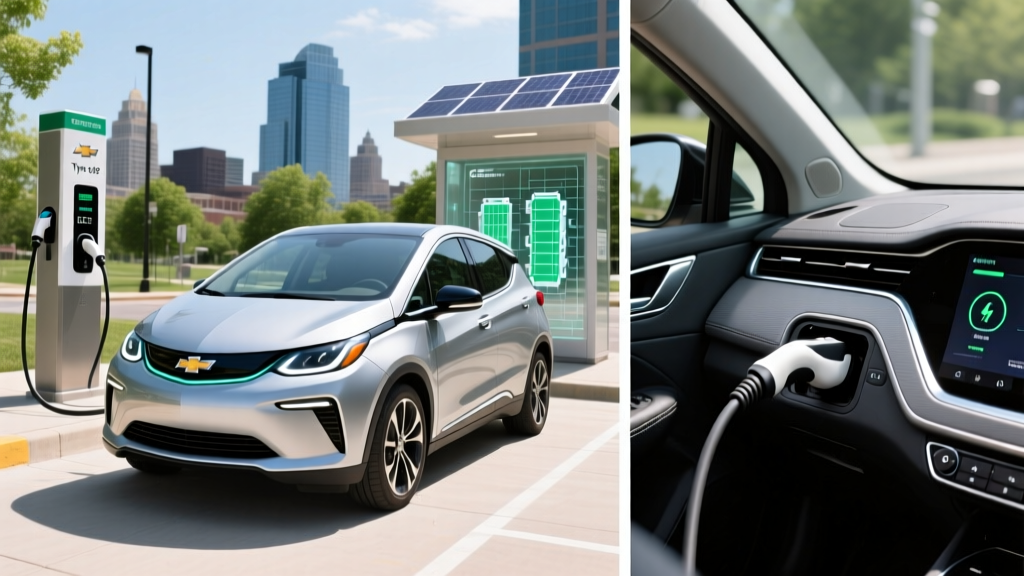
The next-generation Chevrolet Bolt is back, and for Cincinnati-area EV shoppers, it represents one of the most compelling value propositions in the sub-$30,000 electric vehicle segment. Built on an updated Ultium-derived platform with a lithium iron phosphate (LFP) battery, the 2027 Bolt addresses the previous generation's most criticized weakness — sluggish DC fast charging — while keeping the practical hatchback formula that made the original a bestseller.
With an EPA-estimated range of approximately 255 miles, improved charging speeds, and eligibility for the full federal tax credit under IRS §30D rules, the 2027 Bolt is a serious option for Greater Cincinnati commuters navigating I-75, I-71, or the daily US-50 corridor run. Below, we break down every number that matters — from real-world range in Ohio winters to home charging costs in a Duke Energy service territory.
2027 Chevy Bolt: Core Specifications at a Glance
| Spec | Value |
|---|---|
| EPA Estimated Range | ~255 miles |
| Battery Capacity (Usable) | ~65 kWh |
| Battery Chemistry | LFP (Lithium Iron Phosphate) |
| Peak DC Fast Charge Rate | ~150 kW |
| 10–80% DC Charge Time | ~28 minutes (est.) |
| Level 2 Home Charge Rate | 11.5 kW (~38 mi/hr) |
| Motor Output | ~200 hp / 236 lb-ft torque |
| 0–60 mph | ~6.5 seconds (est.) |
| Drivetrain | FWD (single motor) |
| Combined MPGe | ~120 MPGe (est.) |
| Efficiency | ~28 kWh/100 mi |
| Cargo Volume (rear seats up) | ~18 cu ft |
| Cargo Volume (rear seats folded) | ~56 cu ft |
| Rear Legroom | ~36.0 inches |
| Battery/Powertrain Warranty | 8 years / 100,000 miles |
| Base MSRP (1LT) | ~$27,900 (before credits) |
Note: The 2027 Chevy Bolt is an announced next-generation model. Specifications above reflect GM's preliminary data and industry reporting as of early 2026. Final EPA certification and pricing will be confirmed closer to the on-sale date. Check Chevrolet's official configurator for updates.
Real-World Range: What Cincinnati Drivers Should Actually Expect
Real-World Highway (70–75 mph, mild weather): ~220–235 miles
Real-World Cincinnati Winter (20–35°F, mixed driving): ~175–200 miles
Cold + Highway Combo (winter road trip): ~160–180 miles
The EPA number is a starting point, not a guarantee. Cincinnati's climate — humid summers with A/C demand and genuine winters with temperatures regularly dipping below freezing — will compress the Bolt's usable range in predictable ways.
Summer commuting: On a typical July day with highs near 90°F, expect to lose 5–8% of range to cabin cooling and battery thermal management. A 255-mile EPA rating translates to roughly 235–245 miles in mixed city/highway driving around the I-275 beltway.
Winter reality check: LFP chemistry is more resilient to cold-weather degradation over time than NMC, but it still suffers immediate range loss in freezing temperatures. Without a heat pump (GM has not confirmed one for the base Bolt), resistive cabin heating can consume 2–4 kW continuously. On a 20°F January morning in Hyde Park, plan for roughly 30–35% range reduction versus the EPA sticker. That puts realistic winter range around 170–200 miles — enough for most Cincinnati commutes but tight for a round trip to Columbus (roughly 215 miles) without a charging stop.
Highway efficiency: The Bolt's hatchback shape creates more aerodynamic drag than a sedan like the Tesla Model 3 or Hyundai Ioniq 6. At sustained 75 mph on I-71 south toward Louisville, efficiency drops to roughly 3.0–3.2 mi/kWh, yielding about 200–210 miles from a full charge in moderate temperatures.
Charging Speed: The Biggest Generational Improvement
The first-generation Bolt's 55 kW peak DC charge rate was its most damaging flaw — a 10–80% session took over an hour, making road trips painful. The 2027 model fixes this decisively.
| Charge Level | Power (kW) | Speed (miles of range per hour) | Typical Use Case |
|---|---|---|---|
| Level 1 (120V household) | ~1.4 kW | ~4–5 mi/hr | Emergency / overnight trickle |
| Level 2 (240V, 48A home charger) | 11.5 kW | ~38 mi/hr | Daily home charging |
| Level 2 (240V, 32A portable) | 7.7 kW | ~25 mi/hr | Renter / no-panel-upgrade option |
| DC Fast Charge (peak) | ~150 kW | ~500+ mi/hr (at peak) | Road trips, public stations |
DC fast charging in practice: The Bolt's ~150 kW peak rate is achievable on compatible CCS or NACS stations (GM has transitioned to NACS for new models, but adapters and network access vary — confirm connector type at purchase). The charge curve will taper significantly above 80% State of Charge (SoC). Expect a 10–80% session in approximately 28 minutes at a 150+ kW station, but plan for 40–45 minutes if you need to charge to 90% or higher.
Cincinnati public charging context: The Greater Cincinnati area has a growing DC fast-charging network. Electrify America stations at the Kenwood Collection and Florence, KY, along with EVgo locations near downtown, offer 150–350 kW chargers that can fully utilize the Bolt's peak rate. However, older 50 kW stations along rural corridors will bottleneck charging to roughly 45–50 minutes for a 10–80% session.
Home charging economics: In the Duke Energy Ohio service territory, residential electricity averages roughly $0.13–0.15/kWh (as of 2025–2026 rate schedules). Charging the Bolt's ~65 kWh battery from 10% to 90% at home costs approximately $7.50–$8.50 — translating to about $0.04 per mile. Compare that to a 30 MPG gas car at $3.30/gallon: roughly $0.11 per mile. Over 12,000 miles annually, home charging saves Cincinnati Bolt owners an estimated $800–$1,000 per year versus gasoline.
For a Level 2 home installation (240V, 50A circuit with a 48A hardwired charger), budget $800–$1,800 total for equipment, licensed electrician labor, and permits in the Cincinnati metro. Older homes in neighborhoods like Clifton or Walnut Hills may require a panel upgrade (200A service), adding $1,500–$3,000 to the project.
Performance and Driving Dynamics
The 2027 Bolt isn't a performance EV, but it doesn't need to be. With an estimated 200 horsepower and 236 lb-ft of instant electric torque, it delivers confident merging onto I-75 and responsive city driving. The ~6.5-second 0–60 mph time is a meaningful improvement over the outgoing Bolt EV's 6.8 seconds, and the front-wheel-drive layout prioritizes efficiency and packaging over all-weather traction.
Ride quality: The updated platform should offer a lower center of gravity and improved weight distribution compared to the previous Bolt's adaptation of the BEV2 architecture. Expect a compliant ride tuned for comfort rather than sportiness — appropriate for a subcompact hatchback in this price range.
One-pedal driving and regen: Chevrolet's regen-on-demand paddle and one-pedal driving mode return, allowing drivers to recapture energy during deceleration. This is especially useful in Cincinnati's hilly terrain — the descent from Mount Adams or the hills of Northern Kentucky become opportunities to extend range rather than brake-waste events.
Notable limitation: The Bolt remains front-wheel drive only. There is no AWD option, which may concern buyers in areas that receive significant snowfall. Quality winter tires are strongly recommended for Cincinnati's occasional but real winter storms.
Pricing, Trims, and Federal Tax Credit Eligibility
| Trim | Est. Base MSRP | §30D Credit (if eligible) | Effective Price |
|---|---|---|---|
| 1LT | ~$27,900 | Up to $7,500 | ~$20,400 |
| 2LT | ~$31,500 | Up to $7,500 | ~$24,000 |
| RS (sport appearance) | ~$33,000 | Up to $7,500 | ~$25,500 |
Federal tax credit rules (IRS §30D): The Bolt's sub-$30,000 starting price places it well under the $55,000 MSRP cap for hatchbacks and sedans. However, eligibility for the full $7,500 credit depends on multiple factors that change annually:
- Buyer income caps: Modified adjusted gross income (MAGI) must not exceed $150,000 (single), $225,000 (head of household), or $300,000 (joint filers).
- MSRP cap: Vehicle must have an MSRP at or below $55,000 for cars/hatchbacks (the Bolt clears this easily).
- Battery sourcing requirements: A percentage of critical minerals and battery components must be sourced from the U.S. or free-trade-agreement countries. These thresholds increase yearly. GM's LFP supply chain for the Bolt will determine partial vs. full credit eligibility — verify current-year sourcing compliance at IRS.gov §30D guidance.
- Point-of-sale transfer: As of 2024+, buyers can transfer the credit to the dealer at purchase, reducing the out-of-pocket price immediately rather than waiting for a tax refund. Confirm dealer participation.
Ohio state incentives: Ohio does not currently offer a state-level EV purchase rebate or tax credit (unlike states such as Colorado or California). Cincinnati-area buyers should check with Duke Energy for any utility-specific EV charging rebates, which periodically offer $200–$500 toward Level 2 charger installation. Local incentive availability varies — consult official utility and state resources for current programs.
Interior, Tech, and Daily Practicality
Infotainment: The 2027 Bolt is expected to feature Chevrolet's latest infotainment system on an 11-inch diagonal touchscreen with wireless Apple CarPlay and Android Auto. Google Built-in (Google Maps, Google Assistant, Play Store) is likely standard on 2LT and above, providing native navigation that accounts for charging stops and battery preconditioning.
Driver assistance: Chevy Safety Assist should be standard across all trims, including automatic emergency braking, lane-keep assist, following-distance indicator, and IntelliBeam auto high beams. GM's Super Cruise (hands-free Level 2 driving on mapped highways) may be available as an option on higher trims, though it was not offered on the previous Bolt. Super Cruise is a Level 2 driver-assist system — the driver must remain attentive and ready to take over at all times.
Cargo and passenger space: The Bolt's hatchback layout delivers genuine utility. With approximately 18 cubic feet behind the rear seats and 56 cubic feet with the 60/40 split rear seats folded, it accommodates a week's groceries, a full set of golf clubs, or a weekend's worth of luggage for two. Rear legroom of roughly 36 inches is adequate for adults on shorter trips but snug for taller passengers on longer drives.
Notable drawbacks:
- No front trunk (frunk) — the FWD motor packaging eliminates under-hood storage
- Rear-seat headroom is compromised by the sloping roofline for taller passengers
- No AWD option for winter traction
- LFP batteries are heavier per kWh than NMC, contributing to a curb weight likely above 3,600 lbs
- DC fast charging at 150 kW is competitive but trails the 200+ kW rates of rivals like the Hyundai Ioniq 5
Who Should Buy the 2027 Chevy Bolt?
- You're a Cincinnati-area commuter driving 30–60 miles round trip daily
- You have access to home Level 2 charging (garage or dedicated driveway outlet)
- You want the lowest total cost of ownership in a new EV under $30,000
- You prioritize low running costs over performance or premium features
- You want LFP battery chemistry for long-term durability and daily 100% charging
- You need AWD for frequent snow driving or mountain roads
- You regularly road-trip more than 300 miles one-way and want minimal charging stops
- You need seating for five adults or towing capability
- You want the fastest possible DC charging (consider Ioniq 5 or EV6 at 200+ kW)
Pros and Cons
- Sub-$28,000 MSRP — cheapest new long-range EV available
- ~255 miles EPA range is ample for daily commuting
- LFP chemistry offers excellent cycle life and can charge to 100% daily without degradation concerns
- Significantly improved DC fast charging vs. previous generation
- Likely eligible for full or partial §30D federal tax credit
- Practical hatchback cargo space for its footprint
- Low estimated cost per mile (~$0.04 on home electricity)
- FWD only — no AWD option for winter confidence
- 150 kW DC peak is good but not class-leading
- Cold-weather range loss of 30–35% without a confirmed heat pump
- Rear seat is tight for taller adults on long drives
- No frunk for additional storage
- Ohio offers no state EV purchase incentive
- Unreleased model — final specs and pricing not yet confirmed
Frequently Asked Questions
What is the real-world range of the 2027 Chevy Bolt?
While the EPA estimates approximately 255 miles, Cincinnati drivers should expect roughly 220–235 miles in mild-weather highway driving and 175–200 miles during winter months when temperatures drop below freezing. Cold weather reduces battery efficiency and increases cabin heating demand, which directly reduces range.
How fast does the 2027 Bolt charge at home and on the road?
On a Level 2 home charger (240V, 48A), the Bolt charges at 11.5 kW, adding approximately 38 miles of range per hour — a full overnight session easily replenishes a day's driving. On DC fast chargers, it peaks at approximately 150 kW, achieving a 10–80% charge in roughly 28 minutes at a compatible station.
How much does the 2027 Chevy Bolt cost after the federal tax credit?
The base 1LT trim starts at an estimated $27,900. If you meet all IRS §30D requirements — including income caps, battery-sourcing thresholds, and MSRP limits — the credit can reduce your effective price to approximately $20,400 via point-of-sale transfer. However, the exact credit amount ($0 to $7,500) depends on current-year battery sourcing compliance. Always verify eligibility with your tax professional and dealer before purchase. See IRS.gov for current rules.
Is the 2027 Bolt worth buying over competitors like the Nissan Leaf or Hyundai Kona Electric?
The Bolt's combination of ~255 miles range, LFP battery durability, sub-$28K pricing, and improved DC charging gives it a strong edge in the budget EV category. The Nissan Leaf uses CHAdeMO (a fading connector standard) and offers less range. The Hyundai Kona Electric is a close competitor but typically starts at a higher MSRP. If the Bolt qualifies for the full tax credit, it's arguably the best value in its segment.
Does the 2027 Chevy Bolt qualify for the $7,500 federal EV tax credit?
The Bolt's MSRP is well under the $55,000 cap for hatchbacks, which clears the first hurdle. Full eligibility depends on your income (MAGI limits apply), and whether GM's LFP battery supply chain meets the critical-minerals and battery-component sourcing thresholds set by the Inflation Reduction Act for the purchase year. These thresholds tighten annually. Confirm current eligibility at fueleconomy.gov and IRS.gov before relying on the credit in your purchase decision.
Can I charge the 2027 Bolt at Tesla Superchargers?
GM has transitioned to the NACS (North American Charging Standard) connector for its newer EVs. The 2027 Bolt is expected to ship with a NACS charge port or include a CCS-to-NACS adapter, enabling access to Tesla's Supercharger network. Confirm the specific connector configuration at the time of purchase, as this affects which public networks you can use natively versus with an adapter.
What is the battery warranty on the 2027 Bolt?
Chevrolet's EV battery and powertrain warranty is expected to carry over at 8 years or 100,000 miles (whichever comes first), covering defects and capacity loss below a specified threshold (typically 60–70% of original capacity). LFP chemistry is known for excellent long-term cycle life — many LFP packs retain over 90% capacity after 1,000+ full charge cycles, which translates to well over 200,000 miles of driving.
This article reflects information available as of early 2026 about an announced, unreleased vehicle. Final specifications, pricing, and tax credit eligibility are subject to change. Always verify details with Chevrolet, the IRS, and fueleconomy.gov before making a purchase decision.