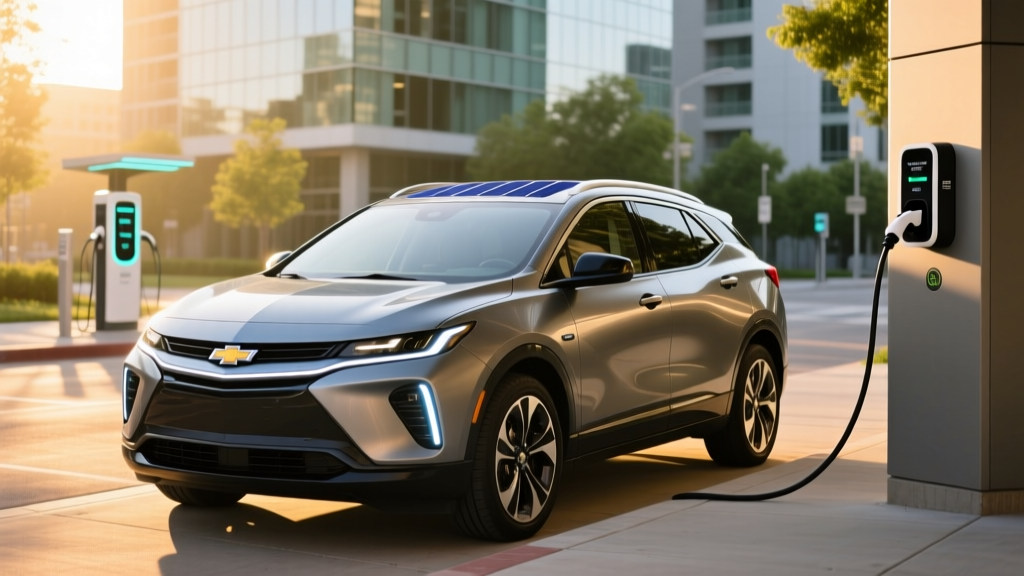
The compact electric SUV segment is crowded, but the 2027 Chevrolet Equinox EV continues to stake a compelling claim as the value-oriented choice for buyers who want over 300 miles of EPA range without crossing the $40,000 threshold before incentives. Now in its second model year on GM's Ultium platform, the 2027 Equinox EV carries forward the formula introduced for 2024—spacious interior, competitive efficiency, and broad trim availability—while benefiting from GM's expanding NACS native charging port rollout and incremental software refinements to its battery thermal management.
Having spent significant time with the Equinox EV across multiple model years, including highway road trips, winter commuting, and repeated DC fast-charging sessions, I'm breaking down exactly what this SUV delivers—and where it falls short against rivals like the Hyundai Ioniq 5, Ford Mustang Mach-E, and Tesla Model Y.
2027 Equinox EV at a Glance: Key Specifications
| Specification | LT (FWD) | RS (FWD) | RS Launch Edition (AWD) |
|---|---|---|---|
| EPA Range | 319 mi | 319 mi | 285 mi |
| Battery (Usable) | ~85 kWh, NMC | ~85 kWh, NMC | ~85 kWh, NMC |
| Horsepower | 213 hp | 213 hp | 288 hp (dual-motor) |
| Torque | 236 lb-ft | 236 lb-ft | 325 lb-ft |
| 0–60 mph | ~8.4 sec | ~8.4 sec | ~5.9 sec |
| Max DC Fast Charge | 150 kW | 150 kW | 150 kW |
| 10–80% DC Time | ~32 min | ~32 min | ~32 min |
| Level 2 Home Rate | 11.5 kW (~34 mi/hr) | 11.5 kW (~34 mi/hr) | 11.5 kW (~34 mi/hr) |
| MPGe (Combined) | 112 MPGe | 112 MPGe | 100 MPGe |
| Base MSRP | $33,600 | $38,400 | $43,400 |
Note: Pricing excludes destination charge (~$1,395). Specifications reflect GM's published data for the 2027 model year; verify with Chevrolet's official configurator before ordering, as mid-year adjustments can occur.
Real-World Range: What the EPA Sticker Doesn't Tell You
Real-World Expectation: 260–290 miles in mixed driving; 230–250 miles sustained highway at 75 mph; 210–240 miles in sub-30°F winter conditions.
The Equinox EV's 319-mile FWD EPA figure is among the best in the compact electric SUV class, but as with every EV, real-world results depend heavily on how and where you drive. In my experience across multiple seasons, the FWD models consistently deliver 280–300 miles in city and suburban driving at moderate speeds, where regenerative braking recovers energy effectively.
Highway driving tells a different story. At a sustained 75 mph on flat terrain, expect 240–260 miles before reaching 10% State of Charge. The Equinox EV's boxy crossover profile creates more aerodynamic drag than sleeker competitors like the Tesla Model Y, and that drag penalty compounds at speed. In cold weather (below 30°F), the NMC battery's internal resistance increases and cabin heating draws significant energy, reducing range by 25–35%. Preconditioning the battery and cabin while plugged in at home mitigates some of this loss, but winter commuters should plan for 210–240 miles of usable range in FWD trims.
The AWD RS trims sacrifice about 34 miles of EPA range (285 mi) due to the second motor's weight and parasitic drag, though the real-world gap narrows in mixed driving since the rear motor disengages during light-load cruising.
Charging Speed: DC Fast Charge and Home Level 2
The Equinox EV peaks at 150 kW on DC fast chargers—a respectable but not class-leading figure. For context, the Hyundai Ioniq 5 can peak at 240 kW on 800V architecture, and the Tesla Model Y peaks around 250 kW on V3 Superchargers. The Equinox EV operates on GM's 400V Ultium architecture, which limits its charge rate but keeps production costs down.
| Charging Level | Power / Voltage | Speed (miles of range added) | Time Estimate |
|---|---|---|---|
| Level 1 (120V household) | ~1.4 kW | ~4 mi/hr | Not practical for full charges |
| Level 2 (240V home, 48A) | 11.5 kW | ~34 mi/hr | 0–100% in ~8.5 hours |
| DC Fast Charge (peak) | 150 kW (400V) | — | 10–80% in ~32 minutes |
The 10–80% DC fast-charge time of roughly 32 minutes is adequate for road-trip stops, but the charging curve matters more than the peak number. The Equinox EV sustains close to its 150 kW peak from roughly 10% to 40% SoC, then tapers progressively—dropping to ~90 kW by 60% and ~50 kW by 80%. This taper is typical for 400V NMC architectures and means the last 20% (80–100%) takes nearly as long as the first 70%. For road trips, plan your stops around the 10–80% window to minimize time at the charger.
For 2027, GM equips the Equinox EV with a native NACS (North American Charging Standard) port, eliminating the need for a CCS-to-NACS adapter at Tesla Superchargers. This is a significant convenience upgrade over the 2024 model's CCS1 port, giving direct access to Tesla's Supercharger network—the most reliable DC fast-charging infrastructure in the U.S.
Home charging at 11.5 kW (48 amps on a 60-amp circuit) adds about 34 miles of range per hour and will fully replenish the battery overnight. A 240V Level 2 home installation typically costs $500–$2,000 depending on panel proximity and local permitting. GM has occasionally bundled home charger credits or subsidized installations through its dealer network—check current promotions at purchase time.
Performance and Driving Dynamics
The Equinox EV is tuned for comfort and efficiency, not performance. The FWD models produce 213 hp and 236 lb-ft of torque from a single front-mounted motor, delivering a 0–60 mph time of approximately 8.4 seconds. That's adequate for merging and passing but noticeably relaxed compared to sportier rivals. Steering is light and well-weighted for parking, and the ride quality benefits from the low center of gravity inherent to the Ultium battery pack mounted under the floor.
The AWD RS Launch Edition adds a rear motor for a combined 288 hp and 325 lb-ft, cutting the 0–60 time to roughly 5.9 seconds. The dual-motor setup also improves traction in snow and rain, and the additional regenerative braking capacity from the rear motor provides slightly stronger one-pedal driving feel. However, the AWD model's added weight (~200 lbs) and parasitic drivetrain losses account for its lower range rating.
Regenerative braking is adjustable via steering wheel paddles, with a dedicated one-pedal driving mode that can bring the vehicle to a complete stop without touching the brake pedal. The brake pedal feel is progressive and predictable—something GM has improved over earlier Ultium vehicles like the initial GMC Hummer EV.
Interior Space, Cargo, and Technology
The Equinox EV's interior is where it makes a strong practical case for families. Passenger volume is generous, with 41.1 inches of front legroom and 37.8 inches of rear legroom—competitive with the segment and enough for adults in both rows comfortably. Cargo space measures 26.4 cubic feet behind the rear seats and 57.2 cubic feet with the rear seats folded, which is solid for the class though not segment-leading (the Model Y offers more cargo volume).
There is no front trunk (frunk) on the Equinox EV, which is a missed opportunity given the packaging flexibility of a dedicated EV platform. GM has cited cost and structural considerations for omitting it.
The centerpiece of the interior is a 17.7-inch diagonal infotainment touchscreen running GM's Google Built-in interface, which includes native Google Maps navigation, Google Assistant voice control, and access to the Google Play Store for apps. A 11.0-inch digital driver display sits behind the steering wheel. Wireless Apple CarPlay and Android Auto are standard. The system is responsive and well-laid-out, though some climate controls are buried in touchscreen menus rather than physical buttons—a common complaint in modern EVs.
Standard driver-assistance features include Chevy Safety Assist (automatic emergency braking, lane-keeping assist, following distance indicator, front pedestrian braking, and IntelliBeam auto high beams). Available Super Cruise—GM's hands-off, eyes-on Level 2 driver-assist system—is offered on higher trims for mapped divided highways. Note that Super Cruise requires an active subscription after the initial trial period (typically 3 years included) and is not autonomous driving—the driver must remain attentive and the system monitors via a steering-column camera.
Pricing, Trims, and Federal Tax Credit Eligibility
The 2027 Equinox EV is offered across four primary trims:
- LT FWD: $33,600 — the value leader with 319-mile range
- RS FWD: $38,400 — sport appearance, same powertrain and range
- RS AWD: $41,900 — dual-motor, 285-mile range
- RS Launch Edition AWD: $43,400 — fully loaded with Super Cruise eligibility
| Trim | Base MSRP | With Destination | Est. After §30D Credit* |
|---|---|---|---|
| LT FWD | $33,600 | $34,995 | ~$27,495 |
| RS FWD | $38,400 | $39,795 | ~$32,295 |
| RS AWD | $41,900 | $43,295 | ~$35,795 |
| RS Launch Edition AWD | $43,400 | $44,795 | ~$37,295 |
*Federal tax credit estimate assumes full $7,500 eligibility under IRS §30D. Eligibility depends on multiple factors—see checklist below.
- MSRP Cap: SUVs must be ≤$80,000 (all Equinox EV trims qualify)
- Buyer Income Cap: AGI ≤$150,000 single / ≤$225,000 head of household / ≤$300,000 joint
- Battery Sourcing: Critical minerals and battery components must meet phased-in domestic/free-trade sourcing thresholds (GM sources Ultium cells from the Ultium Cells LLC joint venture with LG Energy Solution in Ohio/Tennessee, which currently satisfies component requirements)
- Point-of-Sale Transfer: Buyers can elect to transfer the credit to the dealer at purchase, reducing the purchase price directly rather than waiting for a tax refund
- FEOC Restriction: Battery components cannot be sourced from a Foreign Entity of Concern (China, Russia, North Korea, Iran) — verify current compliance at purchase
The Equinox EV has historically qualified for the full $7,500 federal credit, and GM's domestic Ultium Cells battery production positions it well for continued compliance. However, critical-mineral sourcing thresholds tighten annually, and individual buyer income limits may disqualify some purchasers. Consult a tax professional and verify eligibility on the IRS website before relying on the credit in your purchase budget.
Efficiency and Ownership Costs
The FWD Equinox EV achieves an EPA-rated 112 MPGe combined (approximately 30 kWh per 100 miles), which is competitive but not class-leading. The Hyundai Ioniq 5 RWD rates at 117 MPGe combined, and the Tesla Model Y Long Range hits 120 MPGe combined. In practical terms, the Equinox EV costs roughly $0.045–$0.06 per mile to charge at home (assuming $0.14/kWh national average), compared to $0.12–$0.15 per mile for a comparable gas-powered compact SUV at $3.50/gallon.
GM provides an 8-year/100,000-mile battery and powertrain warranty covering defects and capacity loss below 70% of original capacity. This is the industry standard and matches competitors. The vehicle limited warranty is 3 years/36,000 miles bumper-to-bumper.
Insurance costs for the Equinox EV are moderate for the EV segment—typically $150–$200/month depending on location and driving record, which is lower than the Tesla Model Y but slightly higher than gas-powered Equinox equivalents. EV-specific repair costs (particularly battery-related) keep premiums elevated across the category.
How It Compares: Equinox EV vs. Key Rivals
| Attribute | 2027 Chevy Equinox EV (FWD) | 2027 Hyundai Ioniq 5 (RWD) | 2027 Tesla Model Y (LR) |
|---|---|---|---|
| EPA Range | 319 mi | 303 mi | 330 mi |
| Battery | ~85 kWh NMC | 77.4 kWh NMC | ~75 kWh NMC |
| DC Fast Charge Peak | 150 kW | 240 kW (800V) | 250 kW |
| 10–80% Time | ~32 min | ~18 min | ~22 min |
| 0–60 mph | 8.4 sec | 7.2 sec | 5.0 sec |
| Base MSRP | $33,600 | $42,500 | $44,990 |
| NACS Port (Native) | Yes | Yes (2025+) | Yes |
| Cargo (rear seats up) | 26.4 cu ft | 27.2 cu ft | 30.2 cu ft |
The Equinox EV's primary advantage is price. At $33,600 base (and ~$27,495 after the federal credit), it undercuts the Ioniq 5 and Model Y by $8,000–$11,000 before incentives while offering comparable or better EPA range. For budget-conscious buyers who don't need the fastest charging or the sportiest acceleration, the value proposition is strong.
Where it loses ground: DC charging speed. The 150 kW peak and 32-minute 10–80% time put it behind both the Ioniq 5 (18 minutes on 800V architecture) and Model Y (22 minutes). Frequent road trippers will notice this gap on long drives with multiple charging stops. The Ioniq 5 also offers V2L (vehicle-to-load) capability for powering external devices, which the Equinox EV lacks.
Pros, Cons, and Final Verdict
- 319-mile EPA range at a sub-$34K starting price is class-leading value
- Spacious interior with 37.8" rear legroom — genuinely family-friendly
- Native NACS port provides direct Tesla Supercharger access
- Full $7,500 federal tax credit eligibility (when sourcing rules met)
- Comfortable ride quality and composed highway manners
- Google Built-in infotainment is responsive and feature-rich
- Available Super Cruise on mapped highways (with subscription)
- 150 kW DC fast charging is slow vs. Ioniq 5 (240 kW) and Model Y (250 kW)
- No frunk — wasted packaging opportunity on a dedicated EV platform
- FWD acceleration (8.4 sec 0–60) feels lethargic for highway merging
- Cabin materials and noise insulation are a step below premium rivals
- Some climate/HVAC controls buried in touchscreen menus
- AWD range penalty (285 mi vs 319 mi) is steeper than some competitors
- No V2L (vehicle-to-load) capability
Look elsewhere if: You take frequent long road trips and need the fastest possible DC charging (Ioniq 5), you want the performance and cargo space of a Model Y, or you need V2L capability for camping or worksite power.
Frequently Asked Questions
What is the real-world range of the 2027 Chevrolet Equinox EV?
In mixed city and suburban driving, expect 280–300 miles from the FWD trims (EPA-rated 319 mi). Sustained highway driving at 75 mph reduces this to 240–260 miles. In cold weather below 30°F, plan for 210–240 miles. The AWD trims deliver roughly 10% less in all conditions.
How fast does the Equinox EV charge at home and on DC fast chargers?
On a 240V Level 2 home charger (48A), the Equinox EV charges at 11.5 kW, adding about 34 miles of range per hour and reaching a full charge in approximately 8.5 hours. On DC fast chargers, it peaks at 150 kW and charges from 10–80% in about 32 minutes. The 400V architecture means charging tapers noticeably above 60% SoC.
How much does the 2027 Equinox EV cost after the federal tax credit?
The base LT FWD starts at $33,600 MSRP ($34,995 with destination). If you qualify for the full $7,500 §30D federal tax credit, the effective price drops to approximately $27,495. Eligibility requires meeting income caps (≤$150K single / ≤$300K joint), the vehicle must meet battery-sourcing requirements, and you can elect to transfer the credit to the dealer at point of sale for an immediate price reduction.
Does the 2027 Equinox EV qualify for the federal EV tax credit?
Based on current IRS §30D rules and GM's domestic Ultium Cells battery production, the Equinox EV is expected to qualify for the full $7,500 credit. However, eligibility depends on the buyer's adjusted gross income, the vehicle's battery component and critical-mineral sourcing (which tightens annually), and the MSRP cap (SUVs ≤$80,000—all trims qualify). Verify current eligibility on IRS.gov and consult a tax professional before purchasing.
Is the Equinox EV worth buying vs. the Hyundai Ioniq 5 or Tesla Model Y?
If your priority is the lowest purchase price with 300+ mile range, the Equinox EV is hard to beat—especially after the federal credit brings it under $28K. However, if fast DC charging is critical for your road-trip habits, the Ioniq 5 charges from 10–80% in 18 minutes vs. the Equinox's 32 minutes. The Model Y offers more cargo space, faster acceleration, and broader Supercharger integration, but at a significantly higher price. For daily commuting and family use with mostly home charging, the Equinox EV's value proposition is the strongest in the segment.
What battery chemistry does the Equinox EV use, and how long will it last?
The Equinox EV uses NMC (nickel-manganese-cobalt) lithium-ion cells manufactured by Ultium Cells LLC. NMC offers higher energy density than LFP chemistry, which is why GM achieves 319 miles from a ~85 kWh pack. GM warrants the battery for 8 years/100,000 miles against defects and capacity loss below 70%. Based on degradation data from earlier Ultium vehicles and industry NMC averages, expect approximately 10–15% capacity loss over 150,000 miles under normal use—meaning a 319-mile new range might settle to ~275–285 miles after several years.
Sources: EPA fuel economy data via fueleconomy.gov, Chevrolet official specifications, IRS §30D clean vehicle credit guidance at irs.gov.