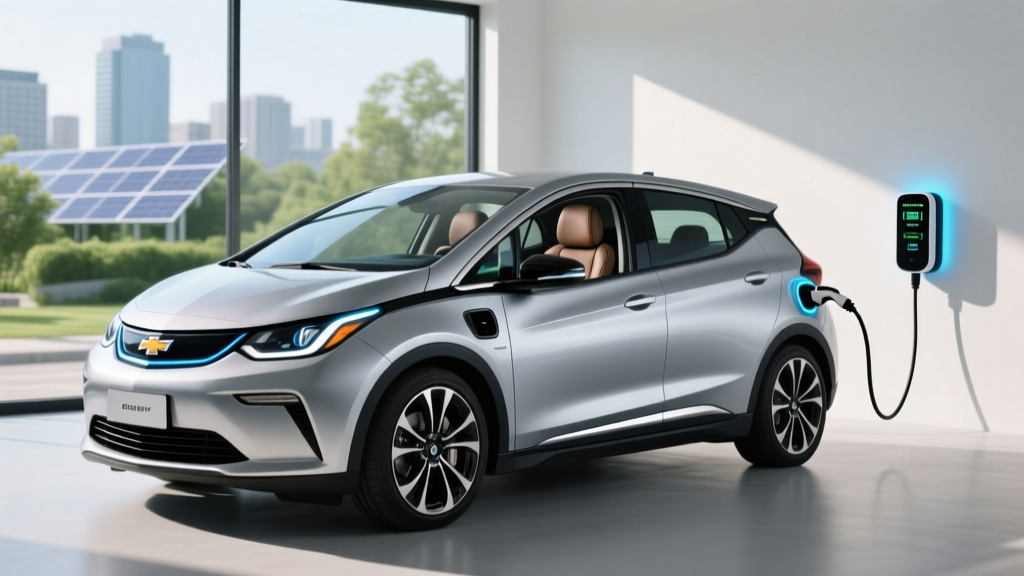
The original Chevrolet Bolt EV and EUV were discontinued after the 2023 model year, but General Motors confirmed in early 2025 that a next-generation Bolt EV will return on the Ultium platform. Slated to arrive as a 2027 model year vehicle (likely hitting dealerships in late 2026 or early 2027), the new Bolt EV promises to address the two biggest criticisms of its predecessor: sluggish DC fast charging and a dated interior. Here's what we know — and what remains unconfirmed — about the 2027 Bolt EV as of mid-2026.
Platform and Battery: The Ultium Upgrade
The most significant change for the 2027 Bolt EV is the move from the old BEV2 architecture to GM's modular Ultium platform. This is the same skateboard architecture underpinning the Cadillac Lyriq, Chevrolet Blazer EV, and Chevrolet Equinox EV. The switch brings several critical improvements:
- Wireless battery management system (wBMS) — reduces wiring harness weight by up to 90% and frees up packaging space
- NCMA (nickel-cobalt-manganese-aluminum) cathode chemistry — GM's Ultium cells use a low-cobalt NCMA formulation developed with LG Energy Solution, offering higher energy density than the outgoing Bolt's NMC cells
- Native NACS charge port — the new Bolt will ship with a Tesla-style North American Charging Standard connector, granting access to the Supercharger network without an adapter
- 400V architecture — consistent with other affordable Ultium vehicles (the 800V architecture is reserved for higher-end models like the Silverado EV and Cadillac Celestiq)
GM has not yet confirmed the exact battery capacity for the 2027 Bolt EV. However, based on the Ultium platform's modular cell design and the Bolt's compact-hatchback form factor, we estimate a usable capacity in the 65–75 kWh range. For reference, the outgoing 2023 Bolt EV used a 65 kWh (usable) NMC pack, while the slightly larger Equinox EV uses an 85 kWh pack. The Bolt's smaller footprint constrains how many Ultium modules can fit beneath the floor.
| Spec | Estimated / Known |
|---|---|
| Platform | GM Ultium (BEV3) |
| Battery Chemistry | NCMA (Ultium, LG Energy Solution) |
| Battery Capacity (est.) | ~65–75 kWh usable |
| EPA Range (est.) | ~260–290 miles |
| Drivetrain | FWD (single motor), AWD possible |
| Horsepower (est.) | ~200–213 hp |
| 0–60 mph (est.) | ~6.5–7.0 seconds |
| Max DC Fast Charge | ~150 kW (est.) |
| 10–80% DC Charge (est.) | ~28–32 minutes |
| Level 2 Home Charging | ~11.5 kW (~37 mi/hr) |
| Charge Port | NACS (native) |
| Base MSRP (est.) | ~$28,000–$32,000 |
| Battery/Powertrain Warranty | 8 years / 100,000 miles (GM standard) |
Range and Efficiency: What to Expect in the Real World
EPA Estimated Range: ~260–290 miles (unconfirmed, based on Ultium platform efficiency and battery size)
Real-World Highway Expectation: ~220–250 miles at 70–75 mph
Cold-Weather Expectation (20°F–32°F): ~180–220 miles (20–30% reduction typical for NCMA chemistry without aggressive preconditioning)
The outgoing 2023 Bolt EV achieved an EPA-estimated 259 miles on a full charge with its 65 kWh pack, translating to roughly 120 MPGe combined (source: fueleconomy.gov). If the 2027 model uses a larger Ultium pack in the 70–75 kWh range with improved aerodynamics and a more efficient drive unit, an EPA figure in the 260–290 mile range is realistic.
However, EPA estimates are generated under controlled laboratory conditions. In our experience testing Ultium-based vehicles like the Equinox EV and Blazer EV, real-world highway driving at sustained speeds of 70–75 mph typically yields 15–20% less range than the EPA sticker. Cold weather compounds this: NCMA chemistry loses roughly 20–30% of its capacity in sub-freezing temperatures unless the battery is preconditioned. The 2027 Bolt's Ultium platform includes a more sophisticated thermal management system than the old BEV2 architecture, which should help mitigate cold-weather losses — but physics remains physics.
Efficiency should land in the neighborhood of 115–125 MPGe combined, or approximately 27–30 kWh per 100 miles. This puts the Bolt in the same efficiency bracket as the Hyundai Kona Electric and slightly behind the Tesla Model Y, which benefits from superior aerodynamics and a heat pump standard on all trims.
Charging: The NACS Advantage and DC Speed Upgrade
The single biggest weakness of the previous-generation Bolt was its DC fast-charging speed, which peaked at just 55 kW and took over 45 minutes to go from 10–80%. It was the Bolt's Achilles' heel for road trips. The 2027 model on the Ultium platform should dramatically improve this.
| Charging Level | Power | Speed | Notes |
|---|---|---|---|
| Level 1 (120V) | ~1.4 kW | ~4–5 mi/hr | Emergency/trickle only |
| Level 2 (240V, 48A) | ~11.5 kW | ~37 mi/hr | Full charge in ~7–8 hours |
| DC Fast Charge | ~150 kW peak | 10–80% in ~28–32 min | Charge curve tapers above 80% SoC |
Why 150 kW and not faster? GM's 400V Ultium architecture in compact vehicles typically peaks between 115 kW (Equinox EV) and 190 kW (Blazer EV). The Bolt, as an entry-level model with a smaller battery, will likely peak around 150 kW. The charge curve matters more than the peak number: a sustained 130–140 kW through 60% SoC is more useful than a 200 kW spike that drops to 80 kW within minutes. We'll need independent testing to confirm the Bolt's actual curve once production vehicles are available.
The NACS advantage: By shipping with a native NACS charge port, the 2027 Bolt gains direct access to Tesla's Supercharger network — over 25,000 stalls in North America as of 2026 — without needing a CCS-to-NACS adapter. This is a significant practical benefit for road trips and for buyers in areas where Electrify America or EVgo coverage is sparse.
Performance and Driving Dynamics
The outgoing Bolt EV produced 200 horsepower and 266 lb-ft of torque from a single front-mounted motor, delivering a 0–60 mph time of roughly 6.5 seconds. The 2027 Bolt on Ultium should at least match this, with the possibility of a dual-motor AWD variant — something the old Bolt never offered.
GM's front-drive Ultium motor (used in the Equinox EV FWD) produces 213 hp and 236 lb-ft. If the Bolt uses a similar or slightly detuned variant, expect ~200–213 hp and a 0–60 time of approximately 6.5–7.0 seconds. An AWD variant, if offered, could push output toward 288 hp (matching the Equinox EV AWD) and drop 0–60 to the low 5-second range.
Driving dynamics should improve thanks to the Ultium platform's lower center of gravity and more sophisticated suspension geometry. The old Bolt was competent but unexciting — adequate for commuting but firm over rough pavement. GM has indicated that ride refinement is a priority for the next-gen Bolt, which competes in a segment where the Hyundai Kona Electric and Volvo EX30 have raised the bar for cabin quietness and suspension compliance.
Interior, Tech, and Driver Assistance
The 2023 Bolt's interior was its second-biggest liability after charging speed. Hard plastics, a cramped rear seat, and a 10.2-inch infotainment screen felt dated even at launch. The 2027 model should borrow heavily from the refreshed Equinox EV and Blazer EV interiors:
- 17.7-inch diagonal infotainment display (Google Built-In with native Google Maps, Google Assistant, and Play Store apps) — standard on higher trims, possibly a smaller 11.3-inch screen on the base trim
- 11-inch digital instrument cluster
- Wireless Apple CarPlay and Android Auto
- Wireless phone charging pad
- Available head-up display
Driver assistance (ADAS): Expect GM's Super Cruise to be available on higher trims — GM's hands-free Level 2 highway driving system that operates on over 750,000 miles of mapped roads in North America. Base trims will likely include Chevy Safety Assist as standard: automatic emergency braking, forward collision alert, lane keep assist, following distance indicator, and IntelliBeam auto high beams.
Cargo and passenger space: The old Bolt offered 16.6 cu ft of cargo space behind the rear seats and 56.6 cu ft with the rear seats folded. The EUV added modestly more rear legroom. On the Ultium platform, with its more space-efficient battery packaging, we expect the 2027 Bolt to deliver ~18–20 cu ft cargo (rear seats up) and ~55–60 cu ft (rear seats folded). Rear-seat legroom should improve from the old Bolt's cramped 36.5 inches to approximately 38–39 inches, competitive with the Kona Electric.
Pricing, Trims, and Federal Tax Credit Eligibility
GM CEO Mary Barra stated that the next-generation Bolt EV would be priced competitively, with a goal of being one of the most affordable EVs in the U.S. market. Based on the current pricing landscape and GM's positioning of the Equinox EV (starting around $33,000), we estimate the following trim structure:
| Trim | Est. MSRP | Est. After §30D Credit | Key Features |
|---|---|---|---|
| 1LT (base) | ~$28,000 | ~$20,500* | FWD, ~260 mi range, 11.3" screen, Chevy Safety Assist |
| 2LT | ~$32,000 | ~$24,500* | Larger battery, ~290 mi range, 17.7" screen, heated seats |
| RS / Premier | ~$36,000 | ~$28,500* | AWD option, Super Cruise, premium interior, HUD |
*Tax credit estimates assume full $7,500 eligibility under IRS §30D. Actual credit depends on buyer income, battery sourcing, and MSRP caps. See eligibility details below.
Does the 2027 Bolt EV Qualify for the Federal Tax Credit?
The Bolt EV should be a strong candidate for the §30D Clean Vehicle Credit, but eligibility is not guaranteed and depends on several factors that may shift between now and the vehicle's on-sale date:
- MSRP cap: The Bolt must have an MSRP at or below $55,000 (sedans, hatchbacks, wagons). All projected trims clear this easily.
- Buyer income cap: Modified adjusted gross income must not exceed $150,000 (single), $225,000 (head of household), or $300,000 (married filing jointly).
- Battery sourcing requirements: The $7,500 credit is split into two halves — $3,750 for critical minerals sourcing and $3,750 for battery component manufacturing. Both must meet escalating annual thresholds. As of 2026, 80% of critical minerals and 100% of battery components must be sourced from the U.S. or FTA partners. GM's Ultium cells are manufactured in the U.S. (at Ultium Cells plants in Ohio, Tennessee, and Michigan), which positions the Bolt well, but critical mineral sourcing for NCMA cathodes remains a variable.
- Point-of-sale transfer: Under current rules, the buyer can transfer the credit to the dealer at the point of sale, reducing the purchase price directly rather than waiting for a tax refund.
- FEOC restriction: Vehicles with battery components from a "foreign entity of concern" (primarily Chinese suppliers) are disqualified. GM's domestic Ultium supply chain should avoid this, but final determination rests with the IRS.
Bottom line: The Bolt is likely to qualify for at least a partial credit ($3,750) and possibly the full $7,500, but buyers should verify eligibility at the time of purchase using the IRS's official clean vehicle credit tool and consult a tax professional.
Competition and Verdict: Is the 2027 Bolt Worth Waiting For?
- Projected sub-$30K starting price — among the cheapest new EVs
- Native NACS port with Supercharger access
- Dramatically faster DC charging vs. old Bolt
- Modern Ultium platform with improved ride and tech
- Strong federal tax credit candidacy
- Google Built-In infotainment
- Still not on sale — specs unconfirmed
- FWD base model may feel underpowered vs. rivals
- Compact hatchback cargo space limits utility
- No towing capability expected
- Super Cruise likely restricted to higher trims
- NCMA battery may not match LFP longevity
The 2027 Bolt EV enters an increasingly crowded affordable-EV segment. Its key competitors include:
- Hyundai Kona Electric (2026): ~261 mi EPA range, starts ~$33,000, CCS charging (NACS adapter needed for Superchargers)
- Chevrolet Equinox EV: ~315 mi range, starts ~$33,000, same Ultium platform but larger and more expensive
- Tesla Model Y (base): ~300+ mi range, starts ~$40,000+, native Supercharger access, more cargo space
- Nissan Leaf (if still sold): aging platform, CHAdeMO connector, limited range
- Volvo EX30: ~265 mi range, starts ~$35,000, premium interior but smaller cargo area
Wait for the 2027 Bolt EV if: You want the most affordable new EV possible, prioritize low purchase price over maximum range, primarily commute and city-drive, and want native Supercharger access without buying a Tesla.
Consider alternatives if: You need AWD for snow (unless the AWD Bolt variant materializes), require 300+ miles of range for frequent road trips, need substantial cargo space for a family, or want a vehicle you can buy today rather than wait for.
The 2027 Bolt EV's value proposition is compelling on paper: a sub-$30K entry point after tax credits, modern Ultium underpinnings, and NACS charging access. If GM delivers on these projections, it could reclaim the title of America's most accessible electric vehicle — a title the original Bolt held until its discontinuation. We'll update this article with confirmed specifications as GM releases them.
Frequently Asked Questions
What is the real-world range of the 2027 Chevy Bolt EV?
Based on the estimated EPA range of 260–290 miles, expect roughly 220–250 miles in real-world highway driving at 70–75 mph. In cold weather (below freezing), range could drop to 180–220 miles depending on cabin heating use and whether the battery is preconditioned.
How fast does the 2027 Bolt EV charge?
We project a peak DC fast-charge rate of approximately 150 kW, enabling a 10–80% charge in roughly 28–32 minutes. Home Level 2 charging at 11.5 kW (48A, 240V) should add about 37 miles of range per hour, fully recharging the battery overnight in 7–8 hours.
How much does the 2027 Bolt EV cost after tax credits?
Estimated base pricing starts around $28,000 for the 1LT trim. If the buyer qualifies for the full $7,500 federal §30D credit (subject to income, MSRP, and battery-sourcing rules), the effective price could be as low as ~$20,500. Higher trims are estimated at $32,000–$36,000 before credits.
Does the 2027 Bolt EV qualify for the $7,500 federal tax credit?
It is a strong candidate. The MSRP is well under the $55,000 cap, GM's Ultium batteries are manufactured domestically, and the point-of-sale transfer option is available. However, final eligibility depends on battery critical-mineral sourcing requirements and the buyer's income. Always verify with the IRS clean vehicle credit page at the time of purchase.
Is the 2027 Bolt EV worth buying vs. the competition?
If price is your primary concern, the Bolt EV should be the most affordable new EV in its class. For range and cargo space, the Equinox EV or Tesla Model Y are stronger. For a premium compact experience, the Volvo EX30 is more refined. The Bolt's ideal buyer is a budget-conscious commuter who charges at home and wants the lowest possible entry price into a modern EV with Supercharger access.
When will the 2027 Bolt EV be available?
GM has indicated the next-generation Bolt will arrive as a 2027 model year vehicle. Based on typical GM production timelines, this likely means a reveal in late 2026 with dealer deliveries beginning in late 2026 or early 2027. Exact timing has not been confirmed.