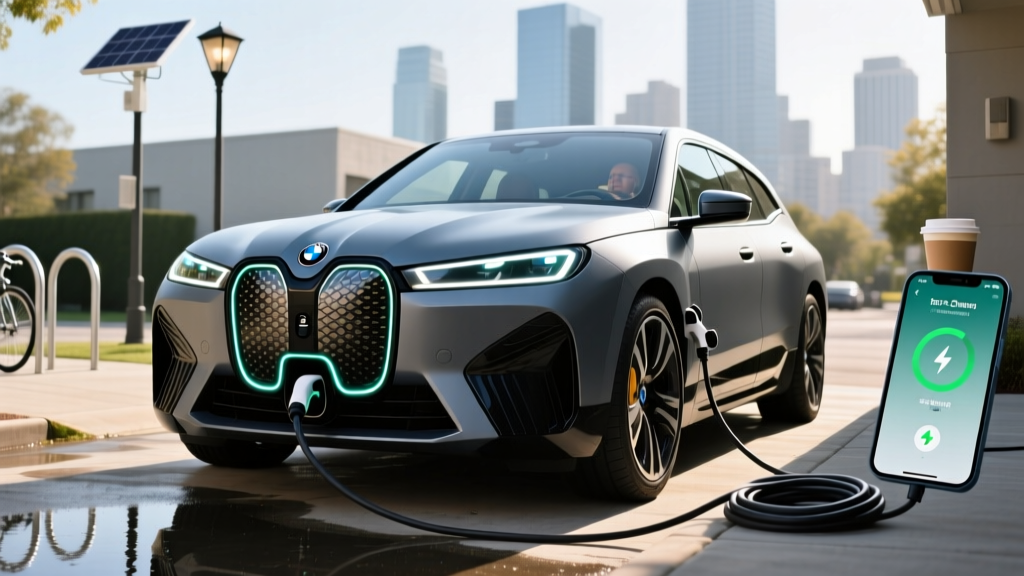
The BMW iX has occupied a distinct lane in the luxury electric SUV segment since its launch — a technology-forward, design-polarizing flagship that prioritizes cabin refinement and long-distance cruising over outright performance theatrics. For the 2027 model year, BMW has carried over the core Neue Klasse-adjacent architecture introduced with the facelifted 2025 iX, with incremental updates to battery management software and standard equipment. If you're researching the BMW iX 2027 as a potential purchase, this review breaks down every number that matters: real range, actual charging speeds, ownership costs, and where it lands against rivals like the Mercedes EQE SUV, Audi Q8 e-tron, and Tesla Model X.
Quick Verdict: Who the 2027 BMW iX Is For
The 2027 iX is best suited for luxury EV buyers who want a composed, quiet highway cruiser with premium interior materials and don't need third-row seating. It excels as a two-row family hauler and executive commuter with genuine 300+ mile legs. It is not for buyers seeking the sharpest handling dynamics in the segment, maximum cargo utility, or the lowest price of entry. If you frequently tow, carry more than four adults, or prioritize sporty driving engagement above cabin serenity, competitors may serve you better.
- You prioritize cabin quietness, ride comfort, and material quality over sportiness
- Your typical trips are 2-4 passengers with moderate cargo needs
- You want 300+ miles of EPA range with fast DC charging for road trips
- BMW's iDrive 8.5 infotainment and curved display layout appeal to you
- You need three rows (consider the Rivian R1S or Kia EV9)
- You want the lowest luxury EV SUV price point (Audi Q8 e-tron starts lower)
- Track-capable handling is a priority (Porsche Cayenne EV or Tesla Model X Plaid)
2027 BMW iX Specifications at a Glance
| Spec | xDrive50 | M60 |
|---|---|---|
| EPA Range | 324 mi (20" wheels) / 340 mi (22") | 296 mi (21") / 312 mi (22") |
| Battery (usable) | 105.2 kWh (NMC) | 105.2 kWh (NMC) |
| Horsepower | 516 hp | 610 hp |
| 0-60 mph | 4.4 sec | 3.6 sec |
| Drivetrain | Dual-motor AWD | Dual-motor AWD |
| MPGe (combined) | 86 MPGe | 78 MPGe |
| Efficiency | 39 kWh/100mi | 43 kWh/100mi |
| Max DC Fast Charge | 195 kW | 195 kW |
| 10-80% DC Charge | ~34 min | ~34 min |
| Level 2 Rate | 11 kW (48A) | 11 kW (48A) |
| Cargo (rear seats up) | 35.5 cu ft | 35.5 cu ft |
| Cargo (rear seats folded) | 77.9 cu ft | 77.9 cu ft |
| Rear Legroom | 38.9 in | 38.9 in |
| Towing Capacity | 3,500 lbs | 3,500 lbs |
| Base MSRP | $87,250 | $111,500 |
Source: EPA / fueleconomy.gov and BMW USA specifications. Specs reflect 2027 model year data. Wheel/tire selection affects range.
Range & Efficiency: Real-World Expectations vs. EPA Stickers
EPA sticker: 324 miles (20" wheels) / 340 miles (22" aero wheels)
Expected real-world highway (70-75 mph, mild weather): ~275-295 miles
Expected real-world mixed driving: ~290-310 miles
Cold-weather (below 32°F, highway): ~230-260 miles (heat pump equipped, but cabin + battery heating draws significant energy)
The iX's heat pump helps mitigate cold-weather losses compared to EVs without one, but expect 15-25% range reduction in sustained freezing temperatures with highway driving.
The 105.2 kWh usable battery pack uses NMC (nickel manganese cobalt) chemistry — BMW's fifth-generation eDrive system. NMC offers higher energy density than LFP, which is why BMW can fit this much capacity into the iX's platform without excessive weight. The trade-off is that NMC cells are more sensitive to sustained high state-of-charge storage, so daily charging to 80-90% rather than 100% will preserve long-term health.
Efficiency-wise, the xDrive50's 39 kWh/100mi is competitive for a 5,600+ lb luxury SUV. For context, the Mercedes EQE 350 4MATIC SUV returns 84 MPGe combined, and the Audi Q8 55 e-tron lands at 81 MPGe. The iX's aerodynamic drag coefficient of 0.25 Cd — aided by the sealed kidney grille, flush door handles, and flat underbody — gives it an edge at highway speeds where drag dominates energy consumption.
Charging: DC Fast, Level 2, and the 80% Taper Reality
| Charging Level | Power (kW) | Speed | Notes |
|---|---|---|---|
| Level 1 (120V) | ~1.4 kW | ~4 mi/hr | Emergency/trickle only; full charge in ~75+ hours |
| Level 2 (240V, 48A) | 11 kW | ~30 mi/hr | 10-100% in ~11 hours; overnight home charging |
| DC Fast (CCS) | 195 kW peak | 10-80% in ~34 min | Sustains ~150 kW to 60%, tapers significantly above 80% |
KW vs. KWH reminder: kW (kilowatts) measures charging power — the rate at which energy flows. kWh (kilowatt-hours) measures battery capacity — the total energy stored. The iX's 105.2 kWh battery charged at a sustained 105 kW would theoretically fill in one hour, but real charging curves taper as the battery approaches full.
The iX's 195 kW peak DC fast-charge rate is respectable but no longer class-leading in 2027. The Hyundai Ioniq 5 and Kia EV6 platform vehicles can peak above 240 kW on 800V architectures, and Porsche's Taycan can sustain high rates well past 60% SoC thanks to its 800V system. The iX uses a 400V architecture, which limits its peak rate but keeps costs and complexity manageable.
Charging curve reality: In real-world DC fast-charging sessions at Electrify America or EVgo 350 kW stations, expect the iX to pull close to its 195 kW peak between roughly 10-40% SoC. From 40-60%, it sustains approximately 140-160 kW. Above 60%, the rate begins a steady taper. Above 80%, charging slows dramatically — from 80-100% can take nearly as long as 10-80%. For road trips, plan stops around the 10-80% window and don't wait to charge to full unless you need every mile to reach your destination.
At home on an 11 kW Level 2 charger (a 48-amp circuit on a 60-amp breaker), the iX adds approximately 30 miles of range per hour. A full 10-100% charge takes roughly 11 hours. If your home electrical panel supports a 60-amp dedicated circuit, a quality Level 2 station like the ChargePoint Home Flex or Emporia Level 2 will handle overnight replenishment comfortably. Budget $800-$2,500 for a professional Level 2 installation depending on your panel capacity and run distance — consult a licensed electrician for an exact quote.
Performance & Driving Dynamics
Both iX trims use BMW's fifth-generation eDrive dual-motor all-wheel-drive system. The xDrive50 produces 516 hp and reaches 60 mph in 4.4 seconds — quick enough for confident highway merging and passing without being a performance showcase. The M60 bumps output to 610 hp with a 3.6-second 0-60 time, placing it firmly in performance-SUV territory.
Ride quality is where the iX earns its luxury credentials. The standard two-axle air suspension (with adaptive dampers) delivers a compliant, isolated ride that absorbs highway imperfections with minimal intrusion. Steering is precise but light — this is a grand tourer, not a canyon carver. The available rear-axle steering (Integral Active Steering) reduces the turning circle and improves low-speed maneuverability, a worthwhile upgrade for urban drivers.
Regenerative braking offers multiple modes: adaptive (which uses radar and navigation data to modulate regen based on traffic and upcoming curves), high (near one-pedal driving), and low (coasting). The adaptive mode is BMW's strongest implementation — it genuinely reads traffic ahead and adjusts deceleration, reducing the need to toggle between modes manually.
Interior, Tech & Cargo
The iX cabin remains one of the most distinctive in the luxury EV segment. BMW's curved display merges a 12.3-inch instrument cluster with a 14.9-inch central touchscreen running iDrive 8.5. The system is responsive, with improved voice recognition and a configurable home screen. Wireless Apple CarPlay and Android Auto are standard. The hexagonal steering wheel and crystal iDrive controller add visual drama, though the hexagonal wheel takes adjustment.
Material quality is excellent: standard Sensafin synthetic leather is convincing, and the available open-pore wood and glass controls (part of the Design Suite package) elevate the cabin to near-Bentley territory in feel. The panoramic electrochromic glass roof can dim electronically — a standout feature.
Cargo: 35.5 cubic feet behind the second row is competitive with the Audi Q8 e-tron (36.9 cu ft) but trails the Mercedes EQE SUV (39.2 cu ft). Fold the 40/20/40 split rear seats and you get 77.9 cu ft. Rear legroom at 38.9 inches is generous. The iX has no front trunk (frunk) — the space under the hood houses HVAC and power electronics.
Driver Assistance: The iX comes standard with BMW's Driving Assistant Professional, which includes adaptive cruise control with stop-and-go, lane-keeping assist, and evasive steering assist. This is an SAE Level 2 system — the driver must remain engaged and hands must periodically touch the wheel (or the driver monitoring camera must confirm eye attention). The available Highway Assistant adds hands-free driving on compatible divided highways at up to 85 mph, but this remains Level 2 with driver monitoring — it is not autonomous driving.
BMW's Highway Assistant and Driving Assistant Professional require continuous driver supervision. You must be prepared to take over at any time. This is fundamentally different from Level 4 robotaxi services like Waymo, which operate without a human driver in geofenced areas. Never treat Level 2 as "self-driving."
Pricing, Trims & Federal Tax Credit Eligibility
| Trim | Base MSRP | As-Tested (est.) | §30D Credit Eligible? |
|---|---|---|---|
| iX xDrive50 | $87,250 | $92,000-$98,000 | No — exceeds $80,000 SUV MSRP cap |
| iX M60 | $111,500 | $118,000-$128,000 | No — exceeds $80,000 SUV MSRP cap |
Federal tax credit status: Neither 2027 iX trim qualifies for the $7,500 federal EV tax credit under IRS §30D rules. The law caps the credit for SUVs at an $80,000 MSRP, and the iX starts well above that threshold. Additionally, the §30D credit has buyer income caps ($300,000 MAGI for joint filers, $150,000 for single filers) and battery critical-mineral/battery-component sourcing requirements that further restrict eligibility. Always verify current rules at IRS.gov or consult a tax professional — incentive rules change and state-level credits may still apply.
With the iX priced above the federal credit threshold, total cost of ownership relies more on fuel savings, reduced maintenance, and state/local incentives. Some states offer rebates or HOV-lane access for EVs regardless of price — check your state's energy office for current programs.
Battery Warranty & Long-Term Ownership
BMW covers the iX's high-voltage battery with an 8-year/100,000-mile warranty against defects and capacity loss below 70% of original capacity. The general powertrain warranty mirrors this at 8 years/100,000 miles, and the basic vehicle warranty is 4 years/50,000 miles. These terms are standard for the luxury EV segment — matching Audi and Mercedes, though trailing Hyundai/Kia's 10-year/100,000-mile battery coverage.
NMC battery degradation in the iX has been modest based on early owner reports and BMW's thermal management system, which actively heats and cools the pack. Expect roughly 5-10% capacity loss over the first 100,000 miles under normal use. Best practices: avoid routinely charging to 100% (set daily limit to 80-90%), minimize DC fast-charging when Level 2 is available, and precondition the battery before fast-charging in cold weather (the iX does this automatically when a DC charger is set as a navigation destination).
Pros & Cons
- Genuine 300+ mile EPA range with excellent highway refinement
- Class-leading cabin quietness and ride comfort (air suspension standard)
- Premium interior materials and distinctive design
- Strong adaptive regen and driver-assist suite
- Heat pump standard (better cold-weather efficiency)
- 3,500-lb towing capacity (adequate for light trailers/boats)
- High price of entry; no federal tax credit eligibility
- No front trunk (frunk) — missed utility
- 195 kW DC peak lags 800V competitors (Ioniq 5, Taycan)
- Cargo space trails EQE SUV and Model X
- Polarizing exterior design isn't for everyone
- Hexagonal steering wheel takes getting used to
- Only two rows — no three-row option
2027 BMW iX vs. Key Competitors
Here's how the iX xDrive50 stacks up against its primary luxury EV SUV rivals:
| Attribute | BMW iX xDrive50 | Mercedes EQE 350 4MATIC SUV | Audi Q8 55 e-tron |
|---|---|---|---|
| EPA Range | 324 mi | 279 mi | 303 mi |
| Battery (usable) | 105.2 kWh | 90.6 kWh | 106 kWh |
| HP / 0-60 | 516 hp / 4.4s | 288 hp / 6.4s | 402 hp / 5.4s |
| Max DC Charge | 195 kW | 170 kW | 170 kW |
| Cargo (seats up) | 35.5 cu ft | 39.2 cu ft | 36.9 cu ft |
| Base MSRP | $87,250 | $77,900 | $75,595 |
Sources: fueleconomy.gov, manufacturer specifications. Prices reflect 2027 model year MSRP before destination.
Frequently Asked Questions
What is the real-world range of the 2027 BMW iX?
The EPA rates the iX xDrive50 at 324 miles (20" wheels) and 340 miles (22" aero wheels). In real-world highway driving at 70-75 mph in mild weather, expect approximately 275-295 miles. Mixed city/highway driving yields closer to 290-310 miles. In freezing temperatures with highway driving, plan for 230-260 miles despite the standard heat pump.
How fast does the 2027 BMW iX charge at home and on the road?
On a 240V Level 2 home charger at 11 kW (48 amps), the iX adds roughly 30 miles of range per hour and charges from empty to full in about 11 hours. On a DC fast charger, it peaks at 195 kW and charges from 10-80% in approximately 34 minutes. Above 80%, the charge rate tapers significantly — plan road-trip stops around the 10-80% window for efficiency.
Does the 2027 BMW iX qualify for the federal EV tax credit?
No. Under current IRS §30D rules, the federal clean vehicle credit for SUVs is capped at $80,000 MSRP. The iX xDrive50 starts at $87,250 and the M60 at $111,500 — both exceed the cap. Additionally, the credit has buyer income limits and battery-sourcing requirements. Check IRS.gov for the latest rules, and research state-level incentives that may still apply.
Is the BMW iX worth buying over the Mercedes EQE SUV or Audi Q8 e-tron?
The iX wins on EPA range (324 vs. 279-303 mi), performance (516 hp vs. 288-402 hp), and DC fast-charging speed (195 kW vs. 170 kW). The EQE SUV offers more cargo room (39.2 cu ft) and a lower starting price ($77,900). The Q8 e-tron is the value pick at $75,595. If range and driving refinement are your top priorities, the iX justifies its premium. If budget or cargo space dominate, the Audi or Mercedes may fit better.
How long will the BMW iX battery last?
BMW warranties the high-voltage battery for 8 years or 100,000 miles against defects and capacity loss below 70%. Based on NMC chemistry behavior and BMW's active thermal management, expect roughly 5-10% degradation over 100,000 miles with normal use. To maximize longevity, charge to 80-90% for daily use, minimize frequent DC fast-charging, and use battery preconditioning before fast-charging sessions.
Can the 2027 BMW iX tow?
Yes. Both trims are rated for 3,500 pounds of towing capacity when properly equipped with the factory tow hitch. This covers small boat trailers, light utility trailers, and bicycle racks, but falls short of larger travel trailers or heavy boat setups. Towing will reduce range significantly — expect a 30-50% reduction depending on trailer weight, speed, and terrain.
This review reflects 2027 model-year specifications available at time of publication. Pricing, tax credit eligibility, and specifications are subject to change. Always verify details with your local BMW dealer and consult a tax professional regarding incentive eligibility. Safety ratings: check NHTSA.gov and IIHS.org for the latest crash-test results.