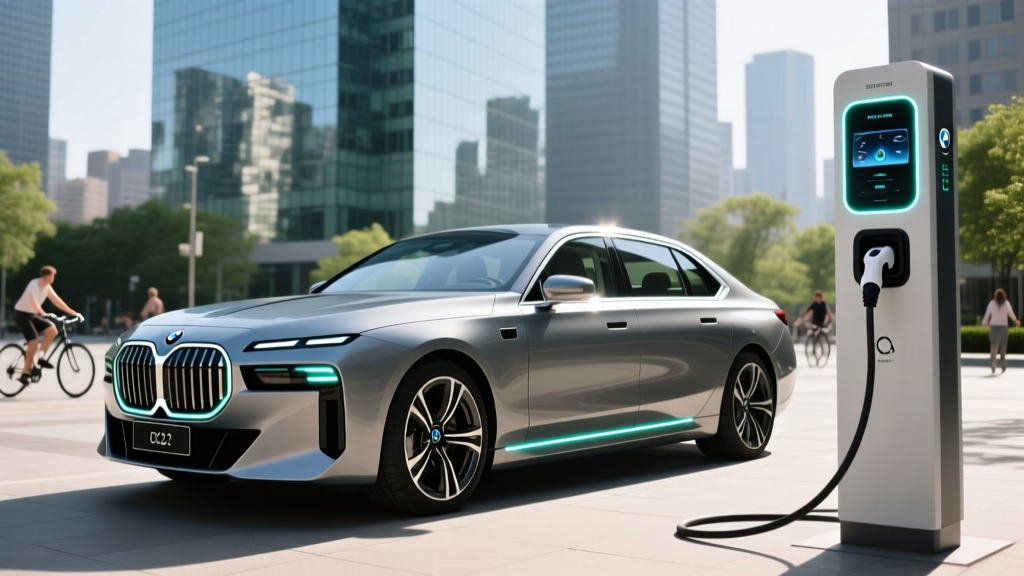
The BMW i7 sits at the apex of BMW's electric lineup — a full-size luxury sedan that tries to prove you don't need to sacrifice comfort, technology, or presence to go electric. For 2027, BMW has refined the i7 with updated battery management software, slightly improved efficiency, and expanded driver-assistance features. But at a starting price well over six figures, the question isn't just whether the i7 is impressive — it's whether it justifies its premium over rivals like the Mercedes-Benz EQS, Lucid Air, and Tesla Model S.
After spending time with the 2027 BMW i7 across highway cruising, city commuting, and DC fast-charging stops, here's a data-driven breakdown of what real ownership looks like.
Range, Efficiency, and the Real-World Reality
The 2027 BMW i7 xDrive60 carries an EPA-estimated range of 318 miles on its 101.7 kWh (usable) battery pack. The high-performance M70 variant, with its more aggressive power delivery and stickier tires, drops to an EPA-estimated 295 miles. The battery uses NMC (nickel manganese cobalt) chemistry, which BMW favors for its energy density in large luxury vehicles where space and weight optimization matter.
EPA Estimate: 318 miles
Highway (70-75 mph, moderate temps): ~265–280 miles
City/Suburban mixed driving: ~300–315 miles (regen-friendly)
Cold weather (below 32°F, highway): ~220–245 miles
The i7's large frontal area and ~5,800-lb curb weight penalize highway efficiency. City drivers who leverage regenerative braking will see results much closer to the EPA sticker. Expect a 20–25% range reduction in sustained sub-freezing conditions — the heat pump helps, but physics is physics with a sedan this size.
Efficiency checks in at 82 MPGe combined (xDrive60), which translates to roughly 41 kWh per 100 miles. That's respectable for a 5,800-pound luxury flagship, though the Lucid Air Grand Touring achieves significantly better efficiency at 131 MPGe combined thanks to its lighter platform and more aerodynamic profile.
| Spec | i7 xDrive60 | i7 M70 |
|---|---|---|
| EPA Range | 318 mi | 295 mi |
| Battery (Usable) | 101.7 kWh, NMC | 101.7 kWh, NMC |
| Horsepower | 536 hp | 650 hp |
| Torque | 549 lb-ft | 749 lb-ft |
| 0-60 mph | 4.5 sec | 3.5 sec |
| Drivetrain | AWD (dual-motor) | AWD (dual-motor) |
| MPGe (Combined) | 82 MPGe | 76 MPGe |
| Max DC Charge Rate | 195 kW | 195 kW |
| 10-80% DCFC Time | ~34 min | ~34 min |
| Base MSRP | $124,200 | $168,500 |
Charging Speed: Home and DC Fast Charging
Charging is where large luxury EVs live or die for road-trip viability. The 2027 i7 supports a peak DC fast-charge rate of 195 kW via its CCS1 connector (NACS adapter available for Tesla Supercharger access). On a capable 350 kW charger, BMW quotes a 10-80% charge time of approximately 34 minutes.
Here's the nuance that spec sheets omit: the i7 doesn't sustain 195 kW for the entire session. The charge curve peaks around 195 kW between roughly 10-30% state of charge, then steps down progressively — holding around 150 kW through 50%, tapering to ~100 kW by 65%, and dropping sharply above 80%. This is standard behavior for NMC packs with this capacity, but it means your actual charging experience depends heavily on how depleted you arrive at the charger.
| Level | Power | Speed | Notes |
|---|---|---|---|
| Level 1 (120V) | ~1.4 kW | ~3 mi/hr | Emergency only; ~100+ hrs for full charge |
| Level 2 (240V, 48A) | 11.5 kW | ~25 mi/hr | ~12-13 hrs from 10-100%; ideal overnight |
| DC Fast Charge | Peak 195 kW | 10-80% in ~34 min | Requires CCS1 station ≥200 kW for best results |
At home on a Level 2 wallbox (BMW offers the Wallbox Plus at 11.5 kW), you'll add roughly 25 miles of range per hour. A full overnight session easily replenishes the pack. The onboard charger maxes out at 11.5 kW — there's no 22 kW AC option, which is a missed opportunity for owners with access to higher-amperage Level 2 infrastructure.
Preconditioning tip: Use the BMW app or iDrive navigation to route to a DC fast charger. The i7 will automatically precondition the battery to optimal temperature, which can shave 5-10 minutes off your charge session in cold weather. Skipping preconditioning in winter can cut your peak charge rate nearly in half.
Performance and Driving Dynamics
The xDrive60's dual-motor AWD powertrain delivers 536 horsepower and 549 lb-ft of torque, launching the i7 to 60 mph in 4.5 seconds. That's quick for a sedan stretching over 212 inches and weighing nearly three tons. The M70 steps up to 650 hp and 749 lb-ft, cutting the 0-60 time to 3.5 seconds — genuine sports-sedan territory in a limousine-sized package.
Both models feature adaptive air suspension, rear-wheel steering (up to 3 degrees), and BMW's xDrive all-wheel-drive system. The air suspension does excellent work masking the i7's mass over imperfect pavement, though you'll feel the weight transfer during aggressive cornering. This is a grand tourer, not a track car — and that's the right trade-off for the segment.
Regenerative braking offers multiple modes: adaptive (which uses navigation and sensor data to modulate regen), high (接近 one-pedal driving), and low (coasting). BMW's adaptive mode is one of the better implementations in the industry, smoothly blending regen and friction braking without the abrupt grab some EVs exhibit.
Interior, Technology, and Cargo
The i7's cabin is where BMW justifies the price. The dashboard centers on BMW's Curved Display — a 12.3-inch instrument cluster fused with a 14.9-inch infotainment touchscreen running iDrive 8.5. Wireless Apple CarPlay and Android Auto are standard, as is a Wi-Fi hotspot and over-the-air update capability.
Standout tech includes:
- Theater Screen: An optional 31.3-inch 8K rear-seat display that deploys from the headliner — genuinely impressive for chauffeured use or family road trips
- Highway Assistant (Level 2): BMW's hands-free driving assist up to 85 mph on divided highways. The driver must remain attentive and eyes-on-road per NHTSA guidance on Level 2 systems
- Parking Assistant Professional: Automated parking with remote maneuvering via smartphone
- Bowers & Wilkins Diamond Surround Sound: Optional 1,965-watt, 36-speaker system
- Executive Lounge Seating: Optional rear seats with power recline, massage, and heated armrests
Passenger space is generous: 42.3 inches of front legroom and 40.1 inches in the rear. The rear seats comfortably accommodate adults over six feet tall. Cargo volume measures 17.7 cubic feet in the trunk — competitive with the segment but notably less than the Tesla Model S (28 cu ft with rear seats folded, though the Model S is a liftback). There's no frunk; BMW uses that space for HVAC and power electronics.
Pricing, Trims, and Federal Tax Credit Eligibility
The 2027 BMW i7 is offered in two trims:
- i7 xDrive60: Starting at $124,200 (including $995 destination)
- i7 M70: Starting at $168,500 (including $995 destination)
Options packages can push a well-equipped xDrive60 to $140,000+ and the M70 beyond $185,000. Key options include the Executive Package ($4,400), Bowers & Wilkins audio ($4,200), and the Theater Screen ($3,000).
The short answer: The BMW i7 does NOT qualify for the federal §30D new EV tax credit.
Here's why, per current IRS rules:
- MSRP Cap: §30D limits eligibility to sedars priced at or below $55,000. The i7 starts at $124,200 — well above the cap.
- Battery Sourcing: Even if the price qualified, the i7's battery components and critical minerals must meet phased-in domestic-content thresholds that many imported luxury EVs do not satisfy.
- Buyer Income Cap: AGI limits apply ($150K single / $300K joint) — though moot here given the MSRP cap.
| Trim | Base MSRP | As-Tested (Typical Options) | Federal Credit |
|---|---|---|---|
| xDrive60 | $124,200 | ~$138,000 | $0 (exceeds MSRP cap) |
| M70 | $168,500 | ~$182,000 | $0 (exceeds MSRP cap) |
Warranty and Long-Term Ownership
BMW backs the i7 with the following coverage:
- Limited Vehicle Warranty: 4 years / 50,000 miles
- Battery & Powertrain Warranty: 8 years / 100,000 miles (covers battery capacity below 70% of original)
- Complimentary Maintenance: 3 years / 36,000 miles
- Roadside Assistance: 4 years / unlimited miles
The 8-year/100,000-mile battery warranty with a 70% capacity retention threshold is standard for the luxury EV segment. Based on data from the iX (which shares a similar battery architecture), BMW's NMC packs have shown modest degradation — typically 5-8% over the first 50,000 miles in moderate climates. Cold-climate owners who frequently DC fast-charge may see slightly higher degradation over time.
For long-term cost planning, a replacement battery pack for the i7 would likely cost between $20,000 and $30,000 out of warranty, based on current BMW EV battery pricing. However, most owners will sell or trade the vehicle well before a pack replacement becomes necessary.
How It Stacks Up: i7 vs. Key Competitors
The i7 competes in a small but fierce segment. Here's how it measures against the three most relevant rivals:
| Metric | BMW i7 xDrive60 | Mercedes EQS 580 | Lucid Air Grand Touring | Tesla Model S Plaid |
|---|---|---|---|---|
| EPA Range | 318 mi | 371 mi | 512 mi | 396 mi |
| Battery | 101.7 kWh | 107.8 kWh | 112 kWh | 100 kWh |
| 0-60 mph | 4.5 sec | 4.1 sec | 3.0 sec | 1.99 sec |
| Peak DCFC | 195 kW | 200 kW | 300 kW | 250 kW |
| Base Price | $124,200 | $127,350 | $125,650 | $108,490 |
| Cargo (cu ft) | 17.7 | 22.0 | 32.0 (w/ hatch) | 28.0 (w/ hatch) |
Where the i7 wins: Build quality, cabin material excellence, rear-seat luxury (especially with the Theater Screen), and BMW's reputation for driving dynamics even in large sedans. The Highway Assistant system is one of the smoother Level 2 implementations available.
Where the i7 loses: Range (Lucid dominates), charging speed (Lucid's 300 kW and 900V architecture are meaningfully faster), cargo space (liftback rivals all offer more), and federal tax credit eligibility (none of these sedans qualify, so it's a wash).
- Exceptional build quality and cabin materials
- Best-in-class rear-seat entertainment (Theater Screen)
- Smooth, composed ride with air suspension
- Strong real-world regen blending and one-pedal capability
- Competitive 0-60 times for a full-size sedan
- Robust BMW dealer and service network
- EPA range trails Lucid Air and Mercedes EQS
- 195 kW peak charging is slow vs. 800V competitors
- No frunk; trunk-only cargo (17.7 cu ft)
- No federal tax credit eligibility
- Heavy weight (5,800 lbs) impacts efficiency
- iDrive learning curve for first-time BMW owners
Who Should Buy the 2027 BMW i7?
Buy the i7 if:
- You prioritize interior luxury, build quality, and rear-seat comfort above all else
- You have reliable home Level 2 charging and don't depend on DC fast-charging for daily use
- You want a full-size sedan with genuine BMW driving dynamics
- Chauffeur-driven or executive use is part of your lifestyle
- Budget is not the primary constraint — you're shopping on quality, not value
- Maximum range is your top priority → Lucid Air Grand Touring (512 mi EPA)
- Fastest possible DC charging matters → Lucid Air (300 kW) or Porsche Taycan (800V)
- You need maximum cargo versatility → Tesla Model S (liftback, 28 cu ft)
- You want to offset cost with the federal tax credit → Consider luxury SUVs below the $80K cap or pre-owned EV credits
The 2027 BMW i7 is the right car for a specific buyer: someone who values craftsmanship, technology, and the BMW badge, and who primarily drives in urban or suburban settings where the range deficit vs. Lucid matters less. For cross-country road warriors who live at DC fast chargers, the 195 kW peak rate and 318-mile range will feel like compromises. For everyone else with a home charger and a taste for the finer things, the i7 delivers an electric luxury experience that's hard to fault from behind the wheel.
Frequently Asked Questions
What is the real-world range of the 2027 BMW i7?
The EPA rates the i7 xDrive60 at 318 miles and the M70 at 295 miles. In real-world highway driving at 70-75 mph in moderate temperatures, expect 265-280 miles from the xDrive60. City driving with regenerative braking can get you close to the EPA number. In cold weather (below 32°F), plan for 220-245 miles on highway trips due to battery resistance and cabin heating demands.
How fast does the 2027 BMW i7 charge?
On a DC fast charger rated at 200 kW or above, the i7 peaks at 195 kW and charges from 10-80% in approximately 34 minutes. At home on a Level 2 wallbox (11.5 kW / 48A), it adds about 25 miles of range per hour, requiring 12-13 hours for a full charge. Always precondition the battery before DC fast-charging for best results.
Does the 2027 BMW i7 qualify for the federal EV tax credit?
No. Under IRS §30D rules, new electric sedans must have an MSRP at or below $55,000 to qualify. The i7 starts at $124,200, disqualifying it entirely. Buyer income caps and battery sourcing requirements also apply to the credit, though the MSRP cap alone excludes the i7. Check your state for any local incentives that may apply.
Is the BMW i7 worth buying over the Mercedes EQS or Lucid Air?
It depends on your priorities. The i7 wins on cabin quality, rear-seat luxury, and brand prestige for traditional BMW buyers. The Mercedes EQS offers more range (371 mi EPA) and cargo space (22 cu ft). The Lucid Air dominates on range (512 mi), charging speed (300 kW), and efficiency, though its service network is less established. Test-drive all three — the i7's refinement speaks loudest from the driver's seat.
What is the battery warranty on the 2027 BMW i7?
BMW covers the i7's high-voltage battery for 8 years or 100,000 miles, whichever comes first. The warranty guarantees the battery will retain at least 70% of its original capacity during that period. If capacity drops below 70%, BMW will repair or replace the battery at no cost. The general vehicle warranty is 4 years / 50,000 miles.
Can the 2027 BMW i7 use Tesla Superchargers?
Yes, with a BMW-provided NACS adapter. The i7 ships with a CCS1 charge port. BMW offers a NACS adapter that allows access to Tesla's Supercharger network (V3 and V4 stalls). Charging speeds at Superchargers will be limited to the i7's peak rate of 195 kW, well within what V3 (250 kW) and V4 stalls can deliver.