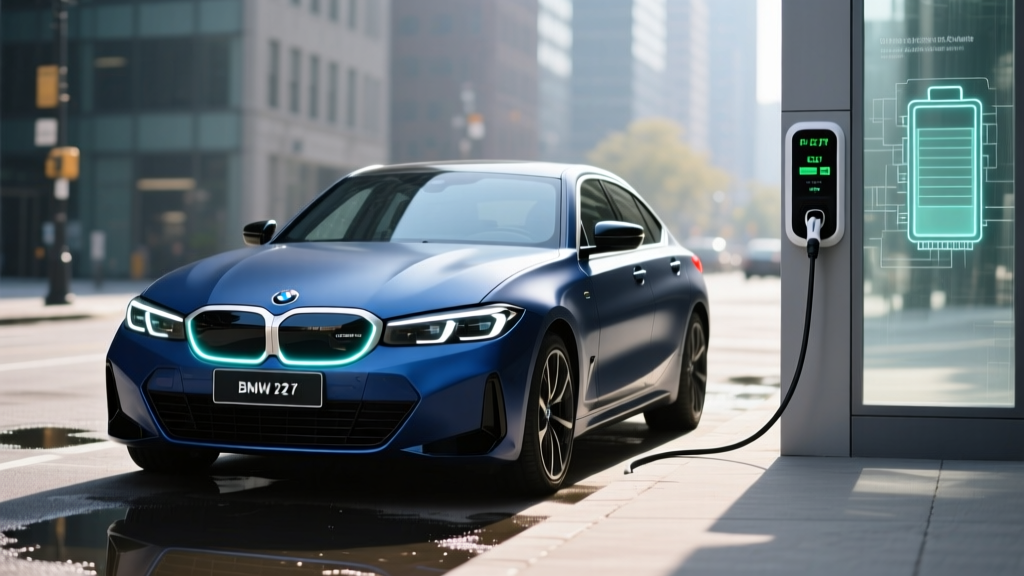
The original BMW i3 was a quirky, carbon-fiber city car that proved ahead of its time. For 2027, BMW is reviving the nameplate on an entirely different scale: the 2027 BMW i3 sedan will ride on BMW's new Neue Klasse (New Class) dedicated EV architecture, positioning it as a compact luxury electric sedan aimed squarely at the Tesla Model 3 and the Mercedes-Benz CLA EV. As of early 2026, BMW has confirmed the vehicle's existence and platform details, but final U.S. specifications, pricing, and on-sale timing remain preliminary. This preview compiles everything confirmed and reasonably projected from BMW's technical disclosures.
Note: The 2027 BMW i3 sedan is an announced/upcoming model. Specifications cited below are based on BMW's Neue Klasse platform data, European press briefings, and industry analysis. Final U.S. EPA figures and MSRP may differ at launch.
Platform and Powertrain: Neue Klasse Explained
The 2027 i3 sedan is the first compact BMW built on the Neue Klasse platform, which debuts with the larger iX3 SUV before filtering down. This is a ground-up EV architecture — not a modified ICE chassis — meaning BMW has optimized packaging, weight distribution, and thermal management specifically for battery-electric propulsion.
BMW has confirmed the platform uses an 800-volt electrical system, enabling faster DC charging and more efficient power delivery. The initial i3 sedan variant is expected to feature a single rear-mounted electric motor (RWD) producing approximately 300 horsepower, with a dual-motor AWD variant (likely badged i3 xDrive) following later. BMW has targeted a 0-60 mph time in the low-to-mid 5-second range for the base RWD model, with the AWD variant potentially dipping below 5 seconds.
Battery, Range, and Efficiency
BMW has confirmed that Neue Klasse vehicles will use round lithium-ion cells (cylindrical format, similar in concept to Tesla's 4680 cells) supplied by CATL and Samsung SDI. The chemistry for the U.S.-market i3 sedan is projected to be NMC (nickel-manganese-cobalt), prioritizing energy density over the lower-cost LFP chemistry used in some competitors' base trims.
The usable battery capacity for the i3 sedan is projected at approximately 75 kWh, based on platform disclosures and the vehicle's compact dimensions. BMW has targeted a 30% improvement in energy density compared to its current fifth-generation eDrive batteries.
Real-World Expectation: Expect approximately 260–280 miles in mixed highway/city driving at moderate temperatures. Highway-only driving at 75+ mph may yield 240–260 miles. In cold weather (below 30°F), plan for 20–30% range reduction, putting realistic winter range around 210–250 miles without preconditioning. BMW's new heat pump system should mitigate some cold-weather loss compared to older EVs.
Efficiency is targeted at roughly 130 MPGe combined (approximately 26 kWh/100 miles), which would be competitive with the Tesla Model 3 Long Range and significantly better than the current BMW i4 eDrive40's 109 MPGe combined rating per fueleconomy.gov.
Charging Speed: 800V Architecture Pays Off
The 800-volt system is the headline feature for charging. BMW has confirmed Neue Klasse vehicles can accept up to 270 kW peak DC fast charging, which is among the fastest in the luxury compact sedan segment.
| Charging Level | Power / Rate | Time / Miles Added |
|---|---|---|
| Level 1 (120V household) | ~1.4 kW | ~4 miles per hour |
| Level 2 (240V home/wallbox) | 11 kW (48A) | ~33 miles per hour / full charge ~8 hrs |
| DC Fast Charge (peak) | 270 kW peak | 10–80% in ~20 minutes (projected) |
| DC Fast Charge (sustained avg.) | ~180–200 kW avg. | 10–80% realistic ~22–25 min |
Charging curve reality check: The 270 kW figure is a peak, not a sustained rate. Expect maximum charge rate from roughly 10–40% state of charge, tapering progressively above 60% and sharply above 80%. BMW's preconditioning feature (automatic when navigating to a charger) warms the battery to optimal temperature for peak charge acceptance. Without preconditioning — for example, arriving at a charger with a cold-soaked battery — expect significantly slower initial charge rates.
For U.S. charging networks, the 2027 i3 is expected to ship with a NACS (Tesla-style) charge port natively, following BMW's commitment to the North American Charging Standard. This grants access to Tesla Superchargers, Electrify America, and other networks without adapters. BMW has also confirmed V2L (vehicle-to-load) capability, allowing the i3 to power external devices.
Performance and Driving Dynamics
| Spec | i3 (RWD, projected) | i3 xDrive (AWD, projected) |
|---|---|---|
| Horsepower | ~300 hp | ~400 hp |
| 0-60 mph | ~5.5 sec | ~4.5 sec |
| Drivetrain | Rear-wheel drive | Dual-motor AWD |
| Top Speed | ~130 mph (electronically limited) | ~130 mph |
BMW has emphasized that Neue Klasse vehicles will retain the brand's driving-dynamics DNA. The i3 sedan's lower center of gravity (battery pack mounted in the floor), near-50/50 weight distribution, and standard adaptive dampers (expected on M Sport trims) should deliver handling that's a clear step above the Tesla Model 3's more comfort-biased tuning. Regenerative braking is expected to offer adjustable levels, including a one-pedal driving mode.
Interior, Tech, and Driver Assistance
The 2027 i3 sedan will debut BMW's next-generation iDrive X infotainment system, built on a new panoramic display architecture. Rather than a single massive screen, BMW is using a full-width heads-up display strip across the lower windshield combined with a central 14.9-inch touchscreen. Physical controls are minimal; BMW has committed to retaining a rotary iDrive controller alongside touch and voice input.
Key tech features (confirmed/expected):
- Wireless Apple CarPlay and Android Auto with native integration
- 5G connectivity with over-the-air (OTA) update capability
- Augmented-reality navigation overlay on the panoramic display
- BMW Digital Key Plus (UWB-based phone-as-key)
- Wireless phone charging (15W, Qi2 compatible)
- 12-speaker Harman Kardon audio standard; optional Bowers & Wilkins surround
Driver assistance: The i3 will ship with BMW's Driving Assistant Professional suite, which includes adaptive cruise control with stop-and-go, lane-keeping assist, automated lane changes, and evasive steering assist. This is an SAE Level 2 system — the driver must remain engaged and hands on or near the wheel at all times. BMW has not announced Level 3 or Level 4 capability for the i3 sedan at launch, though the Neue Klasse platform is designed with hardware provisions for future upgrades.
Dimensions, Cargo, and Practicality
The i3 sedan slots below the i5 in BMW's EV lineup. Based on platform projections and BMW's compact-segment history, expect exterior dimensions similar to the current 3 Series sedan but with a slightly longer wheelbase thanks to the EV-dedicated platform's packaging advantages.
Projected interior dimensions:
- Front legroom: ~42 inches
- Rear legroom: ~36 inches
- Trunk cargo volume: ~15 cu ft
- Frunk (front trunk): ~2 cu ft (cable storage, not cargo-grade)
The rear floor should be nearly flat (no transmission tunnel), improving middle-seat comfort compared to ICE 3 Series models. However, the sedan body style means cargo versatility is limited compared to the i4 Gran Coupe's hatchback design — a notable trade-off if you regularly haul bulky items.
Pricing, Trims, and Federal Tax Credit
BMW has not announced official U.S. MSRP for the 2027 i3 sedan. Based on positioning below the i5 ($66,800 base) and above the i4 ($52,200 base), and accounting for Neue Klasse platform costs, the following pricing is projected:
| Trim (Projected) | Est. Base MSRP | §30D Credit Eligibility |
|---|---|---|
| i3 (RWD base) | ~$47,000 | Likely eligible (under $55K sedan cap) |
| i3 M Sport (RWD) | ~$52,000 | Likely eligible (under $55K sedan cap) |
| i3 xDrive (AWD) | ~$55,000 | Borderline — must verify MSRP under $55K cap |
Federal tax credit (§30D) considerations for 2026/2027: Eligibility for the up-to-$7,500 credit depends on several factors per IRS guidelines:
- MSRP cap: Sedans must have a base MSRP at or below $55,000 (trims and options can push above; the cap applies to base MSRP plus destination)
- Buyer income limits: Modified AGI must not exceed $150,000 (single), $225,000 (head of household), or $300,000 (married filing jointly)
- Battery sourcing: Critical minerals and battery components must meet escalating domestic-content thresholds — BMW's use of CATL cells may complicate eligibility depending on 2027 final rules
- Final assembly: Vehicle must undergo final assembly in North America — BMW's Spartanburg, SC plant is a likely production site for U.S.-market i3 sedans, but this is unconfirmed
- Point-of-sale transfer: Eligible buyers can transfer the credit to the dealer for an immediate price reduction at purchase
Critical caveat: Battery-sourcing rules are the biggest wildcard. If BMW sources cells from CATL's China-based factories, the i3 may fail the critical-minerals requirement, reducing the credit to $3,750 or eliminating it entirely. BMW has announced plans to localize battery cell production, but the timeline for full compliance is uncertain. Always verify eligibility on fueleconomy.gov before purchasing.
Warranty and Long-Term Ownership
BMW is expected to carry forward its current EV warranty structure for the Neue Klasse i3:
- Basic vehicle warranty: 4 years / 50,000 miles
- Battery and powertrain warranty: 8 years / 100,000 miles (covers battery capacity retention below 70% of original)
- Corrosion warranty: 12 years / unlimited miles
- Complimentary maintenance: 3 years / 36,000 miles
The 70% capacity retention threshold is industry-standard but worth noting: if your 75 kWh battery degrades to 52.5 kWh within 8 years or 100,000 miles, BMW will repair or replace it. Based on current NMC cell longevity data, most owners will see 8–12% degradation over 8 years under normal use — well within warranty tolerance.
Who Should Consider the 2027 BMW i3 Sedan?
- You want a compact luxury EV sedan with genuine driving dynamics and BMW build quality
- You need 250+ miles of real-world range for commuting and moderate road trips
- Fast DC charging (20-min 10–80%) is a priority for your travel patterns
- You value a physical rotary controller and BMW's iDrive ecosystem
- You can charge at home (Level 2) and don't rely exclusively on public infrastructure
- You need hatchback cargo versatility (consider the i4 Gran Coupe or Tesla Model 3)
- Maximum range is your top priority (the Tesla Model 3 Long Range offers ~341 EPA miles)
- You need guaranteed full $7,500 tax credit eligibility — battery sourcing is uncertain
- You want Level 3 or higher autonomous driving capability (not available on the i3)
Pros and Cons
- 800V architecture enables ~20-min 10–80% DC fast charging
- Neue Klasse platform promises strong efficiency (~130 MPGe)
- BMW driving dynamics and build quality in a compact EV
- NACS charge port native — Supercharger access without adapter
- Next-gen iDrive X with panoramic display and AR navigation
- Projected sub-$50K base price for RWD trim
- Unreleased — can't test-drive or verify final specs yet
- Tax credit eligibility uncertain due to battery sourcing
- Sedan trunk less versatile than hatchback competitors
- Real-world range likely ~260–280 mi, not class-leading
- ADAS is Level 2 only — no autonomous driving features
- Frunk is cable-storage only, not usable cargo space
Frequently Asked Questions
What is the real-world range of the 2027 BMW i3 sedan?
Based on the projected 75 kWh battery and ~130 MPGe efficiency, expect 260–280 miles in mixed driving at moderate temperatures. Highway-only driving at 75+ mph will likely yield 240–260 miles. In cold weather (below 30°F), plan for 20–30% range loss, putting winter range around 210–250 miles. The EPA sticker is projected at ~310 miles, but real-world conditions rarely match it.
How fast does the i3 sedan charge at home and on the road?
At home on a 240V Level 2 charger (11 kW), the i3 adds roughly 33 miles per hour, reaching a full charge in about 8 hours. On DC fast chargers, the 800V system accepts up to 270 kW peak, enabling a 10–80% charge in approximately 20–25 minutes under good conditions. Average sustained charge rate will be closer to 180–200 kW due to charge-curve tapering above 60% SoC.
How much will the 2027 BMW i3 cost after tax credits?
The base RWD i3 is projected at ~$47,000 MSRP. If it qualifies for the full $7,500 federal credit (which depends on battery sourcing, final assembly location, and your income), the effective price drops to ~$39,500. However, credit eligibility is not guaranteed — BMW's battery supply chain may not meet all §30D requirements by launch. Verify on fueleconomy.gov before purchasing.
Is the 2027 i3 sedan worth buying vs. the Tesla Model 3 or Mercedes CLA EV?
If you prioritize driving dynamics, build quality, and BMW's iDrive ecosystem, the i3 is a strong contender. The Tesla Model 3 Long Range still leads on EPA range (~341 mi) and Supercharger network reliability. The Mercedes CLA EV (also on a new dedicated platform) will compete closely on luxury and tech. The decision will hinge on final pricing, tax credit eligibility, and whether BMW's real-world efficiency matches projections. Wait for independent reviews before committing.
Does the 2027 BMW i3 qualify for the federal EV tax credit?
It's too early to confirm. Eligibility under IRS §30D requires the vehicle to meet MSRP caps (under $55K for sedans), buyer income limits, North American final assembly, and battery critical-mineral/component sourcing thresholds. BMW's use of CATL cells and unconfirmed U.S. production plans make full $7,500 eligibility uncertain. The credit could be $3,750, $7,500, or $0 depending on final sourcing. Check the IRS clean vehicle credit page and fueleconomy.gov closer to launch.
When will the 2027 BMW i3 sedan be available?
BMW has confirmed Neue Klasse production begins in 2025 with the iX3 SUV in Europe. The i3 sedan is expected to follow, with U.S. deliveries likely beginning in late 2026 or early 2027 as a 2027 model-year vehicle. Exact timing depends on production ramp-up and U.S. market allocation.