Quick Verdict: The ID.4 in 2026
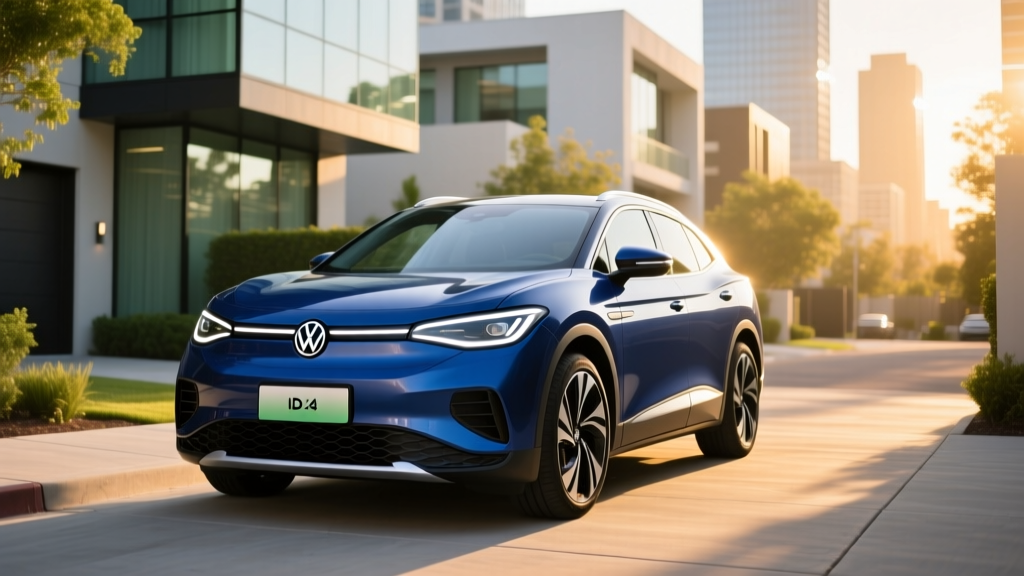
The 2026 Volkswagen ID.4 enters its sixth model year in the U.S. as one of the most practical compact electric SUVs on the market. With a usable battery capacity of 82 kWh (NMC chemistry), EPA-estimated range up to 291 miles on rear-wheel-drive trims, and DC fast charging that peaks at 175 kW, the ID.4 occupies a sensible middle ground between the Hyundai Ioniq 5's blistering charge speeds and the Tesla Model Y's Supercharger ecosystem. For 2026, Volkswagen has streamlined the trim lineup, updated the infotainment software to address longstanding complaints, and maintained aggressive pricing that keeps it competitive against a growing field of rivals.
This review covers everything a prospective buyer or lessee needs: exact range and efficiency figures, real-world charging behavior, cabin dimensions, warranty coverage, federal tax credit eligibility under current IRS §30D rules, and whether leasing or buying makes more financial sense in today's EV market.
| Spec | RWD (Standard/Pro S) | AWD (Pro S / Pro S Plus) |
|---|---|---|
| EPA Range | 291 mi (Standard) / 275 mi (Pro S) | 263 mi (Pro S) / 263 mi (Pro S Plus) |
| Battery (usable) | 82 kWh, NMC lithium-ion | |
| Horsepower | 282 hp | 335 hp |
| 0-60 mph | 7.3 sec | 5.4 sec |
| Max DC Fast Charge | 175 kW (CCS1 connector) | |
| 10-80% DC Charge Time | ~28 minutes | |
| Level 2 Home Charging | 11.5 kW (~37 mi/hr) | |
| MPGe (combined) | 104 MPGe | 98 MPGe |
| Efficiency | 32 kWh/100 mi | 34 kWh/100 mi |
| Cargo (behind rear seats) | 30.3 cu ft | |
| Cargo (seats folded) | 64.2 cu ft | |
| Rear Legroom | 37.6 in | |
| Battery Warranty | 8 years / 100,000 miles | |
| Base MSRP | $40,790 (Standard) | $48,790 (Pro S AWD) |
Range and Efficiency: EPA vs. the Real World
The 2026 ID.4's 82 kWh usable battery (NMC cell chemistry supplied primarily by SK On) delivers an EPA-estimated 291 miles on the base Standard RWD trim with 19-inch wheels. Step up to the Pro S RWD with 20-inch wheels and the EPA figure drops to 275 miles. All-wheel-drive variants settle at 263 miles regardless of trim, per fueleconomy.gov.
Real-World Range Expectations: EPA tests blend city and highway driving at moderate temperatures. In practice:
- City/suburban driving (mild weather): Expect to meet or slightly exceed EPA range — 280-300 mi on the Standard RWD is achievable thanks to generous regenerative braking.
- Highway driving at 70-75 mph: Plan for 230-250 mi on the Standard RWD, roughly 220-240 mi on AWD trims. The ID.4's boxy SUV shape creates more aerodynamic drag than a sedan at sustained speed.
- Cold weather (below 32°F): Range drops 20-30% depending on cabin heating use. A 291-mi EPA rating can shrink to 200-230 mi in freezing conditions. The ID.4 includes a heat pump on Pro S and above trims, which mitigates some of this loss — but physics still applies.
- Towing: Maximum tow rating is 2,700 lbs (AWD). Towing cuts range roughly in half; plan 120-140 mi between charges with a loaded trailer.
Efficiency figures land at 104 MPGe combined (32 kWh/100 mi) for the RWD Standard trim and 98 MPGe combined (34 kWh/100 mi) for AWD. These are respectable but not class-leading — the Hyundai Ioniq 5 RWD achieves 114 MPGe combined, while the Tesla Model Y Long Range AWD hits 120 MPGe combined. The ID.4 trades some efficiency for a more traditional SUV driving feel and softer ride quality.
Charging Speeds: DC Fast, Level 2, and the Charge Curve
Charging infrastructure compatibility is where the ID.4's CCS1 connector becomes a talking point. Volkswagen equipped the 2026 ID.4 with the CCS1 standard — not the Tesla NACS plug. That means access to Electrify America, EVgo, ChargePoint, and other CCS networks, but not native Tesla Supercharger access (adapters exist but may limit peak charge rates). VW includes three years of complimentary Electrify America charging (30-minute sessions) with new purchases and leases.
| Charging Level | Power | Speed / Time | Typical Use Case |
|---|---|---|---|
| Level 1 (120V household) | 1.2 kW | ~4 mi/hr | Overnight trickle; emergency top-up |
| Level 2 (240V home/public) | 11.5 kW | ~37 mi/hr (full charge ~8 hr) | Daily home charging; workplace |
| DC Fast Charge (CCS1) | Peak 175 kW | 10-80% in ~28 min | Road trips; public fast charging |
Understanding the charge curve: The 175 kW peak is not sustained across the entire session. The ID.4's thermal management system allows peak rates between roughly 10-30% state of charge (SoC). From 30-60%, expect 130-150 kW. Above 80%, the rate tapers sharply to protect battery longevity — charging from 80-100% on DC can add another 25-30 minutes. For road-trip planning, the 10-80% window is what matters, and 28 minutes is competitive if not exceptional. The Ioniq 5's 800V architecture delivers 10-80% in 18 minutes at 350 kW chargers, which is noticeably quicker on longer trips.
Home charging reality: At 11.5 kW on a Level 2 home charger (requiring a 48-amp circuit on a 60-amp breaker), the ID.4 adds roughly 37 miles of range per hour. An overnight session from 20% to full takes about 7-8 hours — easily covering daily driving needs. Installation of a hardwired Level 2 charger typically runs $500-$1,500 for the electrician work (equipment additional), though costs climb if your electrical panel needs an upgrade to 200A service. Consult a licensed electrician for a site-specific quote.
Performance and Drivetrain
The 2026 ID.4 offers two powertrain configurations:
- RWD (single rear motor): 282 hp, 339 lb-ft torque, 0-60 mph in 7.3 seconds. Adequate for commuting and merging, with a planted rear-drive feel that's uncommon in this segment.
- AWD (dual motor): 335 hp, 402 lb-ft torque, 0-60 mph in 5.4 seconds. The extra front motor provides confident acceleration and all-weather traction — worth the $4,000-$5,000 premium for buyers in snow-belt states.
Ride quality is a genuine ID.4 strength. VW tuned the suspension for comfort over sportiness, and the result is a composed, quiet cabin at highway speed with minimal road harshness. The steering is light and uncommunicative — not a driver's car, but pleasant for daily commuting. Turning radius is tight at 31.5 feet, making parking-lot maneuvers easy.
Interior, Tech, and Cargo
The ID.4's cabin is spacious and practical, with a flat floor and generous rear-seat room that outpaces many gas-powered compact SUVs.
- Cargo behind rear seats: 30.3 cu ft (larger than the Ioniq 5's 27.2 cu ft)
- Cargo with seats folded: 64.2 cu ft
- Rear legroom: 37.6 inches — comfortable for adults on long trips
- Front legroom: 41.1 inches
- No frunk: Unlike the Ioniq 5 or Model Y, the ID.4 has no front trunk. The under-hood space houses electronics.
Infotainment: The 2026 model year runs VW's latest ID.Software 4.0 on a 12.9-inch touchscreen. Previous model years drew heavy criticism for laggy, unintuitive menus and capacitive touch sliders for volume and climate. VW has improved responsiveness and added physical shortcut buttons for climate controls on 2026 Pro S trims and above — a meaningful quality-of-life fix. Wireless Apple CarPlay and Android Auto are standard across all trims.
Driver assistance (SAE Level 2): The ID.4 includes VW's IQ.DRIVE suite standard: adaptive cruise control with stop-and-go, lane centering, blind-spot monitoring, rear cross-traffic alert, and automatic emergency braking. This is a Level 2 driver-assistance system per SAE classification — the driver must remain fully engaged with hands on the wheel and eyes on the road. It is not autonomous driving. IQ.DRIVE is competent for highway cruising but does not offer hands-free operation like GM's Super Cruise or Ford's BlueCruise on mapped highways.
Pricing, Trims, and Federal Tax Credit Eligibility
| Trim | Drivetrain | MSRP | Est. After §30D Credit* |
|---|---|---|---|
| Standard | RWD | $40,790 | ~$33,290 |
| Pro | RWD | $44,290 | ~$36,790 |
| Pro S | RWD | $47,290 | ~$39,790 |
| Pro S | AWD | $48,790 | ~$41,290 |
| Pro S Plus | AWD | $53,290 | ~$45,790 |
*Estimated prices assume full $7,500 §30D credit eligibility. Actual credit depends on buyer income, battery sourcing, and MSRP caps. See IRS rules below.
Federal EV Tax Credit (§30D) — Key Rules for 2026:
- MSRP cap: SUVs must have an MSRP at or below $80,000. All ID.4 trims qualify.
- Buyer income cap: Adjusted gross income must not exceed $150,000 (single), $225,000 (head of household), or $300,000 (married filing jointly).
- Battery sourcing: Increasing percentages of battery critical minerals and components must be sourced from the U.S. or free-trade-agreement countries. The ID.4's SK On battery (assembled in Georgia) has progressively met more sourcing requirements — but eligibility for the full $7,500 versus a partial $3,750 can vary by production batch and model year. Check the VIN-specific eligibility at IRS.gov or ask your dealer for the IRS-compliant battery sourcing report.
- Point-of-sale transfer: As of 2024, buyers can transfer the credit to the dealer at purchase, reducing the purchase price immediately rather than waiting for a tax refund. This also applies to leases — the leasing company (the legal owner) claims the credit and typically passes the savings through as a capitalized-cost reduction (lower monthly payment).
- Leasing nuance: Under §30D, leased vehicles are technically "commercial" clean vehicles under §45W, which has different (often more lenient) sourcing requirements. Many lessees of the ID.4 will find the full $7,500 passed through by VW Credit regardless of battery sourcing — but confirm with your dealer.
Leasing the 2026 ID.4: What to Know
Leasing the ID.4 deserves specific attention because VW has historically offered some of the most competitive EV lease deals in the market. Here's the framework for evaluating a 2026 ID.4 lease, whether you're searching from Goodyear, Arizona, or anywhere else in the U.S.:
- Typical lease structure: 36 months, 10,000 miles/year. VW Credit (the captive lender) often offers money factors (the lease equivalent of interest rate) subsidized below market rates on the ID.4 to maintain sales volume.
- $7,500 lease credit pass-through: Because the leasing company owns the vehicle, they claim the federal credit under §45W commercial clean vehicle rules. Most manufacturers, including VW, pass this savings to the lessee as a cap-cost reduction. This can drop a lease payment by $100-$150/month compared to a non-subsidized equivalent.
- Residual values: EV residual values have been volatile. If VW sets a high residual (e.g., 55-60% of MSRP at 36 months), monthly payments stay lower. If residuals are set conservatively (reflecting EV depreciation concerns), payments rise. Always compare the total lease cost (sum of payments + any down payment + disposition fee) against other offers.
- Goodyear, AZ and Sun Belt considerations: Arizona's extreme summer heat is relevant to EV ownership. Battery thermal management in the ID.4 is liquid-cooled, which handles heat better than passive systems. However, expect some range loss during 110°F+ summer days when the battery cooling system draws additional energy. Proximity to Electrify America and EVgo stations along I-10 and in the Phoenix metro area is solid for road trips. Home charging is the primary fueling method for most Arizona EV owners — and solar-powered home charging is common in the state, further reducing operating costs.
- Lease-end flexibility: Unlike some manufacturers, VW Credit has historically allowed third-party buyouts at lease end (you can sell the car to CarMax, for example), though policies can change. Confirm current buyout terms before signing.
Warranty and Long-Term Battery Outlook
Volkswagen provides solid warranty coverage for the ID.4:
- Battery warranty: 8 years / 100,000 miles, whichever comes first. VW guarantees the high-voltage battery will retain at least 70% of its original usable capacity during this period. If capacity drops below 70% (as measured by VW diagnostics), the battery will be repaired or replaced at no cost.
- Powertrain warranty: 8 years / 100,000 miles (covers electric motors, power electronics, onboard charger)
- Bumper-to-bumper: 4 years / 50,000 miles
- Roadside assistance: 4 years / 50,000 miles
Battery degradation reality: NMC batteries in liquid-cooled packs like the ID.4's typically lose 1-2% of capacity per year under normal use. After 5 years and 60,000 miles, expect roughly 90-95% state of health (SoH). Rapid DC charging exclusively (never using Level 2) and frequently charging to 100% accelerate degradation slightly. Best practice: charge to 80% for daily use, use DC fast charging primarily for road trips, and precondition the battery before fast charging (the ID.4 does this automatically when a DC charger is set as your navigation destination).
Pros, Cons, and the Competition
Pros
- Comfortable, quiet ride quality — best-in-class for daily commuting comfort
- Spacious cargo area (30.3 cu ft) and rear seat room
- Competitive base price; strong lease deals with $7,500 credit pass-through
- Standard IQ.DRIVE safety suite across all trims
- AWD available with strong 5.4-sec 0-60 performance
- 3 years of complimentary Electrify America charging included
Cons
- 175 kW peak DC charging is slower than Ioniq 5 (350 kW) and Model Y (250 kW)
- CCS1 connector — no native Tesla Supercharger access without adapter
- No front trunk (frunk) for additional storage
- Infotainment improved but still behind Hyundai/Kia and Tesla in responsiveness
- IQ.DRIVE is capable but no hands-free highway driving like BlueCruise
- Efficiency (104 MPGe RWD) trails Ioniq 5 and Model Y
Key competitors at a glance:
- Hyundai Ioniq 5: Faster charging (18 min 10-80%), higher efficiency, similar price. Slightly less cargo room. NACS connector on 2025+ models for Supercharger access.
- Tesla Model Y: Supercharger network, best efficiency (120 MPGe), largest charging infrastructure. Firm ride, polarizing interior minimalism, and no physical controls.
- Ford Mustang Mach-E: Sportier driving dynamics, BlueCruise hands-free capability. Smaller cargo area and lower efficiency than the ID.4.
- Kia EV6: Shares Ioniq 5's 800V fast-charging platform, sportier styling. Less rear headroom.
Who Should Buy (or Lease) the 2026 ID.4?
Choose the ID.4 if:
- You prioritize ride comfort and cabin quietness over sporty handling
- You want a spacious compact SUV with strong cargo capacity and no range-extender compromises
- You can install Level 2 home charging and want a reliable daily commuter
- You value VW's dealer network and service infrastructure over startup brands
- You're in a region with decent Electrify America or CCS charging coverage
Look elsewhere if:
- You take frequent road trips exceeding 250 miles and want the fastest possible DC charging (Ioniq 5, EV6)
- You need Tesla Supercharger network access natively (Model Y, or Ioniq 5/EV6 with NACS)
- You want hands-free highway driving capability (Mach-E with BlueCruise, or GM vehicles with Super Cruise)
- Maximum efficiency and lowest cost-per-mile are your top priorities (Model Y)
Frequently Asked Questions
What is the real-world range of the 2026 VW ID.4?
The EPA estimates 291 miles for the Standard RWD trim. In real-world mixed driving, expect 250-280 miles. Highway-only driving at 70+ mph reduces this to 230-250 miles, and freezing temperatures can drop range to 200-230 miles even with the heat pump equipped on higher trims.
How fast does the ID.4 charge at home and on the road?
At home on a Level 2 charger (11.5 kW), the ID.4 adds roughly 37 miles of range per hour and charges fully overnight in about 8 hours. On DC fast chargers, it peaks at 175 kW and reaches 10-80% in approximately 28 minutes — adequate for road trips but slower than the Ioniq 5's 18-minute benchmark.
Does the 2026 ID.4 qualify for the $7,500 federal EV tax credit?
The ID.4 meets the MSRP cap (all trims are under $80,000) and is assembled in the U.S. (Chattanooga, TN). Full $7,500 eligibility depends on the buyer's income (under $150K single / $300K married filing jointly) and the specific battery's critical-mineral and component sourcing compliance. Lessees typically receive the full credit pass-through under §45W commercial vehicle rules regardless of sourcing. Always verify with your dealer and consult IRS.gov for current rules.
Is leasing or buying the ID.4 a better deal?
Leasing often provides the lowest monthly cost due to VW's subsidized money factors and $7,500 credit pass-through. Buying makes more sense if you plan to keep the vehicle 5+ years, drive more than 12,000 miles/year, or want to build long-term equity. Run the total cost of both options (sum of lease payments + down + disposition fee vs. purchase price minus credit + interest + depreciation) before deciding.
Is the ID.4 a good EV for hot climates like Arizona?
Yes, with caveats. The liquid-cooled battery thermal management handles heat well, and the ID.4's cabin cooling is effective. Expect minor range reduction during extreme heat (105°F+) due to battery cooling energy draw. Home charging in a shaded garage is strongly recommended in desert climates to avoid battery heat soak. Goodyear and Phoenix-area drivers benefit from strong solar adoption for low-cost home charging and growing public charging infrastructure along major corridors.
What's the biggest drawback of the ID.4 compared to competitors?
Charging speed. The 175 kW peak and 28-minute 10-80% time are acceptable but noticeably slower than the Hyundai Ioniq 5 and Kia EV6 (350 kW, 18 minutes) and the Tesla Model Y (250 kW, ~22 minutes). If you road-trip frequently, this difference compounds across multiple charging stops.
Sources: U.S. EPA Fuel Economy, IRS Clean Vehicle Credits, Volkswagen of America official specifications.