Quick Verdict: The ID.4 Plays It Safe — And That's the Point
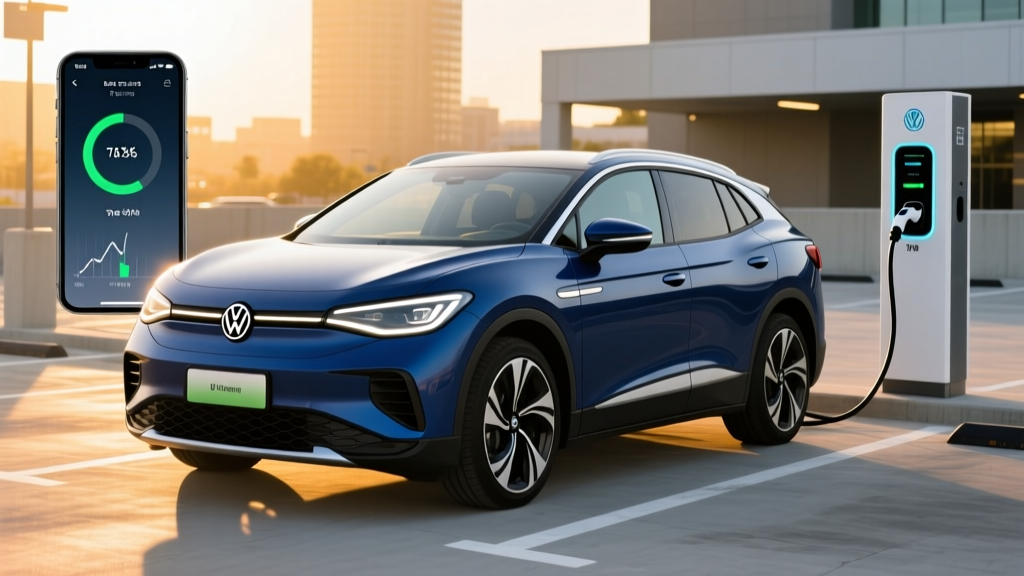
The 2026 Volkswagen ID.4 doesn't try to be the fastest, longest-range, or most tech-forward electric SUV on the market. Instead, it targets buyers who want a predictable, roomy, comfortable crossover that happens to run on electrons. With an EPA-estimated range up to 275 miles, DC fast charging that peaks at 175 kW, and a starting MSRP of $40,790 before incentives, the ID.4 occupies a pragmatic middle ground in a segment increasingly crowded by Hyundai's Ioniq 5, Tesla's Model Y, and Ford's Mustang Mach-E.
For lease shoppers specifically, the ID.4 presents an interesting calculation: Volkswagen's leasing arm has historically offered aggressive money factors and residual values that can make monthly payments competitive — sometimes significantly undercutting purchase scenarios, especially when factoring in how the §30D federal tax credit applies to leases under the commercial clean vehicle credit workaround. Let's break down every number that matters.
Range, Battery, and Real-World Efficiency
Real-World Expectation: 230–250 miles highway; 200–220 miles in freezing temperatures with cabin heat; 260+ miles city driving with regen
The 2026 ID.4 continues to use an 82 kWh usable lithium-ion battery pack (approximately 91 kWh gross capacity) with NMC (nickel-manganese-cobalt) chemistry. VW has not switched to LFP for this model year, meaning the pack prioritizes energy density over cycle-life longevity — a trade-off that matters less given the 8-year/100,000-mile battery warranty covering capacity below 70%.
| Spec | Pro (RWD) | Pro S (RWD) | Pro S Plus (AWD) |
|---|---|---|---|
| EPA Range | 275 mi | 275 mi | 263 mi |
| Combined MPGe | 107 MPGe | 107 MPGe | 102 MPGe |
| Efficiency (kWh/100 mi) | 31 kWh | 31 kWh | 33 kWh |
| Battery (usable/gross) | 82 / 91 kWh NMC | 82 / 91 kWh NMC | 82 / 91 kWh NMC |
Efficiency sits at roughly 31 kWh per 100 miles for the rear-wheel-drive trims, which translates to about 3.2 miles per kWh. That's middling in a segment where the Ioniq 5 pushes closer to 3.5 mi/kWh. On the highway at 75 mph, expect consumption to climb to 35–37 kWh/100 mi, pulling effective range down to approximately 230 miles before you'll want to locate a charger. In cold weather (below 32°F), NMC packs lose roughly 20–30% of range due to increased internal resistance and cabin heating demands — the ID.4 does include a heat pump on Pro S and above trims, which mitigates this somewhat compared to resistive heating.
For context on official figures, see the EPA's fueleconomy.gov ID.4 listing.
Charging Speed: DC Fast Charge and Home Level 2
Charging capability is where the ID.4 delivers competent but not class-leading performance. The peak DC fast-charge rate is 175 kW on the Pro S and Pro S Plus trims (the base Pro is capped at 135 kW). Volkswagen quotes a 10–80% charge time of approximately 30 minutes under ideal conditions.
Here's the nuance most spec sheets omit: the ID.4's charge curve holds above 150 kW only between roughly 15% and 35% state of charge. After 50% SoC, the rate tapers significantly — dropping below 80 kW past 70% and crawling below 40 kW above 85%. This is typical NMC behavior, but it means a 10–90% session takes closer to 45–50 minutes, not the 30-minute headline figure.
| Charging Level | Power (kW) | Miles of Range Added per Hour | Full Charge Time (10–100%) |
|---|---|---|---|
| Level 1 (120V household) | 1.4 kW | ~4 mi/hr | ~60+ hours |
| Level 2 (240V, 32A home charger) | 7.7 kW | ~25 mi/hr | ~11 hours |
| Level 2 (240V, 48A hardwired) | 11.5 kW (onboard max) | ~37 mi/hr | ~7.5 hours |
| DC Fast Charge (Pro S / Pro S Plus) | 175 kW peak | N/A | 10–80% in ~30 min |
| DC Fast Charge (Pro base) | 135 kW peak | N/A | 10–80% in ~36 min |
The ID.4 uses the CCS1 connector for DC fast charging. Volkswagen has not adopted the NACS (Tesla-style) port for the 2026 model year in North America, though adapters are available through the Electrify America and Tesla Supercharger networks with varying compatibility. The ID.4 comes with three years of complimentary Electrify America charging (30-minute sessions), which offsets road-trip fueling costs during the typical lease period.
At home, the onboard charger maxes out at 11.5 kW (48 amps on a 240V circuit). That's enough to fully replenish the 82 kWh usable pack in roughly 7.5 hours — ideal for overnight charging. Most buyers will install a Level 2 wallbox on a 60-amp dedicated circuit; expect $500–$1,200 for the charger hardware and $800–$2,500 for licensed electrician installation depending on panel proximity and local permit requirements.
Performance: Adequate Power, Comfortable Ride
The rear-wheel-drive ID.4 produces 282 horsepower and 339 lb-ft of torque from a single permanent-magnet synchronous motor on the rear axle. The 0–60 mph time clocks in at approximately 7.3 seconds — respectable for a 4,700-pound crossover, though noticeably behind the dual-motor Ioniq 5 (4.5 seconds) and Model Y Long Range (4.8 seconds).
The AWD Pro S Plus adds a front induction motor for a combined 335 horsepower and 402 lb-ft of torque, dropping the 0–60 time to roughly 5.4 seconds. The AWD system is on-demand: the front motor disengages during light-load cruising to preserve efficiency.
Ride quality is where the ID.4 earns its keep. The suspension tuning is decidedly comfort-oriented — absorbing potholes and expansion joints with a maturity that rivals vehicles costing $15,000 more. Steering is light and numb, which frustrates enthusiasts but suits the daily-commute majority. The turning circle of 31.5 feet is genuinely excellent for a compact SUV, making parking-lot maneuvers easy.
Towing capacity is rated at 2,700 pounds with the factory hitch — sufficient for a small utility trailer or a pair of dirt bikes, but not for a camper. If towing matters, the Rivian R1S or even the F-150 Lightning are the electrified answers.
Pricing, Trims, and Federal Tax Credit Eligibility
The 2026 ID.4 is offered in five trim levels. Here's the MSRP breakdown before any incentives or destination charges:
| Trim | Drivetrain | MSRP (incl. dest.) | Est. After §30D Credit |
|---|---|---|---|
| Standard Range | RWD | $40,790 | ~$33,290* |
| Pro | RWD | $44,290 | ~$36,790* |
| Pro S | RWD | $47,790 | ~$40,290* |
| Pro S Plus | AWD | $53,290 | ~$45,790* |
*Estimated after full $7,500 §30D credit. Eligibility depends on buyer income, battery component sourcing, and MSRP caps. See IRS rules below.
- MSRP Cap: SUVs must be under $80,000 — all ID.4 trims qualify ✓
- Buyer Income Cap: AGI ≤ $150,000 (single) / $300,000 (joint) / $225,000 (head of household)
- Battery Sourcing: Critical minerals and battery components must meet phased-in domestic/free-trade sourcing thresholds — VW's Chattanooga-built ID.4 has improved domestic content, but confirm current-year compliance with your dealer or tax professional
- Point-of-Sale Transfer: Eligible buyers can apply the credit as an upfront price reduction at purchase, not just a tax-time offset
- Lease Workaround: Under §45W (commercial clean vehicle credit), the leasing company — not the buyer — claims the credit. Many lessors pass this savings through as a capitalized-cost reduction, but this is not guaranteed. Confirm with VW Credit before signing.
Source: IRS.gov — Credits for New Clean Vehicles. Tax rules change; consult a tax professional.
For lease-specific pricing, Volkswagen Credit typically offers 36-month and 39-month terms. With a competitive money factor and strong residual value (historically around 52–55% for 36 months), monthly payments on a Pro S RWD can land in the $350–$450 range depending on your credit tier and any capitalized-cost reduction from the pass-through credit. Always request the full lease disclosure — money factor, residual, acquisition fee, and disposition fee — before comparing to competitors.
Interior Space, Cargo, and Daily Practicality
The ID.4's cabin dimensions are competitive with the best in the compact electric SUV segment:
- Cargo volume (behind rear seats): 30.3 cubic feet
- Cargo volume (rear seats folded): 64.2 cubic feet
- Front legroom: 41.1 inches
- Rear legroom: 37.6 inches
- Front headroom: 41.0 inches (with panoramic roof: 39.8 in)
- Rear headroom: 38.5 inches
That 30.3 cu ft cargo area behind the second row beats the Ioniq 5 (27.2 cu ft) and rivals the Model Y (30.2 cu ft). The load floor is flat, the liftgate opening is wide, and there's a modest under-floor storage compartment. Notably, the ID.4 does not have a front trunk (frunk) — the space under the hood houses power electronics and the HVAC system, a packaging decision that costs you roughly 2–3 cu ft of bonus storage compared to competitors built on dedicated EV platforms with rear-biased motor placement.
Interior material quality is solidly mid-tier: soft-touch surfaces on the dash and door uppers, hard plastics on the lower door panels and center console. The Pro S and above add synthetic leather (V-Tex) upholstery and a heated steering wheel. The panoramic fixed-glass roof on upper trims creates an airy cabin but lacks a retractable shade — a problem on hot summer days when solar heat gain becomes noticeable.
Tech, Driver Assistance, and Software
The ID.4 runs VW's ID.Software platform on a 12.9-inch touchscreen (Pro S and above) or a 10.1-inch display on lower trims. Wireless Apple CarPlay and Android Auto are standard. The interface has improved markedly since the 2021 launch — faster response times, a redesigned navigation system with EV-aware route planning, and more logical menu hierarchy. However, the touch-capacitive sliders for volume and climate remain frustrating: they're unlit (making nighttime adjustments a guess) and too easy to bump accidentally.
The IQ.DRIVE suite of driver-assistance features is standard across all trims and includes:
- Travel Assist (adaptive cruise + lane centering) — SAE Level 2
- Front Assist with automatic emergency braking and pedestrian detection
- Blind-spot monitor with rear traffic alert
- Lane Assist (lane-keeping)
- Park Assist with surround-view camera (Pro S and above)
The digital instrument cluster is a compact 5.3-inch display mounted behind the steering wheel, supplemented by an available augmented-reality head-up display that projects navigation arrows onto the windshield. The AR HUD is genuinely useful and one of the ID.4's better tech differentiators.
Warranty Coverage and Long-Term Ownership
| Coverage | Term |
|---|---|
| Basic / Bumper-to-Bumper | 4 years / 50,000 miles |
| Battery & Powertrain | 8 years / 100,000 miles |
| Battery Capacity Guarantee | ≥ 70% of original capacity within 8 yr / 100,000 mi |
| Corrosion Perforation | 7 years / 100,000 miles |
| Roadside Assistance | 3 years / 36,000 miles |
The 8-year/100,000-mile battery warranty with a 70% capacity retention threshold is industry-standard — matching Hyundai, Kia, Ford, and Tesla. For lease holders, the battery warranty extends well beyond a typical 36-month lease term, meaning degradation risk falls squarely on the lessor, not you. This is one of the underappreciated advantages of leasing an EV: you return the vehicle before the battery enters the higher-degradation phase of its lifecycle (typically years 6–10).
NMC battery degradation data from real-world ID.4 fleets and owner reports suggests roughly 3–5% capacity loss in the first year (as the battery stabilizes), followed by approximately 1.5–2.5% per year thereafter. At year 8, most ID.4s are projected to retain 82–87% of original capacity — comfortably above the warranty threshold.
Pros, Cons, and Who Should Lease the ID.4
✓ Pros
- Comfortable, quiet ride quality that punches above its price
- Spacious cabin with 30.3 cu ft cargo and generous rear legroom
- Competitive pricing — starts under $41k before incentives
- 3 years of free Electrify America charging included
- Tight turning circle (31.5 ft) for easy urban maneuvering
- Built in Chattanooga, TN — strong domestic content for §30D eligibility
- Heat pump standard on Pro S and above (better cold-weather range)
✗ Cons
- DC fast charging at 175 kW trails class leaders (Ioniq 5 at 240+ kW)
- CCS1 port — no native NACS; Supercharger access requires adapter
- Infotainment touch-sliders are unlit and imprecise
- No front trunk (frunk) — lost storage opportunity
- AWD acceleration (5.4 sec 0–60) lags dual-motor rivals
- Panoramic glass roof lacks a retractable shade
- Driver-assist is capable but not class-leading (no hands-off highway mode)
Who Should Lease the ID.4?
Ideal for: Families and commuters who want a comfortable, no-surprises electric crossover for daily driving and occasional road trips. The ID.4 is the EV equivalent of a Honda CR-V — not exciting, but competent, roomy, and easy to live with. Leasing is especially smart if you want to avoid long-term battery degradation risk and plan to upgrade in 3 years.
Look elsewhere if: You prioritize fast charging for frequent long-distance travel (Ioniq 5 or Model Y recharge faster), want hands-off highway driving (GM Super Cruise or Ford BlueCruise), or need maximum cargo flexibility with a frunk (F-150 Lightning, Rivian R1S).
Frequently Asked Questions
What is the real-world range of the 2026 VW ID.4?
The EPA rates the RWD ID.4 at 275 miles and the AWD at 263 miles. In real-world highway driving at 70–75 mph, expect 230–250 miles. In freezing temperatures with cabin heat, range can drop to 200–220 miles on RWD trims without a heat pump, or 220–240 miles on Pro S and above with the standard heat pump.
How fast does the ID.4 charge at home and on the road?
At home on a 240V Level 2 charger, the ID.4 accepts up to 11.5 kW, adding about 37 miles of range per hour — a full charge in roughly 7.5 hours. On DC fast chargers, the Pro S and Pro S Plus peak at 175 kW, reaching 10–80% in approximately 30 minutes under ideal conditions. The base Pro peaks at 135 kW (10–80% in ~36 minutes).
Does the 2026 VW ID.4 qualify for the $7,500 federal tax credit?
All ID.4 trims fall under the $80,000 MSRP cap for SUVs, and VW's Chattanooga assembly gives the vehicle strong domestic battery-sourcing content. However, eligibility also depends on your adjusted gross income (≤ $150,000 single / ≤ $300,000 joint) and the current-year critical-mineral sourcing thresholds. For leases, the lessor claims the commercial credit (§45W) and may pass savings through as a cap-cost reduction — confirm with VW Credit. Always verify with a tax professional and the IRS clean vehicle credit page.
Is the ID.4 worth leasing versus the Hyundai Ioniq 5 or Tesla Model Y?
It depends on your priorities. The Ioniq 5 charges faster (240 kW peak, 10–80% in ~18 minutes) and accelerates quicker but has less cargo space (27.2 cu ft). The Model Y offers the longest range (~310 mi) and Supercharger network access but has a firmer ride and polarizing interior minimalism. The ID.4 wins on ride comfort, turning radius, and value pricing. If you drive mostly in the city and suburbs and want the smoothest ride, the ID.4 is the strongest pick. If road-trip charging speed is paramount, the Ioniq 5 is the better tool.
What happens to the ID.4 battery after the lease ends?
You return the vehicle. Battery degradation during a typical 36-month lease is minimal (roughly 5–8% capacity loss based on current NMC data), well within VW's 70% warranty threshold. You bear no risk for long-term battery replacement costs, which is a key financial advantage of leasing over purchasing an EV.
Can I charge the ID.4 at Tesla Superchargers?
The 2026 ID.4 uses a CCS1 connector and does not natively support NACS (Tesla's connector). However, CCS-to-NACS adapters are available, and VW has been expanding Supercharger compatibility through adapter programs. Check VW's official charging compatibility guide before relying on Supercharger access for a specific trip. Electrify America remains the ID.4's primary fast-charging partner.