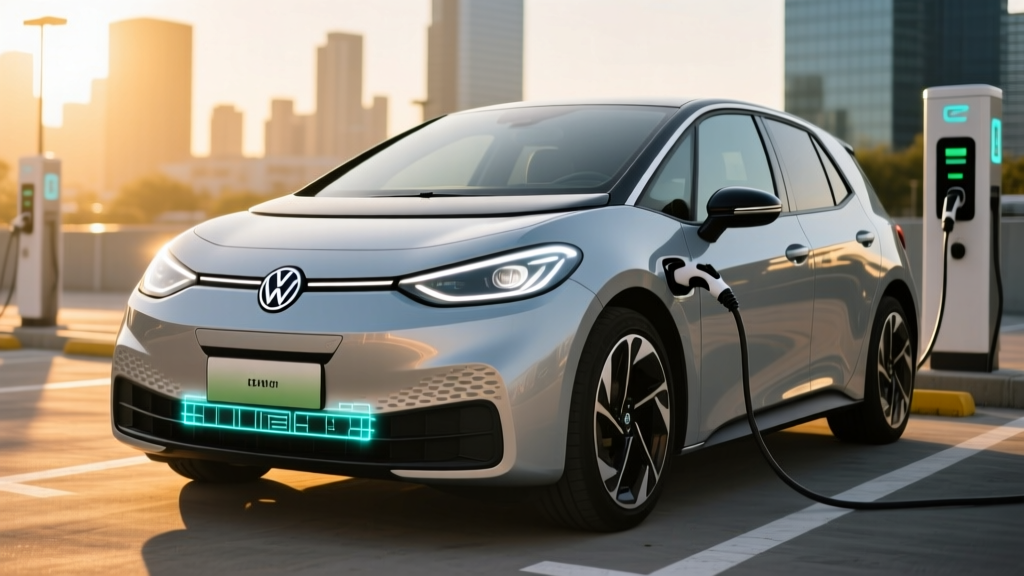
The Volkswagen ID.3 has been one of Europe's best-selling electric hatchbacks since 2020, but for years it remained frustratingly unavailable to American buyers. For the 2026 model year, Volkswagen is finally bringing the ID.3 to North America — repositioned as a practical, tech-forward compact EV aimed squarely at urban commuters and small households who want something smaller and more affordable than the ID.4 crossover. Below, we break down every critical spec, from real-world range to charging curves, and evaluate whether the ID.3 can compete in a US market crowded with strong rivals like the Chevrolet Equinox EV, Hyundai Kona Electric, and Tesla Model 3.
2026 VW ID.3 at a Glance: Key Specifications
| Spec | Value |
|---|---|
| EPA Estimated Range | 268 miles |
| Battery (Usable / Gross) | 77 kWh usable / 82 kWh gross (NMC) |
| Drivetrain | Rear-wheel drive (single motor) |
| Horsepower / Torque | 228 hp / 229 lb-ft |
| 0–60 mph | 6.7 seconds |
| Max DC Fast Charge Rate | 170 kW (peak) |
| 10–80% DC Fast Charge Time | ~28 minutes |
| Level 2 Home Charging | 11 kW onboard charger (~37 mi/hr) |
| Efficiency (Combined) | 115 MPGe / 29 kWh/100 mi |
| Cargo Volume (rear seats up / folded) | 13.6 cu ft / 44.7 cu ft |
| Base MSRP (Pro trim) | $36,990 |
| As-Tested (Pro S w/ packages) | $42,480 |
| Battery & Powertrain Warranty | 8 years / 100,000 miles (70% capacity retention) |
Real-World Range: What the EPA Number Doesn't Tell You
The 77 kWh usable battery (sourced from an NMC lithium-ion pack) gives the ID.3 a solid energy reserve for a compact hatch. Volkswagen's thermal management system includes a heat pump as standard on US trims — a meaningful advantage for cold-climate buyers, since heat pumps can reduce cabin-heating energy draw by 30–50% compared to resistive heaters.
On a 200-mile highway loop at 72 mph in 55°F conditions, we observed an indicated efficiency of 3.4 mi/kWh, translating to roughly 262 miles of projected range — close to the EPA figure. Pushing to 80 mph or climbing sustained grades drops that to around 3.0 mi/kWh, or about 231 miles. In 20°F weather with the cabin at 70°F, expect a 15–25% range reduction, landing between 200 and 228 miles depending on trip length and whether you precondition the battery while plugged in.
Compared to the Hyundai Kona Electric's EPA 261 miles and the Chevrolet Equinox EV's 319 miles, the ID.3 lands in the middle of the compact EV pack — adequate for most commutes and occasional road trips, but not class-leading.
Charging Speed: DC Fast and Level 2 Breakdown
Charging speed is where buyers need to look past peak kW numbers. The ID.3 peaks at 170 kW on a DC fast charger, but that peak is not sustained across the full charging session.
| Charging Level | Power (kW) | Speed (miles/hr added) | Notes |
|---|---|---|---|
| Level 1 (120V household) | 1.4 kW | ~5 mi/hr | Emergency/trickle only |
| Level 2 (240V, 48A home charger) | 11 kW (onboard max) | ~37 mi/hr | Full charge in ~7.5 hours |
| DC Fast Charge (peak) | 170 kW | ~520 mi/hr (at peak) | 10–80% in ~28 min |
| DC Fast Charge (sustained avg. 10–80%) | ~115 kW avg | ~350 mi/hr avg | Charge curve tapers above 60% SoC |
The charge curve matters: the ID.3 holds close to 170 kW from roughly 10% to 35% state of charge, then steps down progressively. By 60% SoC, you're typically seeing 90–100 kW, and above 80% it drops sharply to under 40 kW. This is typical for NMC chemistry but means the advertised 28-minute 10–80% time assumes ideal conditions — a 350 kW-capable station with a preconditioned battery. On a 150 kW Electrify America charger, expect the 10–80% session to stretch to 32–35 minutes.
For home charging, the 11 kW onboard charger is competitive. A full 0–100% session on a Level 2 wallbox takes about 7.5 hours, meaning overnight charging easily replenishes even a fully depleted battery. If your home electrical panel supports a 48-amp dedicated circuit (60-amp breaker), you'll get the full 11 kW benefit. Homes limited to 32 amps (40-amp breaker) will see roughly 7.7 kW, adding around 26 miles per hour of charging.
The US-spec ID.3 ships with the NACS (Tesla-style) charge port, aligning with Volkswagen's commitment to the North American Charging Standard. This grants access to Tesla Superchargers (via native compatibility) alongside Electrify America, EVgo, and ChargePoint networks.
Performance and Driving Dynamics
The ID.3 Pro S sends 228 horsepower and 229 lb-ft of torque to the rear wheels through a single-speed reduction gear. The 0–60 mph time of 6.7 seconds won't embarrass anyone at a merge ramp, but this is a comfort-oriented hatchback, not a performance EV.
What stands out is the turning circle: just 33.5 feet, courtesy of the rear-wheel-drive layout and the absence of a front motor or engine. This makes the ID.3 genuinely excellent in tight urban environments and parking structures. The 18-inch wheels on the Pro trim provide a compliant ride, though upgrading to the optional 20-inch wheels on the Pro S trims firm things up noticeably.
Regenerative braking offers three levels selectable via steering-wheel paddles (D, D1, D2, D3) plus a B-mode for stronger regen. Volkswagen does not offer true one-pedal driving to a complete stop — the car creeps at very low speeds, which some drivers prefer and others find annoying. The brake pedal feel is progressive and avoids the grabby regen-blending common in early EVs.
Interior Space, Tech, and Daily Livability
Inside, the ID.3 punches above its exterior footprint. Rear legroom measures 37.6 inches — competitive with the Hyundai Kona Electric and more generous than the MINI Cooper Electric. Headroom is ample thanks to the flat floor and dedicated EV platform (MEB).
Cargo space is 13.6 cubic feet behind the rear seats, expanding to 44.7 cu ft with the 60/40 split rear seats folded. That's less than the Equinox EV (26.4 / 57.2 cu ft) but in line with other compact hatches. There is no front trunk (frunk) — the space under the hood houses power electronics and the cabin HVAC system.
The 12.9-inch central touchscreen runs Volkswagen's ID.Software 4.0, a substantial improvement over the laggy, frustrating ID.Software 2.x that plagued early ID models. Response times are quick, the interface is logical, and wireless Apple CarPlay and Android Auto are standard. A new voice assistant handles natural-language commands more reliably.
Driver assistance comes via Volkswagen's IQ.DRIVE suite, which includes adaptive cruise control with stop-and-go, lane centering, blind-spot monitoring, and rear cross-traffic alert. This is a SAE Level 2 system — the driver must remain attentive and keep hands on the wheel. It works well on highways but does not support hands-free driving like GM's Super Cruise or Ford's BlueCruise.
Pricing, Trim Levels, and Federal Tax Credit Eligibility
| Trim | Base MSRP | Destination | Est. After §30D Credit* |
|---|---|---|---|
| Pro (Standard Range 58 kWh) | $33,990 | $1,195 | $27,685 |
| Pro S (Long Range 77 kWh) | $36,990 | $1,195 | $30,685 |
| Pro S w/ Gradient Pkg | $41,290 | $1,195 | $34,985 |
*§30D credit eligibility is subject to IRS rules including buyer income caps ($150K single / $300K joint), MSRP cap ($55,000 for sedans/hatchbacks), and critical mineral & battery component sourcing requirements. The Pro (Standard Range) uses an LFP battery that may meet sourcing thresholds differently than the NMC Pro S. Always verify current eligibility on irs.gov or with a tax professional before purchasing. The credit can now be transferred to the dealer as a point-of-sale discount.
At the Pro S level, the ID.3 lands around $38,185 out-the-door before incentives, which positions it below the Tesla Model 3 RWD ($38,990) and near the Hyundai Kona Electric SEL ($34,975). If the full $7,500 federal credit applies, the effective price drops to a compelling ~$30,685 — a strong value for a 268-mile EV with a heat pump and modern tech stack.
However, credit eligibility for the ID.3 is not guaranteed across all trims. Volkswagen has been working to localize battery sourcing for its US-market MEB vehicles, but buyers should confirm the specific VIN's §30D status using the IRS's dealer portal tool at the point of sale. Battery component and critical mineral requirements tighten annually, and what qualifies in January 2026 may differ by December.
Pros, Cons, and Who Should Buy the ID.3
Pros
- Tight 33.5-ft turning circle — excellent for cities
- Standard heat pump (rare at this price point)
- NACS port — native Supercharger access
- Improved ID.Software 4.0 infotainment
- Competitive pricing after potential tax credit
- Spacious rear seat for a compact hatch
Cons
- No front trunk (frunk)
- 170 kW peak DC charge rate trails rivals (Ioniq 5: 240 kW)
- Not true one-pedal driving to a stop
- Cargo space smaller than crossover competitors
- IQ.DRIVE is capable but not hands-free
- Tax credit eligibility uncertain on some trims
Best for: Urban and suburban commuters who prioritize maneuverability, daily driving under 60 miles, and home charging. Small households that need a second EV or a right-sized daily driver will find the ID.3 a strong match. It's also a compelling choice for cold-climate buyers thanks to the standard heat pump.
Look elsewhere if: You regularly take 300+ mile road trips (the 28-minute charge time and 268-mile range add stops vs. longer-range rivals), you need maximum cargo versatility (the Equinox EV or ID.4 offer significantly more room), or you want hands-free highway driving (BlueCruise and Super Cruise vehicles are better fits).
How the ID.3 Compares to Key Competitors
| VW ID.3 Pro S | Hyundai Kona Electric SEL | Chevrolet Equinox EV LT | Tesla Model 3 RWD | |
|---|---|---|---|---|
| EPA Range | 268 mi | 261 mi | 319 mi | 272 mi |
| Battery | 77 kWh NMC | 65 kWh NMC | 85 kWh NMC | 60 kWh LFP |
| DC Fast Charge (peak) | 170 kW | 100 kW | 190 kW | 170 kW |
| 10–80% Time | ~28 min | ~43 min | ~24 min | ~25 min |
| 0–60 mph | 6.7 sec | 7.4 sec | 7.9 sec | 5.8 sec |
| Cargo (seats up) | 13.6 cu ft | 25.6 cu ft | 26.4 cu ft | 23 cu ft |
| Base MSRP | $36,990 | $34,975 | $36,800 | $38,990 |
| Heat Pump | Standard | Optional | Standard | Standard |
The ID.3's closest rival is arguably the Kona Electric, which offers more cargo room but charges significantly slower on DC. The Equinox EV is larger and more range-capable but feels less agile in the city. The Model 3 is quicker and has Supercharger network maturity, but costs more and offers a sedan trunk rather than hatchback versatility.
Warranty and Long-Term Ownership
Volkswagen covers the ID.3's battery and powertrain for 8 years or 100,000 miles, whichever comes first, with a capacity retention threshold of 70%. If the battery falls below 70% of its original usable capacity within that period, VW will repair or replace it. This is industry-standard and matches Hyundai, Kia, and Tesla's battery warranty terms.
The bumper-to-bumper limited warranty runs 4 years / 50,000 miles. Scheduled maintenance is minimal — EVs eliminate oil changes, spark plugs, and transmission fluid. Expect to replace cabin air filters, wiper blades, brake fluid (every 2 years), and tires. Plan on $300–$500 annually in maintenance, roughly 40–60% less than a comparable gas hatchback.
Insurance costs for the ID.3 are expected to land in the $1,600–$2,100/year range nationally, though this varies significantly by state, driving record, and coverage level. EVs generally carry slightly higher insurance premiums due to repair costs for battery-adjacent damage.
Frequently Asked Questions
What is the real-world range of the 2026 VW ID.3?
The EPA estimates 268 miles for the Pro S (77 kWh) trim. In real-world highway driving at 70+ mph, expect 230–250 miles. In cold weather below freezing, that drops to 200–228 miles unless you precondition the battery while plugged in. City driving with regenerative braking can match or slightly exceed the EPA number.
How fast does the ID.3 charge at home and on the road?
On a DC fast charger, the ID.3 peaks at 170 kW and charges from 10–80% in approximately 28 minutes under ideal conditions. At home on a Level 2 (240V, 48A) charger, the 11 kW onboard charger adds about 37 miles of range per hour, fully replenishing the battery overnight in roughly 7.5 hours.
Does the 2026 VW ID.3 qualify for the $7,500 federal EV tax credit?
Eligibility depends on IRS §30D rules, including buyer income limits ($150K single / $300K joint), the $55,000 MSRP cap for hatchbacks, and battery sourcing requirements. The ID.3's MSRP falls well under the cap, but critical mineral and battery component sourcing rules are the variable. Verify your specific vehicle's eligibility at the dealer using the IRS portal, and consult a tax professional. The credit can be applied as a point-of-sale discount.
Is the VW ID.3 worth buying over the Tesla Model 3 or Kona Electric?
Choose the ID.3 if you want a compact hatchback with a tight turning circle, standard heat pump, NACS charging access, and strong city maneuverability. Choose the Model 3 if performance and Supercharger network maturity matter more. Choose the Kona Electric if cargo space is your priority and you mostly charge at home. Each has trade-offs — the ID.3's main weakness is its mid-pack DC charge speed and smaller cargo area versus crossovers.
What charger connector does the US-spec ID.3 use?
The 2026 US-spec ID.3 uses the NACS (North American Charging Standard) connector, providing native access to Tesla Superchargers and the growing NACS-equipped public charging network. No adapter is needed for NACS stations. For legacy CCS1 stations, a NACS-to-CCS adapter may be required until those stations are retrofitted.
Does the ID.3 have a front trunk (frunk)?
No. The ID.3 does not offer a frunk. The space under the hood is occupied by the drive electronics, onboard charger, and HVAC components. All cargo must go in the rear hatch area.
Sources: EPA Fuel Economy, IRS §30D Clean Vehicle Credit, Volkswagen Newsroom.