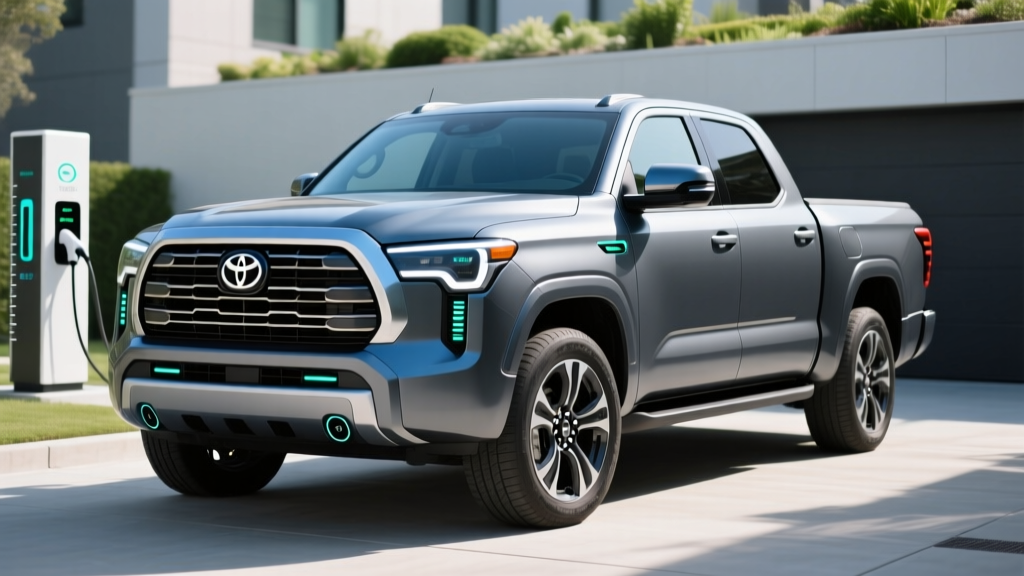
For truck buyers researching wheel upgrades, tire swaps, or aftermarket accessories, the search for the 2008 Toyota Tundra bolt pattern often marks the beginning of a long ownership journey. That same generation of Tundra owners is now looking ahead to the electrified era. Toyota has officially confirmed a battery-electric Tundra pickup built on its next-generation EV platform, targeting a late-2026 on-sale window. While the truck is not yet available for purchase, Toyota has released preliminary specifications that let us examine what future Tundra EV owners — and those carrying over wheel and accessory knowledge from earlier generations — can expect.
This profile covers everything confirmed so far: battery chemistry and capacity, EPA-estimated and real-world range projections, DC fast-charge performance, towing and payload, pricing with federal tax credit context, and how the Tundra EV's wheel hub specifications relate to legacy Tundra bolt patterns for aftermarket wheel compatibility.
Preliminary Specifications at a Glance
| Specification | Value |
|---|---|
| Drivetrain | Dual-motor AWD (e-Axle front + rear) |
| Battery Chemistry | NMC (nickel manganese cobalt), large-format prismatic cells |
| Battery Capacity (estimated usable) | ~120 kWh (Toyota has not published final figure) |
| EPA Range (target) | ~300–340 miles (estimated, not yet EPA-certified) |
| Peak DC Fast-Charge Rate | ~250 kW (target, 800V architecture) |
| 10–80% DC Charge Time (target) | ~25–30 minutes (estimated) |
| Level 2 Home Charging | 11.5 kW onboard charger (~30 mi/hr) |
| 0–60 mph | ~4.5 seconds (estimated, dual-motor) |
| Horsepower (target) | ~550 hp combined |
| Towing Capacity (target) | ~10,000 lbs (with max tow package) |
| Payload (target) | ~1,600 lbs |
| Bed Length Options | 5.5 ft and 6.5 ft |
| Base MSRP (estimated) | $58,000–$62,000 (SR5 equivalent) |
| Federal Tax Credit (§30D) | Up to $7,500, subject to MSRP cap, income limits, and battery-sourcing rules |
| Battery/Powertrain Warranty | 8 years / 100,000 miles (Toyota standard EV coverage) |
Range and Efficiency: What to Expect in the Real World
Toyota has targeted a maximum range of approximately 300–340 miles for the Tundra EV, likely achieved in the extended-range battery configuration. This figure is not yet EPA-certified, so treat it as a preliminary estimate. For a full-size electric pickup with a ~120 kWh battery and the aerodynamic profile of a crew-cab truck, this target is realistic but not class-leading.
Efficiency for a truck of this size and weight will likely land in the 48–55 MPGe range (combined), or roughly 55–65 kWh per 100 miles. For comparison, the Ford F-150 Lightning extended-range achieves 70 MPGe combined with its 131 kWh battery and 320-mile EPA rating. The Rivian R1T Dual-Motor with the Max Pack sits at 73 MPGe and 410 miles. Toyota will need to demonstrate competitive efficiency to win over cross-shopping truck buyers.
Charging Speed and Infrastructure
The Tundra EV is expected to ride on Toyota's next-generation platform with an 800-volt electrical architecture, enabling peak DC fast-charge rates of approximately 250 kW. This is critical for a truck with a large battery — charging a 120 kWh pack at only 150 kW would result in painfully long stops on road trips.
| Charging Level | Power | Estimated Speed |
|---|---|---|
| Level 1 (120V household) | 1.4 kW | ~3–4 miles per hour |
| Level 2 (240V, 48A) | 11.5 kW | ~30 miles per hour |
| DC Fast Charge (peak) | ~250 kW | 10–80% in ~25–30 min |
| DC Fast Charge (sustained avg) | ~150–180 kW | Average rate during 10–80% session |
A key reality for all large-battery EVs: the peak kW figure is just that — a peak. Charge curves taper significantly above 80% State of Charge to protect battery longevity. With a ~120 kWh pack, you can expect the Tundra EV to sustain its highest charge rates between roughly 15% and 55% SoC, then progressively taper. A full 10–80% session will likely average 150–180 kW even if the peak touches 250 kW.
For home charging, the 11.5 kW onboard charger means a full 0–100% charge on a Level 2 wall connector will take approximately 10–11 hours — feasible for overnight charging but worth noting if your daily driving depletes more than half the battery. Most owners will charge between 20% and 80% daily, which takes roughly 6–7 hours on Level 2.
Bolt Pattern and Wheel Compatibility: From the 2008 Tundra to the EV Era
One of the most common questions from long-time Tundra owners transitioning to the electric generation involves wheel and hub compatibility. The 2008 Toyota Tundra bolt pattern is 5×150 mm (5 lug bolts on a 150 mm circle), with a center bore of 110.1 mm and M14×1.5 lug nuts. This specification carried through the entire second-generation Tundra run (2007–2021).
For the 2026 Tundra EV, Toyota has not yet published final wheel hub specifications. However, the current third-generation Tundra (2022–present, ICE and i-FORCE MAX hybrid) retained the 5×150 bolt pattern. It is highly probable — though not confirmed — that the Tundra EV will maintain 5×150 to preserve aftermarket wheel compatibility and simplify manufacturing commonality across the Tundra lineup.
| Generation | Years | Bolt Pattern | Center Bore | Lug Spec |
|---|---|---|---|---|
| 1st Gen | 2000–2006 | 6×139.7 mm (6-lug) | 106.1 mm | M12×1.25 |
| 2nd Gen (incl. 2008) | 2007–2021 | 5×150 mm | 110.1 mm | M14×1.5 |
| 3rd Gen (ICE/Hybrid) | 2022–present | 5×150 mm | 110.1 mm | M14×1.5 |
| Tundra EV (estimated) | 2026+ | Likely 5×150 mm | TBD | TBD |
If you own a set of aftermarket wheels fitted to a 2008–2021 Tundra with the 5×150 pattern, there is a reasonable chance they will physically bolt on to the Tundra EV — but offset, load rating, and brake caliper clearance must all be verified before fitment. Electric trucks are significantly heavier than their ICE counterparts (expect the Tundra EV to weigh 6,500–7,000 lbs), so any wheel used must meet the higher gross axle weight rating. Always confirm with the wheel manufacturer and Toyota's published specifications before purchasing.
Performance, Towing, and Drivetrain
Toyota has confirmed the Tundra EV will use a dual-motor all-wheel-drive layout with independent e-Axles front and rear. This configuration eliminates the mechanical driveshaft, freeing up space for a flat floor and potentially a front trunk (frunk). Target output is approximately 550 combined horsepower, which would deliver a 0–60 mph time in the 4.5-second range — quick for a full-size truck but not the fastest in the electric pickup segment.
Towing is where truck buyers will scrutinize the Tundra EV most closely. Toyota is targeting a maximum towing capacity of approximately 10,000 pounds with the appropriate tow package, competitive with the F-150 Lightning (10,000 lbs max) and behind the Rivian R1T (11,000 lbs) and Chevrolet Silverado EV (12,500 lbs with Max Tow).
The critical caveat for EV towing remains range. Pulling a 7,000-lb travel trailer at highway speed will likely cut the Tundra EV's range to 150–170 miles. Toyota is expected to offer integrated trailer brake control, a trailer backup camera system, and potentially a tow-specific drive mode that optimizes regen and power delivery. If Toyota integrates NACS (Tesla Supercharger) compatibility — which appears likely given the industry-wide adoption of the connector — the Tundra EV would gain access to the most reliable DC fast-charging network in North America, partially mitigating the range-under-tow concern.
Pricing, Trim Levels, and Federal Tax Credit Eligibility
Toyota has not announced final pricing, but based on the current Tundra lineup and competitive positioning against the F-150 Lightning and Silverado EV, we estimate the following trim structure:
| Trim | Estimated MSRP | Key Features |
|---|---|---|
| SR5 | $58,000–$62,000 | Standard battery (~100 kWh), cloth interior, 8" infotainment |
| Limited | $68,000–$72,000 | Extended battery (~120 kWh), leatherette, 14" touchscreen, tow package |
| Platinum | $78,000–$82,000 | Extended battery, panoramic roof, premium audio, air suspension |
| TRD Pro | $85,000–$90,000 | Off-road suspension, skid plates, all-terrain tires, locking rear diff |
Federal tax credit eligibility under IRS §30D depends on several criteria that must all be met:
- MSRP Cap: Pickup trucks must have an MSRP at or below $80,000 to qualify. This means the SR5, Limited, and potentially Platinum trims could qualify, while the TRD Pro may exceed the cap depending on final pricing and options.
- Buyer Income Limits: Modified adjusted gross income must not exceed $150,000 (single), $225,000 (head of household), or $300,000 (joint filers).
- Battery Sourcing: The critical minerals and battery component requirements phase in annually. For 2026, a significant percentage of battery components must be manufactured or assembled in North America, and critical minerals must be sourced from the U.S. or free-trade-agreement partners. Toyota's battery supply chain for the Tundra EV has not been fully disclosed.
- Point-of-Sale Transfer: Eligible buyers can transfer the credit to the dealer at purchase, reducing the purchase price directly rather than waiting for a tax refund.
Consult a tax professional before relying on credit eligibility, as rules are subject to change and individual circumstances vary.
Tech, Interior, and Driver Assistance
The Tundra EV is expected to inherit and expand upon the third-generation Tundra's interior architecture. Expect Toyota's latest infotainment system with a standard 8-inch or available 14-inch touchscreen, wireless Apple CarPlay and Android Auto, native navigation with real-time charge-station routing, and over-the-air update capability.
On the driver-assistance front, Toyota Safety Sense 3.0 will be standard, including:
- Pre-Collision System with pedestrian detection
- Lane Departure Alert with Steering Assist
- Full-Speed Range Dynamic Radar Cruise Control
- Lane Tracing Assist
- Road Sign Assist
- Proactive Driving Assist (gentle braking/steering in common scenarios)
Notable expected drawbacks include the absence of a hands-free highway driving system comparable to Ford BlueCruise or GM Super Cruise. Toyota has been conservative in this space, and while a hands-free system may arrive via OTA update or a future model year, it is not confirmed for launch. The large battery also means significant vehicle weight, which may affect tire wear rates and braking distances compared to ICE Tundras.
Who Should Consider the Tundra EV — and Who Should Wait
- You're a current Toyota truck loyalist who wants to stay in the brand and values Toyota's reliability reputation and dealer network
- You need moderate towing (under 7,000 lbs for most trips) with daily commuting as the primary use case
- You have home Level 2 charging and your daily driving stays under 200 miles
- You want a full-size crew-cab truck with a usable bed and don't need class-leading range
- You need maximum range now — the Rivian R1T Max Pack (410 mi) and Chevy Silverado EV 4WT (492 mi) already deliver more
- You frequently tow heavy trailers over long distances — every EV truck struggles here, but established models have real-world towing data you can plan around
- You want hands-free highway driving today — Ford F-150 Lightning with BlueCruise is available now
- The Tundra EV's final pricing exceeds your budget or fails to qualify for the §30D credit due to battery sourcing
Frequently Asked Questions
What is the 2008 Toyota Tundra bolt pattern, and will it fit the new Tundra EV?
The 2008 Toyota Tundra uses a 5×150 mm bolt pattern with a 110.1 mm center bore and M14×1.5 lug nuts. Toyota has not confirmed the Tundra EV's bolt pattern, but the current third-generation Tundra (2022+) retains 5×150, making it likely the EV will as well. Always verify final specifications and ensure any wheel meets the EV's higher load rating before fitment.
What is the real-world range of the Tundra EV?
Toyota targets approximately 300–340 miles EPA, but this is not yet certified. Real-world highway driving will likely yield 260–280 miles in moderate conditions and 220–250 miles in cold weather. Towing will reduce range to approximately 150–170 miles depending on trailer weight and speed.
How fast does the Tundra EV charge?
The target peak DC fast-charge rate is approximately 250 kW on an 800V architecture, with a 10–80% session estimated at 25–30 minutes. Sustained average charge rate during a typical session will likely be 150–180 kW due to charge-curve taper above 55% SoC. Home Level 2 charging at 11.5 kW adds approximately 30 miles per hour.
Does the Tundra EV qualify for the federal EV tax credit?
Potentially. Under current IRS §30D rules, pickup trucks must have an MSRP at or below $80,000, and the buyer must meet income caps ($150K single / $300K joint). Battery critical-mineral and component sourcing requirements also apply. Toyota has not disclosed full supply-chain details, so credit eligibility cannot be confirmed until closer to launch. Always verify with a tax professional.
Is the Tundra EV worth waiting for versus buying an F-150 Lightning or Rivian R1T now?
If you need a truck today and have specific range, towing, or technology requirements, the F-150 Lightning and Rivian R1T are proven products with established real-world data. The Tundra EV makes sense to wait for if you prioritize Toyota's reliability track record, dealer network, and potential long-term resale value — but you will be waiting until late 2026 or 2027 for deliveries, and final specs may shift before launch.
What is the battery warranty on the Tundra EV?
Toyota's standard EV battery warranty covers 8 years or 100,000 miles against defects and excessive capacity loss (typically defined as dropping below 70% of original capacity). The powertrain is covered under the same 8-year/100,000-mile term. Final warranty terms for the Tundra EV have not been published.