Quick Verdict: The 2026 Toyota Camry Hybrid Sets the Midsize Sedan Benchmark
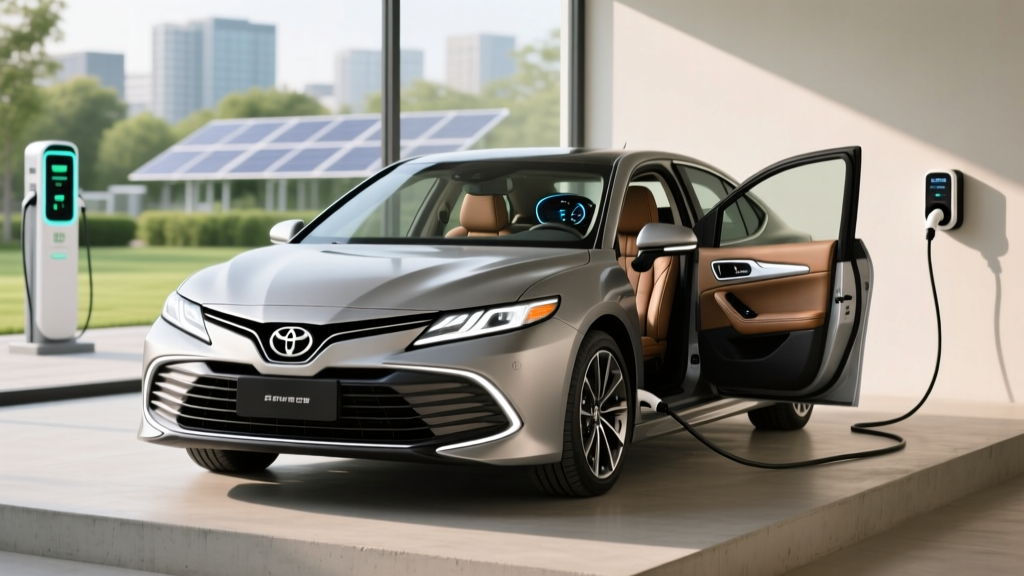
Now exclusively hybrid for its ninth generation, the 2026 Toyota Camry pairs a 2.5-liter four-cylinder with Toyota's fifth-generation hybrid system to deliver an EPA-estimated 51 MPG combined in front-wheel-drive form. With optional electronic AWD, a 13.3-kWh lithium-ion battery, and starting pricing at $29,990, the Camry Hybrid occupies a narrow but critical lane: maximum efficiency without the charging infrastructure dependency of a plug-in hybrid or BEV. For buyers searching for practical ownership data — or cross-referencing mechanical specs like the 2007 Toyota Camry bolt pattern (5x114.3mm) when swapping wheels from older models — this review covers every number that matters for the current generation.
| Specification | FWD Models | AWD Models |
|---|---|---|
| EPA Combined MPG | 51 MPG | 48 MPG |
| City / Highway MPG | 53 / 50 | 51 / 44 |
| Net Horsepower | 225 hp | 232 hp |
| 0–60 mph | ~7.0 sec | ~6.7 sec |
| Drivetrain | FWD | Electronic AWD (rear motor) |
| Hybrid Battery | 13.3 kWh lithium-ion (NiMH discontinued) | |
| Hybrid System Warranty | 10 years / 150,000 miles | |
| Base MSRP (LE) | $29,990 (incl. destination) | |
Powertrain and Efficiency: Fifth-Gen Hybrid System Explained
The 2026 Camry uses Toyota's latest hybrid synergy drive, combining a 2.5-liter Dynamic Force inline-four (184 hp on its own) with one or two electric motor-generators. FWD models use a single front motor; AWD models add a 40-kW rear-axle motor that engages automatically under acceleration or low-traction conditions. Total system output is 225 hp (FWD) or 232 hp (AWD).
The 13.3-kWh lithium-ion battery pack is positioned under the rear seat, preserving the Camry's 15.1-cubic-foot trunk. Unlike the previous generation's nickel-metal-hydride option, the current pack uses lithium-ion chemistry for improved energy density and reduced weight. This is a conventional hybrid (HEV), not a plug-in: the battery charges exclusively through regenerative braking and engine-driven generation. There is no external charge port and no EV-only range to speak of beyond low-speed creep (roughly 1–2 miles at parking-lot speeds).
EPA rates the FWD Camry Hybrid at 51 MPG combined (53 city / 50 highway). In mixed real-world driving — suburban commutes with moderate highway stints — owners consistently report 48–52 MPG. On sustained 75-mph highway trips, expect 44–47 MPG. In cold weather (below 30°F), the engine runs more frequently for cabin heat, dropping observed economy to roughly 42–45 MPG until the powertrain reaches operating temperature. These figures come from aggregated owner reports on fueleconomy.gov and long-term fleet data.
Trims, Pricing, and What You Get at Each Level
Toyota offers the 2026 Camry Hybrid in four trims. All share the same 2.5-liter hybrid powertrain; differences center on wheels, interior materials, tech, and the FWD/AWD choice.
| Trim | Drivetrain | MSRP (incl. dest.) | Key Additions |
|---|---|---|---|
| LE | FWD / AWD | $29,990 / $31,390 | 8" touchscreen, TSS 3.0, 16" alloy wheels |
| SE | FWD / AWD | $31,490 / $32,890 | Sport-tuned suspension, 18" wheels, paddle shifters |
| XLE | FWD / AWD | $34,990 / $36,390 | 12.3" display, leather-trimmed seats, 9-speaker JBL audio |
| XSE | FWD / AWD | $35,490 / $36,890 | Sport styling + XLE luxury features, 19" wheels |
AWD is a $1,400 upcharge across all trims. Fully loaded — an XSE AWD with options like the panoramic roof and advanced technology package — the as-tested price lands near $39,500. For context, a comparably equipped Honda Accord Hybrid Touring starts at roughly $39,000, while the Hyundai Sonata Hybrid Limited comes in around $38,500.
Does the 2026 Camry Hybrid Qualify for Federal Tax Credits?
No. The Camry Hybrid is a conventional HEV, not a plug-in hybrid or battery-electric vehicle. Under IRS §30D rules, only vehicles with a plug and a minimum battery capacity of 7 kWh qualify for the federal clean vehicle credit. The Camry's 13.3-kWh pack might seem sufficient on paper, but because it lacks a charge port and cannot be charged from an external source, it is ineligible.
- ❌ Vehicle must have a plug-in charge port (Camry HEV does not)
- ❌ Must be a BEV, PHEV, or FCEV (Camry is a self-charging HEV)
- ✅ Battery capacity exceeds 7 kWh threshold (13.3 kWh)
- ✅ MSRP under $55,000 sedan cap (all trims qualify on price)
If federal incentives are a priority, consider the Toyota Prius Prime (PHEV, up to $7,500 credit depending on sourcing and income) or a BEV like the Tesla Model 3 or Hyundai Ioniq 6.
Driving Dynamics, Tech, and Daily Livability
The Camry Hybrid prioritizes composure over excitement. The SE and XSE trims add a sport-tuned suspension with firmer damping, but the underlying platform still favors ride quality. Steering is light and accurate; the regenerative braking blend is among the smoothest in the segment, with no jarring transition between regen and friction braking — a common complaint in rival hybrids.
Toyota Safety Sense 3.0 is standard on every trim, bundling a pre-collision system with pedestrian detection, full-speed adaptive cruise control, lane-departure alert with steering assist, lane-tracing assist, automatic high beams, and road-sign assist. This is a Level 2 driver-assistance suite per SAE classification: it supports steering and speed but requires continuous driver engagement. It is not autonomous driving.
Infotainment runs Toyota's latest Audio Multimedia system on an 8-inch (LE, SE) or 12.3-inch (XLE, XSE) touchscreen with wireless Apple CarPlay and Android Auto, Wi-Fi Connect (subscription), and available navigation. The 9-speaker JBL audio system on upper trims is a meaningful upgrade over the base 6-speaker unit.
| Front Legroom | 42.1 in. |
| Rear Legroom | 38.0 in. |
| Front Headroom | 38.3 in. |
| Rear Headroom | 37.6 in. |
| Trunk Volume | 15.1 cu ft (hybrid battery under rear seat) |
| Passenger Volume | 100.4 cu ft |
Warranty and Long-Term Ownership Costs
Toyota's hybrid-specific warranty coverage is a core ownership advantage:
- Hybrid Battery: 10 years / 150,000 miles (whichever comes first)
- Hybrid System Components: 8 years / 100,000 miles (inverter, transaxle, control module)
- Basic Vehicle: 3 years / 36,000 miles
- Powertrain: 5 years / 60,000 miles
- Complimentary Maintenance: 2 years / 25,000 miles (ToyotaCare)
At 15,000 miles per year and a national average of $3.50/gallon for regular unleaded, the 51-MPG FWD Camry Hybrid costs approximately $1,029 annually in fuel. A comparable 30-MPG gas-only midsize sedan would cost roughly $1,750 — a savings of about $720 per year, or $3,600 over five years. Over a 10-year ownership period, that gap widens to $7,200, partially offsetting the Camry Hybrid's lack of federal tax credits.
How It Stacks Up Against Key Competitors
| Model | EPA Combined | HP | AWD Available | Base MSRP |
|---|---|---|---|---|
| Toyota Camry Hybrid | 51 MPG | 225/232 | Yes | $29,990 |
| Honda Accord Hybrid | 48 MPG | 204 | No | $33,990 |
| Hyundai Sonata Hybrid | 47 MPG | 192 | No | $31,250 |
| Kia K5 Hybrid | 46 MPG | 192 | No | $32,090 |
The Camry Hybrid leads on combined MPG and is the only model here offering AWD. The Accord Hybrid counters with more rear-seat room (40.8 in. legroom) and a more polished interior at higher trims. The Sonata Hybrid's solar roof panel is a unique differentiator but adds only marginal range. If AWD is a must-have in a midsize hybrid sedan, the Camry is the only option.
Pros and Cons
- Class-leading 51 MPG combined (FWD)
- Available electronic AWD — unique in segment
- 10-year/150,000-mile hybrid battery warranty
- Standard TSS 3.0 safety suite on every trim
- Smooth regenerative braking transition
- Strong resale value (Kelley Blue Book consistently ranks Camry top-tier)
- No federal tax credit eligibility (HEV, not PHEV/BEV)
- Modest 225–232 hp — adequate but not quick
- Base 8-inch screen feels dated vs. rivals' standard 10+ inch displays
- AWD models lose 3 MPG on the highway vs. FWD
- No plug-in variant available (see Prius Prime for PHEV needs)
Who Should Buy the 2026 Camry Hybrid?
- Choose the Camry Hybrid if: You want maximum MPG without plug-in charging logistics, need available AWD for snow-belt climates, and plan to own the car 8+ years to fully leverage the hybrid warranty and fuel savings.
- Look elsewhere if: You want federal tax credits (consider a PHEV like the Prius Prime or a BEV), prioritize acceleration over efficiency, or need more than 15.1 cu ft of trunk space for gear-heavy lifestyles.
Frequently Asked Questions
What is the real-world MPG of the 2026 Camry Hybrid?
Expect 48–52 MPG in mixed driving for FWD models, with 44–47 MPG on sustained highway trips and 42–45 MPG in sub-freezing temperatures. AWD models typically return 2–3 MPG less across all conditions.
Can I charge the Camry Hybrid at home or at a public charger?
No. The Camry Hybrid is a self-charging HEV with no plug. The 13.3-kWh battery recharges through regenerative braking and the gasoline engine. If you want plug-in capability, the Toyota Prius Prime offers 44 miles of electric-only range with a standard 120V outlet or Level 2 charger.
What is the bolt pattern on the 2026 Camry, and does it match older models?
The 2026 Camry uses a 5x114.3mm (5x4.5-inch) bolt pattern with a 60.1mm center bore and M12x1.5 lug nuts. This is the same pattern used on every Camry since approximately 2002, including the 2007 Toyota Camry. Wheel swaps between generations are generally compatible on bolt pattern, though offset, center bore, and brake caliper clearance should always be verified for your specific wheel.
Is the Camry Hybrid worth it over the gas-only Accord or Sonata?
If fuel cost is your primary concern, yes. The 51-MPG Camry saves roughly $720/year over a 30-MPG gas sedan at current fuel prices. Over 10 years, that's $7,200 in savings — enough to offset the lack of a federal tax credit. The tradeoff is a slightly higher entry price than base gas-only competitors and less rear-seat room than the Accord.
How long will the Camry Hybrid battery last?
Toyota's lithium-ion hybrid packs in the Camry have demonstrated strong longevity. Many owners report minimal degradation at 150,000+ miles. The 10-year/150,000-mile warranty covers the battery against defects and excessive capacity loss. Replacement cost, if needed out of warranty, typically ranges from $2,500 to $4,000 including labor at a Toyota dealer.
Does the 2026 Camry Hybrid have Apple CarPlay and Android Auto?
Yes — wireless Apple CarPlay and wireless Android Auto are standard on every trim. The LE and SE use an 8-inch display; the XLE and XSE upgrade to a 12.3-inch screen with a faster processor and split-screen capability.