Quick Answer: Is the 2026 Toyota C-HR EV Worth Waiting For?
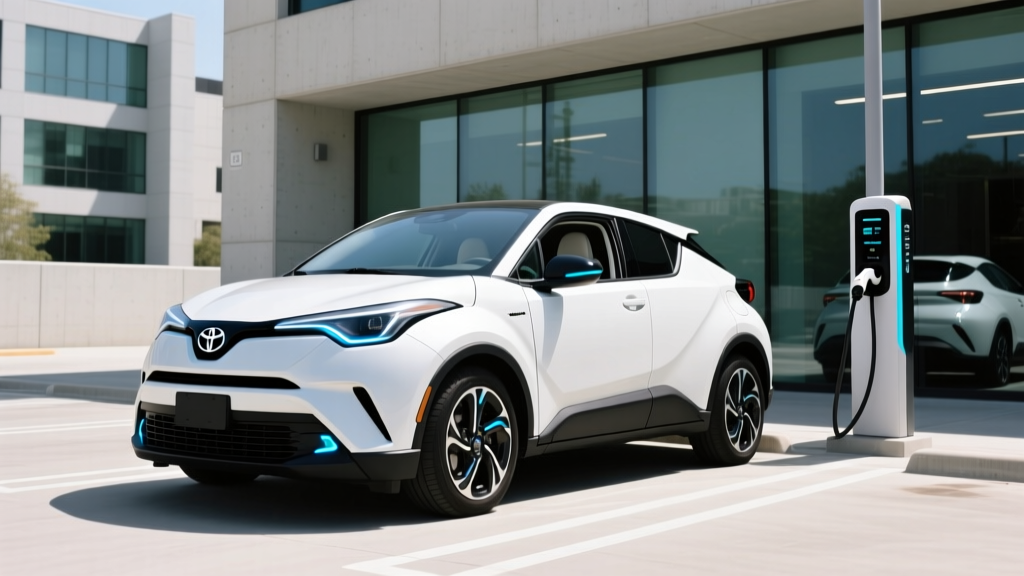
The 2026 Toyota C-HR EV is Toyota's compact electric crossover built on the e-TNGA platform, targeting an EPA-estimated range of approximately 250–280 miles, DC fast charging up to around 150 kW, and a starting MSRP likely between $35,000 and $38,000 before incentives. It positions itself against the Hyundai Kona Electric, Kia Niro EV, and Chevrolet Equinox EV in the affordable compact electric SUV segment. However, as of early 2026, Toyota has not officially confirmed U.S. specifications, pricing, or an on-sale date for the C-HR EV. All figures in this guide are based on Toyota's global announcements, the European C-HR EV reveal, and analysis of the shared e-TNGA platform used in the bZ4X. Treat every number as preliminary until Toyota publishes U.S. specs on its official site.
What We Know About the 2026 Toyota C-HR EV So Far
Toyota unveiled the next-generation C-HR for Europe with a battery-electric variant, marking the nameplate's first fully electric model. The C-HR EV shares Toyota's e-TNGA architecture — the same platform underpinning the bZ4X and Subaru Solterra — but in a smaller, more urban-friendly footprint. For U.S. buyers, the critical question is whether Toyota will bring the EV variant stateside or limit it to European and Asian markets.
Based on the European-spec announcement and e-TNGA platform capabilities, here is what we can reasonably project for a U.S.-market C-HR EV:
| Specification | Estimated (U.S. Market) | Source / Basis |
|---|---|---|
| Battery Capacity (usable) | ~58–65 kWh (LFP or NMC TBD) | e-TNGA platform, Euro C-HR EV specs |
| EPA Range (est.) | 250–280 miles | Platform efficiency, Euro WLTP data adjusted |
| Real-World Highway Range | ~210–240 miles | Typical 15–20% EPA-to-highway reduction |
| DC Fast Charge (peak) | ~150 kW | bZ4X platform benchmark |
| 10–80% DC Charge Time | ~28–32 minutes (est.) | Based on bZ4X charge curve data |
| Level 2 AC Charging | ~7–11 kW | Standard onboard charger |
| Motor Output | ~201–214 hp (FWD) | e-TNGA single-motor config |
| 0–60 mph (est.) | ~7.0–7.5 seconds | Platform weight/power ratio |
| Drivetrain | FWD standard, AWD possible | e-TNGA supports both |
| Starting MSRP (est.) | $35,000–$38,000 | Segment positioning vs. Kona EV, Niro EV |
| Battery Warranty | 8 years / 100,000 miles | Toyota's standard EV battery warranty |
Important caveat: The bZ4X's real-world charging performance has drawn criticism for tapering aggressively above 70% state of charge. If the C-HR EV uses the same thermal management strategy, expect the 10–80% charge time to stretch closer to 35 minutes in practice, especially in cold weather. Toyota has indicated ongoing software improvements to charge-curve management, but we won't know the C-HR EV's actual behavior until independent testing begins.
2026 Toyota C-HR EV vs. Gas C-HR and Hybrid Alternatives
Toyota discontinued the gas-powered C-HR in the U.S. after the 2022 model year, but many shoppers cross-shop the C-HR EV concept against the Toyota Corolla Cross Hybrid and other compact crossovers. Here's how the numbers stack up on a cost-per-mile and efficiency basis:
| Metric | C-HR EV (est.) | Corolla Cross Hybrid (AWD) | Hyundai Kona Electric |
|---|---|---|---|
| EPA Combined Efficiency | ~110–120 MPGe | 42 MPG combined | 120 MPGe (2025 EPA) |
| Energy Cost per Mile | $0.04–$0.06 (home charging) | $0.12–$0.14 (gas at $3.50/gal) | $0.04–$0.06 |
| Annual Fuel/Energy Cost (12k mi) | $480–$720 | $1,440–$1,680 | $480–$720 |
| Estimated Starting MSRP | $35,000–$38,000 | $29,050 | $32,975 |
| Federal Tax Credit Potential | Up to $7,500 (§30D, if eligible) | None (HEV) | Up to $7,500 (§30D) |
| Effective Price After Credit | ~$27,500–$30,500 | $29,050 | ~$25,475–$32,975 |
The math is compelling if you qualify for the full federal credit and charge primarily at home. The C-HR EV could undercut the Corolla Cross Hybrid on effective purchase price while cutting annual energy costs by roughly $800–$1,000. But that "if" carries significant weight — IRS §30D rules impose income caps ($150,000 single / $300,000 joint modified AGI), MSRP caps ($55,000 for SUVs), and stringent battery-sourcing and critical-minerals requirements that change annually. As of 2026, many EVs that previously qualified have lost partial or full eligibility due to the foreign entity of concern (FEOC) restrictions on battery components and minerals. Toyota's battery supply chain for a U.S.-market C-HR EV is not yet confirmed, making credit eligibility uncertain.
Real-World Ownership Costs: 5-Year Breakdown
Spec sheets tell only part of the story. Here's a realistic 5-year / 60,000-mile ownership projection comparing the C-HR EV against a Corolla Cross Hybrid, assuming 12,000 miles driven annually:
| Cost Category | C-HR EV (est.) | Corolla Cross Hybrid |
|---|---|---|
| Purchase Price (after est. credit) | $30,500 | $29,050 |
| Home Charger Installation (Level 2) | $800–$2,000 | $0 |
| Energy / Fuel (5 years) | $2,400–$3,600 | $7,200–$8,400 |
| Maintenance (5 years) | $800–$1,200 | $2,500–$3,500 |
| Insurance (5 years, avg.) | $7,500–$9,000 | $6,000–$7,500 |
| Estimated Depreciation | $12,000–$15,000 | $8,000–$10,000 |
| 5-Year Total Cost of Ownership | $44,000–$51,300 | $52,750–$58,450 |
Key observations from this projection:
- Energy savings are substantial — roughly $4,000–$5,000 over five years if charging at home at the national average of ~$0.16/kWh. Public DC fast charging at $0.35–$0.50/kWh erodes this advantage significantly.
- Maintenance favors the EV — no oil changes, no spark plugs, reduced brake wear from regenerative braking. Toyota's EV maintenance schedule is minimal.
- Insurance runs 15–25% higher on EVs in most states, per industry data. Get quotes before committing.
- Depreciation is the wildcard — EV resale values have been volatile. Toyota's brand strength may help, but the segment's rapid evolution creates uncertainty.
- Home charging access is the dealmaker or dealbreaker. If you rely exclusively on public charging, both your cost per mile and your convenience drop substantially. A Level 2 home charger is practically essential for economical EV ownership.
Charging Reality: What to Expect at Home and on the Road
If the C-HR EV mirrors the bZ4X's charging architecture, here's what daily and road-trip charging will look like:
| Charging Level | Power (kW) | Miles Added per Hour | Use Case |
|---|---|---|---|
| Level 1 (120V household) | ~1.4 kW | ~4–5 miles/hr | Overnight top-up, low daily mileage |
| Level 2 (240V home/public) | ~7–11 kW | ~25–40 miles/hr | Daily primary charging |
| DC Fast Charge | Up to ~150 kW (peak) | ~150–200 miles in 30 min | Road trips, quick top-ups |
Charging curve reality check: Peak 150 kW rates are typically sustained only between roughly 10–50% state of charge. Above 70%, the rate tapers considerably — potentially to 40–60 kW — as the battery management system protects cell longevity. This is standard for most EVs but particularly relevant for Toyota's e-TNGA vehicles, which have shown conservative taper strategies. On a road trip, plan your stops around the 10–70% sweet spot rather than waiting for a full charge.
Cold-weather impact: In sub-freezing temperatures (below 32°F), expect 20–30% range reduction due to battery resistance and cabin heating demands. A C-HR EV rated at 270 miles EPA could deliver 190–215 miles in winter highway driving. Preconditioning the battery while plugged in — warming it using grid power before departure — mitigates some of this loss and improves charge acceptance at DC fast chargers.
Federal Tax Credit Eligibility: The §30D Checklist
The federal clean vehicle credit is not a guaranteed $7,500 for every buyer and every EV. For the 2026 tax year, eligibility depends on multiple overlapping requirements:
- Buyer income cap: Modified AGI must not exceed $150,000 (single filers), $225,000 (head of household), or $300,000 (married filing jointly).
- Vehicle MSRP cap: SUVs and vans must have an MSRP at or below $80,000; sedans below $55,000. The C-HR EV would qualify as an SUV.
- Battery component sourcing: A percentage of battery components must be manufactured or assembled in North America (threshold increases annually through 2029).
- Critical minerals: A percentage of critical minerals must be sourced from the U.S. or a free-trade-agreement partner (threshold also increases annually).
- FEOC restriction: Battery components and critical minerals cannot come from a "foreign entity of concern" (primarily targeting Chinese supply chains).
- Point-of-sale transfer: As of 2024, buyers can transfer the credit to the dealer at purchase, reducing the sale price directly rather than waiting for a tax refund.
Toyota's battery supply chain for a U.S.-spec C-HR EV is unconfirmed. The bZ4X initially struggled with credit eligibility due to battery sourcing. Until Toyota publishes VIN-level credit qualification data, assume partial or uncertain eligibility and consult a tax professional before factoring the credit into your purchase budget.
Common Misconceptions About the C-HR EV — Corrected
| Myth | Fact |
|---|---|
| "The C-HR EV is already on sale in the U.S." | As of early 2026, Toyota has not confirmed U.S. availability. The EV variant was announced for European and select global markets. |
| "280 miles of range means I'll always get 280 miles." | Highway driving at 70+ mph typically yields 15–20% less than the EPA estimate. Cold weather adds another 10–15% loss. Plan for ~210–230 miles in mixed real-world conditions. |
| "I'll save $7,500 no matter what." | Income limits, MSRP caps, battery sourcing rules, and FEOC restrictions all affect eligibility. Not every buyer or every vehicle qualifies for the full amount. |
| "EVs need no maintenance at all." | Tire rotations, cabin air filters, brake fluid checks, and coolant service still apply. EVs need less maintenance, not zero. |
| "The battery will need replacing in 5 years." | Modern EV batteries are designed to retain 70–80% capacity at 100,000+ miles. Toyota warranties its EV batteries for 8 years/100,000 miles against excessive degradation. |
Decision Framework: Should You Wait for the C-HR EV or Buy Now?
Wait for the 2026 Toyota C-HR EV if:
- You want a compact electric crossover from Toyota specifically and trust the brand's long-term reliability reputation.
- You have reliable home charging access (garage or driveway with a 240V outlet) and drive under 60 miles daily.
- You can afford to wait 6–12+ months for confirmed U.S. specs, pricing, and availability.
- You value Toyota's dealer network and service infrastructure for long-term ownership.
Buy an available alternative now if:
- You need a vehicle immediately — the C-HR EV's U.S. launch is unconfirmed and may not happen at all.
- You want guaranteed federal tax credit eligibility — the Hyundai Kona Electric, Chevrolet Equinox EV, and select Tesla models have clearer credit qualification paths in 2026.
- You take frequent road trips exceeding 250 miles and need proven DC fast-charging infrastructure compatibility (NACS access via Tesla Supercharger network).
- You live in an apartment or lack home charging access — a hybrid like the Corolla Cross Hybrid avoids the public-charging dependency entirely.
First-Time EV Buyer Essentials
If the C-HR EV would be your first electric vehicle, internalize these practical realities before committing:
- Home charging is non-negotiable for most owners. A Level 2 (240V) home charger costs $500–$800 for the unit plus $500–$2,000 for professional installation depending on your electrical panel's capacity. If your panel is older or at capacity, a 200-amp upgrade can add $1,500–$3,000. Budget accordingly.
- Public charging is more expensive and less reliable than you expect. DC fast-charging networks like Electrify America and EVgo charge $0.35–$0.50/kWh in many markets — making per-mile costs comparable to a fuel-efficient hybrid. Reliability varies; always have a backup charging plan on road trips.
- Your driving pattern determines whether an EV makes financial sense. High daily mileage (40+ miles) maximizes fuel savings. Very low mileage (under 15 miles daily) means the EV's upfront premium takes many years to recoup.
- Cold climate? Plan conservatively. If you live where winters drop below freezing regularly, budget your daily range at 70% of the EPA figure during cold months.
- Test the actual vehicle before buying. Regenerative braking feel, one-pedal driving modes, and infotainment integration vary significantly between brands. Toyota's approach tends toward conservative — expect moderate regen rather than aggressive one-pedal driving.
Frequently Asked Questions
Is the 2026 Toyota C-HR EV confirmed for the United States?
No. Toyota has announced the C-HR EV for European and select global markets. U.S. availability has not been officially confirmed as of early 2026. Toyota's U.S. EV lineup currently centers on the bZ4X, with additional models expected but not specifically named.
What battery chemistry will the C-HR EV use — LFP or NMC?
Toyota has not confirmed battery chemistry for a U.S.-spec C-HR EV. The European variant may use LFP (lithium iron phosphate), which offers longer cycle life and lower cost but slightly reduced energy density compared to NMC (nickel manganese cobalt). LFP batteries also tolerate regular 100% charging better than NMC, which is advantageous for daily use.
Will the C-HR EV have access to Tesla Superchargers?
This depends on the connector standard Toyota adopts for the U.S. market. Most automakers have committed to adopting the NACS (North American Charging Standard) connector by 2025–2026, which grants access to Tesla's Supercharger network. If the C-HR EV launches with NACS, it will have access; if it launches with CCS, an adapter will be needed.
How does the C-HR EV compare to the Toyota bZ4X?
The C-HR EV would be smaller, lighter, and likely less expensive than the bZ4X. Think of it as a compact urban crossover versus the bZ4X's midsize positioning. Range may be similar or slightly lower due to a smaller battery, but efficiency (MPGe) could be higher thanks to reduced weight.
Should I buy a hybrid instead of waiting for the C-HR EV?
If you lack home charging access, drive in a region with limited public charging infrastructure, or need a vehicle now, a hybrid like the Toyota Corolla Cross Hybrid (42 MPG combined, ~$29,050 starting MSRP) is a practical, lower-risk choice. If you have home charging and want to maximize long-term operating savings, the EV is worth considering — but only once U.S. specs and credit eligibility are confirmed.