Quick Answer: Should You Buy the 2026 Toyota C-HR EV?
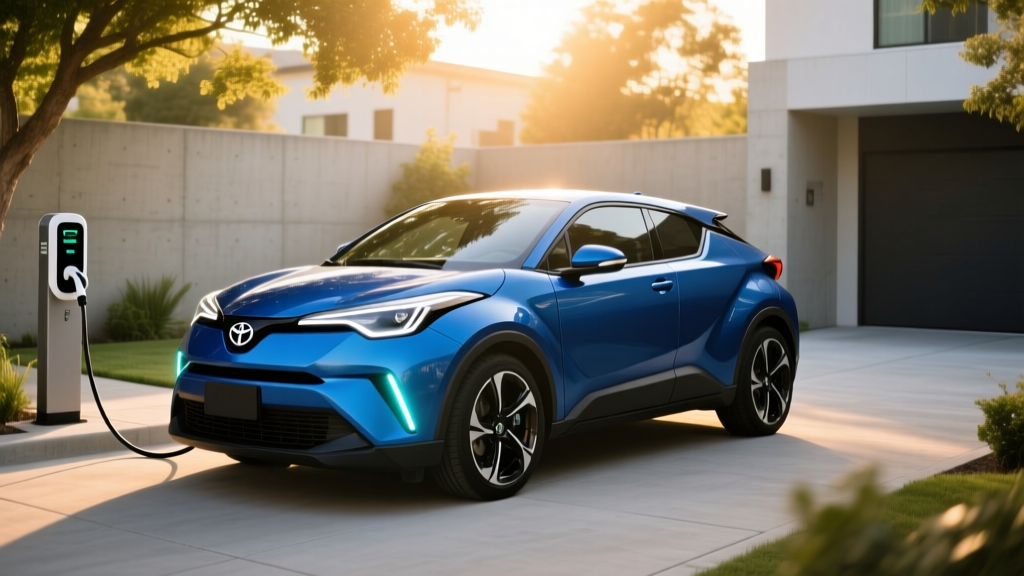
The 2026 Toyota C-HR EV is Toyota's compact electric crossover aimed at buyers who want the brand's reliability in a fully electric package. Based on Toyota's e-TNGA platform, expect an EPA range of approximately 230–260 miles, a ~65–72 kWh battery pack, and a starting MSRP likely between $32,000 and $38,000 depending on trim. It will compete directly with the Hyundai Kona Electric, Kia Niro EV, and Volvo EX30. However, buyers in apartment complexes without home charging access, or those in extreme cold climates, should weigh the real-world range reduction (15–30% in winter) and public charging reliability before committing.
What We Know About the 2026 Toyota C-HR EV (Announced Specs)
The 2026 Toyota C-HR EV represents Toyota's most affordable dedicated BEV entry for the U.S. market. After years of focusing on hybrids and the bZ4X as its sole electric offering, Toyota is expanding its EV lineup with a compact crossover positioned below the bZ4X in price and size. Below is what Toyota has disclosed or what industry analysts project based on the e-TNGA architecture and the C-HR EV concepts shown at global auto shows.
| Specification | Estimated / Announced |
|---|---|
| Battery Capacity (usable) | ~65–72 kWh (LFP or NMC TBD) |
| EPA Range (est.) | 230–260 miles |
| Motor Output | ~201 hp (FWD single motor) |
| 0–60 mph | ~7.5–8.5 seconds |
| DC Fast Charge Peak | ~150 kW |
| 10–80% DC Charge Time | ~30 minutes (est.) |
| Level 2 (AC) Charge Rate | ~7.2–11 kW |
| Base MSRP (est.) | $32,000–$35,000 |
| Warranty (Battery) | 8 years / 100,000 miles (Toyota standard) |
Important caveat: These are preliminary figures based on platform data and concept disclosures. Final EPA certification numbers will be published closer to the on-sale date. Toyota has historically been conservative with range estimates — the bZ4X initially rated lower than competitors but delivered consistent real-world performance.
Real-World Range vs. EPA Sticker
If the 2026 C-HR EV achieves a 250-mile EPA rating, plan for ~200–220 miles on highway road trips at 70+ mph, and ~175–200 miles in sub-freezing winter conditions. Cold weather reduces battery efficiency because energy is diverted to cabin heating and battery thermal management. This is physics, not a Toyota-specific flaw — it applies to every EV on the market.
How Does the C-HR EV Compare to the C-HR Hybrid and Gas Alternatives?
Toyota's hybrid dominance makes this comparison essential. Many buyers cross-shopping the C-HR EV will also consider the Toyota Corolla Cross Hybrid or a used C-HR (discontinued after 2022 in the U.S. as a gas model). Here's how the numbers stack up.
| Metric | C-HR EV (est.) | Corolla Cross Hybrid | Gas Compact Crossover Avg. |
|---|---|---|---|
| EPA Fuel Economy | ~110–120 MPGe | 42 MPG combined | 28–30 MPG combined |
| Annual Fuel/Energy Cost | ~$550 (at $0.14/kWh) | ~$1,100 | ~$1,650 |
| Annual Maintenance | ~$300–$400 | ~$550 | ~$650 |
| 5-Year Fuel/Energy Total | ~$2,750 | ~$5,500 | ~$8,250 |
| Upfront Price Premium | +$4,000–$7,000 | +$2,000–$3,000 | Baseline |
| Tailpipe Emissions | None (grid-dependent) | Low | Standard |
The EV wins on operating cost — saving roughly $2,750 to $5,500 over five years in energy alone. But the hybrid requires no charging infrastructure, no range planning, and carries a smaller upfront premium. If you cannot install a Level 2 charger at home, the hybrid's convenience advantage is substantial.
Real Costs: Purchase, Charging, Insurance, and Maintenance Breakdown
Too many EV guides stop at the sticker price. Here's a comprehensive five-year total cost of ownership (TCO) estimate for the 2026 C-HR EV, assuming 12,000 miles/year, home charging at the U.S. average electricity rate of $0.16/kWh, and a mid-tier trim at ~$35,000 MSRP.
| Cost Category | Estimated 5-Year Total | Notes |
|---|---|---|
| Vehicle Purchase (mid-trim) | $35,000 | Before incentives |
| Federal Tax Credit (§30D) | –$3,750 to –$7,500 | Depends on battery sourcing & income; see IRS rules |
| Home Level 2 Charger Install | $800–$2,000 | 240V/40A circuit; panel upgrade may add $1,500+ |
| Energy (5 years, 60,000 mi) | $2,600–$3,200 | ~3.0 kWh/mile; varies by rate & climate |
| Maintenance (5 years) | $1,500–$2,000 | Tires, cabin filter, brake fluid; no oil changes |
| Insurance (5 years) | $7,500–$9,500 | EV premiums run 10–20% higher than gas equivalents |
| Depreciation (est.) | $14,000–$17,000 | EV depreciation improving but still higher than Toyota hybrids |
| Net 5-Year Cost (with max credit) | ~$33,000–$39,000 | Varies heavily by credit eligibility & local rates |
Federal Tax Credit Reality Check
The §30D Clean Vehicle Credit is not guaranteed. For 2026, eligibility hinges on:
- MSRP cap: SUVs/crossovers must be ≤$80,000 (C-HR EV clears this easily)
- Buyer income cap: AGI ≤$150,000 single / ≤$300,000 joint
- Battery sourcing: Critical minerals and battery components must meet escalating domestic/free-trade-agreement percentages — this is where many foreign-built EVs lose partial or full credit
- Point-of-sale transfer: You can apply the credit at the dealer to reduce your purchase price directly
If the C-HR EV is assembled outside North America (likely Japan or China for early production), it may qualify for $0 to $3,750 of the credit depending on mineral sourcing compliance. Check fueleconomy.gov for the definitive eligibility list once the model is certified.
Charging the C-HR EV: Home Setup, Public Networks, and What to Expect
Charging access is the single biggest variable in EV satisfaction. Here's the practical breakdown for a C-HR EV owner.
| Level | Power (kW) | Miles Added per Hour | Use Case |
|---|---|---|---|
| Level 1 (120V household) | ~1.2–1.4 kW | ~3–5 mi/hr | Overnight top-up only; not practical for daily full charges |
| Level 2 (240V home) | ~7.2–11 kW | ~25–40 mi/hr | Primary daily charging; full charge in 7–10 hours |
| DC Fast Charge | ~150 kW peak | ~150–200 mi in 30 min | Road trips; tapers significantly above 80% SoC |
Home Charging Installation: What It Actually Costs
Most EV owners need a 240V Level 2 circuit installed. Expect to pay:
- Level 2 charger hardware: $350–$700 (ChargePoint Home Flex, Emporia, Wallbox)
- Electrician labor + materials: $500–$1,500 for a straightforward run from panel to garage
- Panel upgrade (if needed): $1,500–$3,000 if your home has a 100A service and needs 200A
- Permit: $50–$200 depending on municipality
Total typical install: $900–$2,400 without a panel upgrade. Always get a licensed electrician to assess your panel capacity before purchasing equipment.
The Charging Curve Reality
The ~150 kW peak charge rate is not sustained across the full session. Like all EVs, the C-HR EV will charge fastest between 10–50% SoC, then progressively taper. A 10–80% session in ~30 minutes is realistic, but pushing from 80–100% on DC fast charging could add another 25–35 minutes. For road trips, plan stops at 10–80% intervals to minimize total charging time.
Common Misconceptions About the C-HR EV — Fact-Checked
| Myth | Fact |
|---|---|
| "The battery will need replacing in 5 years" | Toyota warranties the battery for 8 years/100,000 miles with a capacity retention guarantee (typically ≥70%). Real-world data from bZ4X and other e-TNGA vehicles shows <10% degradation over 100,000 miles. |
| "I can charge on any public charger" | Connector matters. The C-HR EV will likely ship with CCS1 or NACS (Toyota has committed to NACS adoption for 2025+ models). Verify your local public chargers support the connector — CHAdeMO stations are increasingly rare. |
| "EVs are worse in the cold" | EVs lose 15–30% range in freezing temps, but they start instantly (no cold cranking), have heated seats/steering that use less energy than cabin air heating, and regenerative braking works in all conditions. Preconditioning the battery while plugged in mitigates most cold-weather charging slowdown. |
| "The tax credit is $7,500 guaranteed" | The full $7,500 requires meeting both critical-mineral AND battery-component sourcing thresholds. Many 2026 EVs qualify for only $3,750 or $0 depending on supply chain compliance. Always verify on irs.gov before purchase. |
| "EVs cost more to insure" | Generally true — EV insurance premiums run 10–20% higher due to repair costs for battery packs and specialized components. Shop quotes before buying. |
Decision Framework: Is the 2026 C-HR EV Right for You?
Choose the 2026 Toyota C-HR EV If:
- You have home charging access (garage, driveway, or landlord-approved Level 2 installation)
- Your daily commute is under 80 miles round-trip — well within the real-world range buffer
- You want Toyota reliability in an EV with a strong dealer network for service
- You qualify for at least a partial federal or state tax credit to offset the upfront premium
- You drive primarily in moderate climates or accept the winter range trade-off
Choose a Toyota Hybrid Instead If:
- You live in an apartment or condo without charging access and rely on public infrastructure
- You regularly drive 300+ mile trips in areas with sparse DC fast-charging coverage
- You live in extreme cold (sustained sub-10°F winters) and cannot garage the vehicle
- The upfront price premium of $4,000–$7,000 over a hybrid stretches your budget
- You plan to keep the vehicle 10+ years and want the proven long-term track record of Toyota's hybrid system
Choose a Competing EV If:
- You need 300+ miles of range — consider the Tesla Model Y or Chevrolet Equinox EV
- You want faster DC charging (200+ kW) — the Hyundai Kona Electric or Ioniq 5 charge quicker
- You need AWD — check whether Toyota offers a dual-motor C-HR EV variant or look at the Subaru Solterra
What First-Time EV Buyers Must Know Before Purchasing
If the 2026 C-HR EV is your first electric vehicle, these practical realities will shape your ownership experience:
- Charging becomes routine, not a chore. Plug in at home every night like a phone. You'll visit a "gas station" roughly 4–6 times per year on road trips.
- Regenerative braking changes how you drive. One-pedal driving reduces brake wear dramatically — expect brake pads to last 100,000+ miles.
- Tire wear increases. EVs are heavier and deliver instant torque. Budget for tire replacement every 30,000–40,000 miles rather than 50,000+.
- Preconditioning matters. Setting a departure time while plugged in warms the battery and cabin using grid power, preserving range — especially critical in winter.
- Route planning apps are essential. PlugShare, A Better Routeplanner, and the vehicle's native navigation will become part of your road-trip routine for DC fast-charge stops.
- Your electric rate matters enormously. Time-of-use (TOU) rates can cut charging costs by 40–60% if you charge during off-peak hours (typically 10 PM – 6 AM).
Frequently Asked Questions
When will the 2026 Toyota C-HR EV be available in the U.S.?
Toyota has not confirmed an exact on-sale date. Based on global reveal timelines and typical U.S. launch cadence, expect dealer arrivals in late 2025 or early-to-mid 2026. Final EPA ratings and pricing will be published closer to launch.
Will the C-HR EV use NACS (Tesla connector) or CCS?
Toyota announced it will adopt the NACS (North American Charging Standard) connector for future EVs starting in 2025. The 2026 C-HR EV is expected to ship with NACS, granting access to Tesla Supercharger stations via Toyota's charging agreement. A CCS adapter may be included or available for legacy networks.
Can I tow with the 2026 C-HR EV?
Compact EV crossovers in this class typically offer limited or no towing capacity. If towing is a priority, look at the Toyota RAV4 Hybrid (up to 1,750 lbs) or a larger EV like the Hyundai Ioniq 5 (up to 2,300 lbs with the tow package).
How does the C-HR EV compare to the Toyota bZ4X?
The bZ4X is a larger, more expensive electric SUV with ~252 miles of EPA range and a starting MSRP around $43,000. The C-HR EV slots below it as a more affordable, slightly smaller alternative — think of it as Toyota's electric answer to the Corolla Cross vs. RAV4 relationship.
Is the C-HR EV eligible for state rebates and utility incentives?
State incentives (like California's CVRP, Colorado's tax credit, or New York's Drive Clean rebate) vary by jurisdiction and change frequently. Additionally, many utility companies offer $250–$1,000 rebates for home charger installation or discounted TOU electricity rates for EV owners. Check your state energy office and local utility for current programs.
What happens if the battery degrades significantly?
Toyota's EV battery warranty covers capacity below a specified threshold (typically 70% of original capacity) for 8 years or 100,000 miles. If degradation exceeds this threshold under warranty, Toyota will repair or replace the battery at no cost. Out-of-warranty replacement costs for a ~70 kWh pack currently range from $8,000 to $14,000, though prices are declining as battery technology matures.
Note: This article is based on announced and projected specifications for the 2026 Toyota C-HR EV as of early 2026. Final EPA ratings, MSRP, and tax-credit eligibility will be confirmed by Toyota and the IRS closer to the vehicle's on-sale date. Always verify current figures on fueleconomy.gov and irs.gov before making a purchase decision.