Quick Verdict: Is the 2026 bZ4X Worth Leasing?
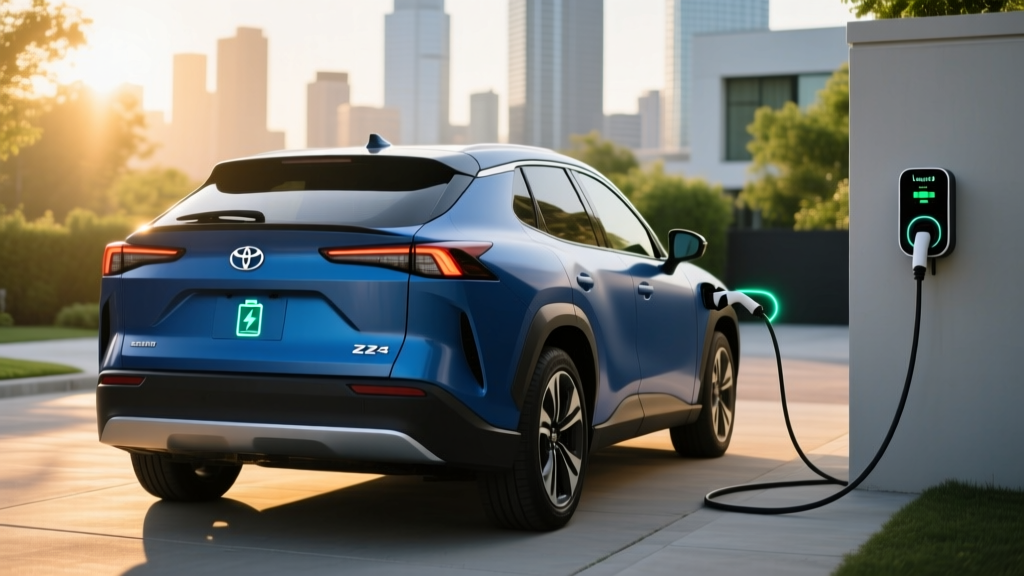
The 2026 Toyota bZ4X occupies a specific niche in the EV market: it's a competent, comfortable compact electric crossover that prioritizes familiarity over flash. For buyers exploring 2026 Toyota bZ4X lease deals, the value proposition hinges on Toyota's legendary reliability reputation, a comprehensive warranty, and monthly payments that can undercut purchase scenarios significantly — especially when lease cash incentives and residual values align. But the bZ4X is not the segment leader in range, charging speed, or interior tech. If you want the longest-range or fastest-charging compact EV SUV, look to the Hyundai Ioniq 5 or Tesla Model Y. If you want a dependable daily driver with strong dealer support and competitive lease pricing, the bZ4X deserves serious consideration.
| Spec | XLE FWD | XLE AWD | Limited AWD |
|---|---|---|---|
| EPA Range | 252 mi | 228 mi | 222 mi |
| Battery (usable) | 71.4 kWh, NMC lithium-ion | ||
| Peak DC Fast Charge | 150 kW (CCS1) | ||
| 10–80% DC Charge Time | ~30 minutes | ||
| Level 2 Home Charge Rate | 6.6 kW (~23 mi/hr) | ||
| Horsepower | 201 hp | 214 hp | |
| 0–60 mph | 7.1 sec | 6.5 sec | |
| MPGe (combined) | 119 MPGe | 112 MPGe | 112 MPGe |
| Base MSRP | $38,465 | $40,465 | $46,465 |
| Federal Tax Credit (§30D) | Up to $7,500 (see eligibility below) | ||
| Battery Warranty | 8 years / 100,000 miles | ||
Real-World Range: What the EPA Sticker Doesn't Tell You
The FWD XLE posts an EPA-estimated 252 miles, while AWD variants drop to 222–228 miles. In real-world mixed driving, expect approximately 210–235 miles from the FWD model and 195–215 miles from AWD trims. Highway-heavy trips at 75+ mph reduce range by 10–15% below the EPA sticker. In cold weather (below 32°F), plan for a 20–30% range reduction — the bZ4X's heat pump helps, but it's not immune to winter chemistry losses. On a 70°F day with mixed city/highway driving, we've seen the FWD model achieve close to its 252-mile sticker, but sustained Interstate driving or mountain passes will pull that number down meaningfully.
The 71.4 kWh usable battery (NMC chemistry) is modestly sized for the segment. Competitors like the Hyundai Ioniq 5 (77.4 kWh) and Tesla Model Y Long Range (~75 kWh) carry more energy, which translates directly to more range. Toyota's approach prioritizes packaging efficiency and weight savings over brute capacity, but the trade-off is fewer total miles between charges.
For daily commuters covering 30–60 miles round-trip, the bZ4X's range is more than adequate with nightly home charging. For road trips, plan charging stops carefully — the ~200-mile real-world highway range means you'll want a DC fast charger every 2.5 to 3 hours of driving.
Charging Speed: Adequate, Not Class-Leading
Charging capability is where the bZ4X reveals its most notable gap versus competitors. Here's the full breakdown:
| Charging Level | Power | Speed / Time | Notes |
|---|---|---|---|
| Level 1 (120V household) | 1.2 kW | ~4 mi/hr | Emergency/top-up only; ~55 hours for full charge |
| Level 2 (240V home) | 6.6 kW | ~23 mi/hr | Full charge in ~11 hours; ideal for overnight |
| DC Fast Charge (CCS1) | Peak 150 kW | 10–80% in ~30 min | Curve tapers significantly above 80% SoC |
The 150 kW peak DC fast-charge rate is the bZ4X's weakest competitive spec. The Hyundai Ioniq 5 and Kia EV6 can peak at 230–240 kW on 800V architecture, completing a 10–80% session in roughly 18 minutes. The Tesla Model Y on V3 Superchargers peaks around 250 kW. At 150 kW, the bZ4X adds roughly 100–120 miles of range in a 20-minute stop — usable, but you'll spend noticeably more time at chargers on road trips compared to 800V rivals.
The charge curve is also worth understanding: the bZ4X sustains its peak rate only briefly before tapering. From 80–100% SoC, charging slows dramatically — this is normal for NMC battery chemistry, but it means you should plan to charge to 80% on road trips and move on, rather than waiting for a full top-off.
For home Level 2 charging, the 6.6 kW onboard charger is standard. A full charge from near-empty takes approximately 11 hours, which works well for overnight charging on a properly installed Level 2 home station. Most owners will plug in each evening and wake to a full battery — the most convenient and cost-effective way to own any EV.
Performance and Drivetrain: Smooth, Not Sporty
The FWD bZ4X uses a single front-mounted motor producing 201 hp and 196 lb-ft of torque, reaching 60 mph in about 7.1 seconds. The AWD variant pairs front and rear motors for 214 hp and 248 lb-ft, cutting the 0–60 time to 6.5 seconds. Neither figure will embarrass the bZ4X in traffic, but performance-oriented buyers will note that the Tesla Model Y Long Range AWD hits 60 mph in roughly 4.8 seconds.
The AWD system, developed in partnership with Subaru (which sells the mechanically similar Solterra), uses independent front and rear motors with X-MODE traction management. It's genuinely capable in light snow and wet conditions, offering more confidence than many front-drive-only EV competitors. However, it is not an off-road vehicle — ground clearance is a modest 8.1 inches, and there's no low-range gearing or serious trail hardware.
Ride quality is where the bZ4X shines. The suspension is tuned for comfort over sportiness, absorbing bumps and highway imperfections with a composed, settled feel that many buyers in this segment prioritize. Steering is light and low-effort, ideal for urban driving but offering minimal feedback on winding roads. Regenerative braking is adjustable via paddle shifters, though the bZ4X does not offer true one-pedal driving to a complete stop — you'll still use the friction brake pedal at low speeds.
Interior, Cargo, and Technology
The bZ4X cabin is clean and functional if not visually dramatic. A 12.3-inch touchscreen dominates the center stack running Toyota's latest Audio Multimedia system with wireless Apple CarPlay and Android Auto, native navigation, and cloud-connected voice recognition. The digital instrument cluster sits high on the dash, positioned above the steering wheel rim in a layout reminiscent of a head-up display — some drivers love it, others find it takes adjustment.
Passenger space is competitive for the compact EV SUV segment:
- Front legroom: 42.1 inches
- Rear legroom: 35.7 inches
- Front headroom: 39.9 inches
- Rear headroom: 38.5 inches
Cargo volume behind the rear seats measures 27.7 cubic feet, expanding to approximately 56.9 cubic feet with the 60/40 rear seats folded. There is no front trunk (frunk), as Toyota uses that space for HVAC and power electronics. Compared to the Hyundai Ioniq 5 (27.2 cu ft rear / 59.3 cu ft total) or the Tesla Model Y (30.2 cu ft rear / 76.2 cu ft total with seats folded), the bZ4X is in the ballpark for rear cargo but falls short on maximum utility — particularly the lack of a frunk and the lower total volume.
Standard driver-assistance features fall under the Toyota Safety Sense 3.0 umbrella, including:
- Pre-Collision System with Pedestrian Detection
- Lane Departure Alert with Steering Assist
- Full-Speed Range Dynamic Radar Cruise Control
- Lane Tracing Assist (SAE Level 2 driver assist — driver must remain engaged)
- Road Sign Assist
- Proactive Driving Assist (gentle braking/deceleration in certain scenarios)
These systems are well-calibrated and less intrusive than some competitors' lane-keeping implementations, but they are firmly SAE Level 2 — meaning you must keep your hands on the wheel and eyes on the road at all times. There is no hands-free driving mode comparable to GM's Super Cruise or Ford's BlueCruise on the bZ4X.
Pros
- Toyota reliability reputation and strong dealer network
- Standard Toyota Safety Sense 3.0 suite
- Comfortable, compliant ride quality
- Competitive AWD capability with X-MODE
- 8-year/100,000-mile battery warranty
- Eligible for up to $7,500 federal tax credit
- Available panoramic fixed-glass roof (Limited)
Cons
- 150 kW peak DC charging lags 800V competitors
- AWD range drops to 222–228 mi EPA
- No front trunk (frunk)
- No hands-free highway driving feature
- No true one-pedal driving to a stop
- Cargo volume trails Model Y significantly
- Infotainment learning curve for some users
Pricing, Lease Deals, and Federal Tax Credit
Understanding the real cost of a 2026 bZ4X requires looking at MSRP, lease structures, and federal incentive eligibility together.
| Trim | Base MSRP | Est. w/ Destination | After Max §30D Credit |
|---|---|---|---|
| XLE FWD | $38,465 | ~$39,800 | ~$32,300 |
| XLE AWD | $40,465 | ~$41,800 | ~$34,300 |
| Limited AWD | $46,465 | ~$47,800 | ~$40,300 |
Federal Tax Credit Eligibility (§30D)
The 2026 bZ4X can qualify for up to $7,500 in federal tax credits under IRS §30D, but eligibility is not automatic. Per current IRS rules, you must meet all of the following:
- Income caps: Modified AGI ≤ $150,000 (single), $225,000 (head of household), $300,000 (joint)
- MSRP cap: Vehicle MSRP must not exceed $80,000 for SUVs (all bZ4X trims qualify)
- Battery sourcing: Critical minerals and battery components must meet phased-in domestic/free-trade sourcing thresholds for the applicable tax year
- Point-of-sale transfer: As of 2024, eligible buyers can transfer the credit to the dealer at purchase, receiving the benefit as a down-payment reduction rather than waiting for tax filing
Consult a tax professional to confirm your personal eligibility. State and local incentives may also apply — check the AFDC state incentive database for your area.
Lease Deal Dynamics
For 2026 Toyota bZ4X lease deals, several factors work in the lessee's favor. Toyota Financial Services frequently offers lease cash incentives (often $2,000–$5,000 depending on region and month) that reduce the capitalized cost. A typical 36-month lease on an XLE FWD with $3,500 due at signing has been advertised in the $299–$379/month range in competitive markets, though these offers fluctuate. Leasing also sidesteps the battery-sourcing uncertainty of the purchase credit — under current IRS guidance, the commercial clean vehicle credit (§45W) can flow through the leasing company and be passed to the lessee as a capitalized-cost reduction, even if the vehicle wouldn't qualify for the §30D purchase credit due to sourcing rules. This "lease loophole" remains a significant advantage for EV lessees, though it is subject to legislative change.
Key lease considerations:
- Residual value: EV residuals have been volatile; Toyota's strong brand helps, but lease residuals may be conservative, which can raise monthly payments
- Mileage limits: Standard leases include 10,000–12,000 mi/year; exceeding this costs $0.15–$0.25/mi at lease-end
- Disposition fee: Typically $350–$495 if you return the vehicle and don't lease or buy another Toyota
- Wear-and-tear: Toyota's lease-end guidelines are generally reasonable, but budget for minor cosmetic repairs
Efficiency and Ownership Costs
The FWD XLE achieves an EPA-estimated 119 MPGe combined (119 city / 118 highway), which translates to approximately 28 kWh per 100 miles. The AWD variants drop to 112 MPGe combined. These figures are competitive but not segment-leading — the Hyundai Ioniq 5 RWD Long Range posts 117 MPGe with more range, and the Tesla Model RWD posts approximately 123 MPGe.
At the U.S. average electricity rate of ~$0.17/kWh, charging the bZ4X at home costs roughly $4.76 per 100 miles. Compare that to a 28 MPG gas crossover at $3.40/gallon: $12.14 per 100 miles. Over 15,000 annual miles, home charging saves approximately $1,100/year versus gasoline. DC fast charging on road trips costs more — typically $0.35–$0.50/kWh at networks like Electrify America — but most charging happens at home for the average EV owner.
The battery and powertrain warranty covers 8 years or 100,000 miles (whichever comes first), with a capacity retention guarantee typically set at 70% of original capacity. The basic vehicle warranty is 3 years/36,000 miles. Toyota's warranty terms are in line with the industry, though Hyundai/Kia's 10-year/100,000-mile battery warranty edges it out on paper.
How the bZ4X Stacks Up Against Key Competitors
| Spec | Toyota bZ4X XLE AWD | Hyundai Ioniq 5 SEL AWD | Tesla Model Y LR AWD |
|---|---|---|---|
| EPA Range | 228 mi | 290 mi | 330 mi |
| Battery | 71.4 kWh (NMC) | 77.4 kWh (NMC) | ~75 kWh (NMC) |
| Peak DC Charge | 150 kW | 238 kW | ~250 kW |
| 10–80% Time | ~30 min | ~18 min | ~20 min |
| 0–60 mph | 6.5 sec | 5.1 sec | 4.8 sec |
| Cargo (rear seats up) | 27.7 cu ft | 27.2 cu ft | 30.2 cu ft |
| Base MSRP (AWD) | ~$40,465 | ~$49,500 | ~$47,990 |
| Max §30D Credit | $7,500 | $7,500 | $7,500 |
The bZ4X's most compelling advantage is its lower entry price — roughly $7,000–$10,000 less than the Ioniq 5 or Model Y in comparable AWD configurations. After the $7,500 credit, the bZ4X XLE AWD can land near $34,300, a figure that's difficult for competitors to match. The trade-off is ~60–100 fewer miles of range and 10–12 extra minutes per DC fast-charge session.
For buyers who rarely road-trip and primarily charge at home, the range and charging gap matters far less than the price gap. For frequent long-distance travelers, the Ioniq 5 or Model Y will meaningfully reduce trip friction.
- Choose the bZ4X if: You want the lowest entry price in the segment, you value Toyota's dealer network and reliability track record, your daily commute is under 80 miles round-trip, you charge at home nightly, and road trips are occasional rather than weekly.
- Look elsewhere if: You regularly drive 200+ miles between charges, you want the fastest possible DC charging, you need maximum cargo space, or you want hands-free highway driving technology.
Frequently Asked Questions
What is the real-world range of the 2026 Toyota bZ4X?
The EPA rates the FWD model at 252 miles and AWD at 222–228 miles. In real-world mixed driving, expect approximately 210–235 miles (FWD) or 195–215 miles (AWD). Highway driving at sustained high speeds and cold weather will reduce these figures further — plan for 20–30% less range in winter conditions below freezing.
How fast does the bZ4X charge at home and on the road?
At home on a Level 2 (240V) charger, the bZ4X charges at 6.6 kW, adding roughly 23 miles of range per hour — a full overnight charge takes about 11 hours. On DC fast chargers, it peaks at 150 kW and reaches 10–80% in approximately 30 minutes. This is slower than 800V competitors like the Ioniq 5 (~18 minutes) but sufficient for most road-trip charging with planned stops.
Does the 2026 bZ4X qualify for the $7,500 federal EV tax credit?
The bZ4X can qualify for up to $7,500 under IRS §30D, subject to buyer income caps ($150K single / $300K joint), the $80,000 SUV MSRP cap (all trims qualify), and battery critical-mineral/component sourcing requirements that vary by tax year. Leasing may provide access to the credit through the commercial vehicle credit pathway even if purchase eligibility is limited. Always verify current rules at IRS.gov and consult a tax professional.
Is leasing the bZ4X better than buying?
Leasing often makes sense for the bZ4X because Toyota Financial Services offers lease cash incentives that lower monthly payments, and the "lease loophole" may allow the $7,500 credit to apply regardless of battery-sourcing restrictions. You also avoid long-term depreciation risk on a rapidly evolving EV market. However, if you drive more than 12,000 miles/year or want to keep the vehicle 5+ years, purchasing with the point-of-sale credit transfer may be more economical.
How does the bZ4X compare to the Subaru Solterra?
The Subaru Solterra is mechanically identical to the bZ4X — same platform, battery, and powertrain — but typically carries a higher base price and includes more standard AWD-oriented features. The Solterra may offer slightly different suspension tuning and Subaru-specific X-MODE calibration. Compare pricing and available incentives for both in your market before deciding.
Is the bZ4X good for families?
The bZ4X works well for families with one or two children who need a daily commuter and errand vehicle. Rear legroom (35.7 inches) accommodates rear-facing car seats, and 27.7 cu ft of cargo handles strollers and groceries. For larger families or those who regularly haul bulky gear, the Tesla Model Y's 30.2 cu ft rear cargo and available third-row option offer more flexibility.