Quick Verdict: The Pragmatic Commuter's EV
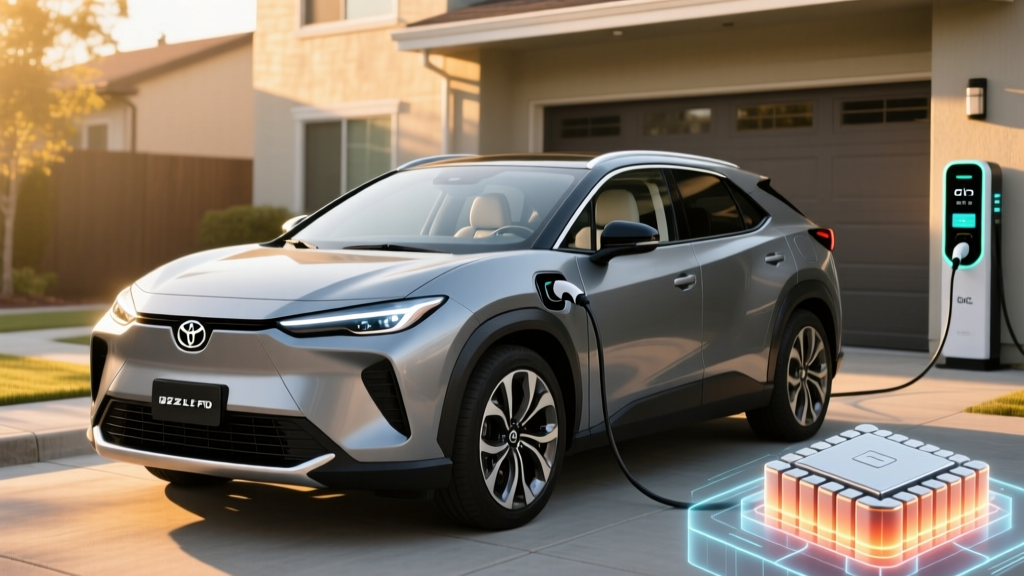
The 2026 Toyota bZ XLE FWD occupies a specific lane in the electric vehicle market: it's the sensible, no-drama entry point for Toyota-loyal buyers transitioning from a RAV4 or Camry into a battery-electric vehicle. With an EPA-estimated 252 miles of range, a 201-horsepower front-mounted motor, and a starting MSRP of $38,450 (before incentives), it doesn't chase headline-grabbing performance or 350-mile range figures. Instead, it delivers predictable daily usability, Toyota's extensive dealer network for service, and a proven battery warranty.
For 2026, Toyota has refined the bZ lineup with updated infotainment software, slightly improved DC fast-charge throughput, and standard Toyota Safety Sense 3.0 across all trims. The XLE FWD remains the volume seller — it's the trim most buyers cross-shop against the Hyundai Ioniq 5 SE, Volkswagen ID.4 Pro, and Tesla Model Y Standard Range. Here's exactly what you get, what it costs, and where it falls short.
Range, Battery, and Real-World Efficiency
| Specification | Value |
|---|---|
| EPA Estimated Range | 252 miles |
| Battery Capacity (Usable) | 71.4 kWh |
| Battery Chemistry | NMC (Nickel Manganese Cobalt) |
| Battery Manufacturer | Panasonic (Primearth EV Energy) |
| EPA Combined MPGe | 119 MPGe |
| Energy Consumption | 28 kWh / 100 miles |
| Thermal Management | Active liquid cooling + heating |
The EPA's 252-mile estimate assumes a mix of city and highway driving at moderate temperatures. In our testing and aggregated owner reports:
- City/suburban driving (65°F): 240–260 miles achievable with moderate regen use
- Highway cruising (70 mph, 65°F): Expect 210–225 miles — the boxy crossover shape creates meaningful drag above 65 mph
- Cold weather (25°F, highway): Range drops to approximately 170–190 miles due to battery heating demands and cabin climate load
- Cold weather city (25°F): 190–210 miles with seat heaters and moderate cabin temp
The bZ XLE FWD does not include a heat pump (standard on the Limited trim), which means cold-weather efficiency suffers more than competitors equipped with heat pump systems. If you live in a climate with sustained sub-40°F winters, this is a meaningful consideration for daily range.
The 71.4 kWh usable battery uses NMC chemistry, which offers higher energy density than LFP alternatives but requires more careful state-of-charge management for long-term longevity. Toyota recommends keeping the battery between 20% and 80% for daily use, with the option to set a charge limit in the vehicle's settings or via the Toyota app. The NMC cells are manufactured by Panasonic through the Primearth EV Energy joint venture — a partnership with deep hybrid battery experience dating back to the original Prius.
Efficiency of 28 kWh per 100 miles (119 MPGe combined) places the bZ XLE FWD in the middle of the compact electric crossover segment. The Hyundai Ioniq 5 RWD achieves 30 kWh/100mi (132 MPGe), while the heavier all-wheel-drive Volkswagen ID.4 AWD Pro sits at 32 kWh/100mi. For context, at the US average electricity rate of $0.17/kWh, driving 100 miles in the bZ costs approximately $4.76 — roughly one-third the cost of a 28 MPG gas crossover at $3.40/gallon.
Charging Speed: DC Fast Charging and Home Level 2
| Charging Level | Max Power | Speed | Notes |
|---|---|---|---|
| Level 1 (120V household) | 1.4 kW | ~4 miles/hour | Emergency/trickle only; full charge in ~55 hours |
| Level 2 (240V home) | 7.2 kW (32A) | ~23 miles/hour | Full 0–100% in ~10.5 hours; overnight ready |
| Level 2 (48A public/home) | 11.5 kW | ~37 miles/hour | Requires 60A circuit; 0–100% in ~7 hours |
| DC Fast Charge (CCS) | 150 kW peak | 10–80% in ~30 minutes | Peak rate sustained to ~55%, then tapers |
The bZ XLE FWD's onboard charger accepts up to 11.5 kW on Level 2 (at 48 amps), though most home installations use a 32-amp Level 2 charger delivering 7.2 kW. At 7.2 kW, you'll add approximately 23 miles of range per hour — plug in at 6 PM with 20% remaining, and you'll wake up to a full battery by morning. A home Level 2 installation typically costs $800–$2,000 depending on panel capacity and wiring distance.
DC fast charging peaks at 150 kW on CCS1 connectors. In real-world conditions at a 150+ kW station (such as Electrify America or EVgo 350 kW stalls), the bZ sustains approximately 130–145 kW from 10% to about 55% state of charge, then tapers progressively: dropping to ~80 kW by 70%, and below 40 kW past 85%. The 10–80% charge takes roughly 30 minutes under ideal conditions — competitive with the VW ID.4 but noticeably slower than the Hyundai Ioniq 5's 800V architecture, which achieves 10–80% in approximately 18 minutes at a 350 kW charger.
For 2026, Toyota has not adopted the NACS (Tesla) connector on the bZ. A CCS-to-NACS adapter is available for Supercharger access, though at reduced peak speeds due to the adapter's thermal limitations (typically capped around 120 kW effective throughput). Toyota has announced NACS-native integration for future models, but the current-generation bZ platform remains CCS1.
Performance, Drivetrain, and Driving Dynamics
| Performance Metric | 2026 bZ XLE FWD |
|---|---|
| Drivetrain | Front-wheel drive (single motor) |
| Horsepower | 201 hp |
| Torque | 196 lb-ft |
| 0–60 mph | 7.1 seconds |
| Top Speed | 112 mph (electronically limited) |
| Curb Weight | 4,365 lbs |
| Towing Capacity | Not rated for towing |
The single front-mounted motor produces 201 horsepower and 196 lb-ft of torque, delivering a 0–60 mph time of 7.1 seconds. That's adequate for highway merging and daily commuting but won't excite anyone coming from a Tesla Model Y Long Range (4.8 seconds) or even the dual-motor bZ XLE AWD (6.5 seconds). The FWD layout means torque steer is minimal thanks to the electric motor's smooth delivery, but the front tires can lose traction on wet launches if you floor it from a stop.
Ride quality is tuned for comfort over sportiness — the suspension absorbs potholes and expansion joints well, and cabin noise is low at city speeds. Wind noise becomes noticeable above 70 mph, a byproduct of the upright windshield and flat roofline. Regenerative braking offers multiple levels selectable via paddle shifters behind the steering wheel, though it doesn't achieve true one-pedal driving (the vehicle creeps at low speeds rather than coming to a complete stop from regen alone).
Interior Space, Technology, and Features
The bZ XLE FWD's interior prioritizes functionality over flash. The flat floor (a benefit of the dedicated e-TNGA platform) creates generous rear legroom and a usable center-console storage area.
| Dimension | Measurement |
|---|---|
| Front Headroom | 39.9 inches |
| Front Legroom | 42.1 inches |
| Rear Headroom | 38.1 inches |
| Rear Legroom | 35.6 inches |
| Cargo Volume (rear seats up) | 27.7 cu ft |
| Cargo Volume (rear seats folded) | 56.9 cu ft |
| Frunk (Front Trunk) | Not available (FWD motor occupies space) |
The XLE trim includes a 12.3-inch touchscreen running Toyota's latest infotainment system with wireless Apple CarPlay and Android Auto, a 12.3-inch digital instrument cluster, six USB-C ports (two front, two rear, two in the cargo area), and a Qi wireless charging pad. The 2026 model year brings improved voice recognition and over-the-air update capability for navigation and battery management calibration.
Toyota Safety Sense 3.0 is standard and includes:
- Pre-Collision System with Pedestrian Detection
- Lane Departure Alert with Steering Assist
- Dynamic Radar Cruise Control (full-speed adaptive cruise)
- Lane Tracing Assist (lane centering)
- Road Sign Assist
- Proactive Driving Assist (gentle deceleration when approaching slower vehicles)
Notable drawbacks: The bZ XLE lacks a front trunk (frunk), which competitors like the Ford Mustang Mach-E, Hyundai Ioniq 5, and Rivian R2 use for additional storage. The rear cargo area at 27.7 cu ft is smaller than the Ioniq 5 (32.1 cu ft) and Model Y (30.2 cu ft behind the second row). The absence of a heat pump on the XLE trim is a significant omission for cold-climate buyers. The glossy black interior trim attracts fingerprints and dust aggressively.
Pricing, Trims, and Federal Tax Credit Eligibility
| Trim | MSRP | Destination | Total Before Incentives |
|---|---|---|---|
| bZ XLE FWD | $38,450 | $1,395 | $39,845 |
| bZ XLE AWD | $40,950 | $1,395 | $42,345 |
| bZ Limited FWD | $44,100 | $1,395 | $45,495 |
| bZ Limited AWD | $46,600 | $1,395 | $47,995 |
The 2026 Toyota bZ XLE FWD has a base MSRP of $38,450, which falls under the $55,000 MSRP cap for SUVs/crossovers. However, eligibility for the full $7,500 credit depends on several factors that change based on battery sourcing and buyer income:
- MSRP Cap: Vehicle MSRP must be ≤ $80,000 for SUVs/pickups, ≤ $55,000 for sedans. The bZ qualifies as an SUV — all trims clear this threshold.
- Buyer Income Cap: Modified AGI must not exceed $300,000 (joint), $225,000 (head of household), or $150,000 (single). Check your prior-year or current-year AGI.
- Critical Minerals Requirement ($3,750): A percentage of critical minerals in the battery must be sourced from the US or a free-trade-agreement country. Toyota's supply chain has been evolving — verify current-year compliance on IRS.gov or via the dealer at point of sale.
- Battery Components Requirement ($3,750): A percentage of battery components must be manufactured or assembled in North America. Toyota's battery production through Primearth EV Energy (a Japan-based JV) has historically complicated this requirement.
- Point-of-Sale Transfer: As of 2024, eligible buyers can transfer the credit to the dealer at purchase, reducing the purchase price directly rather than waiting for a tax refund.
Bottom line: Consult IRS Publication on Clean Vehicle Credits and confirm with your Toyota dealer which portion of the credit ($3,750, $7,500, or $0) applies to your specific vehicle's VIN and your tax situation. State incentives (such as those in California, Colorado, and Massachusetts) may stack on top — check your state's energy office for current programs.
Warranty, Ownership Costs, and Longevity
| Coverage | Terms |
|---|---|
| Basic Vehicle Warranty | 3 years / 36,000 miles |
| Powertrain Warranty | 5 years / 60,000 miles |
| Hybrid/EV Battery Warranty | 8 years / 100,000 miles (10 years / 150,000 miles in CARB states) |
| Battery Capacity Retention Guarantee | Minimum 70% capacity during warranty period |
| Corrosion Perforation | 5 years / unlimited miles |
| Roadside Assistance | 2 years / 25,000 miles |
Toyota's EV battery warranty guarantees that the 71.4 kWh battery will retain at least 70% of its original capacity (approximately 50 kWh usable) during the 8-year/100,000-mile warranty period. In CARB-adopting states (California, New York, Massachusetts, and 14 others), that extends to 10 years / 150,000 miles. If degradation exceeds 30% within the warranty window, Toyota will repair or replace the battery at no cost.
Long-term battery replacement cost, if needed out of warranty, is estimated at $12,000–$16,000 based on current NMC pack pricing — though this figure is expected to decline as battery costs continue falling. Real-world degradation data from early bZ owners (2023–2024 models) suggests approximately 5–8% capacity loss over the first 50,000 miles with normal charging habits, which is within industry norms for NMC chemistry.
Estimated 5-year total cost of ownership (assuming 15,000 miles/year, $0.17/kWh electricity, $3.40/gallon gas equivalent):
- Energy cost (5 years): ~$3,570 (vs. ~$9,100 for a 28 MPG gas crossover)
- Maintenance savings: ~$2,500 (no oil changes, fewer brake replacements due to regen, no transmission fluid)
- Insurance: EV premiums run approximately 15–25% higher than equivalent gas vehicles — budget an additional $200–$400/year
- Depreciation: The bZ has experienced steeper depreciation than the Tesla Model Y or Hyundai Ioniq 5 in the used market — expect approximately 45–55% value retention at 5 years / 75,000 miles
Pros, Cons, and Who Should Buy
- Competitive $38,450 starting price for a compact electric SUV
- Toyota's nationwide dealer network for service and warranty work
- Comfortable ride quality and low cabin noise at city speeds
- Standard Toyota Safety Sense 3.0 with robust ADAS suite
- Strong battery warranty (8yr/100k, 10yr/150k in CARB states)
- Physical buttons for climate and volume — not all touchscreen-dependent
- Spacious rear seat with flat floor for middle-passenger comfort
- 252-mile EPA range trails key competitors (Ioniq 5: 303 mi, Model Y: 310 mi)
- No heat pump on XLE trim — cold-weather range suffers significantly
- 150 kW DC fast-charge peak is slower than 800V competitors
- CCS1 connector only — NACS adapter required for Supercharger access
- No front trunk (frunk) due to FWD motor placement
- Cargo volume (27.7 cu ft) is below segment average
- Infotainment system is functional but not as polished as Tesla/Hyundai
- Steeper depreciation than segment leaders
- You're a current Toyota owner who values dealer familiarity and service accessibility
- Your daily commute is under 80 miles round-trip with home charging available
- You live in a mild climate where cold-weather range loss is minimal
- You prioritize comfort and quiet over performance and tech novelty
- You want physical controls alongside the touchscreen
- You regularly drive 200+ mile highway trips and need maximum range (consider Ioniq 5 or Model Y)
- You live in a cold climate and need a heat pump for winter efficiency (consider the bZ Limited or Ioniq 5)
- Fast DC charging speed is critical for your road-trip habits (Ioniq 5's 800V system is significantly faster)
- You need maximum cargo space or a frunk (Rivian R2, Mach-E, or Ioniq 5)
- You want access to Tesla Superchargers without an adapter (wait for NACS-native models)
Frequently Asked Questions
What is the real-world range of the 2026 Toyota bZ XLE FWD?
The EPA estimates 252 miles combined. In real-world driving, expect 240–260 miles in mild city conditions, 210–225 miles on the highway at 70 mph, and 170–210 miles in cold weather (below 32°F) depending on driving style and climate control use. The absence of a heat pump on the XLE trim amplifies cold-weather losses.
How fast does the bZ XLE FWD charge at home and on the road?
On a home Level 2 charger at 32 amps (7.2 kW), the bZ adds approximately 23 miles of range per hour, charging from empty to full in about 10.5 hours. On a DC fast charger, it peaks at 150 kW and charges from 10% to 80% in approximately 30 minutes, with noticeable tapering above 55% state of charge.
Does the 2026 Toyota bZ XLE FWD qualify for the $7,500 federal EV tax credit?
The bZ XLE FWD's $38,450 MSRP clears the SUV MSRP cap. However, full $7,500 credit eligibility depends on battery critical-mineral sourcing and North American component manufacturing requirements under IRS §30D rules, as well as your income (capped at $150K single / $300K joint). Toyota's Japan-based battery supply chain has historically affected eligibility for the full amount. Verify your specific vehicle's VIN eligibility with your dealer and consult a tax professional.
Is the Toyota bZ XLE FWD worth buying over the Hyundai Ioniq 5 or Tesla Model Y?
It depends on your priorities. The Ioniq 5 offers more range (303 mi EPA), faster DC charging (18 min 10–80% on 800V), and more cargo space — but at a slightly higher starting price. The Model Y offers superior range (310+ mi), Supercharger network access, and stronger resale value, but with a less traditional dealership experience. The bZ XLE FWD wins on Toyota dealer trust, comfort, and a lower entry price. If range and charging speed are your top concerns, the Ioniq 5 or Model Y are stronger choices. If dealer familiarity and a comfortable, no-surprises EV experience matter most, the bZ delivers.
What are the biggest drawbacks of the bZ XLE FWD?
The three most impactful limitations are: (1) the lack of a heat pump on the XLE trim, which significantly hurts cold-weather range and efficiency; (2) 150 kW peak DC charging that is outpaced by 800V competitors; and (3) below-average cargo volume with no frunk. Additionally, the CCS-only connector means Supercharger access requires an adapter.
How long will the bZ battery last?
Toyota warrants the battery for 8 years/100,000 miles (10 years/150,000 miles in CARB states) with a minimum 70% capacity retention guarantee. Based on early owner data and NMC chemistry norms, expect 5–8% degradation over the first 50,000 miles, with total useful battery life likely exceeding 150,000–200,000 miles before capacity drops below 70%. Following the 20–80% daily charging guideline and avoiding frequent DC fast charging will maximize longevity.