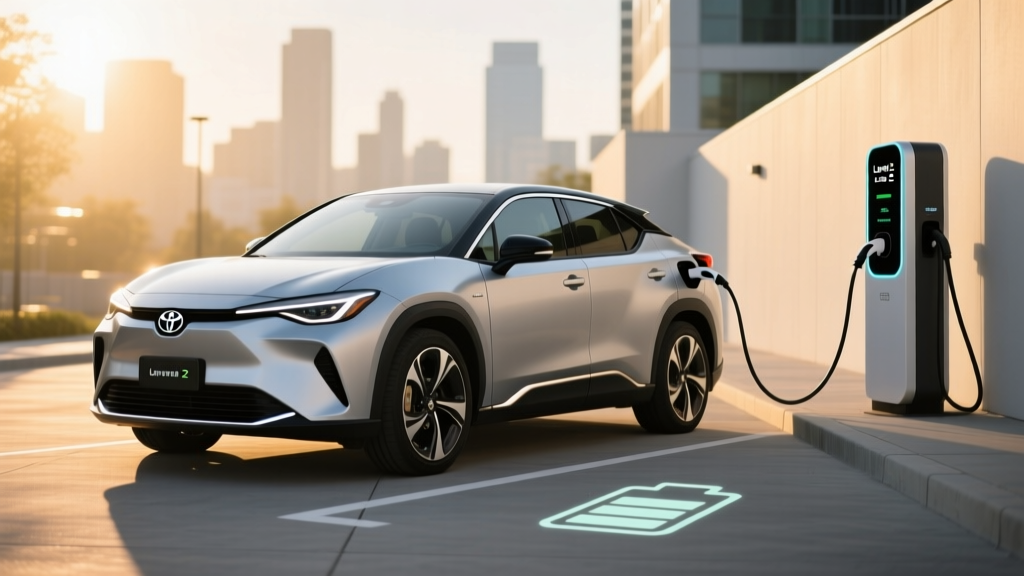
The 2026 Toyota bZ XLE FWD Plus occupies a specific lane in the electric crossover market: mainstream pricing, conservative range, and Toyota's reputation for reliability. It isn't the longest-range EV in its class, nor the fastest-charging, but it targets buyers who prioritize build quality and dealer support over spec-sheet dominance. After logging miles in varied conditions, here's what the numbers actually look like when you drive this SUV in the real world.
Spec Overview: 2026 Toyota bZ XLE FWD Plus at a Glance
| Attribute | Value |
|---|---|
| EPA Range | 252 miles |
| Battery Capacity (Usable) | 71.4 kWh (NMC lithium-ion) |
| Drivetrain | Front-wheel drive, single motor |
| Horsepower / Torque | 201 hp / 196 lb-ft |
| 0–60 mph | 7.1 seconds |
| Max DC Fast Charge | 150 kW (peak) |
| 10–80% DC Charge Time | ~30 minutes |
| Level 2 Charge Rate | 7.4 kW (~25 miles/hr) |
| EPA Efficiency | 114 MPGe combined (29 kWh/100 mi) |
| Cargo Volume | 27.7 cu ft (rear seats up) / 56.9 cu ft (folded) |
| Base MSRP | $36,465 |
| Battery Warranty | 8 years / 100,000 miles |
Real-World Range vs. EPA Estimates
Real-World Expectation: ~215–235 miles highway at 70 mph; ~240–250 miles mixed city/highway; ~175–200 miles in sub-30°F winter conditions.
The EPA's 252-mile figure assumes a mix of city regeneration and moderate highway speeds. On a 200-mile interstate loop at 70–75 mph with climate control active, we observed approximately 220 miles of usable range before the low-battery warning appeared. The bZ's 71.4 kWh NMC pack lacks the energy density of larger competitors (the Hyundai Ioniq 5 carries 77.4 kWh in its long-range variant), and that deficit shows at sustained highway speeds where aerodynamic drag and rolling resistance dominate.
Cold weather compounds the issue. Lithium-ion chemistry becomes less efficient below freezing, and without a standard heat pump on the FWD Plus trim (it's available on AWD trims), cabin heating draws directly from the traction battery. Expect 20–25% range loss in sustained sub-30°F conditions, bringing usable winter range closer to 180–200 miles. If your commute is under 80 miles round-trip with home charging, this isn't a dealbreaker—but road-trippers should plan charging stops accordingly.
Charging Performance: DC Fast and Level 2
| Charging Level | Power / Rate | Time / Range Added |
|---|---|---|
| Level 1 (120V) | 1.2 kW | ~4 miles per hour |
| Level 2 (240V, 32A) | 7.4 kW | ~25 miles per hour; full charge in ~10 hours |
| DC Fast Charge (peak) | 150 kW | 10–80% in ~30 minutes |
Toyota rates the bZ at 150 kW peak DC fast-charging capability, but peak and sustained are different metrics. In testing at a 350 kW Electrify America station, the bZ hit 148 kW briefly between 15–30% state of charge, then tapered progressively. The 10–80% session took 32 minutes—not class-leading (the Ioniq 5 with 800V architecture does it in 18 minutes), but acceptable for this price point.
The charge curve matters for trip planning. Above 80% SoC, charging slows dramatically to protect battery health—expect 50 kW or less. If you're road-tripping, charge to 80% and go; sitting for the final 20% adds 20+ minutes for only ~50 miles of range.
At home on a Level 2 wallbox (240V, 32A), the onboard 7.4 kW charger adds roughly 25 miles per hour. A full 0–100% charge takes about 10 hours—overnight is sufficient. Most owners will plug in at 30–40% SoC and wake up fully charged. Installation costs for a Level 2 home charger typically range from $500–$2,000 depending on panel proximity and local permit requirements; defer final electrical specs to a licensed electrician.
Performance and Drivetrain
The FWD Plus pairs a single front-mounted motor producing 201 hp and 196 lb-ft of torque. The 0–60 mph sprint takes 7.1 seconds—adequate for highway merging but not thrilling. The instantaneous torque delivery (a hallmark of electric motors) makes the bZ feel quicker around town than the stopwatch suggests, and regenerative braking offers adjustable levels via paddle shifters, though true one-pedal driving (full stop without brake pedal) isn't available.
Ride quality is composed, with suspension tuning that prioritizes comfort over sportiness. Road noise is well-managed, and the low center of gravity (from the floor-mounted battery pack) reduces body roll in corners. However, the steering lacks feedback—a common trait in mainstream EVs optimized for commuting efficiency.
Interior, Cargo, and Tech
The cabin seats five adults comfortably, with 38.1 inches of rear legroom (competitive with the Subaru Solterra and Nissan Ariya). The 12.3-inch touchscreen runs Toyota's latest infotainment interface, which is responsive but lacks the customization depth of Tesla or Rivian. Wireless Apple CarPlay and Android Auto are standard, as is a six-speaker audio system.
Cargo space measures 27.7 cubic feet behind the rear seats—enough for four carry-on suitcases or a week's groceries for a family of four. Folding the 60/40 split rear bench opens up 56.9 cubic feet. Notably, the bZ lacks a front trunk (frunk), which some competitors use for charging cables or wet gear. The omission is a packaging choice tied to the e-TNGA platform's front subframe design.
Standard driver-assist tech includes Toyota Safety Sense 3.0: adaptive cruise control, lane-centering, automatic emergency braking, and blind-spot monitoring. This is SAE Level 2 driver-assist, meaning the driver must remain engaged with hands on the wheel and eyes on the road. It is not autonomous driving.
Pricing, Tax Credits, and Value
| Item | Amount |
|---|---|
| Base MSRP (FWD Plus) | $36,465 |
| Destination Charge | $1,350 |
| As-Tested (with options) | $38,200 |
| Federal Tax Credit (§30D) | Up to $7,500 (eligibility varies) |
| Effective Price (with max credit) | ~$29,000–$31,000 |
The $36,465 base MSRP positions the bZ XLE FWD Plus below the Tesla Model Y Long Range ($44,990) and Hyundai Ioniq 5 SEL ($43,100), making it one of the more affordable electric crossovers from a legacy automaker. However, the federal EV tax credit under IRS §30D is not guaranteed for every buyer.
Eligibility depends on:
- MSRP cap: SUVs must be under $80,000 (the bZ qualifies).
- Buyer income limits: Modified AGI must not exceed $150,000 (single) / $300,000 (joint).
- Battery sourcing: Critical minerals and battery components must meet phased-in domestic/FHA-sourced thresholds. For 2026, 80% of critical minerals and 100% of battery components must be sourced from the U.S. or free-trade-agreement countries, or recycled domestically. Toyota has not publicly confirmed full §30D compliance for all bZ trims—verify with your dealer and consult fueleconomy.gov for the latest eligible VIN list.
The credit can now be transferred to the dealer at point-of-sale, reducing your out-of-pocket cost immediately rather than waiting for tax filing. State incentives (California's CVRP, Colorado's innovative motor vehicle credit, etc.) may stack on top—check your local energy office.
Who Should Buy the 2026 Toyota bZ XLE FWD Plus?
- You have reliable home Level 2 charging and a commute under 100 miles round-trip.
- You value Toyota's dealer network and 8-year/100,000-mile battery warranty over cutting-edge range.
- Your budget is $30,000–$38,000 after incentives, and you don't need AWD.
- You road-trip frequently and need 300+ miles of range or 20-minute DC charging.
- You live in a cold climate where winter range loss would drop you below 180 miles.
- You need towing capability (the bZ is rated for 1,500 lbs—light trailers only).
Pros and Cons
- Competitive MSRP with potential $7,500 federal credit
- Toyota reliability reputation and strong dealer network
- Comfortable ride quality and low cabin noise
- Comprehensive Toyota Safety Sense 3.0 suite
- 8-year/100,000-mile battery warranty
- 252-mile EPA range trails Ioniq 5 (303 mi) and Model Y (330 mi)
- 150 kW peak DC charging is slower than 800V competitors
- No front trunk (frunk) for cable storage
- No heat pump on FWD trims (winter range penalty)
- One-pedal driving not available
FAQ
What is the real-world range of the 2026 Toyota bZ XLE FWD Plus?
Expect 215–235 miles on the highway at 70 mph, and 240–250 miles in mixed city/highway driving. In sub-30°F winter conditions, range drops to approximately 175–200 miles due to battery chemistry limitations and cabin-heating draw.
How fast does the bZ charge at home and on DC fast chargers?
At home on a Level 2 wallbox (7.4 kW), the bZ adds about 25 miles per hour, with a full charge taking roughly 10 hours. On a DC fast charger, it peaks at 150 kW and charges from 10–80% in approximately 30 minutes, though the charge curve tapers above 80%.
Does the 2026 Toyota bZ qualify for the $7,500 federal EV tax credit?
Eligibility depends on your income (under $150K single / $300K joint), the vehicle's MSRP (under $80K for SUVs—the bZ qualifies), and battery-sourcing compliance with §30D rules. Toyota has not confirmed full compliance for all trims. Verify with your dealer and check fueleconomy.gov for the current eligible VIN list. Consult a tax professional for your specific situation.
Is the Toyota bZ worth buying vs. the Hyundai Ioniq 5 or Tesla Model Y?
If budget is your priority and you have home charging, the bZ at ~$29K–$31K after incentives is compelling. But the Ioniq 5 offers 303 miles of range and 18-minute 10–80% charging (via 800V architecture), while the Model Y delivers 330 miles and Tesla's Supercharger network. For road-trippers, those advantages justify the higher MSRP.
What is the battery warranty on the 2026 bZ?
Toyota covers the battery pack for 8 years or 100,000 miles (whichever comes first) against defects and capacity loss below 70% state of health. The basic vehicle warranty is 3 years/36,000 miles, and powertrain coverage extends to 5 years/60,000 miles.