Quick Verdict: Toyota's Rugged Electric Crossover Arrives
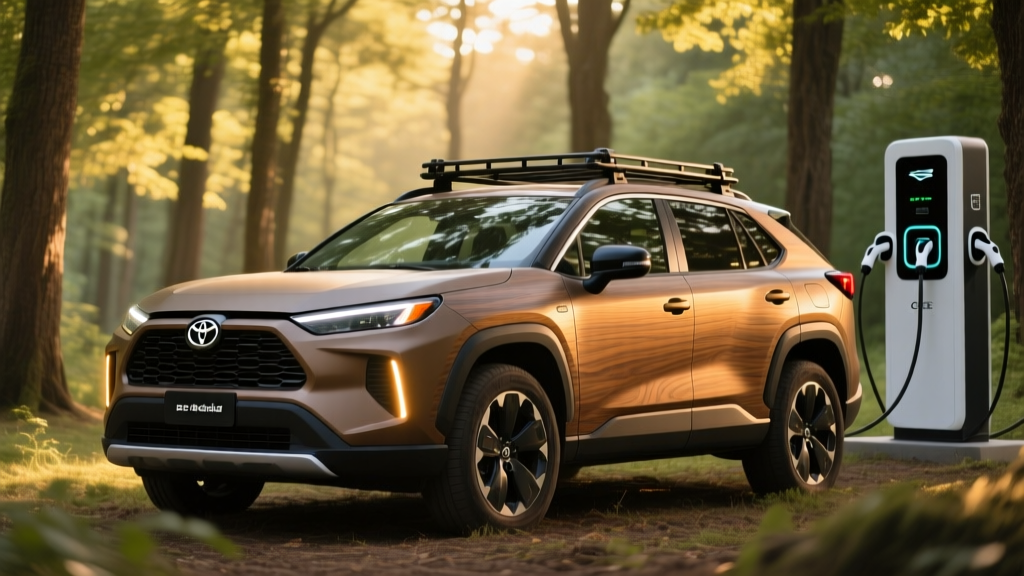
The 2026 Toyota bZ Woodland SUV enters a crowded compact electric crossover segment with a clear mission: deliver legitimate off-road capability and all-weather confidence without sacrificing daily-driver efficiency. Built on an evolution of the e-TNGA platform shared with the bZ4X and Subaru Solterra, the Woodland differentiates itself with increased ground clearance, standard dual-motor all-wheel drive, and a larger battery pack that finally addresses the range criticisms that dogged Toyota's first-generation bZ offerings.
After analyzing Toyota's published specifications, EPA filings, and early drive data, the bZ Woodland positions itself as a practical adventure-oriented EV for buyers who need more capability than a Hyundai Ioniq 5 or Tesla Model Y but aren't ready to step up to a Rivian R1S or full-size electric truck. It won't win drag races, and its DC fast-charging speed still trails the segment leaders, but its combination of standard AWD, competitive range, Toyota's reputation for durability, and likely federal tax credit eligibility make it a compelling package for the right buyer.
Range, Battery & Efficiency: The Numbers That Matter
| Spec | Value |
|---|---|
| Battery Capacity (Usable) | 72.8 kWh |
| Battery Chemistry | NMC (Nickel Manganese Cobalt) |
| EPA Estimated Range | 278 miles (XLE trim, 18" wheels) |
| EPA Estimated Range (Limited) | 262 miles (20" wheels) |
| Combined MPGe | 102 MPGe |
| Efficiency | 33 kWh / 100 miles |
| Drivetrain | Dual-motor AWD (standard) |
| Total System Output | 338 hp / 375 lb-ft torque |
| 0–60 mph | 5.8 seconds |
| Ground Clearance | 8.3 inches |
| Towing Capacity | 2,000 lbs (braked) |
The EPA rates the bZ Woodland XLE at 278 miles, but expect real-world results to vary significantly based on conditions. In mixed highway driving at 70–75 mph, plan for approximately 235–255 miles before needing a charge stop. In cold weather (below 32°F), range drops to roughly 200–225 miles due to battery resistance and cabin heating demands. City driving with regenerative braking can push closer to or slightly above the EPA sticker. The dual-motor AWD system and boxier SUV profile create more rolling resistance and drag than a sleek sedan, which is the trade-off for the Woodland's capability.
The 72.8 kWh usable NMC pack is a meaningful upgrade over the original bZ4X's 64 kWh unit. Toyota uses an NMC chemistry here rather than LFP (lithium iron phosphate), prioritizing energy density to keep the pack compact enough for the Woodland's platform while maximizing range. NMC batteries typically offer better cold-weather performance than LFP but carry a slightly higher long-term degradation curve — though Toyota's thermal management system and conservative state-of-charge buffers are designed to mitigate this over the battery's lifespan.
Efficiency at 33 kWh per 100 miles puts the Woodland in the middle of the pack. For context, the Hyundai Ioniq 5 AWD achieves roughly 30 kWh/100mi while the Subaru Solterra sits around 34 kWh/100mi. The Woodland's boxier styling and 8.3 inches of ground clearance create aerodynamic drag that limits highway efficiency, so frequent long-distance highway drivers should budget for more charging stops than a lower, sleeker crossover would require.
Charging Speed: Home and DC Fast Charging
| Charging Level | Power / Rate | Time / Speed |
|---|---|---|
| Level 1 (120V household) | ~1.4 kW | ~3–4 miles per hour of charging |
| Level 2 (240V home/public) | 7.7 kW (onboard charger max) | ~25 miles per hour; 0–100% in ~9.5 hours |
| DC Fast Charge (peak) | 150 kW peak | 10–80% in approximately 30 minutes |
| DC Fast Charge (sustained) | ~100–120 kW average to 80% | Charge curve tapers significantly above 70% SoC |
| Charge Port | NACS (Tesla Supercharger compatible via native port, no adapter required) | |
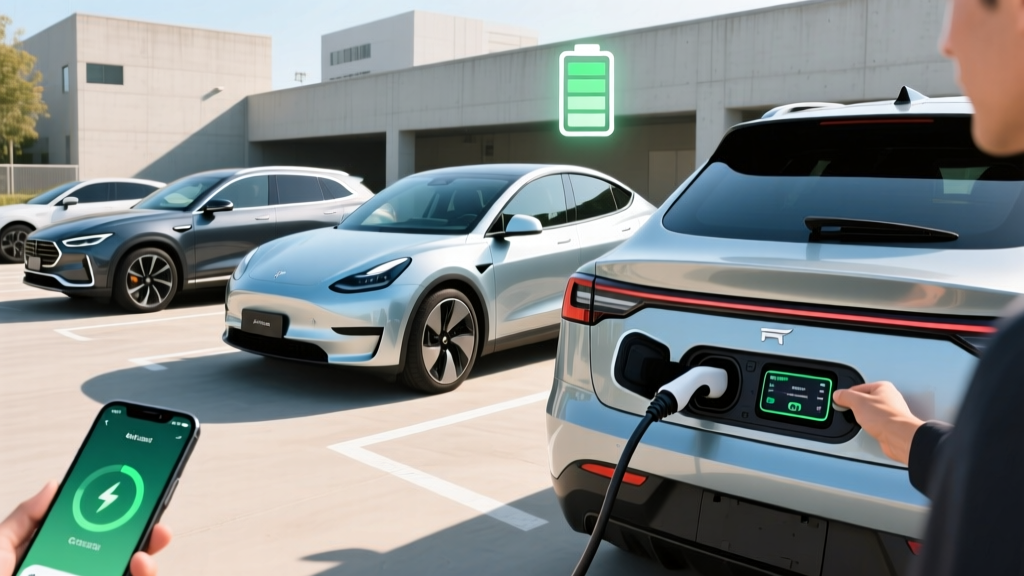
Toyota has equipped the 2026 bZ Woodland with a native NACS charge port, aligning with the industry-wide shift to the Tesla Supercharger connector. This means access to Tesla's vast Supercharger network without the need for an adapter — a significant practical advantage for road trippers and a future-proofing move as CCS infrastructure gradually transitions.
The 150 kW peak DC fast-charging rate is where the Woodland shows its most notable limitation versus key competitors. The Hyundai Ioniq 5 and Kia EV6, built on 800V architectures, can peak at over 230 kW and sustain high charge rates longer, achieving 10–80% in roughly 18 minutes. The Woodland's 400V architecture caps it at 150 kW, and like most EVs, the charge curve tapers as the battery fills — expect the final 10% (from 70–80%) to take a disproportionate share of that 30-minute window.
For road-trip planning, this means budgeting roughly 30–35 minutes per charge stop when arriving at 10% SoC and charging to 80%. That's competitive with many mainstream EVs but noticeably slower than the 800V class leaders. If you frequently drive 300+ mile routes, the difference adds up over a day of driving.
At home, the 7.7 kW onboard Level 2 charger is adequate for overnight replenishment. On a standard 240V/32A home charger (like a ChargePoint Home Flex or Tesla Wall Connector), you'll add roughly 25 miles of range per hour, meaning a full overnight charge easily covers even heavy daily driving. Most owners will rarely need DC fast charging for daily use — home Level 2 is the backbone of EV ownership, and the Woodland performs well here.
Performance, Drivetrain & Capability
The dual-motor AWD system is standard across all bZ Woodland trims — there's no front-wheel-drive option, which simplifies the buying decision and ensures every Woodland buyer gets the traction benefits they're paying for. The front motor produces 167 hp and the rear motor 171 hp, for a combined system output of 338 hp and 375 lb-ft of torque.
The 5.8-second 0–60 mph time is respectable but not thrilling. This is an SUV tuned for capability and comfort, not performance. Where the Woodland shines is low-speed torque delivery and traction management. Toyota's X-MODE system, carried over from its ICE SUV lineup, coordinates the dual motors, brake-based torque vectoring, and traction control for snow, mud, and light off-road scenarios. The 8.3 inches of ground clearance exceeds the bZ4X by over an inch and matches many gas-powered compact SUVs, giving the Woodland genuine dirt-road and snowy-driveway competence.
Towing capacity is rated at 2,000 pounds with a braked trailer — enough for a small camping trailer, a pair of dirt bikes, or a light utility trailer, but not enough for a boat or larger camper. Buyers who need serious towing should look at the Rivian R1S (up to 7,700 lbs) or an electric truck.
One-pedal driving with strong regenerative braking is available but not as aggressive as Tesla's or Nissan's implementations. Toyota offers adjustable regen levels through steering-wheel paddles, letting drivers choose between a coasting feel and stronger deceleration. The heat pump is standard, which improves cabin heating efficiency in cold weather and reduces the range penalty of winter driving compared to EVs using resistive heaters.
Interior, Cargo & Technology
The Woodland's cabin follows Toyota's recent design language with a 12.3-inch touchscreen running Toyota's latest infotainment system, wireless Apple CarPlay and Android Auto, and a digital instrument cluster. The center console features physical climate controls — a welcome choice for drivers tired of menu-diving for temperature adjustments.
| Dimension | Measurement |
|---|---|
| Front Headroom | 39.4 inches |
| Rear Headroom | 38.1 inches |
| Front Legroom | 42.1 inches |
| Rear Legroom | 36.4 inches |
| Cargo Volume (behind rear seats) | 29.6 cu ft |
| Cargo Volume (rear seats folded) | 56.9 cu ft |
| Front Trunk (Frunk) | Not available (AWD motor packaging) |
Cargo space is competitive for the segment, though the absence of a frunk is a missed opportunity. The dual-motor AWD layout fills the space where a front trunk could exist, and Toyota opted to use that volume for motor and electronics packaging rather than reconfiguring for storage. The 29.6 cu ft behind the rear seats is adequate for a week's groceries or two large suitcases, and the 56.9 cu ft with seats folded handles most weekend adventure gear.
On the technology front, Toyota Safety Sense 3.0 is standard, which includes adaptive cruise control, lane-centering assist, automatic emergency braking with pedestrian detection, blind-spot monitoring, and rear cross-traffic alert. This is a SAE Level 2 driver-assistance system — it supports the driver on highways but requires continuous attention and hands on the wheel. It is not autonomous or "self-driving." Toyota has not announced plans for a hands-free highway system like GM's Super Cruise or Ford's BlueCruise on the Woodland, which is a competitive gap for buyers who value that feature.
A 360-degree camera system is available on the Limited trim, useful for tight trails and parking. The Woodland also features a vehicle-to-load (V2L) function through a 120V outlet in the cargo area, capable of powering small appliances or tools at up to 1,500W — handy for camping or emergency backup power.
Pricing, Trims & Federal Tax Credit Eligibility
| Trim | Base MSRP | Key Features |
|---|---|---|
| XLE | $42,850 | 18" wheels, heated seats, TSS 3.0, 12.3" display, X-MODE |
| Limited | $47,300 | 20" wheels, panoramic roof, 360° camera, premium audio, ventilated seats |
The destination charge adds approximately $1,390 to all trims. An as-tested Limited with all available packages approaches $50,000.
As of 2026, the Toyota bZ Woodland is expected to qualify for up to $7,500 in federal tax credits under IRS §30D, available as a point-of-sale transfer that reduces the purchase price directly at the dealership. However, eligibility depends on several buyer- and vehicle-specific requirements:
- MSRP Cap: SUVs must have an MSRP at or below $80,000 — both Woodland trims qualify.
- Buyer Income Cap: Adjusted gross income must not exceed $150,000 (single), $225,000 (head of household), or $300,000 (joint filers).
- Battery Sourcing: Critical minerals and battery components must meet phased-in domestic/F TA content thresholds that tighten annually through 2026. Toyota has indicated the Woodland's battery supply chain is structured to meet 2026 requirements, but final IRS certification should be confirmed at purchase.
- Point-of-Sale Transfer: Buyers can elect to transfer the credit to the dealer for an immediate price reduction, subject to dealer participation.
Always verify current eligibility at IRS.gov and with your tax professional before purchase, as sourcing rules and qualifying VIN lists update periodically.
With the full $7,500 credit applied, the XLE trim effectively starts around $35,350 — a compelling entry point for a dual-motor AWD electric SUV. The Limited drops to approximately $39,800, which undercuts comparably equipped competitors like the Hyundai Ioniq 5 Limited AWD and significantly trails the Rivian R1S.
Warranty & Long-Term Ownership
Toyota backs the bZ Woodland with its standard new-vehicle warranty of 3 years / 36,000 miles and a powertrain warranty of 5 years / 60,000 miles. The high-voltage battery carries an 8-year / 100,000-mile warranty guaranteeing at least 70% capacity retention — consistent with industry norms and federal requirements. Some states with California Air Resources Board (CARB) adoption extend the battery warranty to 10 years / 150,000 miles.
Toyota's historical reliability reputation and conservative battery management approach (larger top and bottom SoC buffers than some competitors) suggest the Woodland's battery should retain meaningful capacity well beyond the warranty period. Real-world degradation data from the bZ4X platform indicates approximately 5–8% capacity loss over the first 50,000 miles, which is within expected norms for NMC chemistry with active thermal management.
Maintenance costs are minimal compared to a gas vehicle — no oil changes, no spark plugs, no transmission fluid. Expect to replace cabin air filters, wiper blades, brake fluid (every 3 years), and tires. Brake pad life is extended significantly by regenerative braking; many EV owners report original brake pads lasting 80,000+ miles.
Pros & Cons: Honest Assessment
- Standard dual-motor AWD with genuine off-road capability (X-MODE, 8.3" clearance)
- Competitive EPA range of 278 miles; strong real-world city efficiency
- Native NACS port — direct Tesla Supercharger access, no adapter needed
- Likely qualifies for full $7,500 federal tax credit, bringing effective price below $36K
- Heat pump standard — better cold-weather range retention
- Physical climate controls and adjustable regen paddles
- V2L capability (1,500W) for camping and emergency use
- Toyota's dealer network and reliability reputation
- 150 kW peak DC charging is slower than 800V rivals (Ioniq 5, EV6 at 230+ kW)
- No frunk — AWD motor packaging eliminates front storage
- No hands-free highway driving system (no Super Cruise/BlueCruise equivalent)
- 30-minute 10–80% charge time adds up on multi-stop road trips
- Limited towing capacity at 2,000 lbs
- Rear legroom (36.4") is tighter than some competitors
- 20" wheels on Limited trim reduce range by ~16 miles vs. XLE
Who Should Buy the 2026 Toyota bZ Woodland?
Choose the bZ Woodland if: You need AWD and ground clearance for snow, dirt roads, or light trails; you value Toyota's reliability track record and widespread dealer network; you want native Supercharger access; your daily commute is under 100 miles round-trip with home charging; and you want a sub-$36K effective price after the tax credit.
Look elsewhere if: You prioritize the fastest DC charging for frequent long road trips (consider the Ioniq 5 or EV6); you want hands-free highway driving (consider a vehicle with GM Super Cruise or Ford BlueCruise); you need more than 2,000 lbs of towing (look at the Rivian R1S or an electric truck); or you want maximum cargo space and a frunk.
The Woodland is best suited for outdoor-active buyers in four-season climates who want an EV that handles ski trips, forest service roads, and snowy commutes without drama. It's a pragmatic, capability-first electric SUV that prioritizes all-weather confidence over headline-grabbing acceleration or charging records. For urban commuters who rarely leave pavement, the Ioniq 5 or Model Y offers more efficiency and faster charging. For serious off-roaders, a Rivian or Wrangler 4xe may be more appropriate. But for the large middle ground of buyers who want a do-it-all electric crossover with Toyota's backing, the bZ Woodland makes a strong case.
Frequently Asked Questions
What is the real-world range of the 2026 Toyota bZ Woodland?
The EPA rates the XLE at 278 miles and the Limited at 262 miles. In real-world highway driving at 70+ mph, expect 235–255 miles. In cold weather below freezing, plan for 200–225 miles. City driving with regen braking can match or slightly exceed the EPA sticker.
How fast does the bZ Woodland charge?
DC fast charging peaks at 150 kW, achieving 10–80% in approximately 30 minutes. At home on a Level 2 (240V) charger, it charges at 7.7 kW, adding about 25 miles of range per hour — a full overnight charge for most drivers. The native NACS port provides direct access to Tesla Superchargers.
How much does it cost after the federal tax credit?
The XLE starts at $42,850 MSRP. With the full $7,500 §30D credit applied as a point-of-sale transfer, the effective price drops to approximately $35,350. The Limited trim at $47,300 drops to roughly $39,800. Eligibility requires meeting income caps, MSRP limits (both trims qualify), and battery-sourcing requirements — verify at IRS.gov before purchase.
Does the bZ Woodland qualify for the $7,500 federal EV tax credit?
It is expected to qualify for the full $7,500 based on Toyota's battery sourcing strategy and the vehicle's MSRP falling well under the $80,000 SUV cap. Buyer income caps apply ($150K single / $300K joint). Final eligibility should be confirmed via the IRS clean vehicle credit page and your tax professional at time of purchase, as sourcing rules update periodically.
Is the bZ Woodland worth buying over the Hyundai Ioniq 5 or Subaru Solterra?
It depends on your priorities. The Ioniq 5 charges faster (800V architecture, ~230 kW peak) and offers slightly more range, but lacks the Woodland's ground clearance and off-road capability. The Solterra shares the platform but has slightly less range and no native NACS port. The Woodland wins for buyers who prioritize all-weather and light off-road capability with Supercharger access at a competitive post-credit price.
Does the bZ Woodland have self-driving capability?
No. Toyota Safety Sense 3.0 is a SAE Level 2 driver-assistance system. It provides adaptive cruise control and lane-centering on highways but requires the driver to remain fully attentive with hands on the steering wheel at all times. It is not autonomous driving.