Quick Verdict: Toyota's Electric Playbook Matures for 2026
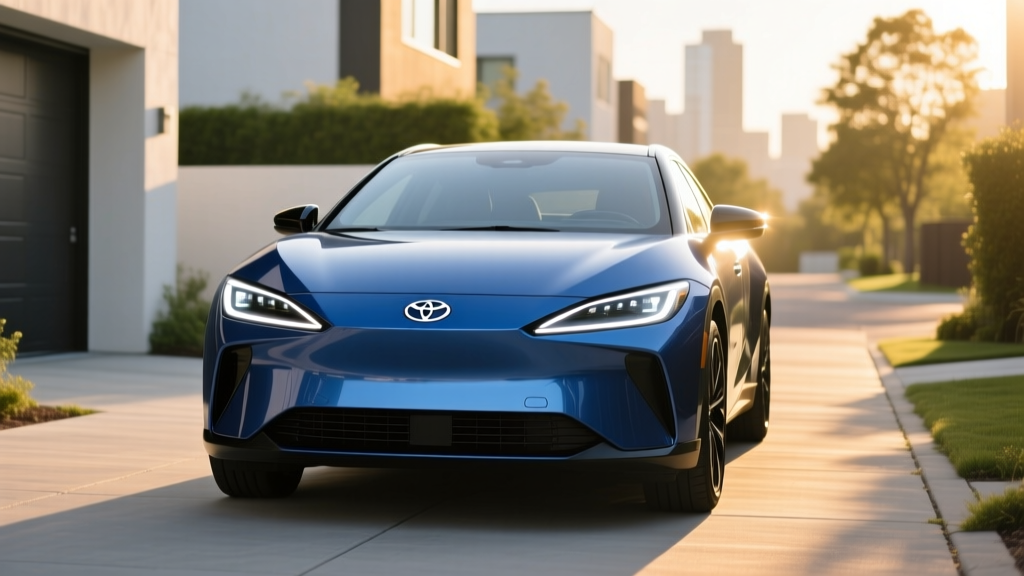
Toyota spent years catching flak for a cautious EV strategy, but the 2026 Toyota bZ electric car lineup — anchored by the refreshed bZ4X crossover and the all-new bZ5X three-row SUV — signals a genuine pivot. The bZ4X returns with a larger battery, faster DC charging, and a price cut that puts it squarely in the crosshairs of the Hyundai Ioniq 5 and Tesla Model Y. The bZ5X fills a gap Toyota has ignored for years: a mainstream, three-row electric family hauler.
Neither vehicle will win a drag race against a Tesla, and Toyota's infotainment still trails Korean rivals in polish. But if you value battery longevity warranties, dealer service networks, and pragmatic range over performance bragging rights, the 2026 bZ lineup deserves a serious look.
The bZ4X XLE FWD carries an EPA-estimated 282 miles of range. In mixed highway driving at 70 mph, expect roughly 245–260 miles. In freezing temperatures (below 30°F), plan for 200–220 miles before you need a charger. The AWD Limited trim drops to an EPA 252 miles — budget accordingly.
Full Specs at a Glance
| Spec | bZ4X XLE (FWD) | bZ4X Limited (AWD) | bZ5X (AWD) |
|---|---|---|---|
| EPA Range | 282 mi | 252 mi | 305 mi |
| Battery (usable) | 74.4 kWh (NMC) | 74.4 kWh (NMC) | 92.0 kWh (NMC) |
| Horsepower | 201 hp | 214 hp | 338 hp |
| 0–60 mph | 7.1 sec | 6.5 sec | 5.8 sec |
| Drivetrain | FWD (single motor) | AWD (dual motor) | AWD (dual motor) |
| Max DC Fast Charge | 150 kW | 150 kW | 200 kW |
| 10–80% DCFC Time | ~30 min | ~30 min | ~25 min |
| Level 2 Home Rate | 7.2 kW (~25 mi/hr) | 7.2 kW (~25 mi/hr) | 11.5 kW (~38 mi/hr) |
| MPGe (combined) | 120 MPGe | 107 MPGe | 105 MPGe |
| kWh/100 mi | 28 | 31 | 32 |
| Cargo (behind 2nd row) | 27.7 cu ft | 27.7 cu ft | 42.0 cu ft |
| Rear Legroom | 38.1 in | 38.1 in | 39.4 in |
| Battery Warranty | 10 yr / 150,000 mi | 10 yr / 150,000 mi | 10 yr / 150,000 mi |
| Base MSRP | $37,950 | $44,250 | $49,900 |
Range, Battery Chemistry & Efficiency
Toyota equips both bZ models with lithium-ion NMC (nickel manganese cobalt) battery packs supplied primarily by Panasonic and CATL. Toyota has not adopted LFP (lithium iron phosphate) chemistry for these vehicles, likely prioritizing energy density to keep pack weight manageable in the midsize crossover and SUV segments.
The bZ4X's 74.4 kWh usable pack is an upgrade from the earlier 71.4 kWh unit, achieved through improved cell packaging rather than a full chemistry redesign. Efficiency is competitive: 28 kWh/100 miles for the FWD bZ4X translates to roughly 3.6 miles per kWh, which is respectable for the segment but trails the Ioniq 5's 3.8 mi/kWh and the Model Y's 3.7 mi/kWh.
The bZ5X's larger 92.0 kWh pack gives it the longest EPA range in Toyota's EV stable at 305 miles. That 305-mile figure is enough for most families to handle daily driving plus weekend trips without mid-journey charging, though road-trippers should plan stops every 240–260 miles to account for highway-speed energy consumption and seasonal temperature swings.
Charging Speed: DC Fast Charge & Home Level 2
| Charging Level | bZ4X | bZ5X | Notes |
|---|---|---|---|
| Level 1 (120V / 12A) | ~1.4 kW (~5 mi/hr) | ~1.4 kW (~5 mi/hr) | Emergency/trickle only |
| Level 2 (240V / 32A) | 7.2 kW (~25 mi/hr) | 11.5 kW (~38 mi/hr) | Home overnight charging |
| Level 2 (240V / 48A) | 7.2 kW (capped by onboard charger) | 11.5 kW (uses full 48A) | bZ5X benefits from higher-amp circuits |
| DC Fast Charge (peak) | 150 kW (CCS1) | 200 kW (NACS) | See connector note below |
| 10–80% DCFC | ~30 minutes | ~25 minutes | Preconditioning required for peak rate |
Connector note: The 2026 bZ5X ships with a native NACS (Tesla-style) charge port, giving it direct access to Tesla Superchargers without an adapter. The bZ4X retains CCS1, though Toyota provides a NACS adapter in the box. This split reflects Toyota's transition strategy — expect full NACS adoption across the lineup by 2027.
Charging curve reality: The bZ4X peaks at 150 kW only between roughly 10–35% state of charge. From 35–60%, it sustains around 100–110 kW, and above 80%, it tapers sharply to under 40 kW. That 30-minute 10–80% claim assumes battery preconditioning is active — if you arrive at a DC fast charger with a cold battery, add 5–10 minutes. The bZ5X holds its 200 kW peak longer (up to ~45% SoC), making it noticeably faster on long road-trip charging stops.
For home charging setup guidance, a Level 2 charger on a 240V/40A circuit will fully recharge the bZ4X overnight in about 10 hours. The bZ5X benefits from a 60A circuit to unlock its full 11.5 kW onboard charger — budget $800–$1,500 for the electrician install depending on your panel capacity.
Performance & Driving Dynamics
The bZ4X was never designed to be a performance EV, and the 2026 model stays the course. The FWD single-motor variant delivers 201 hp and a 7.1-second 0–60 time — perfectly adequate for merging and passing but noticeably relaxed compared to the Ioniq 5's 5.0-second AWD sprint. The dual-motor AWD bZ4X bumps output to 214 hp and drops 0–60 to 6.5 seconds, with Toyota's X-Mode traction system adding genuine light-off-road capability (gravel, snow, mud) that few EV crossovers match.
The bZ5X is the performance surprise. At 338 hp and 5.8 seconds to 60, it outpaces the Kia EV9's base AWD and slots in just behind the EV9 GT-Line. Ride quality is compliant, body roll is well-controlled for a three-row SUV, and regenerative braking offers adjustable levels via paddle shifters — though true one-pedal driving (full stop without brake pedal) is not available, a frustrating Toyota carryover.
Pricing, Trims & Federal Tax Credit Eligibility
| Trim | MSRP | Est. After §30D Credit* | Destination |
|---|---|---|---|
| bZ4X XLE (FWD) | $37,950 | $30,450 | $1,350 |
| bZ4X XLE (AWD) | $39,950 | $32,450 | $1,350 |
| bZ4X Limited (AWD) | $44,250 | $36,750 | $1,350 |
| bZ5X XLE (AWD) | $49,900 | $42,400 | $1,450 |
| bZ5X Limited (AWD) | $55,400 | $47,900 | $1,450 |
*Federal tax credit estimates assume full eligibility under IRS §30D rules. Individual eligibility varies.
- Income cap: Modified AGI ≤ $150,000 (single) / $300,000 (joint) / $225,000 (head of household)
- MSRP cap: ≤ $55,000 for SUVs (bZ5X qualifies); ≤ $55,000 for crossovers classified as SUVs (bZ4X qualifies)
- Battery sourcing: Critical minerals and battery components must meet escalating domestic-content thresholds — Toyota sources cells from Panasonic (US-assembled packs for bZ5X) and CATL (bZ4X), and the CATL-sourced bZ4X may face partial credit reduction depending on 2026 FEOC (foreign entity of concern) rules
- Point-of-sale transfer: You can transfer the credit to the dealer at purchase for an immediate price reduction, rather than waiting to claim it on your tax return
- Verify before buying: Check the latest fueleconomy.gov credit listings — eligibility can change mid-year as sourcing rules tighten
Credit warning: The bZ4X's CATL battery cells may trigger the FEOC (foreign entity of concern) restriction, potentially reducing the credit from $7,500 to $3,750 or eliminating it entirely for 2026. The bZ5X, with its Panasonic US-assembled pack, is more likely to qualify for the full $7,500. Confirm the exact credit amount with your dealer and a tax professional before signing.
Interior, Tech & Cargo
Toyota overhauled the bZ4X's interior for 2026, addressing the most common complaint: the awkward instrument cluster placement. A new 12.3-inch digital gauge cluster now sits directly in the driver's sightline (no more peering over the steering wheel), paired with a 14-inch touchscreen running Toyota's latest Audio Multimedia system. Wireless Apple CarPlay and Android Auto are standard. Physical climate controls return, replacing the touch-capacitive sliders that frustrated early bZ4X buyers.
The bZ5X's cabin is a step up in material quality — soft-touch surfaces on the dash and door panels, available heated and ventilated second-row captain's chairs, and a panoramic glass roof with an electrochromic dimming panel. Third-row space accommodates children comfortably (29.5 inches of legroom) but will feel cramped for adults on anything beyond short trips.
Cargo capacity: The bZ4X offers 27.7 cubic feet behind the second row and 56.9 cubic feet with seats folded — competitive with the RAV4. The bZ5X delivers 42.0 cu ft behind the second row, 81.0 cu ft with the second row folded (third row folds flat), and a small front trunk (frunk) adding 2.1 cu ft — enough for charging cables and a small bag.
Driver assistance: Toyota Safety Sense 3.0 is standard on all trims, including adaptive cruise control with lane centering, automatic emergency braking with pedestrian detection, blind-spot monitoring, and rear cross-traffic alert. This is a solid SAE Level 2 driver-assist system — it requires continuous driver supervision and is not a self-driving system. Toyota does not currently offer a hands-free highway driving feature comparable to GM's Super Cruise or Ford's BlueCruise.
Toyota Safety Sense 3.0 is an SAE Level 2 system. You must keep your hands on the wheel and eyes on the road at all times. It does not autonomously navigate, change lanes without confirmation, or handle complex urban intersections. Do not confuse it with Level 4 robotaxi services like Waymo.
Warranty & Long-Term Ownership
Toyota backs both bZ models with a 10-year / 150,000-mile battery and hybrid/EV component warranty — one of the longest in the mainstream EV segment and a clear competitive advantage over the Hyundai/Kia 10-year/100,000-mile coverage and Tesla's 8-year/120,000-mile battery warranty. The basic vehicle warranty runs 3 years / 36,000 miles, with a 5-year / 60,000-mile powertrain warranty.
Toyota's NMC battery packs have demonstrated strong longevity data from their hybrid lineup, and the company engineers a generous buffer (approximately 8–10% of total capacity is reserved and not user-accessible) to slow degradation. Expect roughly 90–93% state of health after 100,000 miles based on early bZ4X fleet data and Toyota's historical hybrid battery performance.
Pros & Cons
- 10-year/150,000-mile battery warranty — best in mainstream segment
- bZ5X fills a genuine gap: affordable three-row EV SUV
- Competitive pricing, especially after potential §30D credit
- X-Mode AWD traction system (bZ4X) handles snow/gravel well
- Physical climate controls return for 2026
- Large Toyota dealer network for service access
- DC fast-charge speed (150 kW bZ4X) trails Ioniq 5 (240 kW) and Model Y (250 kW)
- No true one-pedal driving mode
- bZ4X may face reduced federal tax credit due to CATL battery sourcing
- No hands-free highway driving feature (behind GM/Ford)
- Third-row bZ5X space is tight for adults
- Efficiency (kWh/100 mi) slightly behind segment leaders
Who Should Buy the 2026 Toyota bZ?
Choose the bZ4X if: You want a practical compact EV crossover for commuting and weekend errands, you value a long battery warranty, you have reliable home charging, and you don't need class-leading DC fast-charge speed. Best for: daily commuters, two-person households, Toyota-loyal buyers transitioning from a RAV4 Hybrid.
Choose the bZ5X if: You need three rows for a growing family, you want a 300+ mile range EV SUV under $50K (before credit), and you take regular road trips where NACS Supercharger access matters. Best for: families with 2–3 kids, road-trippers, buyers cross-shopping the Kia EV9.
Look elsewhere if: You prioritize fastest possible DC charging (Ioniq 5 / Model Y), you want hands-free highway driving (GM Super Cruise / Ford BlueCruise), or you regularly tow more than 2,000 lbs (consider the F-150 Lightning or Rivian R1S).
Frequently Asked Questions
What is the real-world range of the 2026 Toyota bZ4X?
The EPA rates the bZ4X FWD at 282 miles. In real-world highway driving at 70 mph in moderate temperatures, expect 245–260 miles. In cold weather (below 30°F), range drops to roughly 200–220 miles due to cabin heating demands and reduced battery efficiency. City driving with regenerative braking can exceed the EPA estimate, reaching 290+ miles in stop-and-go traffic.
How fast does the 2026 Toyota bZ charge at home and on the road?
At home on a Level 2 (240V) charger, the bZ4X adds about 25 miles of range per hour (7.2 kW), fully charging overnight in ~10 hours. The bZ5X charges faster at home — about 38 miles per hour (11.5 kW). On DC fast chargers, the bZ4X peaks at 150 kW (10–80% in ~30 minutes) and the bZ5X peaks at 200 kW (10–80% in ~25 minutes). Always precondition the battery via the navigation system for optimal charge speed.
Does the 2026 Toyota bZ qualify for the federal EV tax credit?
It depends on the model and your income. The bZ5X, with its US-assembled Panasonic battery, is likely eligible for the full $7,500 under IRS §30D, assuming you meet the income caps ($150K single / $300K joint). The bZ4X's CATL-sourced cells may trigger the FEOC restriction, potentially reducing or eliminating the credit. Always verify current eligibility on fueleconomy.gov before purchasing.
Is the Toyota bZ4X worth buying over the Hyundai Ioniq 5 or Tesla Model Y?
The bZ4X wins on battery warranty length (10 yr/150K mi vs. competitors' 8 yr/100K mi) and Toyota's dealer service network. The Ioniq 5 wins on DC fast-charge speed (240 kW vs. 150 kW) and interior design. The Model Y wins on efficiency, Supercharger network access (though bZ5X now has NACS), and performance. If long-term battery peace of mind is your priority, the bZ4X makes a strong case.
What is the biggest drawback of the 2026 Toyota bZ lineup?
The most significant weakness is DC fast-charge speed on the bZ4X — 150 kW peak is a generation behind rivals. On a long road trip, that translates to 5–8 extra minutes per charge stop compared to an Ioniq 5 or Model Y. The lack of a hands-free driving feature and the absence of true one-pedal driving are secondary frustrations that affect daily usability.
Can the Toyota bZ5X tow?
Yes. The bZ5X AWD is rated for up to 3,500 pounds of towing capacity — sufficient for a small boat trailer, a pair of jet skis, or a lightweight camping trailer. Towing will reduce range significantly; plan for roughly 50–60% of the EPA range estimate when towing near maximum capacity.