The Tesla Roadster has occupied a strange corner of the EV world since Elon Musk first teased a second-generation model in 2017. As of early 2026, Tesla has confirmed the Roadster is slated for production this year, with reservations reopening and preliminary specifications published on the company's website. But between Tesla's headline-grabbing claims and what actually shows up in driveways, there is a gap worth examining with a critical eye.
This profile synthesizes every confirmed and estimated data point available for the 2026 Tesla Roadster, clearly separating what Tesla has stated from what remains preliminary. If you are holding a reservation or weighing this against a Porsche Taycan Turbo GT or Rimac Nevera, here is the spec-driven breakdown you need.
2026 Tesla Roadster Specifications at a Glance
| Spec | Estimated / Claimed |
|---|---|
| EPA Range (est.) | 620 miles (Tesla claim) |
| Battery Capacity | ~200 kWh (Tesla claim), NMC chemistry expected |
| Drivetrain | Tri-motor AWD (1 front, 2 rear) |
| Horsepower | ~1,000+ hp (wheel torque: 10,000 Nm claimed) |
| 0–60 mph | 1.9 seconds (base) / 1.1 seconds (Space Package w/ cold-gas thrusters) |
| Top Speed | 250+ mph |
| Max DC Fast Charge | Est. 250–350 kW (unconfirmed) |
| 10–80% DC Charge Time | Est. 25–35 minutes (unconfirmed) |
| Level 2 Home Charging | Est. 11.5–22 kW (48A–80A onboard charger) |
| Base MSRP | ~$200,000 (Founders Series: ~$250,000) |
| Federal Tax Credit (§30D) | Not eligible (MSRP exceeds $80K cap for non-vans/pickups) |
| Warranty (est.) | 8 years / 150,000 miles (battery & drive unit) |
| Seating | 2+2 (4 seats; rear seats minimal legroom) |
Range and Efficiency: 620 Miles Claimed, but What Is Real?
Tesla has repeatedly cited a 620-mile range figure for the Roadster, enabled by a massive ~200 kWh battery pack. For context, the longest-range EV currently on sale (the Lucid Air Grand Touring) achieves an EPA-verified 516 miles with a 112 kWh usable pack. The Roadster's claimed range would shatter that record — if certified.
- EPA estimate: 620 miles (Tesla claim, pending EPA certification)
- Highway driving (75 mph): Expect ~480–530 miles. Aerodynamic drag at highway speed reduces efficiency roughly 20–25% versus the combined cycle.
- Cold weather (below 32°F / 0°C): Expect ~370–440 miles. Lithium-ion packs lose 20–30% usable capacity in freezing temperatures without aggressive preconditioning.
- Track/Spirited driving: Well under 200 miles. Sustained high-speed runs at 1,000+ hp drain a 200 kWh pack rapidly.
Efficiency will likely land in the 30–34 kWh/100 mi range (combined), given the pack size and weight penalty of a 200 kWh battery. That translates to roughly 98–112 MPGe. For a hypercar, efficiency is secondary to performance, but buyers paying $200K+ should expect reasonable energy consumption for daily usability.
Charging Speed: The 200 kWh Problem
Here is the physics challenge Tesla must solve: a 200 kWh battery requires either an extraordinarily long charge time or an extraordinarily high charge rate. Even at a sustained 250 kW, filling 160 kWh (10–80% of a 200 kWh pack) takes a minimum of 38 minutes in ideal conditions — and real-world charging curves taper significantly above 60–70% state of charge.
| Charging Level | Power (kW) | Est. Miles Added per Hour | Notes |
|---|---|---|---|
| Level 1 (120V) | 1.4 kW | ~4 mi/hr | Essentially useless for a 200 kWh pack (140+ hours) |
| Level 2 (240V, 48A) | 11.5 kW | ~33 mi/hr | Overnight charge: ~18 hours for 10–100% |
| Level 2 (240V, 80A) | 19.2 kW | ~55 mi/hr | Requires 100A circuit; ~10 hours overnight |
| DC Fast (V4 Supercharger) | Est. 250–350 kW peak | ~700–1,000 mi/hr (peak) | 10–80% est. 25–35 min; sustained rate much lower |
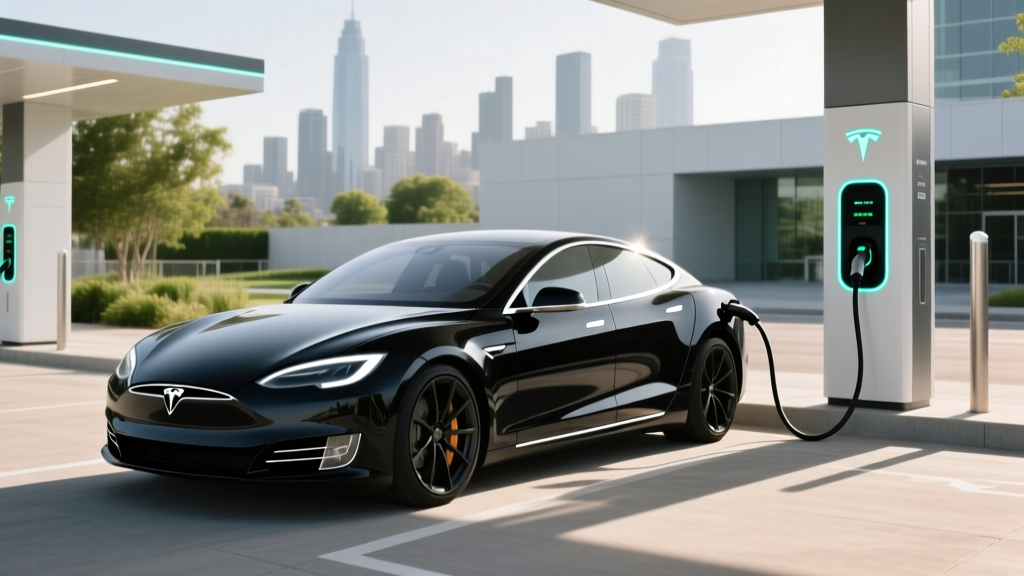
Tesla's V4 Supercharger cabinets support up to 350 kW on the CCS/NACS connector, but whether the Roadster's battery architecture can accept that rate — and sustain it — remains unconfirmed. A Tesla Supercharger network session will likely precondition the battery via navigation routing, as current Tesla models do, but the thermal management demands of a 200 kWh pack charging at 350 kW are substantial.
For home charging, owners will almost certainly need an 80A Tesla Wall Connector on a 100A dedicated circuit to achieve overnight fills. Budget $1,500–$3,000 for electrical panel upgrades if your home has a 100A or 150A main service — a 200A panel is strongly recommended.
Performance: 1.9 Seconds and the Space Package Question
The base Roadster's claimed 1.9-second 0–60 mph time would make it one of the quickest production cars ever built, rivaling the Rimac Nevera (1.85s) and demolishing the Porsche Taycan Turbo GT (2.1s with Launch Control). Tesla's tri-motor layout — one front motor, two rear — enables torque vectoring and all-wheel-drive traction essential for sub-2-second launches.
The more controversial claim is the optional Space Package, developed with SpaceX, which reportedly adds cold-gas thrusters around the vehicle to improve cornering, braking, and acceleration. Tesla claims this package drops 0–60 to 1.1 seconds. Independent verification of this claim — and its legality on public roads — has not been published. Cold-gas thrusters use compressed gas (not combustion), but any system that alters vehicle dynamics via directed thrust will face regulatory scrutiny from NHTSA.
Top speed is listed at 250+ mph, placing the Roadster firmly in hypercar territory. For reference, reaching 250 mph requires approximately 500–600 hp just to overcome aerodynamic drag, leaving substantial power in reserve from the tri-motor setup.
Pricing, Trims, and Tax Credit Reality
The 2026 Tesla Roadster is positioned as a low-volume halo car, not a mass-market EV. Pricing reflects that positioning:
| Trim / Configuration | Est. MSRP | §30D Tax Credit | Est. Net Price |
|---|---|---|---|
| Roadster (Base) | ~$200,000 | $0 | ~$200,000 |
| Roadster (Founders Series) | ~$250,000 | $0 | ~$250,000 |
| Space Package (add-on) | +$50,000 (est.) | $0 | +$50,000 |
Interior, Cargo, and Daily Usability
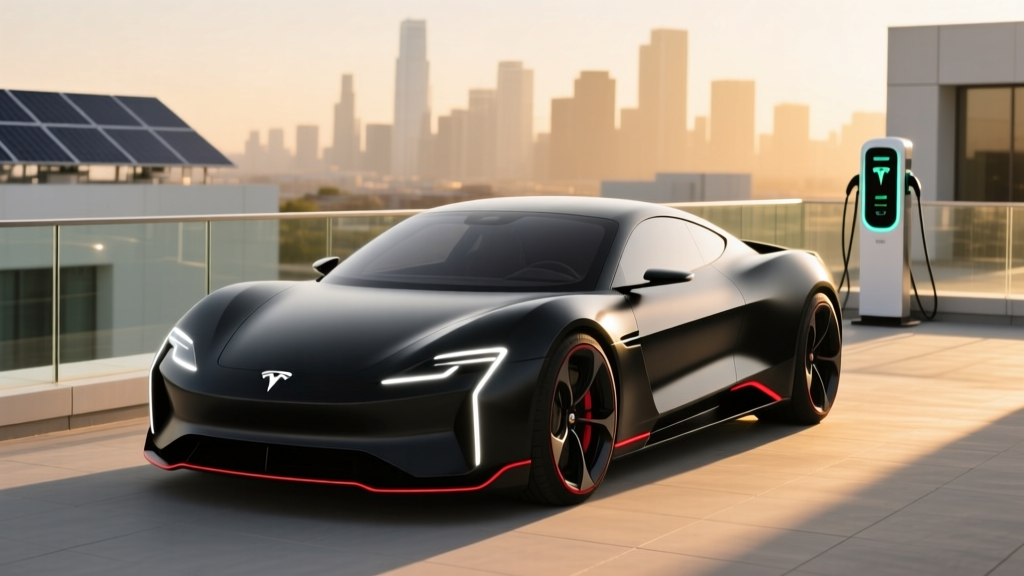
The Roadster is a 2+2 coupe with a removable glass roof panel. Tesla has shown a minimalist interior consistent with its current design language — a central touchscreen (likely 17-inch, similar to the refreshed Model S), a yoke or standard steering wheel, and a digital instrument cluster.
Practical dimensions remain limited due to the vehicle's low-slung sports car proportions:
- Rear seats: Suitable for small children or cargo overflow only. Legroom is expected to be under 28 inches — not viable for adults on any trip longer than a grocery run.
- Cargo (rear trunk): Estimated 8–12 cu ft. Enough for two carry-on bags or a week's groceries.
- Frunk (front trunk): Estimated 3–5 cu ft. Likely reduced by the front motor and HVAC hardware.
- Total cargo: ~12–17 cu ft combined. For comparison, a Mazda MX-5 Miata offers 4.6 cu ft — the Roadster is more practical than a traditional roadster, but far less than a Model S (28 cu ft with seats folded).
The glass roof panel stores in the trunk, converting the coupe to an open-air configuration. Tesla has not confirmed whether the roof panel consumes a significant portion of rear cargo space when stowed.
Tech, Driver Assistance, and Standout Features
Expect the Roadster to ship with Tesla's latest hardware suite, including:
- Autopilot (standard): Adaptive cruise control, lane centering, automatic emergency braking, blind-spot monitoring. This is an SAE Level 2 driver-assistance system — the driver must remain fully engaged and attentive at all times.
- Full Self-Driving (Supervised) (optional, ~$8,000–$15,000): Adds automated lane changes, navigation-based on/off-ramp handling, traffic light recognition, and parking assist. Despite the name, FSD Supervised remains SAE Level 2 — it is not autonomous driving, and the driver is legally responsible for the vehicle.
- Infotainment: Tesla's proprietary OS with over-the-air updates, streaming media, gaming (Steam integration), and Tesla Premium Connectivity.
- Sentry Mode / Dashcam: Continuous recording via external cameras.
- Space Package thrusters: If production-legal, this is the most unconventional feature — compressed-air thrusters for dynamic enhancement. Regulatory approval for road use is not guaranteed.
Warranty and Long-Term Ownership
Tesla has not published Roadster-specific warranty terms, but based on the Model S/X precedent, expect:
- Battery & Drive Unit: 8 years / 150,000 miles, with minimum 70% capacity retention guaranteed over the warranty period.
- New Vehicle Limited Warranty: 4 years / 50,000 miles (bumper-to-bumper).
- Battery replacement cost (out of warranty): A 200 kWh NMC pack replacement would likely cost $25,000–$40,000+ based on current cell pricing trajectories. This is a significant long-term ownership risk for second-hand buyers.
NMC (nickel manganese cobalt) chemistry is expected for the Roadster, given its energy-density requirements. NMC offers higher energy density than LFP (lithium iron phosphate) but is more susceptible to calendar degradation at high states of charge. Daily charging to 80–90% rather than 100% will extend pack life substantially.
Pros, Cons, and the Verdict
✅ Pros
- Claimed 620-mile range — potentially 20% more than any production EV
- Sub-2-second 0–60 mph (base); hypercar performance at a fraction of a Bugatti's price
- Access to the Tesla Supercharger network (NACS connector) — the most reliable DC fast-charging network in North America
- Over-the-air updates continuously improve the vehicle post-purchase
- Removable glass roof adds open-air versatility
- Tri-motor AWD with torque vectoring for all-weather traction
❌ Cons
- No federal tax credit eligibility (MSRP cap exceeded)
- 200 kWh pack means very long home charging times without a high-amperage Level 2 install
- Space Package legality on public roads is unproven
- 2+2 seating is impractical for families or rear-seat adults
- Tesla's history of production delays — the Roadster was first announced in 2017
- Insurance premiums will be extreme for a $200K+ hypercar with 1.9s 0–60 capability
- Resale value uncertainty for a low-volume, first-year production model
Who Should Buy the 2026 Tesla Roadster?
Choose the Roadster if:
- You want the fastest-accelerating production car under $300,000 and can tolerate production-timeline risk.
- You already own a practical daily driver and want a weekend/track hypercar that can also road-trip 500+ miles on a charge.
- You value Tesla's Supercharger network and OTA update ecosystem over traditional luxury-brand dealer service.
Consider alternatives if:
- You need rear-seat usability — look at the Porsche Taycan Turbo GT ($230K, 2.1s 0–60, 4 seats with real legroom).
- You want a proven, shipping-now hypercar — the Rimac Nevera ($2.2M, 1.85s 0–60, 191-mile range) or Lotus Evija ($2.3M) are available today.
- You want luxury EV grand touring with real range — the Lucid Air Sapphire ($250K, 446-mile EPA range, 1,234 hp, 3.3s 0–60) offers a more practical package.
Frequently Asked Questions
What is the real-world range of the 2026 Tesla Roadster?
Tesla claims 620 miles, but this figure has not been EPA-certified. Real-world highway driving at 75 mph will likely yield 480–530 miles. In freezing temperatures, expect 370–440 miles. Even at the lower bound, this would be the longest-range production EV available.
How fast does the Roadster charge at home and on the road?
At home on a 48A Level 2 charger, expect ~33 miles of range added per hour — meaning a full overnight charge (10–100%) takes roughly 18 hours. An 80A charger cuts that to ~10 hours. DC fast charging is estimated at 250–350 kW peak, with a 10–80% session taking 25–35 minutes, though the sustained charge curve for a 200 kWh pack is unconfirmed and will taper significantly above 70% state of charge.
Does the 2026 Tesla Roadster qualify for the federal EV tax credit?
No. Under current IRS §30D rules, the Roadster's ~$200,000 MSRP far exceeds the $80,000 cap for passenger vehicles. Buyer income limits and battery critical-mineral sourcing requirements are moot — the price alone disqualifies it. Check with a tax professional for any applicable state-level incentives.
Is the Space Package legal for street use?
Unconfirmed. Cold-gas thrusters that alter vehicle dynamics are unprecedented in production road cars. NHTSA has not publicly commented on the Roadster's Space Package, and Tesla has not stated whether the thrusters will be functional on public roads or restricted to track use only. Do not assume street legality until regulatory clearance is confirmed.
Is the Roadster worth buying versus the Porsche Taycan Turbo GT or Lucid Air Sapphire?
If your priority is straight-line acceleration and maximum range, the Roadster's claimed specs are unmatched. If you want a proven, shipping vehicle with dealer service infrastructure, real-world-tested range, and genuine four-seat usability, the Taycan Turbo GT or Lucid Air Sapphire are safer bets today. The Roadster carries significant production-delay risk and first-year-model uncertainty.
When will the 2026 Tesla Roadster actually ship?
Tesla has indicated production is expected to begin in 2026, but the company has a well-documented history of timeline slippage (the Roadster was originally promised for 2020). Reservation holders should prepare for potential delays into 2027. We will update this article when Tesla confirms firm delivery dates.