Why Tempe EV Shoppers Are Searching for the Tesla Model Y
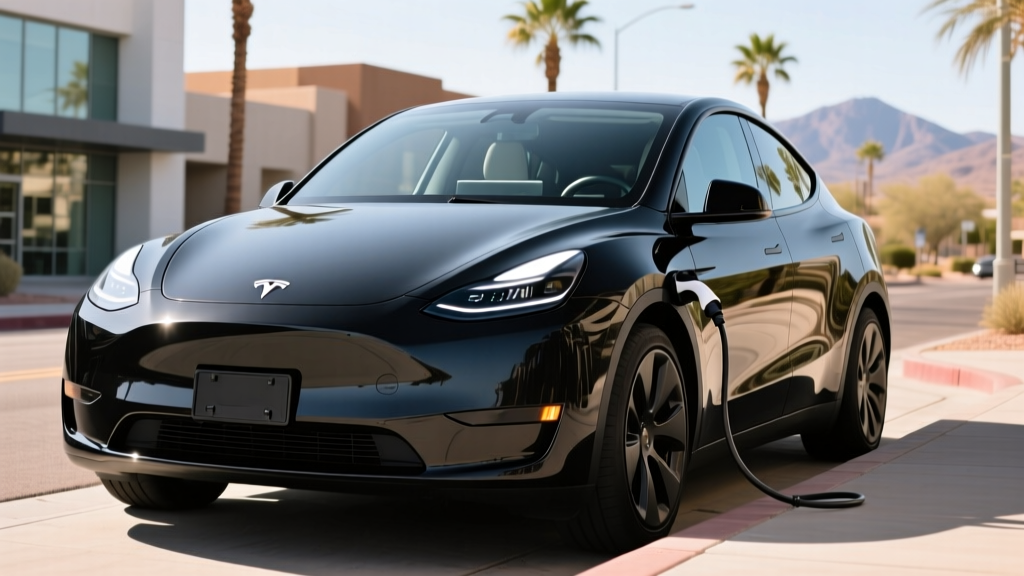
If you've been searching for a Tesla dealership in Tempe, you're not alone. The Tesla Service Center and showroom at 1525 W. Broadway Road in Tempe, Arizona, has become one of the busiest EV destinations in the Valley of the Sun. And for good reason: the refreshed 2026 Tesla Model Y remains the best-selling electric vehicle in the United States, combining a practical crossover form factor with Tesla's Supercharger network, over-the-air updates, and competitive pricing.
But before you drive to the Tempe location — or place an order online for delivery to your nearest Arizona ZIP code — you need hard data, not marketing gloss. This review covers the 2026 Model Y Long Range AWD and Performance trims with exact specs, real-world range expectations for Arizona's extreme heat, charging speeds, tax credit eligibility under current IRS §30D rules, and how it stacks up against the Hyundai Ioniq 5, Ford Mustang Mach-E, and Chevrolet Equinox EV.
2026 Tesla Model Y: Core Specifications at a Glance
| Specification | Long Range AWD | Performance |
|---|---|---|
| EPA Range | 320 miles | 295 miles |
| Battery Capacity (usable) | ~78.1 kWh (NMC) | ~78.1 kWh (NMC) |
| Drivetrain | Dual-Motor AWD | Dual-Motor AWD |
| Horsepower | 384 hp | 456 hp |
| 0–60 mph | 4.8 seconds | 3.3 seconds |
| Top Speed | 125 mph | 155 mph |
| Max DC Fast Charge | 250 kW (peak) | 250 kW (peak) |
| 10–80% DC Charge Time | ~27 minutes | ~27 minutes |
| Level 2 Home Charge Rate | 11.5 kW (~44 mi/hr) | 11.5 kW (~44 mi/hr) |
| Efficiency | 122 MPGe / 28 kWh/100mi | 111 MPGe / 30 kWh/100mi |
| Cargo Volume (rear seats up) | 30.2 cu ft | 30.2 cu ft |
| Cargo Volume (rear seats down) | 72.1 cu ft | 72.1 cu ft |
| Front Trunk (Frunk) | 4.1 cu ft | 4.1 cu ft |
| Base MSRP | $44,990 | $51,490 |
| Battery Warranty | 8 yr / 120,000 mi | 8 yr / 120,000 mi |
Sources: fueleconomy.gov, Tesla.com specifications (2026 model year).
Range and Efficiency: What Arizona Heat Really Does
EPA Estimated: 320 miles
Real-World Highway (75 mph, 85°F): ~270–290 miles
Real-World Arizona Summer (110°F+, A/C max): ~255–275 miles
Cold Weather (30°F, cabin heat): ~230–250 miles
Note: The Model Y uses a heat pump standard, which mitigates cold-weather losses compared to resistive heating, but Arizona's extreme summer heat forces the thermal management system to cool the battery aggressively, drawing additional energy.
The 2026 Model Y Long Range AWD carries an EPA-estimated 320 miles of range. That figure is achievable in moderate conditions at city speeds with mild climate-control usage. However, Tempe's summer reality is different.
When ambient temperatures exceed 105°F — common from June through September in the Phoenix metro — the battery thermal management system works harder to keep the NMC cells within their optimal operating window (roughly 68–95°F). This parasitic cooling load, combined with aggressive air-conditioning use, typically reduces real-world range by 12–18% compared to the EPA sticker. Expect 255 to 275 miles of usable range during peak summer.
On the positive side, the Model Y's efficiency of 122 MPGe (28 kWh per 100 miles) remains among the best in the midsize electric crossover segment. The vehicle's low drag coefficient (0.23 Cd) and regenerative braking system contribute to strong efficiency even in stop-and-go traffic on the I-10 or Loop 101.
Charging Speed and Infrastructure: DC Fast, Level 2, and Tempe Superchargers
| Charging Level | Power (kW) | Miles Added per Hour | Typical Use Case |
|---|---|---|---|
| Level 1 (120V household) | ~1.4 kW | ~5 mi/hr | Emergency / overnight trickle |
| Level 2 (240V, 48A Wall Connector) | 11.5 kW | ~44 mi/hr | Home daily charging |
| DC Fast Charge (V3 Supercharger) | 250 kW (peak) | ~1,000 mi/hr at peak | Road trips, rapid top-ups |
| DC Fast Charge (V4 Supercharger) | 250 kW (peak) | ~1,000 mi/hr at peak | Newer stations, CCS adapters |
The Model Y supports a peak DC fast-charge rate of 250 kW on Tesla's V3 and V4 Superchargers. In practice, the charge curve is aggressive: you'll see 250 kW from approximately 10–30% state of charge (SoC), tapering to ~150 kW by 50%, and dropping below 50 kW past 85%. A 10–80% session takes approximately 27 minutes under optimal battery preconditioning.
Preconditioning matters. If you navigate to a Supercharger using the car's built-in navigation, the Model Y will automatically warm or cool the battery to the ideal temperature for maximum charge acceptance. Skipping preconditioning — for example, pulling into a charger with a cold-soaked battery in winter — can add 10–15 minutes to your session.
For Tempe owners, there are multiple Supercharger stations in the immediate area, including locations at Tempe Marketplace, Arizona Mills, and along the I-10 corridor. Tesla's NACS (North American Charging Standard) connector is now the industry standard, with Ford, Rivian, GM, and others adopting it. This means future public charging infrastructure will increasingly favor NACS-equipped vehicles like the Model Y.
At home, the Tesla Wall Connector on a 60-amp circuit delivers 11.5 kW (48 amps), adding roughly 44 miles of range per hour of charging. A full charge from 10% to 100% takes about 7 hours — ideal for overnight charging on a time-of-use plan from Arizona Public Service (APS) or Salt River Project (SRP).
Performance, Ride, and Daily Driving in the Valley
The Long Range AWD model produces 384 horsepower from its dual-motor setup, delivering a 4.8-second 0–60 mph time. That's quick by any measure, and the instant torque makes highway merging onto the Loop 202 effortless. The Performance trim bumps output to 456 hp and drops the 0–60 to 3.3 seconds — sports-car territory in a family crossover.
Ride quality in the refreshed Model Y (codenamed "Juniper") has improved substantially over the pre-2025 models. Tesla revised the suspension tuning, added acoustic glass, and improved seat cushioning. The result is a noticeably quieter and more compliant ride over Tempe's speed bumps and expansion joints.
One-pedal driving via regenerative braking is well-calibrated, though Tesla removed the user-adjustable regen strength toggle in recent software updates — you get the default strong-regen setting, which most EV drivers prefer but may require an adjustment period for first-time EV owners.
Interior, Cargo, and Technology
The 2026 Model Y's interior is minimalist by design. A single 15.4-inch touchscreen handles infotainment, climate, navigation, and vehicle settings. A rear 8-inch touchscreen serves second-row passengers for climate control and entertainment. There are no physical buttons for climate or volume — everything runs through the screen or steering-wheel controls.
Cargo capacity is a standout: 30.2 cubic feet behind the second row and 72.1 cubic feet with the rear seats folded, plus a 4.1-cubic-foot front trunk (frunk). That's competitive with the Toyota RAV4 and significantly more than the Ford Mustang Mach-E (29.7 cu ft rear). For families hauling strollers, groceries, or weekend camping gear, the Model Y's cargo area is genuinely practical.
Second-row legroom measures 41.6 inches, adequate for adults on longer trips. However, the panoramic glass roof — while visually striking — does contribute to cabin heat soak in Arizona summers. Tesla includes a tinted glass panel, but many Tempe owners invest in aftermarket ceramic tint or a removable sunshade for the roof.
Tech highlights:
- Tesla Autopilot (standard): SAE Level 2 driver-assist with adaptive cruise control and lane centering
- Full Self-Driving (Supervised) — $8,000 option: Adds automatic lane changes, traffic-light recognition, and city-street navigation. This is still SAE Level 2 and requires active driver supervision at all times.
- Over-the-air software updates that add features and improve performance
- Sentry Mode dashcam surveillance while parked
- Dog Mode and Camp Mode climate settings
- Native navigation with real-time Supercharger routing
Pricing, Trims, and Federal Tax Credit Eligibility
| Trim | Base MSRP | Destination Fee | Federal §30D Credit | Effective Price (if eligible) |
|---|---|---|---|---|
| Long Range AWD | $44,990 | $1,390 | Up to $7,500 | ~$38,880 |
| Performance | $51,490 | $1,390 | Up to $7,500 | ~$45,380 |
- Income caps: Modified AGI ≤ $150,000 (single), ≤ $300,000 (married filing jointly)
- MSRP cap: Vehicle MSRP must not exceed $80,000 for SUVs/crossovers (Model Y qualifies)
- Battery sourcing: Critical minerals and battery components must meet phased-in domestic/free-trade sourcing thresholds — Tesla has largely met these requirements for US-built Model Y, but confirm current-year status at IRS.gov qualified vehicles list
- Point-of-sale transfer: You can transfer the credit to the dealer at purchase, reducing your out-of-pocket cost immediately rather than waiting for tax filing
- Consult a tax professional to confirm your individual eligibility before relying on the credit
The Model Y Long Range AWD starts at $44,990 before destination. If you qualify for the full $7,500 federal tax credit — and Tesla's US-built Model Y has consistently appeared on the IRS qualified-vehicles list — the effective price drops to approximately $38,880. That positions it squarely against the Hyundai Ioniq 5 SEL ($45,500 MSRP) and well below the Ford Mustang Mach-E Premium AWD ($48,995).
Popular options that increase the price: FSD (Supervised) at $8,000, premium paint colors ($1,000–$2,500), and 20-inch wheels ($2,000). A fully loaded Long Range with FSD can push past $57,000 before credits.
Warranty, Reliability, and Long-Term Ownership
Tesla covers the Model Y with the following warranty structure:
- Basic Vehicle: 4 years / 50,000 miles
- Battery and Drive Unit: 8 years / 120,000 miles (whichever comes first), with a minimum 70% capacity retention guarantee
The 8-year/120,000-mile battery warranty is competitive with the industry standard (Hyundai offers 10yr/100,000mi, Ford offers 8yr/100,000mi). Tesla's NMC battery chemistry in the Long Range has shown strong long-term degradation data: fleet averages suggest approximately 10–12% capacity loss over 150,000 miles, based on aggregated owner reports. For Arizona owners, the thermal management system's active cooling helps mitigate heat-induced degradation — a meaningful advantage in a climate where battery temperatures can otherwise soar.
Reliability remains a mixed story. Tesla's build quality has improved with the Juniper refresh (panel gaps, paint quality), but the brand still trails Toyota and Hyundai in J.D. Power initial quality surveys. Service center wait times in the Phoenix metro can stretch to 2–3 weeks for non-urgent warranty work, though Tesla's mobile service handles many minor repairs at your home or office.
Model Y vs. Key Competitors: Where It Wins and Where It Falls Short
✅ Pros
- Access to the Tesla Supercharger network — the most reliable and expansive DC fast-charging network in the US
- Class-leading efficiency (122 MPGe) and strong real-world range
- Excellent cargo capacity (72.1 cu ft max)
- Over-the-air updates continuously add features
- Strong resale value relative to most EVs
- NACS connector is now the industry standard
- Competitive pricing after federal tax credit
❌ Cons
- No Apple CarPlay or Android Auto — Tesla's proprietary infotainment only
- Minimalist interior lacks physical controls; steep learning curve
- FSD (Supervised) remains SAE Level 2 despite the name — $8,000 for a driver-assist feature
- Glass roof contributes to cabin heat in Arizona summers
- Service center capacity in Phoenix metro is strained
- Ride quality improved but still firm compared to Hyundai Ioniq 5
- No heads-up display
Choose the Model Y if: You prioritize Supercharger network access, maximum cargo space, strong efficiency, and want an EV with proven long-term software support. It's the default pick for road-trippers and families who need versatility.
Consider the Hyundai Ioniq 5 instead if: You want Apple CarPlay, a more comfortable ride, faster peak charging (up to 350 kW on 800V architecture, 10–80% in ~18 minutes), and prefer physical controls. The Ioniq 5 also offers a longer 10-year battery warranty.
Consider the Ford Mustang Mach-E if: You want a more engaging driving experience, a traditional dealership experience with in-person service, and don't mind slightly less cargo space.
Visiting the Tesla Location in Tempe: What to Expect
Tesla does not operate traditional franchised dealerships. The Tempe location on W. Broadway Road functions as a showroom and service center. You can view vehicles in person, take a test drive (by appointment), and handle delivery — but all purchases are completed online through Tesla.com. This direct-sales model means no negotiation, no dealer markups, and no haggling over trade-in values (Tesla offers a trade-in estimate online, though it tends to be below private-party value).
If you're visiting from the East Valley — Chandler, Gilbert, Mesa, or Ahwatukee — the Tempe location is the closest physical Tesla presence. Alternatively, the Scottsdale showroom on Camelback Road offers a similar experience with a slightly more upscale setting.
Pro tip: Schedule your test drive on a weekday morning for the shortest wait. Bring your driver's license and insurance card. Tesla's advisors can walk you through home charging setup, including the Wall Connector installation process and local utility rebate programs from SRP and APS.
Frequently Asked Questions
What is the real-world range of the 2026 Tesla Model Y in Arizona?
The EPA rates the Long Range AWD at 320 miles. In Tempe's summer heat (105–115°F), expect 255–275 miles with A/C running. In mild weather (60–80°F), owners regularly achieve 290–310 miles in mixed driving.
How fast does the Model Y charge at home and on the road?
At home on a Level 2 Tesla Wall Connector (11.5 kW / 48A), you'll add about 44 miles per hour — a full overnight charge. On a V3 Supercharger at 250 kW peak, a 10–80% session takes approximately 27 minutes with proper battery preconditioning.
Does the 2026 Model Y qualify for the $7,500 federal EV tax credit?
The US-built Model Y has consistently qualified for the full $7,500 credit under IRS §30D. However, eligibility depends on your income (≤$300,000 MFJ / ≤$150,000 single), the vehicle's MSRP (must be ≤$80,000 for SUVs), and current battery-sourcing requirements. Always verify on the IRS qualified vehicles list and consult a tax professional.
Is the Model Y worth buying over the Hyundai Ioniq 5 or Ford Mach-E?
The Model Y wins on Supercharger access, cargo space, and efficiency. The Ioniq 5 wins on charging speed (800V architecture), ride comfort, and Apple CarPlay. The Mach-E wins on driving dynamics and traditional dealership service. Your priority list determines the winner.
How does the glass roof handle Arizona sun?
Tesla's panoramic glass roof is heavily tinted and blocks most UV, but it does radiate heat into the cabin during peak summer. Many Arizona owners add an aftermarket removable sunshade ($30–$60) or ceramic window tint to reduce heat soak. Preconditioning the cabin via the Tesla app before entering the car is essential.
What does it cost to install a home charger in Tempe?
A Tesla Wall Connector ($475) installed on a new 60-amp 240V circuit typically costs $1,200–$2,500 total, depending on your electrical panel's capacity and the distance from the panel to the garage. If your home needs a panel upgrade (100A to 200A), add $1,500–$3,000. Always get a quote from a licensed electrician. SRP and APS occasionally offer rebates for EV charger installations — check their current programs.