The Tesla Model Y remains the best-selling electric vehicle in the United States for good reason: it offers practical crossover space, access to the Supercharger network, and aggressive pricing. The 2026 Tesla Model Y RWD — the base, rear-wheel-drive variant — is the volume play. It undercuts the Long Range and Performance trims by thousands while retaining the core attributes buyers want: over 300 miles of EPA range, DC fast charging, and Tesla's software ecosystem. But with competitors like the Hyundai Ioniq 5 and Ford Mustang Mach-E closing the gap on charging speed and interior quality, is the RWD still the smartest buy in 2026?
Spec Snapshot: 2026 Tesla Model Y RWD
| Attribute | Specification |
|---|---|
| EPA Range | 300 miles |
| Battery Capacity | 57.5 kWh usable (LFP chemistry) |
| Drivetrain | Rear-wheel drive, single motor |
| Horsepower | 295 hp |
| 0–60 mph | 5.8 seconds |
| Peak DC Fast Charge | 170 kW |
| 10–80% DC Charge Time | ~25 minutes |
| Level 2 Charge Rate | 11.5 kW (~44 mi/hr) |
| Efficiency | 138 MPGe combined / 24 kWh/100 mi |
| Cargo Volume | 30.2 cu ft (rear seats up) / 72.0 cu ft (seats folded) |
| Frunk | 4.1 cu ft |
| Rear Legroom | 40.5 inches |
| Base MSRP | $44,990 (incl. destination) |
| Battery/Drive Unit Warranty | 8 years / 100,000 miles |
Range and Efficiency: EPA vs. the Real World
Real-World Expectation: Plan for 250–275 miles on highway road trips at 70–75 mph, and 220–240 miles in sub-40°F winter conditions. City and suburban driving with regenerative braking recovers more energy, often matching or exceeding the EPA sticker.
The 2026 Model Y RWD uses a 57.5 kWh usable lithium iron phosphate (LFP) battery pack. Tesla switched the base Model Y to LFP chemistry for the 2025 model year, and the 2026 carryover continues with it. LFP offers several owner-relevant advantages over the nickel-manganese-cobalt (NMC) chemistry used in Long Range and Performance trims:
- Longer cycle life — LFP cells tolerate repeated full charges with less degradation, which is why Tesla recommends charging to 100% regularly for LFP packs.
- Lower degradation — Real-world fleet data shows LFP packs retaining 90%+ state of health after 100,000 miles.
- No cobalt — simpler supply chain and fewer ethical sourcing concerns.
The trade-off: LFP has lower energy density than NMC, which is why the RWD carries a smaller pack and delivers less range than the 330-mile Long Range AWD. LFP also loses a slightly larger percentage of capacity in extreme cold, though Tesla's heat pump mitigates much of this in practice.
Efficiency is a strong point. At 138 MPGe combined (24 kWh/100 mi), the Model Y RWD ranks among the most efficient electric crossovers on the market, per fueleconomy.gov. That efficiency translates directly into lower charging costs — roughly $0.04–$0.05 per mile at average residential electricity rates, compared to $0.12–$0.15 per mile for a comparable gas crossover.
Charging Speed: DC Fast and Home Level 2
| Charging Level | Power (kW) | Speed | Notes |
|---|---|---|---|
| Level 1 (120V) | ~1.4 kW | ~5 mi/hr | Emergency/top-off only |
| Level 2 (240V, 48A) | 11.5 kW | ~44 mi/hr | Full charge in ~5.5 hours |
| DC Fast (peak) | 170 kW | 10–80% in ~25 min | Tapers significantly above 80% |
The Model Y RWD peaks at 170 kW on DC fast chargers. That's adequate but no longer class-leading — the Hyundai Ioniq 5 and Kia EV6 can peak at 240+ kW thanks to their 800V architectures. In practice, the Model Y RWD's charge curve holds near peak for a narrow SoC window (roughly 10–35%), then steps down through 120 kW and 80 kW as the pack fills. The 10–80% time of approximately 25 minutes is competitive, but don't expect the full 170 kW for the entire session.
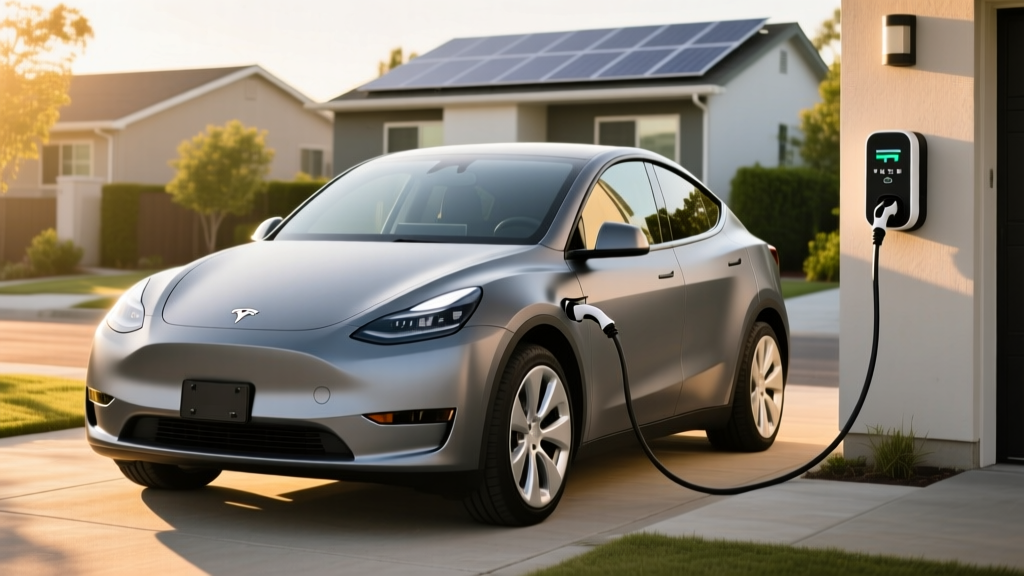
On Level 2, the onboard charger accepts up to 11.5 kW (48 amps), which adds about 44 miles of range per hour. A full 0–100% charge takes roughly 5.5 hours — easily achievable overnight on a home Level 2 charger like the Tesla Wall Connector or ChargePoint Home Flex.
Preconditioning matters. The Model Y will automatically warm the battery when you navigate to a Supercharger or DC fast station via the built-in navigation. Arriving without preconditioning — especially in cold weather — can cut peak charge rates by 40–50%. Always navigate to the charger rather than just entering the address manually in a third-party app.
The Model Y ships with a NACS (North American Charging Standard) connector natively, giving it seamless plug-and-charge access to the entire Tesla Supercharger network — over 25,000 stalls in North America. This remains one of the strongest ownership advantages: Superchargers consistently deliver their rated speeds with minimal downtime, something public CCS networks still struggle to match in many regions.
Performance, Ride, and Practicality
The single rear motor produces 295 hp and launches the Model Y RWD to 60 mph in 5.8 seconds. That's brisk for daily driving — you'll merge onto highways and overtake with confidence — but it's noticeably a step behind the 4.8-second Long Range AWD. If you regularly drive in snow or on loose surfaces, the RWD's lack of all-wheel drive is worth considering; winter tires help, but AWD provides a meaningful traction advantage.
Ride quality improved with the "Juniper" refresh introduced for the 2025 model year. Tesla retuned the suspension, added acoustic glass, and improved seat cushioning. The 2026 Model Y RWD carries these improvements forward. It's still firm by luxury-crossover standards, but it no longer feels punishing over broken pavement.
Cargo and passenger space:
- 30.2 cu ft behind the second row (72.0 cu ft with seats folded)
- 4.1 cu ft front trunk (frunk) — useful for charging cables, groceries, or a small bag
- 40.5 inches of rear legroom — competitive with midsize crossovers
- Available third-row seat (very tight, best for small children on short trips)
The 15.4-inch touchscreen handles all infotainment, climate, and vehicle controls. There are no physical buttons — not even for the glovebox. This minimalism appeals to some and frustrates others, but Tesla's interface remains the most responsive and feature-rich in the EV segment: navigation, streaming, Sentry Mode dashcam recording, over-the-air updates, and the Tesla app ecosystem all work seamlessly.
Pricing, Tax Credits, and Total Cost
| Item | Amount |
|---|---|
| Base MSRP (incl. destination) | $44,990 |
| Estimated with common add-ons (paint, wheels) | $46,490–$48,490 |
| Federal §30D Tax Credit (if eligible) | –$7,500 |
| Effective price after credit (point-of-sale transfer) | ~$37,490–$40,990 |
| Estimated 5-yr fuel savings vs. gas crossover | ~$4,500–$6,000 |
The 2026 Model Y RWD's $44,990 base price sits below the IRS MSRP cap of $80,000 for SUVs/trucks, so the vehicle itself qualifies on that front. However, the full $7,500 federal EV tax credit under §30D depends on several buyer-specific and vehicle-specific factors that change regularly:
- Buyer income caps: AGI must not exceed $150,000 (single), $225,000 (head of household), or $300,000 (joint).
- Battery sourcing requirements: Increasing percentages of battery components and critical minerals must be sourced from the US or FTA partners. Tesla has worked to qualify US-built Model Y variants, but eligibility can shift by model year and production batch.
- Point-of-sale transfer: As of 2024, buyers can transfer the credit to the dealer at purchase, reducing the sale price directly rather than waiting for a tax refund.
Check the latest eligibility status on IRS.gov's qualified vehicles list before committing. State incentives (California, Colorado, New York, and others) may stack on top — consult your state's energy office or a tax professional for specifics.
Ownership costs beyond the purchase price: EV insurance premiums run 15–25% higher than comparable gas vehicles on average. Home Level 2 charger installation typically costs $800–$2,000 (equipment + electrician), assuming your panel doesn't need an upgrade. Maintenance is minimal — no oil changes, no spark plugs, tire rotations and cabin air filter replacements are the main recurring costs.
Tech, Safety, and Driver Assistance
Every Model Y RWD includes Tesla Autopilot as standard: adaptive cruise control, lane centering, automatic emergency braking, and blind-spot monitoring. This is an SAE Level 2 driver-assist system — the driver must remain attentive, keep hands on the wheel, and supervise at all times. It is not autonomous driving.
Safety ratings are strong. The NHTSA has awarded the Model Y a 5-star overall rating, and the IIHS has named it a Top Safety Pick+ in recent test years. Tesla's over-the-air update model means safety features and crash-avoidance algorithms improve incrementally throughout ownership.
Other standout tech: Tesla's mobile app provides remote climate control, charge monitoring, location tracking, and Sentry Mode alerts. The built-in trip planner accounts for charging stops, elevation, and weather when routing long drives — one of the best EV navigation systems available.
Pros and Cons
- 300-mile EPA range from an affordable base price
- Supercharger network access — the most reliable public charging in the US
- LFP battery longevity and 100% daily charging tolerance
- Class-leading software, app integration, and OTA updates
- Strong cargo capacity with flat-folding rear seats
- Low running costs (~$0.04–0.05/mi on home electricity)
- DC fast charging peaks at 170 kW — outpaced by 800V competitors
- No all-wheel drive; winter traction depends on tire choice
- Minimalist interior lacks physical controls and premium materials
- FSD (Supervised) costs $8,000 extra and remains Level 2
- Insurance premiums above segment average
- Ride still firm over rough pavement despite Juniper improvements
Is the 2026 Model Y RWD Worth It vs. Competitors?
Choose the 2026 Tesla Model Y RWD if:
- You want the lowest entry price into a 300-mile EV crossover with the most reliable public charging network.
- You primarily commute and road-trip in moderate climates where RWD is sufficient.
- You value software, app integration, and OTA improvements over interior luxury.
- You plan to charge primarily at home and use Superchargers for road trips.
Consider alternatives if:
- Hyundai Ioniq 5 / Kia EV6: Faster DC charging (240 kW peak), more distinctive design, physical buttons, and AWD available at similar pricing. CCS charging network is less reliable than Superchargers.
- Ford Mustang Mach-E: Stronger driving dynamics, more traditional interior, competitive range. Also on CCS.
- Model Y Long Range AWD: If you need all-wheel drive, 330+ miles of range, or faster acceleration, the $4,000–$5,000 step up is often justified.
Frequently Asked Questions
What is the real-world range of the 2026 Tesla Model Y RWD?
The EPA rates it at 300 miles. In mixed real-world driving, expect 250–275 miles at highway speeds, and as low as 220–240 miles in freezing temperatures. City driving with frequent regenerative braking can match or exceed the EPA estimate.
How fast does the 2026 Model Y RWD charge?
On DC fast chargers, it peaks at 170 kW and charges from 10–80% in approximately 25 minutes. On a home Level 2 charger (11.5 kW), it adds about 44 miles per hour, reaching a full charge overnight in roughly 5.5 hours.
Does the 2026 Model Y RWD qualify for the $7,500 federal tax credit?
The vehicle meets the MSRP cap, but full credit eligibility depends on buyer income limits, battery component sourcing, and critical mineral requirements that can change by production batch. Verify current eligibility on IRS.gov before purchasing. Point-of-sale transfer is available if you qualify.
Is the Model Y RWD good in snow and winter?
Rear-wheel drive provides less traction than AWD in snow and ice. With dedicated winter tires, the Model Y RWD is manageable for most winter commutes, but buyers in heavy-snow regions should strongly consider the Long Range AWD instead. Tesla's heat pump provides efficient cabin heating without excessive range loss.
How long will the LFP battery last?
Tesla warranties the battery for 8 years or 100,000 miles, whichever comes first, with a minimum 70% capacity retention guarantee. LFP chemistry typically degrades more slowly than NMC, and fleet data suggests these packs can exceed 200,000 miles with significant usable capacity remaining. Regular 100% charging is recommended for LFP — unlike NMC packs.
Is Tesla Autopilot self-driving?
No. Autopilot and the optional Full Self-Driving (Supervised) package are both SAE Level 2 driver-assist systems. The driver must remain fully attentive, keep hands on the wheel, and be prepared to take over at any time. Tesla's naming conventions have drawn criticism from NHTSA and safety advocates for potentially overstating capability.