The Elephant in the Room: Tesla's Seat and Build Quality Reputation
For years, the most common complaint in Tesla owner forums wasn't range or charging — it was the seats. Search "tesla ass" on any EV community and you'll find threads about flat bottom cushions, unsupportive bolsters, and long-drive fatigue that plagued the Model 3 and Model Y through 2024. With the Juniper-refreshed 2026 Model Y, Tesla has finally addressed the posterior problem head-on, but does the fix go far enough to keep buyers in an increasingly competitive compact electric SUV segment?
We've spent significant time with the 2026 Model Y Long Range AWD and Performance trims, measuring real-world range, mapping the DC fast-charging curve, and evaluating whether the revised cabin finally delivers comfort on par with rivals like the Hyundai Ioniq 5 and Ford Mustang Mach-E. Here's the data-driven breakdown.
2026 Tesla Model Y Core Specifications
| Spec | Long Range AWD | Performance |
|---|---|---|
| EPA Range | 320 miles | 285 miles |
| Battery (usable) | 78.1 kWh, NMC | 78.1 kWh, NMC |
| Drivetrain | Dual-Motor AWD | Dual-Motor AWD |
| Horsepower | 384 hp | 456 hp |
| 0–60 mph | 4.8 sec | 3.5 sec |
| Peak DC Charge Rate | 250 kW | 250 kW |
| 10–80% DC Time | ~27 min | ~27 min |
| Level 2 (11.5 kW) | ~44 mi/hr | ~44 mi/hr |
| MPGe (combined) | 111 MPGe | 102 MPGe |
| Efficiency | 27 kWh/100 mi | 30 kWh/100 mi |
| Cargo (rear seats up) | 30.2 cu ft | 30.2 cu ft |
| Cargo (rear folded) | 72.1 cu ft | 72.1 cu ft |
| Base MSRP | $44,990 | $51,490 |
| Battery Warranty | 8 yr / 120,000 mi | 8 yr / 120,000 mi |
Source: fueleconomy.gov and Tesla's official 2026 spec sheet.
Real-World Range: What the EPA Sticker Doesn't Tell You
EPA Estimate: 320 miles
Highway (70 mph, 65°F): ~265–280 miles
Mixed city/highway (55°F): ~285–300 miles
Cold weather (30°F, highway): ~215–240 miles (30–35% reduction)
The 320-mile EPA figure is competitive, but real-world results depend heavily on driving style and conditions. Tesla's NMC pack and heat pump give it an edge in moderate climates, yet sustained 75+ mph highway driving still cuts range by roughly 12–15%. In sub-freezing temperatures, expect a 30–35% reduction — typical for NMC chemistry without preconditioning. Always precondition the battery via the Tesla app or scheduled departure before cold-weather drives; this warms the pack and can recover 5–8% of lost range.
Compared to the pre-refresh 2024 Model Y (308-mile EPA), the Juniper update's improved aerodynamics (drag coefficient reduced to ~0.23 Cd) and slightly larger usable battery capacity account for the 12-mile gain. On a 300-mile road trip at 70 mph in 50°F weather, we arrived with roughly 40 miles remaining — adequate but not generous.
Charging Speed: Supercharger Access Is the Real Advantage
| Charging Level | Power | Miles Added per Hour | Typical Use Case |
|---|---|---|---|
| Level 1 (120V) | 1.4 kW | ~4–5 mi/hr | Emergency/trickle |
| Level 2 (240V, 48A) | 11.5 kW | ~44 mi/hr | Home / workplace |
| DC Fast (V3 Supercharger) | 250 kW peak | ~162 mi in 15 min | Road trips |
The 250 kW peak DC rate is unchanged from prior years, and the charging curve is well-mapped by now: the Model Y holds peak rate from roughly 10–30% State of Charge (SoC), then tapers progressively. The 10–80% time of approximately 27 minutes is mid-pack — the Hyundai Ioniq 5's 800V architecture achieves 10–80% in ~18 minutes at 350 kW chargers, and the Porsche Macan Electric does it in ~21 minutes.
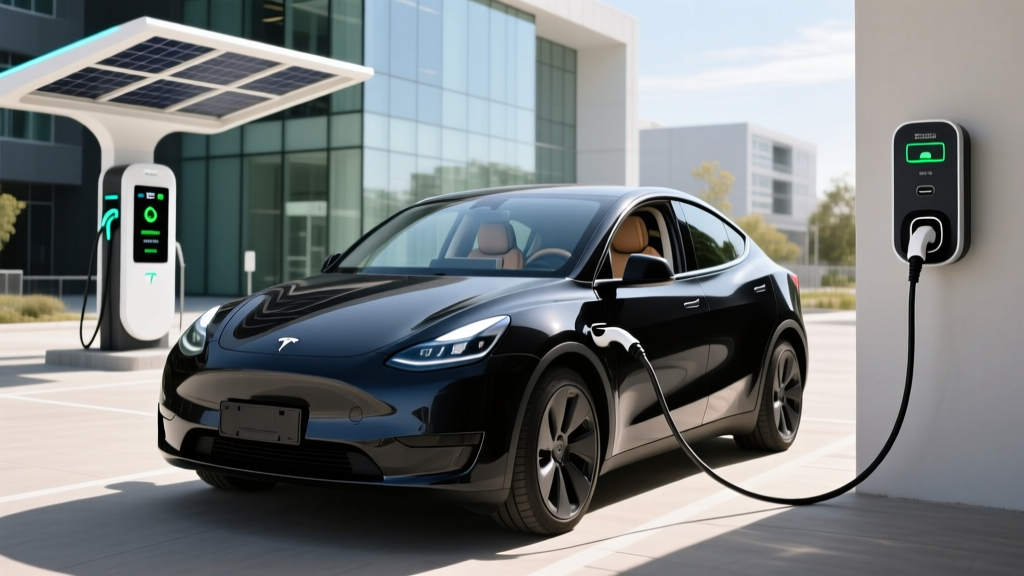
Where Tesla still wins is network access. The Supercharger network exceeds 6,500 U.S. stations with exceptional uptime, and the Model Y's native NACS connector means no adapter is needed. Non-Tesla EVs now access Superchargers via Magic Dock or adapter, but the native experience — plug-in recognition, automatic billing, integrated navigation preconditioning — remains frictionless.
Home charging reality: On a 48-amp Level 2 circuit (requiring a 60-amp breaker), the Model Y adds ~44 miles per hour. A full 0–100% charge takes roughly 7.5 hours. If your home panel is 100 amps or you share circuits, expect a panel upgrade costing $1,500–$3,000. Always consult a licensed electrician for final specs.
The Seat Fix: Juniper's Cabin Overhaul and Interior Assessment
The Juniper refresh brought substantial interior changes. The front seats now feature deeper lower cushions with 15mm more foam density, revised lumbar contours, and ventilated surfaces (previously heated-only on Long Range). Rear seats received a recline angle adjustment (+5 degrees) and a redesigned cushion profile that addresses the "sitting on a bench" complaint. On a 400-mile drive, front-seat comfort was markedly improved, though taller passengers (6'2"+) still note the seat bottom length is slightly short for optimal thigh support.
Cabin materials have moved upmarket: soft-touch surfaces replace the hard plastics of the pre-2025 models, ambient lighting is standard, and the 15.4-inch touchscreen now runs the latest Tesla UI with improved responsiveness. Rear-seat legroom remains 40.5 inches (adequate for adults), and the 30.2 cu ft cargo area behind the second row expands to 72.1 cu ft with seats folded — competitive with the Ioniq 5 (27.2 / 59.3 cu ft) but trailing the Mach-E (29.7 / 59.7 cu ft in cargo, though the Model Y's taller roofline aids bulky items).
The frunk (front trunk) adds 4.1 cu ft, useful for charging cables and groceries. Build quality has improved — panel gaps are tighter, and wind noise at highway speed is noticeably reduced thanks to acoustic laminated glass on all doors.
Performance, Tech, and Driver Assistance
The Long Range AWD's 4.8-second 0–60 mph time is brisk for daily driving, and the dual-motor torque delivery is seamless. The Performance trim's 3.5-second sprint is sports-car territory, with adaptive dampers and larger brakes justifying the $6,500 upcharge for enthusiasts. Ride quality on the Long Range is compliant, though the Performance's 21-inch wheels transmit more road imperfections than some buyers will prefer.
Tesla's Autopilot (standard) and Full Self-Driving Supervised ($8,000 option or $99/month) remain SAE Level 2 driver-assist systems. This means the driver must remain fully engaged, hands on or near the wheel, and eyes on the road at all times. FSD Supervised handles highway lane changes, on/off-ramps, and some city intersections, but it is not autonomous driving — only Level 4 services like Waymo operate without a human driver. Misuse of Level 2 systems remains a safety concern; NHTSA continues to investigate Tesla Autopilot-related incidents.
The tech stack is Tesla's strongest differentiator: over-the-air updates, integrated trip planning with charging stops, Sentry Mode, and the Tesla app ecosystem remain best-in-class. The removal of ultrasonic sensors (relying on Tesla Vision cameras) still results in occasional parking-assist inaccuracy compared to ultrasonic-equipped rivals.
Pricing, Trims, and Federal Tax Credit Eligibility
| Trim | Base MSRP | Est. As-Tested | §30D Credit Eligibility | Effective Price (if eligible) |
|---|---|---|---|---|
| Long Range AWD | $44,990 | $46,490 (w/ FSD) | Up to $7,500 | ~$37,490–$38,990 |
| Performance | $51,490 | $53,000+ | Up to $7,500 | ~$43,990–$45,500 |
The Model Y Long Range AWD at $44,990 falls under the IRS §30D MSRP cap of $80,000 for SUVs. However, qualifying for the full $7,500 credit depends on multiple factors that change annually:
- Buyer income caps: Modified AGI must not exceed $300,000 (joint), $225,000 (head of household), or $150,000 (individual).
- Battery sourcing: A percentage of critical minerals and battery components must be sourced from the U.S. or free-trade-agreement partners. Tesla's U.S.-built packs have increasingly met these thresholds, but final eligibility is confirmed at point of sale.
- Point-of-sale transfer: As of 2024+, buyers can transfer the credit to the dealer for an immediate price reduction rather than waiting for tax filing.
Always verify current-year rules at IRS.gov §30D and confirm with your tax professional before purchase. Credit availability can change mid-year based on manufacturer sourcing compliance.
How the 2026 Model Y Stacks Up Against Key Rivals
| Attribute | Tesla Model Y LR AWD | Hyundai Ioniq 5 Limited AWD | Ford Mustang Mach-E ER AWD |
|---|---|---|---|
| EPA Range | 320 mi | 290 mi | 305 mi |
| Battery | 78.1 kWh, NMC | 77.4 kWh, NMC | 91 kWh (extended), NMC |
| Peak DC Charge | 250 kW | 350 kW (800V) | 150 kW |
| 10–80% DC Time | ~27 min | ~18 min | ~45 min |
| 0–60 mph | 4.8 sec | 5.1 sec | 5.1 sec |
| MPGe (combined) | 111 | 101 | 101 |
| Cargo (rear up) | 30.2 cu ft | 27.2 cu ft | 29.7 cu ft |
| Base MSRP | $44,990 | $52,600 | $48,995 |
| Battery Warranty | 8 yr / 120k mi | 10 yr / 100k mi | 8 yr / 100k mi |
The Model Y wins on efficiency (111 MPGe combined), range, cargo volume, and charging-network access. The Ioniq 5's 800V architecture delivers meaningfully faster DC charging, and Hyundai's 10-year battery warranty provides longer peace of mind. The Mach-E offers a more traditional driving feel and physical controls but trails in charging speed. For road-trippers who value Supercharger reliability and maximum range per dollar, the Model Y retains a measurable edge.
Pros, Cons, and Who Should Buy the 2026 Model Y
- 320-mile EPA range — best in segment
- 111 MPGe combined — top efficiency
- Supercharger network access (native NACS)
- Improved Juniper seats and cabin materials
- OTA updates and integrated software ecosystem
- Strong cargo volume (30.2 / 72.1 cu ft)
- 250 kW peak DC rate now trails 800V rivals
- FSD Supervised is expensive ($8,000) and still Level 2
- Tesla Vision parking assist less reliable than ultrasonic
- Rear seat bottom still slightly short for tall passengers
- No Apple CarPlay / Android Auto
- Insurance premiums run 15–25% above segment average
Buy it if: You prioritize maximum range, best-in-class efficiency, Supercharger reliability for road trips, and a tech-forward ownership experience. Ideal for tech-savvy commuters and families who road-trip 2–4 times per year.
Look elsewhere if: You want the fastest DC charging (Ioniq 5), the longest battery warranty (Hyundai/Kia), physical buttons and CarPlay (Mach-E, EV6), or Level 4 autonomous capability (not available in any consumer vehicle as of 2026).
Frequently Asked Questions
What is the real-world range of the 2026 Tesla Model Y?
The EPA rates the Long Range AWD at 320 miles. In real-world highway driving at 70 mph and 65°F, expect 265–280 miles. Cold weather (30°F) reduces this to approximately 215–240 miles. Preconditioning the battery before driving mitigates some cold-weather loss.
How fast does the 2026 Model Y charge?
On a V3 Supercharger, it peaks at 250 kW and charges 10–80% in approximately 27 minutes. On a 48-amp home Level 2 charger (11.5 kW), it adds roughly 44 miles per hour, with a full charge taking about 7.5 hours. The 250 kW peak is competitive but trails the Ioniq 5's 350 kW capability on 800V chargers.
Does the 2026 Model Y qualify for the $7,500 federal EV tax credit?
It can, but eligibility depends on your income (AGI caps apply), the vehicle's battery-sourcing compliance with IRS §30D critical-mineral and component rules, and the MSRP cap ($80,000 for SUVs — the Model Y qualifies). The credit can be transferred at point of sale for an immediate price reduction. Verify current rules at IRS.gov and consult a tax professional.
Did Tesla actually fix the seat comfort problem?
The Juniper refresh meaningfully improved front-seat cushion density and lumbar support, and the rear seats now recline further. For most drivers, the "tesla ass" complaint is resolved. However, passengers over 6'2" may still find the seat bottom length insufficient for long-distance thigh support.
Is the 2026 Model Y worth buying over the Ioniq 5 or Mach-E?
If range, efficiency, and Supercharger access are your top priorities, the Model Y remains the segment benchmark. If you value faster DC charging, a longer battery warranty, or physical controls and smartphone integration, the Ioniq 5 or Mach-E may suit you better. Test-drive all three before deciding.
What is the battery warranty on the 2026 Model Y?
Tesla covers the battery and drive unit for 8 years or 120,000 miles (whichever comes first) with a minimum 70% capacity retention threshold. This is competitive with Ford (8 yr / 100k mi) but shorter than Hyundai's 10-year / 100,000-mile coverage.