Quick Verdict: The 2026 Tesla Model Y Still Sets the EV Benchmark
The 2026 Tesla Model Y remains the best-selling electric vehicle in the United States for good reason: a compelling blend of 320 miles of EPA-estimated range, a usable fast-charging curve, practical crossover utility, and access to the 60,000-plus-station Supercharger network. The Juniper refresh brought a quieter cabin, ventilated front seats, a rear touchscreen, and ambient lighting — addressing the most common complaints from the pre-2025 generation.
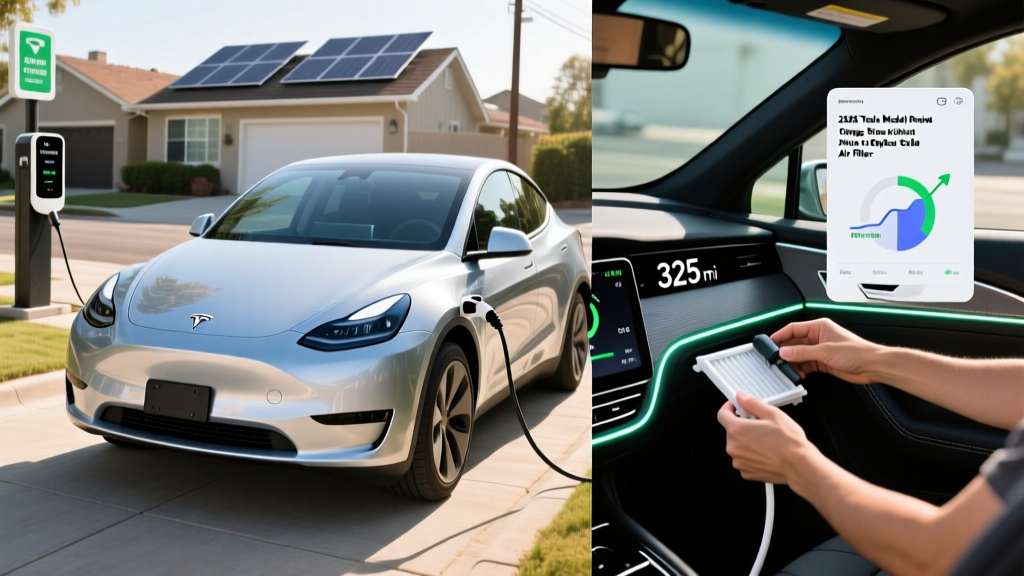
But ownership goes beyond the spec sheet. Many Model Y owners eventually ask a practical maintenance question: how to replace Tesla air filter components in the HVAC system? Unlike gas cars where cabin air filter replacement is a dealer staple, Tesla designed the Model Y's filters to be owner-serviceable — saving $150–$200 per visit. This review covers the full 2026 Model Y profile and walks through the filter replacement process so you can maintain cabin air quality yourself.
Range, Battery & Efficiency: Real-World Numbers That Matter
EPA Estimated: 320 miles (Long Range AWD) | 290 miles (Performance) | 260 miles (RWD Standard Range)
Real-World Expectation: Plan for 250–280 miles on sustained highway driving at 70–75 mph. In freezing temperatures (below 32°F), expect a 20–30% reduction — roughly 200–240 miles effective range for the Long Range AWD. City driving with regenerative braking recovers closer to the EPA sticker. The heat pump (standard on all 2026 trims) significantly reduces cold-weather cabin heating losses compared to resistive heaters.
| Spec | RWD Standard Range | Long Range AWD | Performance |
|---|---|---|---|
| EPA Range | 260 mi | 320 mi | 290 mi |
| Battery (usable) | ~60 kWh (LFP) | ~78 kWh (NMC) | ~78 kWh (NMC) |
| Efficiency | 133 MPGe / 26 kWh/100mi | 125 MPGe / 27 kWh/100mi | 117 MPGe / 29 kWh/100mi |
| 0–60 mph | 6.6 sec | 4.8 sec | 3.5 sec |
| Horsepower | 295 hp | 384 hp | 456 hp |
| Drivetrain | RWD (single motor) | AWD (dual motor) | AWD (dual motor) |
| Base MSRP | $39,990 | $47,990 | $52,490 |
The Standard Range RWD trim uses lithium iron phosphate (LFP) chemistry — meaning Tesla recommends charging to 100% regularly, which partially offsets its smaller battery. The Long Range and Performance trims use nickel manganese cobalt (NMC) cells with higher energy density, best kept between 20–80% for daily use and charged to 100% only before long trips. This LFP vs. NMC distinction is one of the most consequential ownership decisions: LFP offers longer cycle life and 100% daily charging freedom; NMC delivers more range per kilogram but requires more deliberate charging habits. (fueleconomy.gov EV technology overview)
Charging Speed: DC Fast Charge, Home Level 2 & the Charge Curve
Charging speed is where the 2026 Model Y's 4680-cell architecture shows its value — but peak kW numbers only tell part of the story. The charge curve matters more than the headline rate.
| Charging Level | Max Rate | Speed / Notes |
|---|---|---|
| DC Fast Charge (Supercharger V4) | 250 kW peak | 10–80% in ~25 min (LR AWD); sustains ~170 kW average to 50%, tapers sharply above 80% |
| Level 2 (240V, 48A Wall Connector) | 11.5 kW | ~44 miles of range per hour; full charge in ~7 hours (LR AWD) |
| Level 2 (240V, 32A mobile connector) | 7.7 kW | ~30 miles/hr; adequate for overnight charging under 50 mi/day commutes |
| Level 1 (120V household) | ~1.4 kW | ~4–5 miles/hr; emergency/trickle only |
The critical detail: kW is power (charge rate), kWh is energy (battery capacity). A 250 kW peak does not mean you receive 250 kWh of energy. The Model Y Long Range's 78 kWh battery will pull near-peak power only while the battery is cool and below ~40% state of charge. Above 80% SoC, the rate drops to under 40 kW to protect cell longevity. Always precondition the battery via the Tesla app or by navigating to a Supercharger — cold batteries charge drastically slower. (Tesla charging overview)
How to Replace Tesla Air Filter: A Step-by-Step Owner Guide
The cabin air filter in the Model Y captures particulates, pollen, and pollutants before they enter the HVAC system. Tesla recommends replacement every 2 years for standard filters, or every 3 years if equipped with the HEPA filter (available on select trims). If you drive in dusty, polluted, or wildfire-prone areas, check annually.
What You Need
- Replacement cabin air filter (Tesla Part #1520906-00-A or equivalent HEPA aftermarket)
- Torx T20 screwdriver
- Trim removal tool or flat plastic pry tool
- ~20–30 minutes
Replacement Steps (2026 Model Y / Juniper Generation)
- Access the filter housing: Open the front trunk (frunk). Remove the frunk tub liner by releasing the plastic clips along the edges. This exposes the cowl area near the windshield base.
- Remove the cowl cover: Using the T20 Torx, remove the screws securing the cowl panel. Gently lift the panel away — the filter housing sits beneath it on the passenger side.
- Open the filter housing: Release the retaining clips or screws on the filter compartment cover. Slide the old filter out. Note the airflow direction arrow printed on the old filter.
- Install the new filter: Insert the replacement with the airflow arrow pointing downward (toward the blower motor). Ensure it seats fully in the housing channels.
- Reassemble: Replace the housing cover, cowl panel, and frunk tub liner. Reset the filter replacement reminder in the Tesla app under Service → Cabin Air Filter.
Cost comparison: Tesla Service Center charges $150–$220 for this service (parts + labor). Doing it yourself with a genuine Tesla filter costs ~$40–$60; aftermarket HEPA filters run $25–$45. The job requires no high-voltage system access and carries zero warranty risk.
Pricing, Trims & Federal Tax Credit Eligibility
| Trim | Base MSRP | Est. As-Tested* | §30D Credit Eligibility | Effective Price |
|---|---|---|---|---|
| RWD Standard Range | $39,990 | $41,490 | Likely $3,750 (50% critical minerals threshold) | ~$37,740 |
| Long Range AWD | $47,990 | $49,990 | Likely $3,750–$7,500 (sourcing dependent) | ~$42,490–$44,240 |
| Performance | $52,490 | $54,990 | Likely $3,750–$7,500 | ~$47,490–$49,240 |
*As-tested includes typical destination fee ($1,390) and common add-ons (FSD transfer, paint color).
Tax credit rules matter: Under IRS §30D, the full $7,500 credit requires meeting both critical-mineral sourcing ($3,750) and battery-component manufacturing ($3,750) thresholds. Tesla's US-built battery packs generally satisfy the component requirement, but critical-mineral sourcing varies by supply-chain quarter. The Model Y qualifies under the MSRP cap ($80,000 for SUVs/crossovers). Buyer income caps apply: modified AGI cannot exceed $150,000 (single), $225,000 (head of household), or $300,000 (joint). The credit can be transferred at point of sale as an instant discount. Always confirm current eligibility on the IRS clean vehicle credit page before purchase — sourcing rules tighten annually.
Interior, Cargo, Tech & Driver Assistance
The Juniper refresh transformed the Model Y's cabin from spartan to premium-adjacent. Key 2026 interior specs:
- Cargo volume: 30.2 cu ft behind rear seats; 72.1 cu ft with rear seats folded (plus 4.1 cu ft frunk)
- Rear legroom: 41.6 inches — competitive with the Hyundai Ioniq 5 and ahead of the Ford Mustang Mach-E
- Front headroom: 41.0 inches; rear headroom: 39.4 inches
- Infotainment: 15.4-inch front touchscreen + 8.0-inch rear passenger screen (new for Juniper); no Apple CarPlay/Android Auto (Tesla-native OS only)
- Audio: 15-speaker premium system with immersive audio (17 speakers on Performance)
Driver assistance: Basic Autopilot (adaptive cruise + lane centering) is standard. Full Self-Driving (Supervised) remains a $8,000 add-on or $99/month subscription. This is SAE Level 2 automation — the driver must remain engaged, hands on or near the wheel, eyes on the road. It is not self-driving. Tesla's FSD (Supervised) handles complex intersections and highway interchanges impressively but can misinterpret construction zones, temporary lane markings, and unprotected left turns. (NHTSA automated vehicle guidance)
Warranty & Long-Term Ownership
Tesla's warranty structure is straightforward:
- Basic vehicle: 4 years / 50,000 miles (bumper-to-bumper)
- Battery & drive unit: 8 years / 120,000 miles (RWD) or 8 years / 120,000 miles (Long Range & Performance) — guaranteed to retain at least 70% capacity
- Corrosion: 12 years, unlimited miles
Real-world battery degradation data from Tesla's 2025 Impact Report shows Model Y batteries retaining approximately 88–92% capacity at 100,000 miles on average. LFP batteries in the Standard Range trim tend to degrade more slowly but start with less total capacity. NMC batteries lose capacity faster initially but plateau. A full battery replacement out of warranty costs $12,000–$18,000 depending on trim — a risk worth factoring into 10-year ownership plans.
Pros, Cons & Who Should Buy the 2026 Model Y
- Class-leading Supercharger network access (60,000+ stalls globally)
- 250 kW DC fast charging with strong mid-curve sustain
- 320-mile EPA range on Long Range AWD covers most road trips with one stop
- Spacious 72 cu ft cargo area with seats folded
- OTA updates continuously add features post-purchase
- Owner-serviceable cabin air filter reduces maintenance costs
- Strong resale value relative to EV segment average
- No Apple CarPlay or Android Auto — Tesla-native interface only
- Ride quality firm on 20/21-inch wheels; road noise still present post-Juniper
- FSD (Supervised) remains Level 2 despite the name — buyer expectation mismatch
- Insurance premiums 15–25% higher than segment average (Tesla-specific repair costs)
- Touchscreen-dependent controls (no physical HVAC buttons) frustrate some drivers
- Standard Range LFP battery offers only 260 miles — tight for road-trip-heavy buyers
Who This EV Suits Best
- Daily commuters (30–80 mi round trip): Any trim works; RWD Standard Range is the value pick with home Level 2 charging.
- Families needing cargo space: Long Range AWD — 72 cu ft cargo, 320-mi range eliminates most road-trip range anxiety.
- Performance enthusiasts: Performance trim's 3.5-second 0–60 and track mode, but accept the 30-mile range trade-off.
- Cold-climate buyers: Long Range AWD with the heat pump; budget for 20–30% winter range loss and consider a garage-mounted Level 2 charger.
Frequently Asked Questions
What is the real-world range of the 2026 Tesla Model Y?
The EPA rates the Long Range AWD at 320 miles. In mixed real-world driving (highway, moderate climate), expect 270–300 miles. Sustained 75 mph highway driving drops this to ~250–260 miles. In sub-freezing weather, plan for 200–240 miles effective range. Preconditioning the battery and cabin while plugged in recovers significant range.
How fast does the Model Y charge at home and on the road?
On a 250 kW Supercharger, the Long Range AWD charges 10–80% in approximately 25 minutes, adding up to 175 miles in 15 minutes under ideal conditions. At home with a Tesla Wall Connector (48A/11.5 kW), you'll add ~44 miles per hour — enough to fully replenish overnight. The 10–80% metric matters more than peak kW because the charge curve tapers sharply above 80% to protect battery health.
How much does the 2026 Model Y cost after tax credits?
After the estimated $3,750 federal credit (critical-minerals portion; full $7,500 depends on quarterly sourcing compliance), the Long Range AWD lands around $44,240–$46,240 including destination. The RWD Standard Range drops to roughly $36,240–$37,740. State incentives (California, Colorado, Massachusetts, and others) can stack on top — check your state's EV rebate program.
Does the 2026 Model Y qualify for the federal EV tax credit?
Yes, partially or fully, depending on IRS sourcing determinations for the quarter of your purchase. The Model Y is assembled in Fremont, CA and Austin, TX (domestic assembly requirement met). It falls under the $80,000 SUV MSRP cap. Buyer income must not exceed $150K single / $300K joint. The credit can be applied at point of sale as an instant price reduction. Confirm current-quarter eligibility at irs.gov/clean-vehicle-credits.
How often should I replace the Tesla cabin air filter?
Tesla recommends every 2 years for the standard filter, every 3 years for the HEPA filter. In areas with heavy pollution, wildfire smoke, or dusty roads, inspect annually. The replacement is owner-serviceable (see steps above) and costs $25–$60 in parts vs. $150–$220 at a service center.
Is the 2026 Model Y worth buying over the Hyundai Ioniq 5 or Ford Mustang Mach-E?
The Model Y wins on Supercharger network access, cargo space (72 vs. 53 cu ft in the Ioniq 5), and software ecosystem. The Ioniq 5 charges faster at 350 kW-capable chargers (10–80% in ~18 min) and offers a more comfortable ride. The Mach-E provides a more traditional driving feel and Apple CarPlay. If Supercharger reliability and range-per-dollar are your priorities, the Model Y Long Range AWD remains the segment default.